Monster Month: Amarok/Amaroq

Amarok

Now, we’re getting into the more obscure beasts.  How obscure are we talking?  Well, it’s not as easy to find information on some of these.  So, the posts might be getting a little thinner.

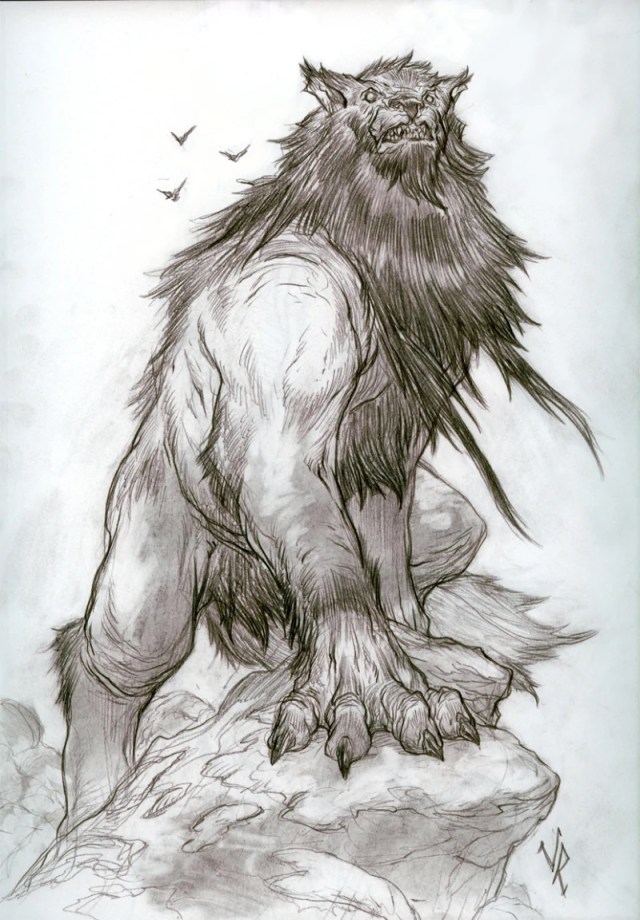
The Amarok (or Amaroq) is from the Inuit religion and is simply a giant wolf.  They are solitary hunters who go after anyone foolish enough to hunt alone at night.  Probably not hard to figure out how this legend came about.  In fact, giant wolves are found in multiple religions and mythologies.  Most times, they aren’t altered beyond being made enormous, which comes with the usual super strength and durability.  The Amarok is not that different and was probably born from the concept of dire wolves.

There are some differences among the Inuit.  Those in Greenland use Amarok solely for this creature while others use it for any wolf.  Even with its ferocious reputation, the Amarok is typically put in a positive light.  The story I ran into the most was the following:

‘A young boy was weak and considered an outcast by his village.  He prayed to the gods for strength, which resulted in an Amarok being sent to him.  He wrestled the Amarok’s tail until small bones fell out of him.  These were stunting his growth.  He went back to wrestle the Amarok every day in order to build up his strength.  Eventually, he was strong enough to earn the respect of his village.’

Others stories have people killing an Amarok as a sign of strength or just because.  There wasn’t much else to these tales, except for one that stood out to me:

‘A mourner and their friend go in search of an Amarok they hear is nearby.  They find the pups and the mourner kills them.  Running away, they hide nearby to see the mother appear with food.  The mother Amarok goes to a lake and drags out a human form.  The mourner drops dead because the Amarok took their soul.’

That’s also the closest I could come to finding any supernatural powers.  Mostly, the Amarok is a giant wolf used in mythology either as a benevolent guardian, dangerous predator, or test of strength.  Some tales talk of them appearing to pick off sick reindeer when the herds get too large.  This helps the herds grow in strength and be better sources of food for the Inuit.

Beyond all of that, it got tricky finding clear information.  I noticed that some people used the term ‘Amarok Wolf’ for general large wolves.  This is regardless of their origins.  So, I saw it getting used for Fenrir and the wolf who raised Remus and Romulus.  I don’t think that’s right though.  Kind of muddies the waters.

Posted in Uncategorized | Tagged , , , , , , , , , , | 19 Comments

How to Use Prologues, Part 8, Outsider’s Report

Image courtesy of Tumisu via Pixabay Hi SErs! It’s a day of Harmony here at Story Empire 🙂 Today, I’d like to talk about using an Outsider’s Report …

How to Use Prologues, Part 8, Outsider’s Report
Posted in Uncategorized | 2 Comments

Poetry Day: City of Hate

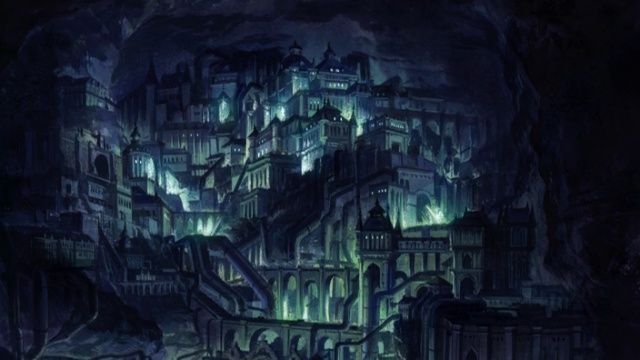
Seraph of the End City

(Just came up with an idea for a city that has succumbed to hate.  Thought of it being a dangerous stop for an adventurer on their quest.)

The rusty gates are locked

Chains wrapped around the gears

So that none may wander in

And join the misery-born

*

Beyond the walls lives molten rage

A city infected by deepest hate

Where screaming fills the night

And bodies rot at dawn

*

The slightest tiff becomes a feud

Egged on by the bloodthirsty

And ignored by sleepy guards

Until one clan is dead

*

No religion thrives within the town

They were the first to die

After stoking the fires of hate

In an attempt to please their gods

*

These days the hate is over greed

And jealousy and stares

Stabbings over single sneezes

Or forgetting to say please

*

No one knows how it came to pass

Or how long the hate will last

They only hope to keep it locked

Behind the bleeding walls

Posted in Poems | Tagged , , , , , , , | 8 Comments

Monster Month: Bunyip

Bunyip

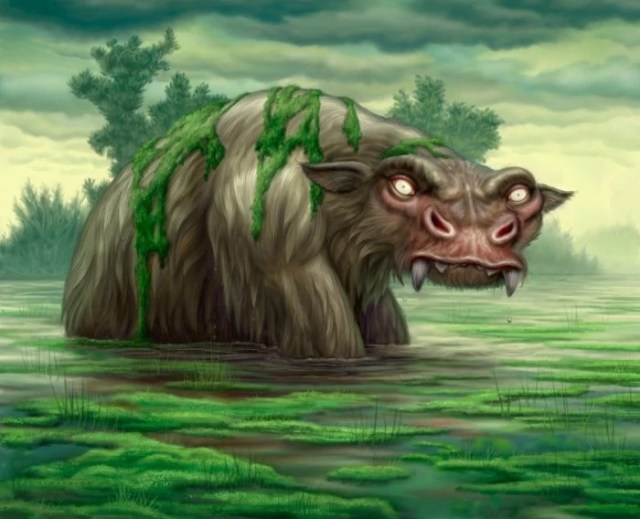
Is that what a Bunyip looks like?  No idea because the descriptions were incredibly varied and I couldn’t find many common factors beyond ‘aquatic’.  Not surprising since this is folklore that was spread across Australia.  Even the name has regional variations, so you can’t really lock down a single concept.

As I said, the only constant is that the Bunyip is aquatic.  This may mean that it’s an aggressive water spirit because people tended to be afraid of it.  I did mention that there were a few common factors too.  Since they’re aquatic, Bunyips were strong swimmers with either fins or flippers.  They have a loud, distinctive call that is similar to a boom or a roar.  Women and children were its preferred prey.  Beyond all of that, the legends tend to be unique to their region.

There have been a few theories at to the Bunyip’s origins:

  1. Most sightings describe a creature with a round head, brown or black fur, no tail, and being between 4 to 6 feet long.  This description is why some believe the Bunyip was born from seeing seals that wandered up the rivers.  If they made it far inland, people unfamiliar with them would assume they’re a strange creature.  An elephant seal would really drive this myth considering how big and aggressive they are.
  2. Other sightings describe a creature with a long neck that is 5 to 15 feet long.  They have a head like a horse or emu with more equine features such as mane and tail.  This could have come from the fossils of extinct animals found in Australia.  It was adding to the bones to make sense of what was found.
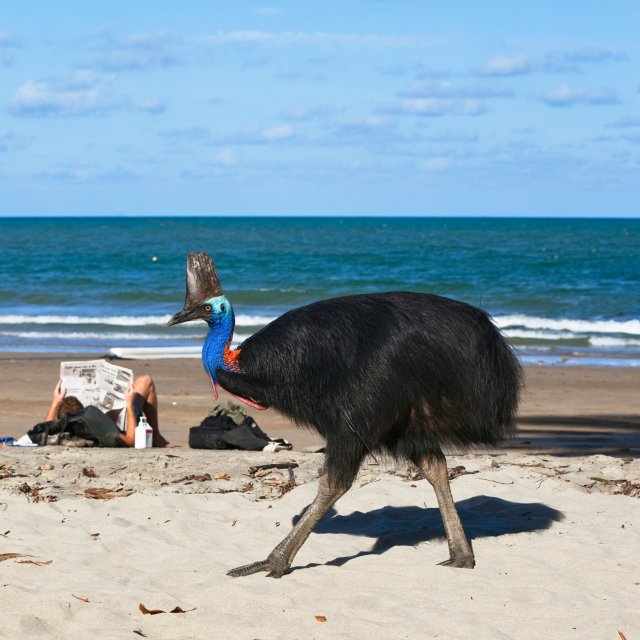
  3. The first written account of the Bunyip described it as laying blue eggs.  It had deadly claws, powerful legs, a bird-like head, and a colorful chest?  That actually describes the Australian cassowary:

    Cassowary

  4. Just a thought, but another source could have been crocodiles.  An aspect of the Bunyip is eating children and livestock that get too close to the shore.  That’s exactly what crocodilians do.  If it happened when people weren’t looking then they could blame a mysterious creature.
  5. Finally, another aspect of the Bunyip is the booming call.  This may be what people thought was making the call of a bittern marsh bird.  It could also be pieces from all of these theories getting mixed together.

There have been plenty of sightings over the years.  Oddly enough, these increased when European settlers started showing up and were finding fossils.  This began in 1818 when large bones where found and described as being similar to that of a hippo.  Of course, this was probably an extinct animal, but it got the ball rolling.  Why wouldn’t it?  Europeans showed up to see kangaroos, koalas, cassowaries, platypuses, and other unique animals.  The possibility of a Bunyip wasn’t off the table if one thinks it’s simply an elusive water predator.

I keep looking up information and it paints so many strange pictures.  The Bunyip is a large starfish.  It’s also a dog-headed, furry creature.  The Bunyip bloodthirsty predator. It’s also a protector of wildlife who devours people who do evil.  The Bunyip is a natural animal.  It also has supernatural powers such as controlling water levels and hypnotizing humans into being slaves.  Your head starts spinning after a while.  Guess you can pick your legend and stick to it.

Posted in Uncategorized | Tagged , , , , , , , , , | 15 Comments

Guest Post – Marlena Smith – The Power of Love #newbook

I am delighted to welcome a long-time friend to Fiction Favorites. She writes under the pen name Marlena Smith. She is here today to tell us all …

Guest Post – Marlena Smith – The Power of Love #newbook
Posted in Uncategorized | 5 Comments

Free PDF: Raven’s Hold

Yahoo Image Search

From 2015-2018, I spent October posting my attempts at a horror series.  It took a lot out of me and my doubts where extreme, so I didn’t bother publishing.  Instead, I made it a blog only thing.  My mind goes back to it from time to time and I wanted to give it a small revival.  Yet, it would be insane to have a post with a link to each of the 30-31 parts.  So, I’m going to try to connect a PDF of each book to the next four Tuesday posts.  Let’s see if it works.

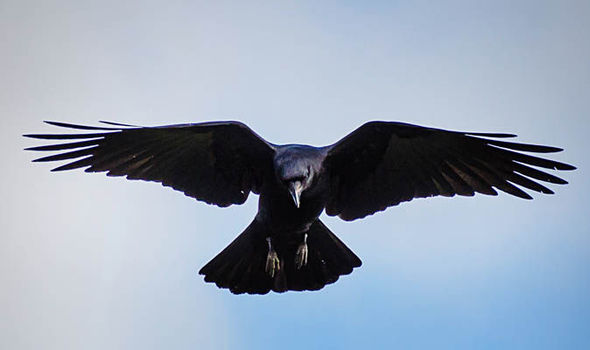
Raven’s Hold

This is the one that started it all.  A young man named Ian has been invited to be a patient at the Raven’s Hold asylum.  Once there, he meets a few of the residents and makes a new friend who claims to be a prisoner.  Though, very little is stranger than the excitable Dawn Addison and her invisible unicorn.  As Ian’s stay gets longer, the sense that there is more to Raven’s Hold than reality can explain grows.

Raven’s Hold PDF

Posted in Raven Series | Tagged , , , , , , , , , , , , , , , | 8 Comments

Monster Month: Wendigo

Wendigo

We’re going to be touching on some monsters throughout the month.  I was trying for obscure ones, but the first one is probably known by others.  If you’ve been a fan of Wolverine comics or ‘Supernatural’, you’ve heard of:

THE WENDIGO

These creatures are from Native American folklore, specifically the Algonquin-speaking people such as the Cree and Ojibwe.  This means there are some variations on what the Wendigo looks like and acts, but there are the following commonalities:

  • Evil supernatural being
  • Cannibalistic
  • Connected to winter and the cold
  • Connected to famine and starvation

I think the last one is why Wendigo are cannibals and many imagine them to be gaunt.  A lack of food could drive someone to eat another person.  These beings are almost skeletal and corpse-like, which is similar to how a person would look if they starved to death.  A few descriptions give them bloody lips like they are dehydrated.  Some of the tribes had it that a Wendigo would grow in proportion to the person it ate, which meant it would remain hungry.  This is why they are still gaunt even if they are eating people at a terrifying rate.  It’s this aspect that also makes them a symbol of gluttony.

I’ve found 3 origins for the Wendigo:

  1. Just a malevolent wind spirit that comes out during the winter.  Not sure if this is genuine lore or modern fiction.
  2. A human turns into a Wendigo if they are driven to the point of cannibalism.  Since it is from the northern regions of America, it stems from the threat of being trapped in the snow.  People may give in to the urge to eat those who have already died if they have been left without food for so long.  Key point there is that they don’t eat the living, but the dead to transform.
  3. A human who demonstrates extreme gluttony and greed will turn into a Wendigo.  In this scenario, it is a tale to promote cooperation and sharing.  Cannibalism comes after the change.

Wendigo tend to be giants, but European influence has created a version that is human-sized and bestial like a werewolf.  The original lore had them as giants with glowing eyes, long tongues, sharp teeth, and sharp claws.  Those are the only things were common while the rest of their description changed by culture.  Powers were varied too with some having weather control and perfect stealth.  The point of a Wendigo was to be scary and prevent people from committing cannibalism and general gluttony.  So, they may have been built to fit whatever local fears and threats people had, which explains the variety.

Finally, there is something called Wendigo Psychosis, which is up for debate and currently considered a culture-specific disorder.  The reason for the debate is that some people think this was created by anthropologists misunderstanding things, but there are others who think the syndrome is real.  Basically, a person develops a craving for human flesh and fears becoming a cannibal.  Some think this is when a person is possessed by a Wendigo spirit.  This isn’t as common as it was prior to the 20th century, which is another reason there are debates on if it’s real or not.

Posted in Monster Maker Fun | Tagged , , , , , , , , | 11 Comments

Haunted Halloween Holiday

Let’s all welcome Robbie and Michael Cheadle to the blog today. I’ve known Robbie for a while now, but she hasn’t been a guest here for a long time. …

Haunted Halloween Holiday
Posted in Uncategorized | Leave a comment

MKTG #20 – SCAMS

Hello, SE’ers! It’s Jan here to talk about an infuriating book marketing pitfall. I will share some tips to help make sure you don’t fall for useless…

MKTG #20 – SCAMS
Posted in Uncategorized | 2 Comments

Saola: The Asian Unicorn

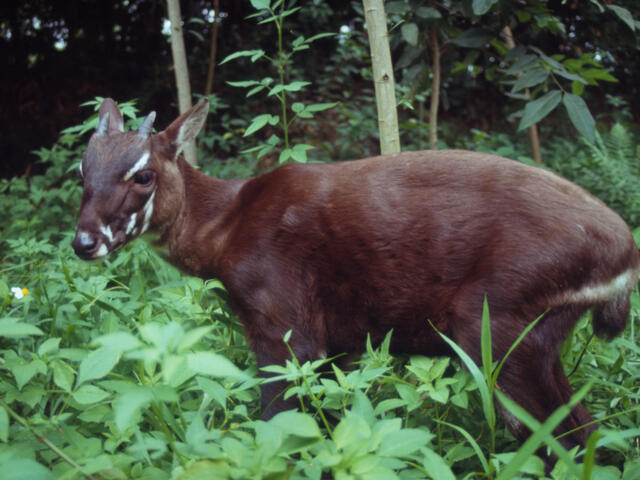
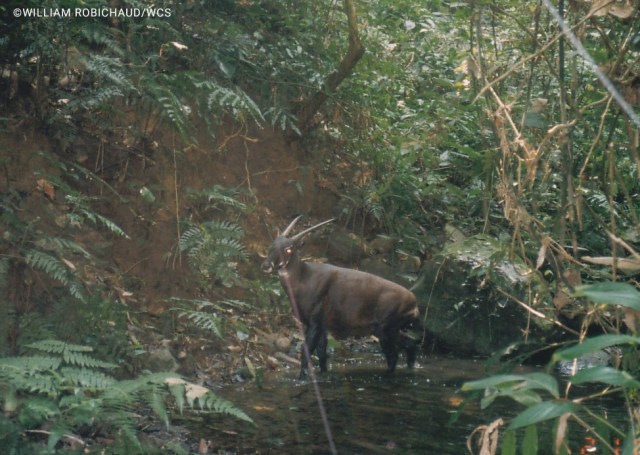
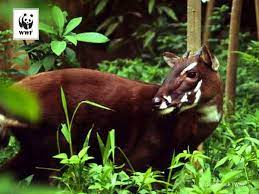
They look like an antelope, but they’re more closely related to cows.  Well, I say look, but these critically endangered animals are incredibly rare.  Scientists have only documented wild Saola 4 times and none are in captivity.  This means we don’t know much about them including their population.  Could be a few hundred or a few dozen, but we really have no idea.

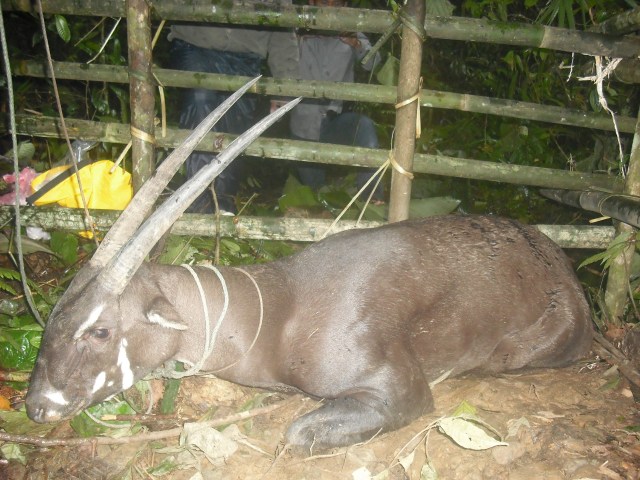
They’re found in the Vietnam/Laos region and were discovered in 1992.  They’re actually the first large mammal to be found in 50 years.  Although, they didn’t find a live one.  It was a strange skull in a hunter’s home.  This skull had two parallel horns that grew about 20 inches and ended in points.  It has been discovered that males and females both have these.  They have glands around their muzzle for marking territory too.

That’s really it for the interesting stuff.  Most information was gathered from the few Saola that were captured, but they died anywhere from weeks to months.  I couldn’t find any information on why or how they were captured.  All other information is from photographs with the most recent one being from 2013 when a Saola went by a motion sensor camera.  Makes this animal a major mystery.

Not a mystery enough for hunting and illegal fur trade to happen.  Those are the biggest threats to the Saola.  Keep in mind that they live in a small region of Vietnam and Laos, so they can’t be a big population to begin with.  Specifically, they are only found in the Annamite Range.  Habitat loss is another problem.  It doesn’t help that scientists and conservationists can’t find them alive in the wild.  Seems the hunters have better luck because they set traps for other animals like wild boar and muntjac.

For a little more information click HERE

Let’s see if we can get any pictures and videos.

Google Image Search

Google Image Search

Google Image Search (Not sure if captured and released or poached.)

Google Image Search


Posted in Animal Posts | Tagged , , , , , , , , , | 18 Comments