The Smallest Ratite: The Kiwi

As promised, here is the 5th ratite, which is a family of flightless birds.  Unlike the emu, ostrich, rhea, and cassowary, the kiwi is small.  Some are no bigger than a domestic chicken.  They are also endangered, so there are breeding programs and this site to help protect them:

Save the Kiwi

Only 5-10% of kiwi chicks survive into adulthood due to the introduction of predators such as dogs.  The biggest threat are stoats (type of weasel) because they go after the chicks, who won’t be too large for them until they are 1-1.5 years old.  Habitat destruction is another factor because it can lead to chicks getting killed in accidents.  It can also reduce the population to the point where incest begins.  All of this can lower a population’s chick survival to less than 5%.  This is why people are trying to take action, but it’s definitely an uphill battle.  Thankfully, there are a lot of protected areas since this is the symbol of New Zealand.  This makes the predators the bigger of the two threats.

So, what are kiwis?  They are small birds that can’t fly and are genetically closer to the extinct elephant bird than the moa.  This is odd because kiwis live in New Zealand like the moa while the elephant bird was from Malagasy. They are nocturnal, so they have very small eyes and depend very little on their sense of sight.  Kiwis work more off noise, scent, and touch, so blind ones function as well as others.

The strangest thing about kiwis is that their eggs can weight up to a quarter of its body mass.  This means it has the largest egg of all birds in terms of body/egg proportions.  A comparison I saw online was a human giving birth to a fully grown four-year-old.  This means they lay one egg at a time and around 6 per year.  It takes about 30 days for the female to lay the egg too.  Nobody is sure about this adaptation either.  The two theories I found are:

  • A holdover from when kiwis were larger.
  • The large egg means the chick is born with enough development to run away from aerial predators.  It has also eaten enough in the egg to survive for 1-2 weeks without needing much more food.  This doesn’t help against the introduced land predators, but it does allow them to hide from birds of prey for extended periods of time.

Let’s get to the fun pictures and videos.  We have 5 species and all of them are from New Zealand.
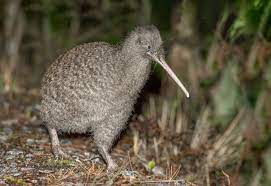
Great Spotted Kiwi
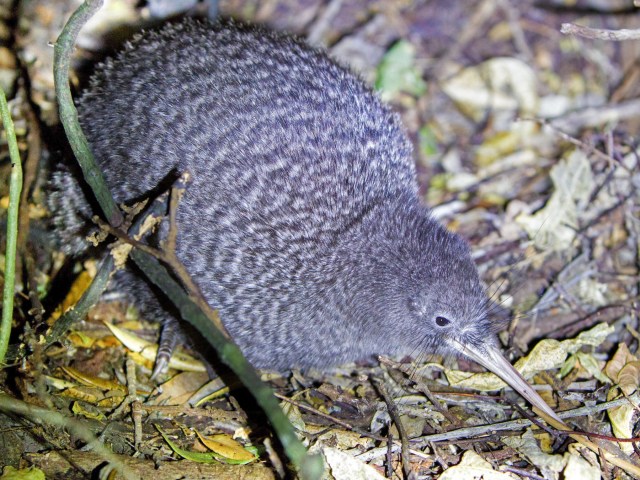
Little Spotted Kiwi
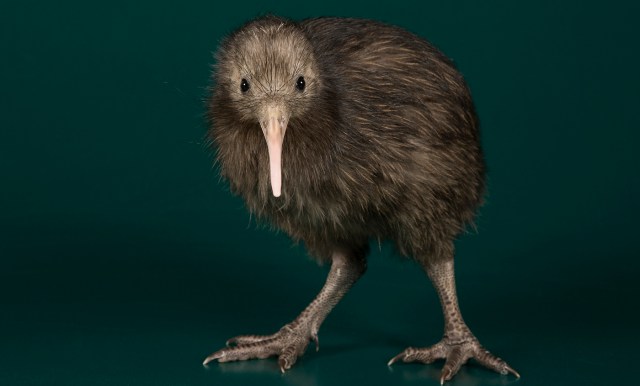
North Island Brown Kiwi
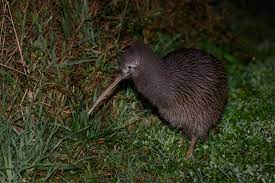
Okarito Brown Kiwi

Southern Brown Kiwi
Posted in Animal Posts | Tagged , , , , , , , | 18 Comments

Goal Post: The First Full Week of School

I need this weekend to rest.

My head is spinning so much that I’m not really sure where to begin.  Some stuff I can’t talk about because it connects to the drama.  Was it better this week?  Yes, but not by much due to the actions of other people.  This left me tired by the end of every day, so I didn’t get much in the way of writing done.

Actually, I didn’t get any writing done after Sunday and I think I only got one section completed.  Darwin & the Avenging Elf is going to go into October because weekdays aren’t being friendly.  Weekends are rough too because of errands and events.  I always forget the holidays around this time of year.  With 12 sections left, I might be able to get 7-8 done this coming week. That sounds really good, but it’s the ideal.  So, I’m looking more at 6 if I’m lucky.  Guess we’ll just see what happens.

That isn’t to say that my week wasn’t eventful.  It was the first full week of school, so there was a lot to do.  Had a lot of fun working with the students.  I helped with homecoming last Saturday, which ended up being a 9 hour thing because I kept helping.  That’s a big reason I didn’t get a lot done last weekend, but it was worth it.  First time it’s happened since before Covid, so it had a lot of energy.  Course, it also had a lot of sun, which drained me pretty nicely.

There’s another thing that happened, but I think I’m going to hold off a bit.  For some reason, I feel like I should wait until a specific date down the road.  That mystery aside, the event was a little crazy because of my own stupidity.  Almost made a big mistake because I wasn’t thinking things through.  Still feeling like a fool about it too.  I added to this idiocy by getting a triple scoop hot fudge sundae from Baskin Robbins . . . at 10 PM.  Wolfing that down and then trying to go to bed resulted in a terrible night of sleep.  The ensuing nights weren’t much better due to stress, which is why I’m exhausted.

I’m resting up this weekend.  My son and I have haircuts later today then I promised him video game time.  Going for a walk tomorrow morning before lunch and then he has something with his mom.  I should be able to get some writing done during that period, but we’ll see how I’m feeling.  Beyond those events, I really don’t have a lot more planned for the weekend. The week had so much going on that I just needed a quiet, low energy period.

Only other thing I’ve been doing is watching TV.  Finished Season 5 of ‘Cobra Kai’ and I really liked it.  Started off slow, but the last episode definitely made up for the minimal action.  Good amount of character growth too.  I finished Season 4 of ‘What We Do in the Shadows’ last night.  Still funny, so I’m glad I got into it.  Not sure what to tackle next, but I’m leaning towards Season 3 of ‘Harley Quinn’.  Looks like everything I’m watching has only 10 episodes each.  So, I should probably think further ahead, but I haven’t checked my lists in a while.

There really isn’t much else to talk about.  Last week was mostly work and helping my son with schoolwork.  The evenings were resting up for another round, so I didn’t even expect to get any writing done.  Made some progress on November and December posts, which is a victory.  I’ll be trying to get further along on those this weekend if I’m not able to do book writing.  I doubt I’ll be able to tackle the next Darwin book before January too, so I’ll handle whatever else I can get to.  This is always a readjustment part of the year.  Not that I’m in a rush since I don’t know when I’ll ever publish again.

Goals of the week:

  1. Time with son.
  2. Write more Darwin & the Avenging Elf
  3. November posts
  4. Meet the Teacher night
  5. Read more ‘Demon Slayer’
  6. Puzzle time
  7. Sleep better
  8. Important meetings
Posted in Goal Posts | Tagged , , , , , | 10 Comments

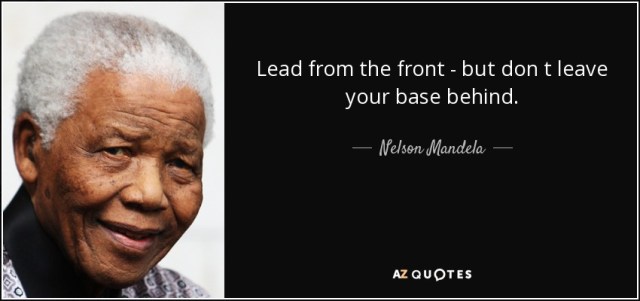
Leading from the Front

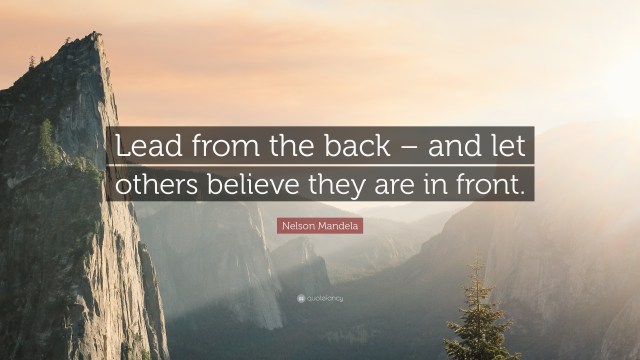
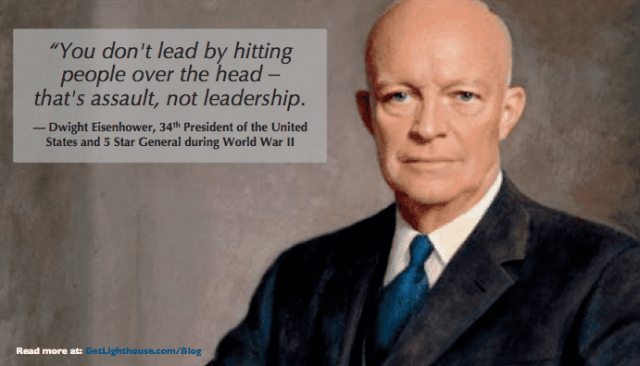
(Kind of strange that Nelson Mandela had a quote on leading from the back and another on leading from the front.  Makes me think at least one is fake.)

Now, these are the generals that we tend to see in fantasy stories.  At least when combat is actually going on.  They may be standing around a table and talking for the most part, but they eventually step onto the battlefield.  Unless they’re killed by a traitor or there isn’t a military battle involved in the story.  Either way, these heavily armored figures are typically some kind of a decorated knight.  It doesn’t surprise anybody when they show that they earned their rank.

Unlike the ones who lead from the back, physical abilities are a big factor in how effective this character is.  They aren’t directing armies from a vantage point, but are in the thick of the battle.  Orders are still shouted when they’re needed, but this general is the point of a spear instead of the hand wielding the weapon.  So, they have a preoccupation with staying alive and can’t think of much more.  Considering what every other solider is doing would get one killed here.  They can only examine their surroundings after powering through the enemies, which requires strength, speed, endurance, and combat skill.

This isn’t to say this type of general is an idiot and intelligence doesn’t matter.  They work off a different mindset where one doesn’t have a lot of time to adjust.  Experience and a flexible mind are necessary to change strategies in the heat of battle while continuing to stay alive.  One could say that wisdom and instinct are more important for this role than knowledge and intelligence.  After all, a warrior wouldn’t make it to the rank of general if they lacked the sense to survive all previous battles.

Risk analysis is another difference because the previous category would have enough time to think hard about this topic.  While this general would consider it at the start, they wouldn’t be able to change in the same way once the battle begins.  A change reported to or noticed by one leading from the back can be considered carefully before a decision is made.  The delivery of the information would be fairly quick as well.  When leading from the front, it isn’t easy to be told about a change in the battle and the general won’t notice events going on far from their area.  So, there will be a delay, which could result in a rash decision.  This is one of the risks that this type of leader takes.

The tradeoff would be a higher morale.  Psychologically, one can see how soldiers will fight harder and with more ferocity if their general is in the same level of danger.  I think this is the philosophy of Alexander the Great, but I’m not sure.  The point is that the soldiers see that their leader wouldn’t have them do anything that they weren’t willing to do.  This creates respect, so they will fight hard to protect their leader and show that they are worthy of such treatment.  Much of this will stem from how a culture perceives strength and strategy, but there is an emotional boost that comes from this type of leader.

Now, how can one who leads from the front handle giving orders?  That’s another aspect of being in the front and fostering high morale.  Soldiers, especially those who have been given ranks, need to be trusted to handle situations in their area.  The general is fighting on their own and giving orders when possible, but there has to be some personal responsibility as well.  If the battle shifts, a lieutenant far away will need to makes decisions while also sending a message to the general.  Trust and understanding are essential to this because they need to know what their leader would want.  At the same time, they would need to have some individuality to remain flexible.  It’s a difficult balance to create in a character.

Between the two, I would saying a general who leads from the front is the more entertaining category.  We get to throw them into action and there’s less of a risk of the readers getting bored.  They can function very well as a main character because of this benefit.  Authors can also fall into a trap of making them the only competent soldier and forgetting that generals work with an army.  Strategies are ignored and the general simply charges in to do everything on their own.  In reality, they still need to be team players and work with their men, who they should trust.  If not, you have a leader who doesn’t treat their people well and will probably be betrayed.  A viable option, but the hubris/egotism of a leader causing their downfall is fairly common.

So, what do you think of those who lead from the front?

Posted in Thoughts | Tagged , , , , , , , | 9 Comments

Why Do Some Author’s Insist on Writing a Lousy Ending?

Photo by Andrey Zvyagintsev on Unsplash   Good Morning, SEers. John is with you today, and I wish you a happy Friday. As you can see by the headline,…

Why Do Some Author’s Insist on Writing a Lousy Ending?
Posted in Uncategorized | 4 Comments

Poetry Day: Careless Infector

(Well . . . This poem was disturbingly prophetic.)

I hear you coughing

With nothing in your way

Spraying toxic spit

In the air I breathe

Forcing me to join you

In a fevered bed of pain

No one to care for us

Because we are too ill

You refuse to fight the virus

Hiding in a whimpering heap

Leaving me to push myself

Prolonging my disease

While you recover fast

And run off to join the world

Abandoning me to suffer

With the virus you have left me

Posted in Poems | Tagged , , , , , , , , | 12 Comments

The Haunting of Chatham Hollow

Let’s all welcome Mae Clair to Entertaining Stories today. She’s here to tell us about her latest release, The Haunting of Chatham Hollow. Mae is one…

The Haunting of Chatham Hollow
Posted in Uncategorized | 5 Comments

Leading from the Back

What is leading from the back?  It’s exactly what you think.  This would be a military leader who stays away from the frontline.  They give orders while analyzing information and listening to advisors.  They’re still in charge, but not in as much danger as your average soldier.  Sound familiar?

This is the type of general we see a lot in reality-based stories.  It’s because modern generals don’t physically go into battle.  Not typically anyway.  Keep in mind that this isn’t a negative thing.  It’s simply how war is waged in this global culture.  This style requires that leaders aren’t the more physically aggressive or badass, but the ones who are smart enough to properly direct armies and resources.  It could also be wisdom or some mental ability that makes them the best for the job.  Think of them as the chess masters who are trying to outthink an opponent who isn’t in the room.  Not easy and requires a lot of mental flexibility.

Generals who lead from the back are difficult to put in a main hero role.  It’s because they’re not in the action that the author will have trouble maintaining tension.  Movies and television can be easier with the more visual development of tension.  You can also shift to action there with more ease than in a book where the general is the main POV.  It can make stories clunky and disjointed even if you’re showing the proper reactions towards the events.

Another issue is that many readers might not think the general has anything at stake.  A person may see a leader who stays in a safe zone as weak and not worth the respect that they’re given.  This stems from how our culture pushes fictional heroes who are tough, aggressive, and violent.  A real general isn’t likely to go charging into battle with two machineguns firing and a rocket launcher strapped to his back.  General Nick Fury isn’t a real person!  People tend to forget this, so seeing a modern general in action on the page will come off as boring.

Thankfully, there is an audience for this type of story.  People who enjoy the strategy side of war would be interested in seeing things from the generals perspective.  Also, anyone who is curious about the psychological impact on a person who is aware that their decisions cause others to die.  Both routes require that the author show the mindset of the general, so you may be looking at a first person POV tale.  They aren’t always the same people too.  The first group might not be interested in the toll such decisions take on the psyche since they’re focused on the ‘art of war’.  The second group might not care about how the war goes so much as how the general handles wins and losses.  So, it can be a challenge to hit both marks.

The key to making an effective ‘lead from the back’ general is research.  There are plenty of books and interviews out there.  Generals have talked about their job for so long that the biggest challenge is to decide on whose mindset to follow.  That’s the other part here because we’re dealing with humans.  Generals aren’t cookie cutter leaders.  Each one has unique strengths, weaknesses, morals, viewpoints, and strategies.  For example, some generals will prefer bombardment to reduce their own casualties while others will have no problem throwing their armies into harm’s way.  So, pick a general whose mentality and tactics fit with what you want then start from there.  It doesn’t have to be a perfect match, but it can be a jumping off point, especially if the person has talked about the mistakes they’ve made.

So, what are your thoughts on this type of general?

Posted in Thoughts | Tagged , , , , , , , , | 9 Comments

HEALTHY WRITERS—LESSONS FROM SCHOOL

Hi SEers! What does it mean to be a healthy writer? Do you eat lots of broccoli, run marathons, or write a lot? It’s mixed in there somewhere. To …

HEALTHY WRITERS—LESSONS FROM SCHOOL
Posted in Uncategorized | Leave a comment

Teaser Tuesday: Do I Need Supporting Characters?

Yahoo Image Search

Welcome back.  I was surprised to find that this was a question.  So, I had to touch on it and explain supporting characters.  Enjoy.

Do I Need Supporting Characters?

A story can be made or broken by the supporting characters who range from traveling companions to minor villains. Of course, you can have your hero go it alone and have a focus on how someone will carry on when isolated. This is more difficult than one would think because you create a supporting cast as soon as you introduce another character. It might not even be a speaking part. That troll? Supporting character even though it’s a monster. That shop owner selling cheap swords? Supporting even though he only shows up for one scene and has a few simple lines of dialogue. This is a fairly broad definition, but these are all characters who add more color and life to your story. Hence, they should not be ignored entirely.

On the other hand, you don’t have to go deep with these characters if they’re minor and closer to set pieces. Putting hours of thought into a healer who shows up and leaves on the same page is overcompensating. It’s clear they have a purpose, but not enough that the audience needs a full backstory. I would suggest that the amount of time you put into creating supporting characters really should be dependent on how much you are going to use them.

You can divide your cast into three categories to help here:

  1. Primary– This is your main hero and main villain. The story revolves around these characters, so they have to be the deepest. They are the most likely to change throughout the story too. Names, physical description, evolution, backstory, and focus are certainly required more than the other groups. If you are writing an ensemble story, you will have more characters in this category. Never think you can only have 2 characters as primaries if you have multiple heroes and villains who are heavily involved in the plot. That leads to favoritism and the story can be weakened by you reducing the importance of the others while they are truly critical to the events.
  2. Secondary– These are your mentors, independent rivals, allies, third party enemies, and other characters who are important, but not central. They influence the primaries and the story, but they are not the major motivators of the big events. When the battles and adventures hit the high gear, they are standing a few steps back and giving support. They might not be there at all. It helps to have some depth like the primaries including a backstory. Yet, they don’t need a big evolution or one at all because they are distanced enough from the story events. In other words, character development is optional and can be minimal here.
  3. Tertiary– I would put the store owners, key monsters, healers, nobles, and anyone else who shows up for a little time here. They don’t travel beyond their initial area because they serve a single purpose. In a series, you can eventually have them evolve to secondary if they show up more often. If not then you really only need a name, physical description, and a purpose. There’s no evolution here, especially if they’re around solely to be killed.

We are going to be focusing more on the secondary group for, what I think, are obvious reasons. Primary are too essential and tertiary are too temporary. Secondary is where you can find a lot of development catalysts for the characters, story, and world. This is because they aren’t the major movers of events, but influencers of those who will do it. I’d say the men and women behind the curtain if you didn’t see them act. Then again, some supporting characters do stay in the shadows until near the end for a big reveal. That’s a rather niche use though. Beyond the precious plot twist, you get tons of mileage from the secondary cast. I would say more than the primaries in certain areas, which is why it’s important to give these characters more attention than a passing fancy.

Posted in Teaser Tuesday | Tagged , , , , , , , , | 19 Comments

Generals in Fiction: The Biggest, Shiniest Targets

I think this is another character type that gets overlooked or done with minor attention to anything other than the role.  Any genres that touch on there being a military force will note that there are generals.  Might not be much of a hierarchy beyond them, but you have military leaders.  They typically fall into these categories:

  1. Evil general who is trying to turn the kingdom into a military state.  Sometimes they’re being tricked into doing so by another villain.  Other times, they simply think the leader is weak and strength is needed.  We’re talking full authoritarian here.
  2. Loyal general who stands beside the leader through every event.  They will act as adviser and many times sacrifice themselves over the course of the story.  This is the total opposite of the first example.
  3. Mentor for the hero who either trains them at the start or does so at a midpoint.  A general is seen as someone with experience and discipline, which is what they are passing on to the hero.  This also establishes a neutral hero as having taken a side in some fashion and connects them to the ‘good’ kingdom.
  4. An arrogant adversary for the hero who will inevitably be killed in a battle.  Again, we see a polar opposite of the mentor here.
  5. Fodder tossed onto the battle as either an ally or enemy.  There’s nothing to them beyond being a superior warrior who the other soldiers listen to.  Sometimes it’s not even clear they’re the general other than they’re giving orders.

Those are very broad, so you can say that any character could fall into those if you stretch things enough.  The difference here is that generals tend to be thrown into these categories with nothing else given to them.  Authors don’t typically give them depth unless they’re the main character, but that’s rare.  So, they are relegated to these roles that are exclusively secondary and tertiary.  Kind of a shame even though it makes senses.

The challenge with a general is that one doesn’t start out that way.  You need to work your way up to that rank, which takes years.  If that isn’t the main story then it’s going to be a slow and boring slog to the fun part.  Even if you start with the hero having the rank, there’s a risk of boring.  Generals are experienced and skilled, so they won’t be learning as they go like other heroes.  They can handle most combat situations in a way that blocks tension from being fostered.  You have a lower chance of mistakes or them facing a new situation.  It’s why many authors gravitate towards novice warriors and inexperienced youths.  These are characters that readers can relate to because they are learning about the world and how to grow as well.

Of course, you can always take a general who has lost his army and position.  The former general is a common mentor and villain.  Many times they’ve become bitter and depressed, so they join for a last bit of glory.  Maybe the hero has a spark that they remember possessing and they want to see if they can keep it alive.  I’m on the fence about this because it doesn’t really work off the general concept.  It would be like any other previous career that brings in experience, skills, and history, but might not have the biggest story impact.  Not when compared to a figure active in that role.

I’ll be touching on what I consider the 2 types of generals later this week.  For now, I’m going to open the floor.  What do people think of generals or any military leaders being used in fiction, especially fantasy?

Posted in Thoughts | Tagged , , , , , , | 13 Comments