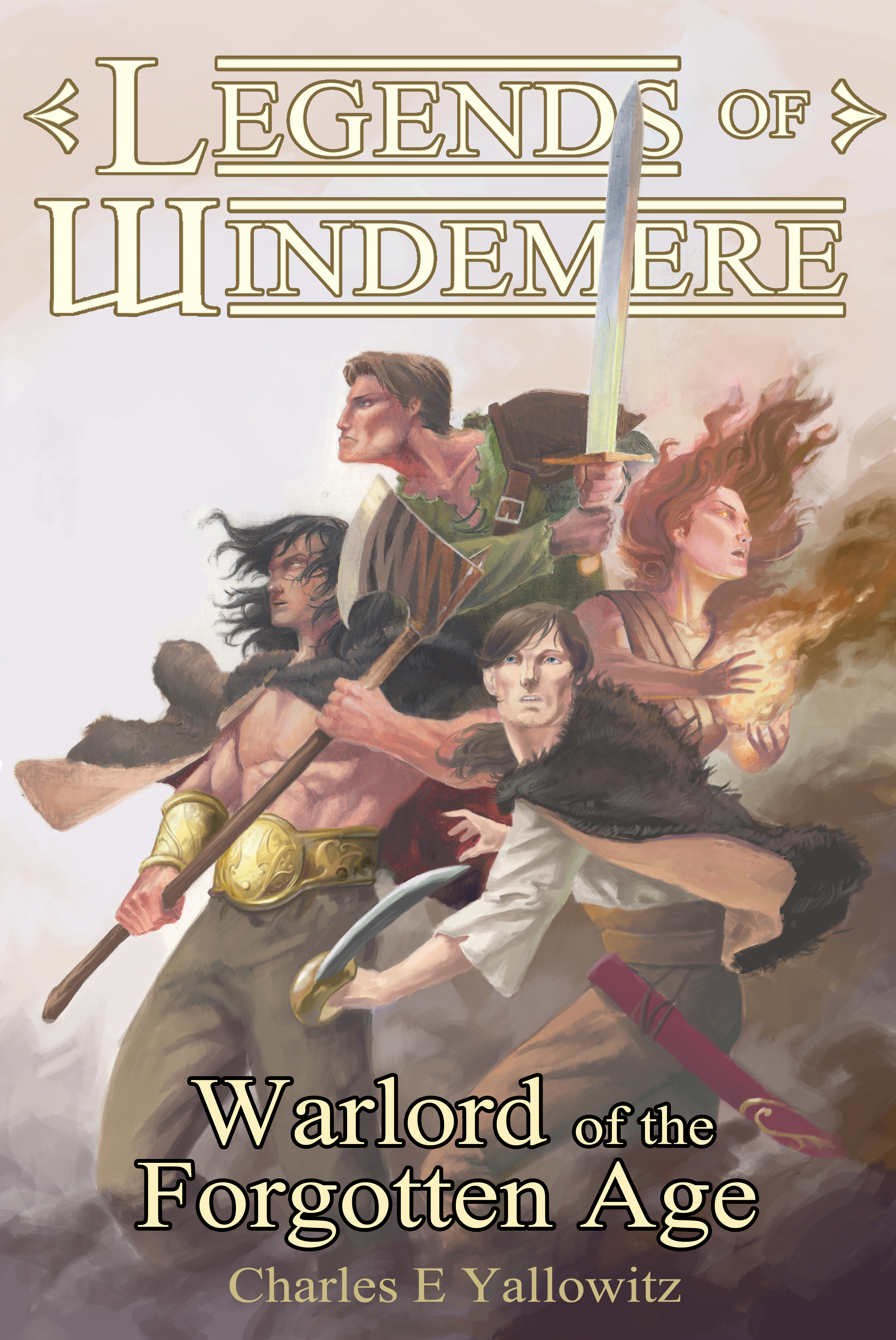
Cover Art by Jason Pedersen
(A small part of the final battle, which shows the Baron in some type of action. I really didn’t use a lot of teasers with him fighting. Read the rest of Warlord of the Forgotten Age for 99 cents!)
A shadow passes over the Baron as he jumps over a street and gently lands on the side of a building. The immortal watches the griffin and Dariana swing back around, the pair picking up speed to ram him. Drawing an icy cutlass from behind his back, he prepares to meet the reckless charge. When he senses something is wrong, the Baron leaps up to the roof and watches the beast crash through a window. He whirls around to slash at Dariana, the telepath having been waiting above the whole time. The goading smile fades from the warlord’s face when he sees that his daughter is blocking his arm with her own regenerated limb. She throws a punch that he moves to slash with a second cutlass, but the limb circles around the blade and strikes him in the face. Pushing his daughter back, the Baron gets away from the edge and receives several more blows to the face before he gets out of range. He hears a faint thud behind him and turns enough to parry Luke’s sabers, the weapons dripping with pink energy.
“Both of you must be proud to have me cornered like this,” the Baron says while kicking the half-elf away. He yanks his leg back to avoid losing it, but the movement leaves him open for a punch that knocks him onto another rooftop. “I am curious to learn how you recovered your arms so quickly. Your brother had his time magic and I was once a god, but you have never had the ability to heal such injuries without help. Did that mercenary live long enough to use his power on you?”
“He’s still alive and will face you again soon enough,” Dariana replies as she rushes forward. Ducking under the cutlasses, she elbows her father in the stomach and sends him skidding back. “All of us know that this is our final battle. We’re not happy about dying, but we’re prepared for it. As long as you die with us.”
“I’d much rather kill him and live a lot longer,” Luke chimes in with a smirk. The cutlasses and his sabers rapidly clang together, neither swordsman giving ground. “You’re not that tough without your favorite sword and armor. Honestly, I’m starting to wonder what all of the fuss was about. The only reason you’re lasting so long is because we keep getting separated, which is bound to change at some point. At least your son made us afraid when we fought him. Then again, he was active in Windemere instead of playing with demons and twiddling his thumbs for centuries.”
“Again, trying to anger me will-” the Baron starts to say before he receives another shot to the mouth. Spitting out a tooth, he knocks Luke’s sabers aside and kicks with enough force to knock the champion across the street. “All you have are distractions and tricks. I look one way and get attacked from another. This is why I toy with you. I want this battle to last until you stop coming at me with childish games.”
Dariana strikes her father from behind, the flying tackle sending both immortals off the rooftop. She flips in midair and drives the Baron into the pavement with her feet before leaping away from his quick slashes. Rising out of the rubble and wiping stone chips off his shirt, the warlord watches his daughter come at him again. Her punch passes through his cutlasses to strike his chin and knock him through a store window. Instead of returning to the fight, the Baron blasts the rear wall with a fireball and retreats down the other street. He waves over his shoulder as Dariana and Luke give chase, the two champions sticking to the rooftops. Throwing daggers and crossbow bolts repeatedly fly from his hands, the conjured projectiles keeping his pursuers at bay. It is only when he comes to a large intersection that the warlord stops and calmly uses an enchanted comb get some dirt out of his beard.
The instant the champions land on the ground, the Baron appears behind them and slams the pair together. With a flick of his wrist, he hurls Luke into a building that collapses on top of the forest tracker. Focusing on his daughter, the warlord uses a staff to jab at her stomach and block her attacks with wild spins. Thrusting the weapon at her face, he fights to ignore her incoming fists and turns his attack into a sweep. Breaking her telepathic control, the Baron watches her arms vanish and swings his staff to knock her kick away. Without her illusionary limbs, Dariana is easier to handle, but she is still able to land a few echoing blows that leaving her father’s torso heavily bruised. Transforming his weapon into a halberd, he charges and comes dangerously close to gutting his daughter. Her incredible reflexes and centuries of training help her rapidly kick the long blade away while backing up, but she is eventually cornered against an overturned cart.
“That was an excellent strategy,” the Baron declares before stabbing backwards. He frowns at how Luke blocks the heavy weapon, but the half-elf is unable to defend against the street turning to mud beneath his feet. “You have become a true nuisance. What will it take to make you stay down?”








 Legends of Windemere