
Originally posted on July 10th, 2013 . . . It seems this was my first big theme that carried for a while. I’ve become a lot more lax about this topic, but not with my own writing. Keep needing to explain why certain things happen like archers never running out of arrows or a small character wielding a giant weapon. Probably a good thing in the long run.
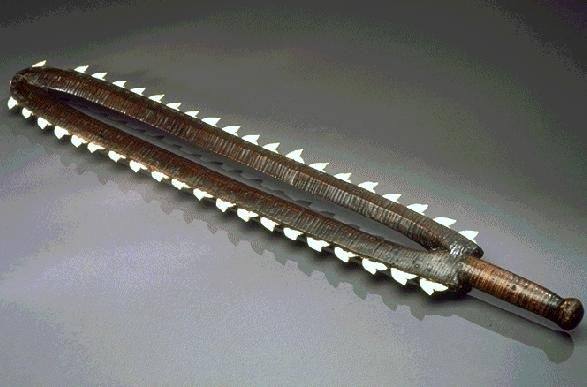
Tooth Sword
We’ve all seen or read about it. An 8-shot revolver having 10 bullets? An enormous sword being wielded by a slender warrior? Standing a few feet away from an explosion and not getting touched? These can be great scenes and effects to use, but you trade believability for this. The only way to pull it off is to make it a standard for the world and that only works with melee weapons. Take Cloud for example. He’s an enhanced human and in a world where other people are wielding gigantic butter knives, so he can get away with it. If your guy is the only one who can do such an act without any explanation then you’re probably being lazy.
Next week, I’m going to post about this topic and hit the three major combat categories. Range, melee, and bare-handed each have their own rules and research requirements. I’m still thinking about one on explosions/lasers/magic, so we’ll see how that one goes. For today, I’m going to do an overall. I’ll end this entire series on a ‘How to Write Action Scenes’ list.
This might be me nit-picking or being paranoid about my own writing, but you how to know your weapons if you plan on using them. Not down to the final part unless you’re having a character take a gun apart and explain it. You need to know how they work, their strengths, their weaknesses, and their maintenance. For example, The Lion, The Witch, & The Wardrobe had it right. You have to clean off your sword. I can’t tell you how many times I’ve read a book or seen a movie where somebody sheathes a bloody blade. It’s horrible maintenance, at least that’s how I see it. The blood would dry in the sheathe and the blade can rust. As for magic blades, show some respect for them.
The key to solving this issue is research. I’m not talking about reading fiction books and watching movies to see what has been done. You’ll get an idea of what you can get away with like the jumping through air while firing two guns cliche. Another favorite is the precision hurling of full-sized swords, which weren’t designed to be thrown. A hilt is not aerodynamic. I’m rambling, but my point here is that you should know what you’re doing with weapons and combat to make it clear and somewhat believable. A reader/viewer might be willing to give you some leeway on a few issues, but don’t push it.
Here is what I do for my weapon research. Remember that I work in fantasy, so this is mostly for melee weapons and bows:
- Research the specific blade or bow that I want to use. By research, I mean read about their use and analyze pictures of the weapon. Get it in your mind. For example, I looked for sabers to get a better idea of Luke’s fighting style.
- See if you can find videos that show the weapon being used. It’s not easy for melee weapons when you get to the obscure, but it really helps you get an idea of the limitations of a weapon. For guns, it can help you see how it is held and the power of the kickback. Is that the term?
- When writing an action scene and putting in the moves, feel free to stop. Then stand up and slowly try to imitate the actions. Go for a few moves to see where they will lead because many times you will write into a trap. For example, your hero swings and misses, leaving his side open with no hope of recovery. Oops.
- Learn it yourself. If you have the opportunity to get some hands-on practice then you should take it. Try archery for your bowmen and fencing for your swordsmen. Visit a firing range if you wish. One thing that I’ve done at times is friendly sparring with fake weapons. There are groups for this kind of stuff and I’m sure they would let you in if you asked them to help.
Those are the big rules of mine when it comes to combat research. As with most things, research is key. Hopefully this series of informative posts helps people with their action scene writing.









 Legends of Windemere