Adventurers with Mundane Jobs

The Simpsons

There is a trend in fantasy and adventure stories that I didn’t really notice until recently.  I don’t even know what triggered this thought.  Many adventurers start out in a simple, mundane job.  This is mundane when compared to battling monsters and traveling across the globe gathering treasure.  How does this origin impact the hero?

First of all, we can all tell what story this turns into.  We are talking about the ‘hero’s journey’, which takes a person from a ‘normal’ life and drops them into a life where they have to rise to great challenges.  Best example off the top of my head is Bilbo Baggins going from a quiet life in the Shire to a seasoned adventurer who faced down a dragon and survived a war.  People love this kind of story because they can believe on some level that it could happen to them.  We all want to be heroes, but we’re just waiting for that pot-smoking wizard to come knocking on our door.

Something that you DO NOT see as often is the effect the previous life has on that of adventuring.  I can’t really think of any job skills that Bilbo used during his adventure or even if he had a job before he left.  His skills are passed off more as those of all hobbits such as throwing and sneaking.  This is where some stories can become flat because it comes off as the hero waiting for their calling.  They weren’t doing anything prior to their adventure.  I know we should only show the interesting part of their life, but the boring, normal parts can still be referenced.

People might be scratching their heads at why this is something I’ve been thinking about and I don’t blame you.  It’s hard to imagine everyday skills being useful on an adventure where one really needs magic, combat abilities, and probably a few thief skills.  Being able to cook or sew doesn’t factor into that.  At least, it doesn’t when it comes to the meaty scenes, which is my point.  A character doesn’t need to have solely adventuring skills, especially if they were pulled into the lifestyle.  If anything, they would need some abilities prior to becoming a solid adventurer to keep them alive.

We’re also talking about depth here.  An adventure who only knows specific skills to get them through dangers can be seen as flat.  They just happen to only possess the knowledge and skills for their quest.  They have nothing else about their existence.  It makes them talking about their previous life rather empty too.  Sure, an adventurer can talk at length about how he used to be a leatherworker.  It doesn’t mean anything if they haven’t shown these skills.  In fact, one would call this superfluous since it has no bearing on the character or story.  This is probably why many authors don’t touch on the past life because they can’t see it being useful.

What else can these histories be used for?  It gives the hero a place that they came from, but also a possible role to go back to.  A hero can’t be an adventurer forever.  Their final quest needs to be written eventually.  If they aren’t going to be killed or rule a kingdom then they might just want to retire.  It doesn’t have to be their original life, but some type of mundane lifestyle that would help them relax.  Keep in mind that these characters have probably seen some horrible events and been pushed to their limits.  Them wanting to settle into a quiet life isn’t unbelievable.  In fact, you can easily see why they would want to spend their remaining years living in such a fashion.  To do that, they need some type of skillset that would either make them money or keep them busy.

I haven’t done a lot with this in my own stories.  The champions in Legends of Windemere all began as warriors or trained for their destiny.  The Dawn Fangs were typically warriors, but it was clear that Bob used to work with horses and Chastity was more into business.  Not that the vampires would reach the end of their quest.  Anyway, I do tend to lean towards warrior and caster origins.  Darwin is neither, but his situation is fairly unique since he tries to help and has trouble mastering skills.  Still, I do want to add more mundane abilities to my characters.  Just to give them a little more depth and a possible path after their adventures.  Time will tell there.

Posted in Thoughts | Tagged , , , , , , , | 14 Comments

Quest of the Brokenhearted on Paperback and eBook!

Cover Art by Sean Harrington

It was fun writing this off-shoot of Legends of Windemere.  Kira Grasdon became one of my favorite characters to write.  Giving her a solo adventure was always on the list and making it a loose homage to Castlevania helped lock in another concept.  As with the others, you can get Quest of the Brokenhearted on Paperback ($12.00) or eBook ($2.99).

Small bit of trivia, but ‘Brokenhearted’ was written that way due to an accident.  I originally had it hyphenated like you see quite often.  Yet, I started writing too quickly and kept forgetting the hyphen.  Eventually, I gave up and figured it looked right anyway.  It wasn’t until after I published that I thought about looking up to see if that was a viable spelling.  It was, so my laziness didn’t get me into too much trouble.  Now, enjoy the teaser.

*****

Roland tackles Rayne and twists, so that his body is the one that goes through the wooden door. The wind is knocked from the man’s lungs and he is dazed for a second while the elf scrambles under a table. A shadow falls over the abandoned store and a foul-smelling breeze is pushed through the entrance. Looking up, Roland sees that the opening is blocked by a maw full of yellowed teeth and a dark purple tongue. He rolls and dives to the side to avoid a barrage of drool-dripping chains that erupt from the monster’s throat. They smash into the far wall and grab a red-furred monster, which is promptly yanked into the waiting mouth. Struggling to dislodge the creature after it sprouts spines, the predator moves away from the building and violently shakes its head. The only visible parts of the beast are large paws that are covered in ebony fur, which bristles and ripples with every movement.

“Who would be crazy enough to unleash Freybug inside the city?” Roland asks as he gets to Rayne. The elf is curled in a ball around the burbling Gooie Pig while she shivers from pure terror. “I guess you’ve never seen a monster like this. All you’ve known are the more civilized ones and those who fight as champions. The Shadow Earl and Princess Cyrena must have shielded you from the likes of Freybug. It’s clear he wants to eat you.”

“But I didn’t do anything wrong!” Rayne suddenly shouts. Wanting to get away from the marketplace, she kicks free and scrambles for the nearby stairs. “Monsters like that aren’t supposed to be in Lacarsis. The citizens are nice and don’t eat each other unless it’s an arena fight or they broke a law. I’m going to the castle and telling the Shadow Earl. He’ll find the person who started this and then things will go back to normal.”

“What if he’s the one who did it?”

“He would never cause such chaos.”

“You saw the scrying portals in the sky, which means this is an official match.”

“That doesn’t mean the Shadow Earl did this.”

“I know, but he’s at least aware and letting it continue.”

A loud snort from outside draws their attention to where they see a wet nose poking into the building. Embers fall from the nostrils as Freybug takes a deep breath that sucks most of the air from the room. Roland and Rayne rush up the stairs, the muscular man getting ahead to smash the door with a bone-jarring punch. They hear the plume of fire explode below as they get to the second floor, their retreat stopped by spouts of flame that slip through the floor planks. Smoke billows up the stairs along with the screams of those who were still hiding in the shop. A powerful impact causes the structure to tilt backwards, the wooden beams creaking from the pressure. Knowing it is only a matter of time before the building collapses, they hurry into the nearest room and scramble out the window. On the other side of the roof from Freybug, they stay low and quickly move to where they can jump to safety. Before they can cross the narrow alley, the entire second floor is lifted into the air and shaken as it sits atop the monster’s head. Putting an arm around Rayne’s waist, Roland blindly jumps for what he hopes is another building. To his horror, he misses the next roof and plummets towards the ground.

With a squeal, the Gooie Pig expands to cover both of its companions and use its body to cushion the impact. The creature explodes and splatters across the street, the loud pop creating a shockwave that stuns Roland and Rayne. Unable to move, the pair can only watch as Freybug bucks the building off his broad head and sniffs the air. The enormous dog pauses to scratch behind one of his floppy ears with a rear leg that is thicker than a full-grown oak. He turns in the wrong direction to investigate a food cart, which he devours while happily wagging a narrow tail that cuts through stone like a keen blade. The wind changes to carry Rayne’s scent to Freybug’s nose, the delicious aroma slightly muffled by the Gooie Pig’s rancid odor. Unsure if he is looking at the right morsel, the dog leans in close to sniff at the frozen elf with enough strength to pull her against his nose. Growling and drooling, the feral champion opens his mouth and is about to unleash his chains when he abruptly yelps in pain. Whirling around sends a ripple of agony throughout Freybug’s body, the sensation emanating from between his legs until the agony gradually fades away.

Turning back to Rayne, the giant dog retreats a few steps at the sight of a new figure standing in front of his prey. Kira spins her new kusari-gama at her side, the polished sickle already dripping with blood. No longer wearing her nightgown, the adventurer is clothed in a bodysuit that covers her from shoulders to ankles. A subtle feather pattern is in the royal blue material, which has gold edging around the collar and wrists. Designed to be worn under armor instead of alone, the enchanted clothing looks too thin to give her any protection. Yet, there is an occasional thrum of power whenever Freybug gets close to investigate. A thin aura covers Kira’s flesh whenever she is in direct sunlight, but the energy is dissipated every time the dog snorts in her direction. Reaching up to pull at a dark green choker, the adventurer takes a step forward to see if her opponent backs away. She scowls when the growling beast holds his ground and hunkers down to pounce.

“I doubt this is going to be anything other than a slugfest,” Kira whispers

Posted in Legends of Windemere | Tagged , , , , , , , , , , , , , , , , , , , | 6 Comments

#4 of 2022: Third Person POV Post

( This post originally went live on November 16th, 2022.)

Google Image Search

The one issue I have with writing this post is that omniscient is a pain to write.  I get it wrong half the time.  So, I might cut this short to stop getting frustrated.  That and I think it’s fairly straightforward.

Now, I write in a present tense 3rd person style with a limited POV.  I went with limited because it never felt right to have characters or the audience know things that weren’t shown in the book.  I push the boundaries whenever I can when describing new locations, but I really have to use dialogue and discovery to get the facts out.  This includes character thoughts because I always imagine others standing around waiting for inner monologues to end when I picture a scene.  Still, that’s just me and I probably work fast and loose with the rules here.  Might even have it wrong now that I think about it.  It’s another reason why I needed to look a bit more into this.

So, what are omniscient and limited POV?

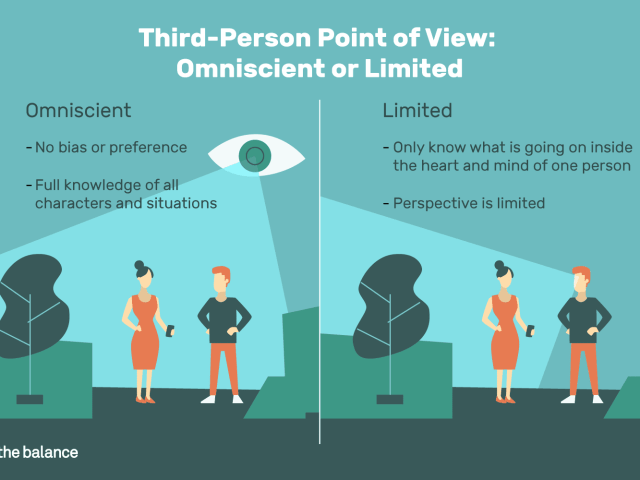
  • Omniscient is when the narrator knows everything.  They are aware of all events, thoughts, and feelings in a story.  This also means that the audience is aware of all these things as well even if the characters are not.
  • Limited is when the narrator relates only what they are aware of.  They cannot share any thoughts, feelings, and knowledge that they do not have.

Right off the bat, I can see why my own style is going to require a third category later in the post.  Anyway, these POVs work off stable and established narrators even if that role changes by the chapter.  It’s why people don’t like things switching in mid-chapter and get confused on who they are viewing the world through.  After all, POV is the lens that you use to reveal the story.  So, you need it to be clear on who is talking and showing the world even if it’s a faceless/bodiless narrator.

I’m sure most people would agree that one is not better than the other.  With omniscient, you can share a lot and not be restrained by having to holding some things back.  The feelings and thoughts of characters are out there.  With limited, you can’t be as free, but you can easily establish more tension and mystery.  You’re hiding a lot until the right moment and people will understand why it wasn’t shown at the start.  There are different levels of this too, especially since you can be flexible.  Most audiences are only subconsciously aware of POV, so that gives you wiggle room.  Means beta readers are helpful to see if the ‘feel’ is right.

Now, I did find that there is a third category: Limited Omniscience.  This is probably what I use without realizing it.  Part of this is due to the present tense since past tense makes it easier to use the two main POVs.  Now, this one has the narrator experience actions through a character, but not the thoughts and feelings.  You can get that through actions and expressions, but the inner workings of a character are kept hidden until they reveal them.  That is the limited part while the omniscient part is knowing all of the experiences and actions that are going on.  For example, Luke Callindor’s actions in battle are omniscient POV while his feelings and thoughts are predominantly limited until he makes them known.

I really like the combo, but that’s because it’s what I’ve been using for years.  So, I’m rather biased on this.  What do other people think about this topic?  It’s both fairly simplistic and complicated, which makes it hard to write about.  I think it doesn’t help that we all use POV differently even slightly.

Posted in Thoughts | Tagged , , , , , , , , , , | 13 Comments

Elements of Setting: Time

Ciao, SEers! Today, we’re going to talk a little about the four elements of setting. More precisely, the first element: time. I could give you the …

Elements of Setting: Time
Posted in Uncategorized | 2 Comments

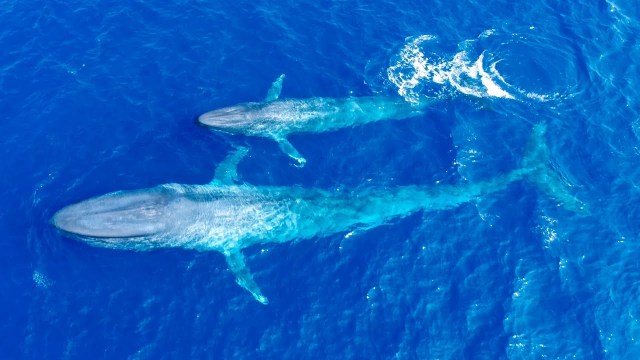
The Largest Animal on Earth: The Blue Whale

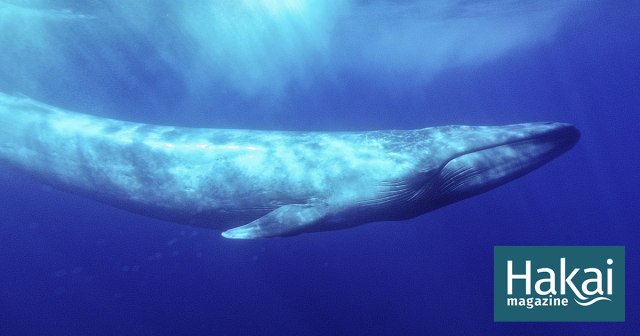
I was trying to decide on the first animal post of 2023.  Took a while before I realized that I should start with the gentle giant: Blue Whale.

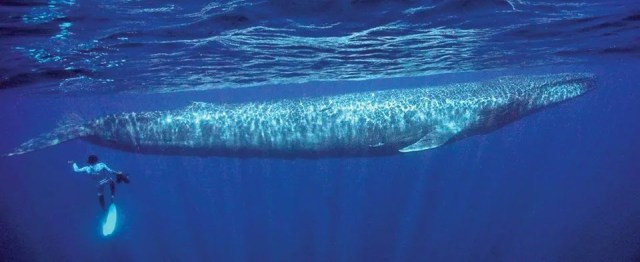
These whales can grow from 80 to 100 feet with the record being 108 feet.  They can weigh from 100,000 to 150,000 pounds.  Their tongue alone weighs about as much as a full-grown elephant.  A blue whale’s heart alone can be 400 pounds and it may only beat twice per minute when the animal is submerged.  They start off big too with newborn calves being 8,800 pounds and 26 feet long.  Blue whales have one of the fastest growth rates in the animal kingdom at 200 pounds per day.

One thing about the blue whale is that it feeds on one of the small animals.  Blue whales have baleen, which are filter-like ‘teeth’ in their mouths.  They move through the ocean and the water goes through the baleen.  The hairs catch the tiny food, which is then swallowed by a throat that is the size of a dinner plate.  In other words, a blue whale would choke on a human.  They eat nearly 9,000 pounds of krill a day.

Blue whales are the loudest animals on the planet too.  Their calls can be heard by others from up to 1,000 miles away.  They hit a decibel level of 188.  To compare, a jet engine comes in at 140 decibels.  Blue whales can call at a very low frequency as well.  Their range here is 8-25 hertz.  The songs vary by population groups too.  Studies have shown that there is a decline in tonal frequency, which may be due to an increase in populations . . . That brings us to everyone’s favorite part.

The blue whale is considered endangered, but it’s population is slowly increasing.  They gestate for 10-12 months, which means they don’t give birth very often.  This doesn’t easily offset the damage that was done by its top predator, which isn’t the orca.  Yes, orcas do hunt blue whales, but human whaling in the past decimated the blue whales.  They used to be untouchable until someone invented those huge harpoon guns.  This brought them from 350,000 to the current number of 25,000, which is slowly increasing.  People wanted their oil back in the day, but they’ve been protected since 1966.  Currently, they are still in danger from being struck by large shipping vessels and pollution.

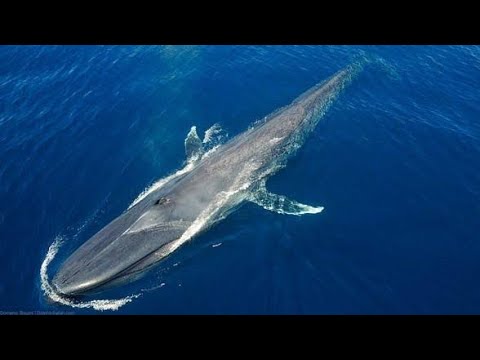
Let’s go to the pictures and videos:

Posted in Animal Posts | Tagged , , , , , , , | 22 Comments

Goal Post: Back to Work in 2023

Well, it’s the first goal post of 2023 . . . It doesn’t feel any different than 2022.

The truth is that I didn’t do much once the break was over.  Tuesday was back to work for me and back to school for my son.  It was a flurry of events that ensued because the end of the second quarter isn’t far away.  That means my days were spent going to work and then helping him with homework.  I wanted to get some writing done, but it wasn’t in the cards, especially as the week progressed.

I had trouble sleeping almost every night and the weather kept setting off my sinuses, so I was pretty miserable.  As I write this post on Friday night, I’m barely staying awake and feel terrible.  I’ll feel better as soon as I go lie down, which is why I’m confused.  It seems stress and anxiety is triggering something.  Even trying to write a fight scene resulted in the same reaction.  I feel warm and start to sweat while my head spins and my breathing gets ragged.  There’s no fever and the cough is my usually anxiety one that goes away as soon as I relax.  I’m clearly tired though.

The sleeping part is probably key.  I’ve been using Zzzquil to help me fall asleep because nothing else was working.  I can’t use it every night though.  So, I use it every third or fourth night.  So, the previous two nights (Wednesday and Thursday) were without Zzzquil and I dealt with some stressful stuff before going to bed.  Didn’t have a choice there.  Both times I violently woke up at 2:30 AM covered in cold sweat, gasping for air, and not sure where I was.  I’d settle down a little bit and get a bit more sleep, but not enough to fully counter everything.  It wouldn’t be until noon that I felt more human.  A tired human, but one that was no longer thinking his skeleton was trying to claw itself out of his body.  There weren’t any clear dreams to trigger this too.  Yet, the damage was done and I dragged myself to the finish line yesterday.  That’s why I took Zzzquil last night and am hopefully still asleep when this goes live.

One interesting thing I found is that apples help clear my head and give me an immediate boost of energy.  Not sure what this means or if it makes sense, but I definitely want to add more of them into my diet.  Definitely couldn’t hurt.

I’d say ‘in other news’, but nothing else happened.  I finished the March posts, worked on a puzzle, pseudo-watched an anime that I barely remember, and wrote maybe a page of Darwin & the Demon Game.  It will be nice if I can do more this weekend, especially since the original plan was to write chapters 4 and 5.  That would put me at the 1/3 mark.  Getting frustrated that I start suffering from exhaustion, brain fog, or getting really sick every time I try to write a book.  I can’t tell if it’s bad timing or I only get the time after pushing myself beyond my limits everywhere else.  At this point, I’ll be happy to get chapter 4 done.

Not that here is any rush to get these books done.  Think I mentioned this before, but I don’t know when I’ll be able to publish again.  Need to find someone to do the covers for Darwin as well as the money.  I still can’t afford any real marketing, so it would be tossing books into the ether and walking away.  Not a great idea and feeds the belief that I’m wasting my time.  Whoa, that was a big spin of the room.  Maybe it is fatigue and I’m just pushing myself too hard.  Anyway, I need to figure out how to solve this problem or it’ll be another year of no new releases.  Heck, that might be useful and I’ll just write the books then publish when life gets better . . . or one of my descendants proves to be smarter and does something with them.

This coming week isn’t going to be much different from the previous one.  I think there’s an appointment or two in there.  My son has a bar mitzvah next weekend, so that’s going to take up 2 of the 3 days.  We have MLK Day off, so we can do video games and relaxing at that point.  I’m not going to make any major plans considering how easily things go helter-skelter these days.  Why do the decisions and actions of other people end up punting me into a state of physical and emotional torment?

So, what are the goals for next week?

  1. Sleep better.
  2. Rest more.
  3. Hydrate
  4. Eat apples.
  5. Hope for the best.
Posted in Goal Posts | Tagged , , , , , , | 13 Comments

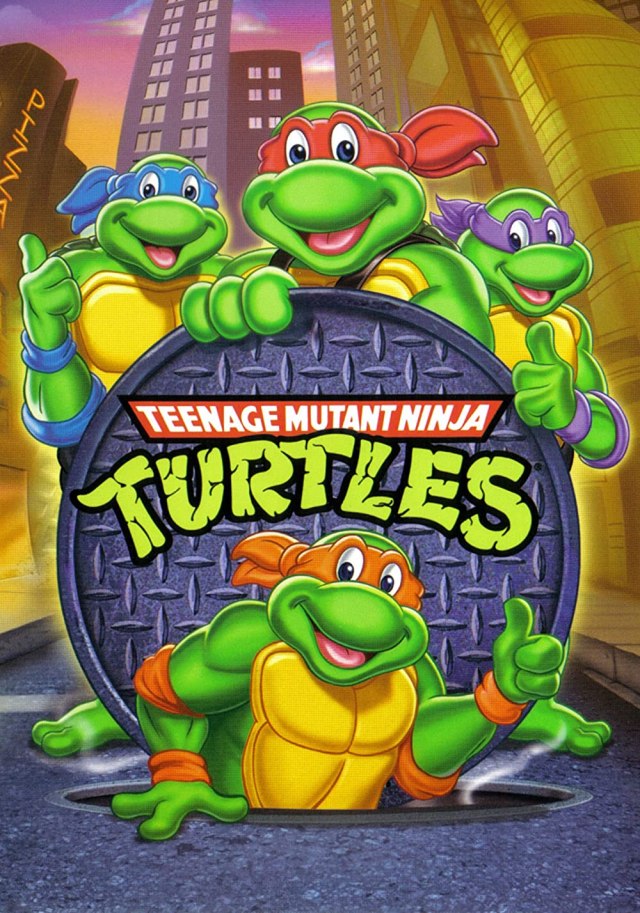
7 Tips to Writing Teenage Protagonists

TMNT

This is going to be tougher than I expected.  After all, I haven’t been a teenager in decades, so I’m kind of out of touch.  Even at work, I realize that teenagers of today aren’t like the ones when I was growing up in the 90’s.  So, let’s get to it and see how lame these tips are going to be.

  1. If you are writing a story that takes place in modern days, you really should research teenagers.  The workaround of having your protagonist not be into the same stuff as their peers while loving ‘vintage’ things can only go so far.  It’s pretty lazy and can cause some story issues, especially if you don’t want them to be a social outcast.  Just try to find out what teenagers are into in terms of pop culture, clothing, and slang to make the character seem more real.
  2. Try very hard to avoid making your teenager as mature and wise as an adult.  We tend to forget this mistake when we get in the zone, especially at first.  Once the character is locked into our minds, we are less likely to have them act beyond their years.  Still, an author can forget that a teenager is prone to making bad decisions from time to time.  They are in a big learning stage of life here, so they shouldn’t be perfect.
  3. Not every teenager has an interest in romance.  Even if they want to be with someone, they won’t necessarily be making that a fixation.  Some teenagers are more interested in friends, a job, classes, and their future in general.  Hormones do play a factor, but it doesn’t mean every teenager is a lustful horndog.
  4. Emotions are not always stable or perfect for the situation.  Teenagers can get frustrated, excited, depressed, and other extremes more easily than most adults.  So, you can have them overreact to certain stimuli.  For example, they may get loud and celebratory when they achieve a goal that seems minor to an adult like getting a B+ or parallel parking successfully.  You have to think like a teenager and have them react accordingly.  Not all the time, but enough to make sure the reader doesn’t think they’re really reading about an adult who is lurking in a high school.
  5. If you are writing about teenagers in other historical eras, you need to do your research.  It’s the same as #1, but you can’t talk to a teenager from that period.  You need to read up on things.  They will always have different skills, world views, and experiences than modern teens.  After all, child labor and marrying young being legal weren’t as far in the past as we’d like to think.
  6. Teenagers in fictional worlds can be seen as more malleable than those of Earth.  You have to make everything from scratch there.  An author can even have them act more mature than one would expect from that age.  Maybe they’ve seen enough death and horrors to erase their innocence.  This does mean you’re working with a traumatized teenager though, so looking up mental health in that age range should be done.  One thing that is always true is that teenagers always have some level of immaturity even if it rarely turns up.
  7. GROWTH!  I saved the big one for last.  Teenagers are in a stage where they are rapidly growing.  Not only physically, but emotionally, socially, and mentally.  More so than adults, they need to change as the story progresses.  It can be in leaps and bounds or oozing ahead, but they cannot go back to their original form.  This is because people see teenage protagonists as symbols of maturation.  If they don’t grow then they failed and there goes the connection.
Posted in Uncategorized | Tagged , , , , , , | 19 Comments

Using Dialect and Vernacular

Hey, SE Readers. Joan with you today. I hope you had a wonderful holiday season, and the new year is off to a good start. Regional dialect and …

Using Dialect and Vernacular
Posted in Uncategorized | 2 Comments

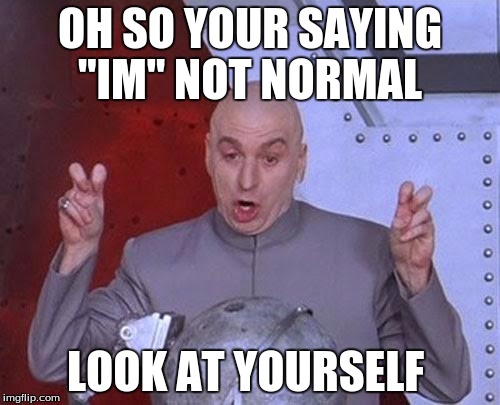
Poetry Day: Death of the Overused Meme

Dr. Evil

(This one is rather self-explanatory.  We’ve all seen it happen.)

You use it every chance you get

The latest viral phrase of fun

Hilarious in its native land

That not everyone has seen

You drag it out at every whim

Draining it of life

Making it a husk of humor

That can barely cause a chuckle

Posted in Poems | Tagged , , , , , , , , | 5 Comments

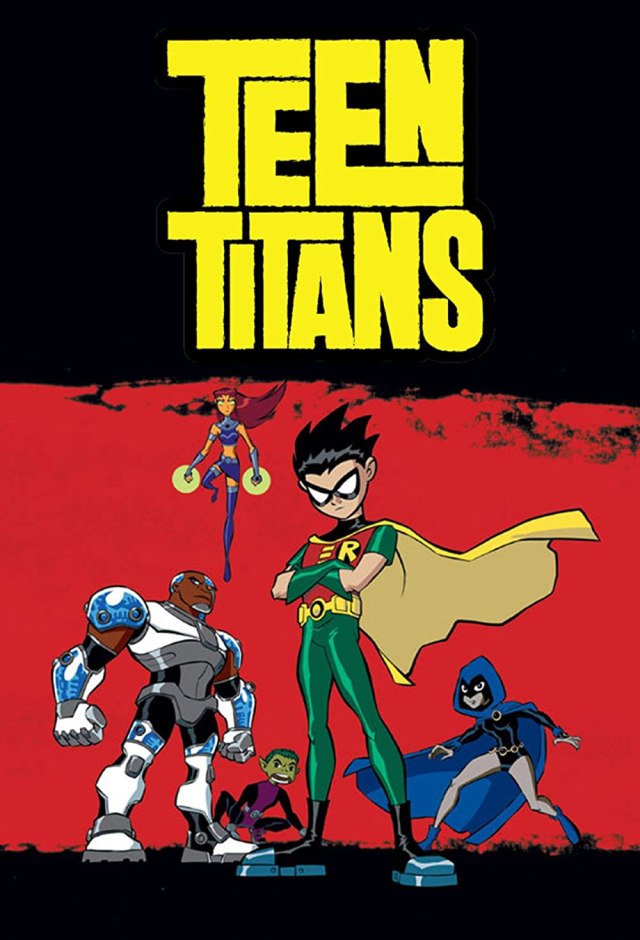
The Benefit of Teenage Protagonists

Teen Titans

The Young Adult market is pretty bad.  One of its staples is having a teenage protagonist, which gets some interesting responses.  Most people seem to relate to these characters on some levels, but you have the occasional audience member judging them as if they are full adults.  This is a downside to teenage protagonists, which also turns out to be one of their biggest strengths.  How so?

First, let’s look at their buttressing groups:

  1. Pre-teens are very young and are limited in what they can do and know.  They are still highly dependent on the adults in their lives, so they tend to need help more often than teens.  This is extremely true in terms of transportation. You also have people not relating to them and sometimes calling them downright annoying.  Teenagers get this as well, but not to the same degree because pre-teens do have a lot less maturity.  They can’t all be ‘mature for their age’.
  2. Adults are on the other side of this advantageous group.  They have the resources, knowledge, and skills to do many things.  Of course, they’re also so mature that people expect them to act a specific way.  Adult characters are judged rather harshly by some audiences.  If they haven’t find their niche or are actively looking for it, they can be labeled as a loser and mocked.  The exception is if finding their path is a key part of the story.

Meanwhile, teenagers hit that sweet middle spot when it comes to development and expectations.  They still get judged, but have more flexibility.  These protagonists can be admired by younger readers who are excited to reach that age.  They can also be understood by adults who remember being that age.  Of course, that’s a difficult caveat considering how many adults seem to forget that they were ever young and had the maturity of an unripe mango.  In other words, we’ve all been there, so there is a higher chance of a reader at any age to relate to a teenager on some level.

Teenagers are also fairly easy to put through character development.  They are at that life stage where they are trying to find their path.  It doesn’t even have to be a central plot point because people expect them to not be where they want to be.  So, they have the freedom of exploration and experimentation.  It isn’t surprising when a teenager makes a mistake or moves ahead suddenly.  As stated, those of us who remember those years can relate to the emotional and social rollercoaster.  Adults strive to not have all that chaos and little kids are in a different growth stage, but teenagers are right there in the middle.  They are growing like pre-teens while pushing towards the stability of adulthood.

Because of this fluidity in their maturity and growth, teenagers get more leeway when it comes to their decisions.  At least, they should.  Those years are rife with mistakes and shaky decisions.  We’ve all been there.  A teenager’s decision can really twist a story around too.  It won’t feel contrived as if an adult made a bad call because people expect the teenager to not have the same insight and forethought.  Their age creates a cushion of immaturity that helps them stay in the good graces of the audience.  As long as they learn from their mistakes, which is essential.

I won’t say teenage characters are perfect and don’t have flaws.  They can be shortsighted and their immaturity may turn off some older readers.  Skills and knowledge are still not at the level of an experienced adult, so they may have some limits.  This is easily fixed by having them learn such things, but it can get iffy when a protagonist always claims they study something just when they need it.  You have to be careful with how much they know and how much they need to learn.  An author can go too far and forget that there are still some knowledge gaps.

The other hindrance comes from the emotional highs and lows of being a teenager.  This is what draws authors to focus on romances and loners.  Many teenage protagonists become fixated on love or fall into that ‘I am an outcast’ faux emo/goth exaggeration.  It’s a trap when an adult writes a teenager and doesn’t do their research.  Sure, you will connect with some people, but these two tropes tend to appear regardless of what the overarching story is.  So, one has to find that balance of emotional immaturity and growth to avoid the clichés.

So, what do you think of teenage protagonists?  Do you have trouble connecting to them?

Posted in Thoughts | Tagged , , , , , , , | 17 Comments