The Bison: Again, These Are Not Buffalo

Last weekend, I made a post about true buffalo.  Those species are found in Asia and Africa.  Today, I’m going to talk about bison, which also get called buffalo.  Both groups are bovines, but there are differences. Bison have humps, larger heads, beards, thick coats that they shed, and their horns are both shorter and sharper.  Now that we got the disclaimer out of the way, let’s get going.

Surprisingly, there are two species in the genus of Bison.  First is the European Bison, which is found in Europe and the Caucasus.  The other is the American Bison, which is what many of us are probably used to.  The big, burly animals that charge through open plains in Westerns.  There are actually two subspecies of American Bison, which are the Plains Bison and Wood Bison.

Going to jump into conservation part right away because it is rather interesting:

  1. The European Bison is considered Near Threatened because it was extinct in the wild due to hunting and habitat loss. In 1927, the last wild one was shot and that left only 60 in captivity.  Since then, they have been gradually revived through a breeding and reintroduction program to bring the number of wild individuals up to around 6,200.  Not bad, but still a ways to go.
  2. The American Plains Bison faced the same overhunting and habitat loss.  They also have benefited from a breeding and reintroduction program.  They went from 325 in 1884 to a current population of 500,000.  This pulls them away from extinction, but they are still at risk from genetic contamination by cattle, disease, habitat destruction, and some extra human stupidity.  That last one is a false belief that bison can spread diseases to cattle, so they are killed.
  3. The American Wood Bison is considered threatened in Canada, which is where it is typically found.  Their population is at 2,500.  Again, it’s thanks to breeding and reintroduction programs.

Now, is there a difference between the American and European bison?  American bison are heavier while European are taller.  American has hairier bodies while European have hairier tails.  European bison hold their heads higher because their are browsers while the American bison is lower due to being a grazer.  American bison have their horns pointing more sideways and up than European bison due to the former fighting with butting/charging and the latter doing horn-locking battles.  Finally, American bison have fifteen pairs of ribs and four lumbar vertebrae while European ones have fourteen pairs of ribs and five lumbar vertebrae.

Some other tidbits:

  • Both bison are the largest are the largest land mammals of their areas.
  • Yellowstone National Park is the only location where American bison have continually lived since prehistoric times.  All other places had them extinct until reintroduction.
  • Bison show their mood with the tails.  Hanging down means calm and standing straight up means angry.
  • Bison can run 35-40 miles per hour.  They can also jump 6 feet vertically.  Keep in mind that these are animals that can weigh over 2 tons.
  • Bison roll in dirt to shed hair and get rid of flies.
  • Bison have poor eyesight, but good senses of hearing and smell.
  • The hump of a bison is all muscle.  Its purpose is to help use the massive head to plow through snow.

Let’s see some pictures and videos.  I went with two for each species/subspecies since there were only three.
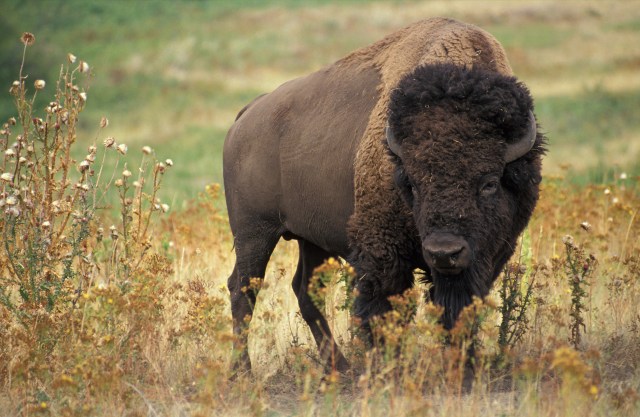
American Plains Bison
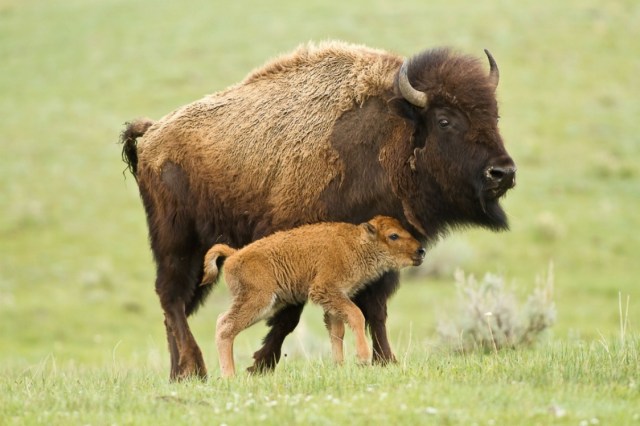
American Plains Bison
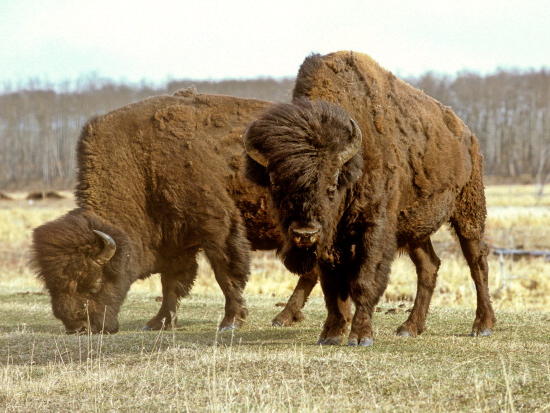
Wood Bison
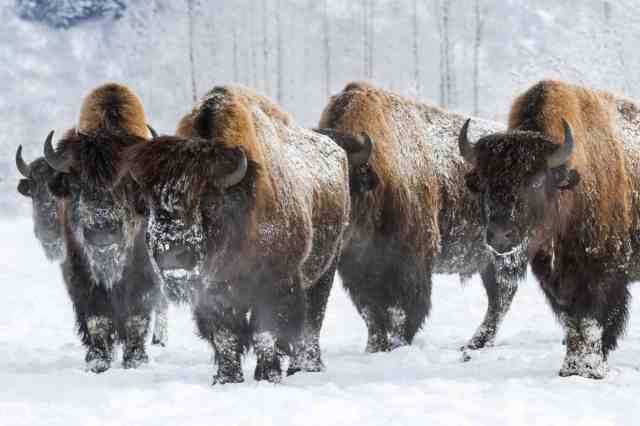
Wood Bison
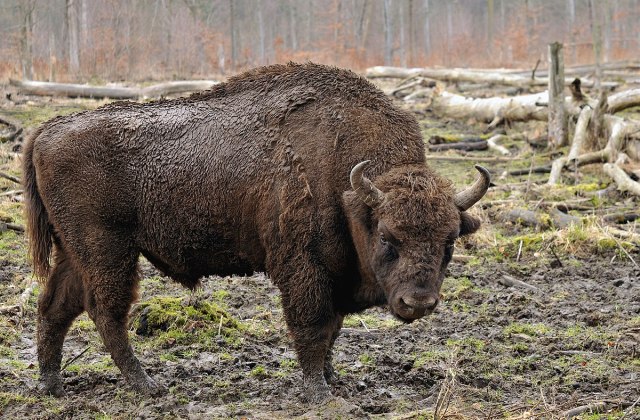
European Bison
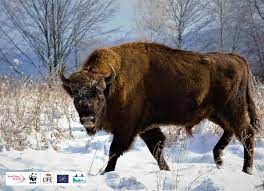
European Bison

(Had to take one video from the Bronx Zoo.  Always love seeing calves running around.)


Posted in Animal Posts | Tagged , , , , , , , , , | 21 Comments

A Week of Disease Dodging!

Well . . . The title says it all.

The week started with me getting a cold, but my son catching the flu.  I guess we catch it quickly and gave him meds fast enough that he only missed three days of school.  A lot happened during those days, so a lot of scrambling to get information and make sure he didn’t fall behind occurred.  I ended nearly every night exhausted and not sure what I should bother doing.  Went to bed early a lot too, so I didn’t get a lot done.  The other side of the coin didn’t help.

There’s a lot of covid going around.  I ended up having to pray that I avoided that too.  As I’ve said before, my anxiety attacks come with cold/flu/covid-like symptoms.  Put plenty of swabs up my nose and thermometers in my mouth this week.  I’m clean as of Friday night, but I’m drained and want to take it easy.  It’ll be more of the same next week because people really start getting sick as we get closer to long breaks.  Nobody knows why, but it seems to be the trend. Fingers crossed that I make it to the finish line with enough health to get some writing done.

Sadly, writing didn’t happen this week.  I’m struggling with the desire to start writing Darwin & the Demon Game today.  Be nice to get the prologue done and then aim to get the first third of the book written by the end of the Holiday Break.  I’m just not sure I can pull it off.  My brain isn’t in writer mode even though my heart is.  Keep staring at the outline and feeling like I’ll screw things up from the start.  I’ve never felt doubt and fear like this before, so I might have to settle for tackling March blog posts.  Can’t figure out what triggered this issue either.  Been feeling it ever since December started. Guess I’ll see if biking and breakfast is enough to get me motivated.

It probably doesn’t help that we have to clear some stuff out of the crawl spaces.  Work is going to be done in my room during the break, which means I’m losing a day of writing.  I can try to write in the dining room, but there’s too much noise and traffic.  Anyway, today might get spent primarily going through everything.  I haven’t entered one of the crawl spaces in over 5 years.  We’ll see what we find there.  Besides the dust that’s probably gathered.

Might not be anything else to talk about.  Just finished an anime called ‘How a Realist Hero Rebuilt the Kingdom’.  It’s about a guy who got summoned to another world, but he ends up instituting social reforms and focusing on the economy instead of adventuring to stop a demon army.  Weird take on the story with a lot of talking only episodes, but it wasn’t that bad.  Promised a student that I would rewatch ‘My Hero Academia’ by the end of the year since he started it.  I’ll have to begin that today since it’s 132 episodes.  I can’t go into Season 6 though because that just came out and I only watch the new stuff with my son.

As I said, next week is going to be crazy busy with work and parenting.  It’s the last week before Holiday Break, which means plenty of tests and homework.  So, I have no real ambition until Friday night when I either start or continue writing Darwin & the Demon Game.  I’ll use the other nights to work on March posts.  I don’t know where I’m going with this series either.  Publishing might happen next year.  It might not if I can’t find a cover artist or find time for proper editing.  Someone mentioned that I might want to just write books and not think about publishing until my son is done with school and off to college.  It’s a possibility, but that will be a long 5 years and I doubt I’d be able to keep this blog going for that long with releasing new works.  Not that I can sell books with this blog either.  Really can’t figure out where I’m going any more.

Goals of the week?

  1. Help my son with tests and homework.
  2. Help students with their last week of school before break.
  3. Stay healthy.
  4. Start writing Darwin & the Demon Game.
  5. March blog posts.
  6. Finish the Optimus Prime Lego Set.
  7. Go through crawl space boxes.
  8. Buy a bottle of whiskey for the break.
  9. Potato latkes tomorrow!
Posted in Goal Posts | Tagged , , , , , , , | 9 Comments

Writing Reactions to Disabled Characters

Quasimodo

On the surface, this looks rather easy.  How hard could it be to have one character react to the disability of another?  We all know what we would do, right?  The list isn’t even that long:

  • Ask questions
  • Show sympathy
  • Tell the person they are strong
  • Start helping them at every turn
  • (for conflict) Look at them with disgust
  • Treat them poorly (again for conflict)

Do you notice something about all of the default reactions authors tend to use when a character is revealed to be disabled?  The character is immediately treated either as a ‘freak’ or a broken person.  It doesn’t matter if they’ve already shown themselves to be confident and capable.  As soon as another character notices, the author starts having them fixate on the disability as if that’s the other person’s entire identity.  Unfortunately, that is very common in our world, but fiction can take another route.

First, I want to make it clear that these reactions do have their uses.  The negative ones are especially good for villains or heroes who need to grow.  Having a character learn that a disabled person isn’t a ‘freak’ or helpless can teach real people this lesson.  Readers may recognize their own biases and actions in these characters.  It’s more difficult with the ‘helpful’ ones though because they are hidden behind the concept of giving aid to those ‘in need’.  For that, a person needs to realize that a disabled person can accomplish some tasks.  At the very least, you really should ask before helping.  That’s probably a key factor in this in my opinion.

Stepping away from reality, fiction gives us other options too.  If the story isn’t about the character adapting to having a disability then it means they have already done so or are in the process.  In an action story, they may have learned how to fight, use magic, get around, and bring skills to the adventure.  Having the other characters treat them like a porcelain doll or a liability decimates their role.  Again, it works if the idea is to have them stand up to their peers and get them to understand.  Yet, that has to happen sooner rather than later if that isn’t the key part of the story.  If it’s only one character being a pain then you can draw it out longer, but the more people who treat the disabled hero as lesser, the quicker you need to resolve that and get to the main story.

That’s a big part of this as well.  People tend to expect a disabled character to be treated as a lesser.  So, authors feel obligated to have some kind of big reaction towards the disability instead of immediate acceptance.  You rarely see a character reveal that they are blind and the others go ‘Cool . . . So, about that rampaging dragon?’  It’s like there always has to be drama or a conversation about it, which is something I get.  We want to draw attention to the challenges of living with a disability.  In doing so, we tend to forget that one of those challenges is being treated like a ‘freak’ or an infant.  Maybe we should consider trying to have the characters be accepted and treated like everyone else unless they actually ask for help.

I’m sure everyone has their own opinion on this.  Mine is probably seen as wrong by some people, which is okay.  So, share what you think about other characters reacting to disabled characters in fiction?

Posted in Thoughts | Tagged , , , , , , , , | 17 Comments

Fairies, Myths, & Magic II

Let’s welcome a special guest to Entertaining Stories today. Coleen is a long-time friend and she has something to share with us today. This is her …

Fairies, Myths, & Magic II
Posted in Uncategorized | 1 Comment

Writing the End – Part II

Greetings Storytellers!  Last month I introduced the topic of endings and how important they are to creating a satisfying and lasting impression of …

Writing the End – Part II
Posted in Uncategorized | 2 Comments

Poetry Day: Cycle of Egos

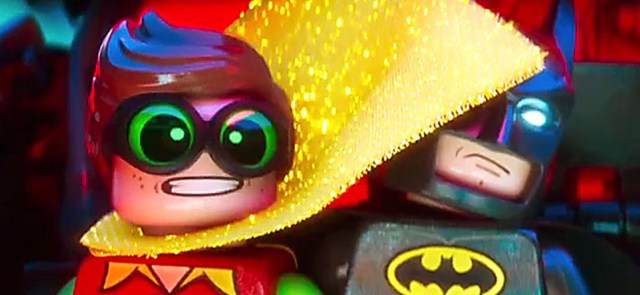
Lego Robin (Also Lego Batman)

(Not the biggest fan of the title now, but that’s what I picked.  It’s really about abuse.  A person who batters at another’s sense of self-worth and will stop long enough for them to recover.  I’ve dealt with too many who are like that, but then play the victim as soon as you stand up for yourself.  The scars don’t entirely disappear if it goes on for long enough. I did try to end this one on a good note.)

*****

Here we are again

The beginning of the cycle

You try to stroke my ego

Which you have beaten

Into a whimpering coma

Through harsh words

And mighty posture

Pushing me

Until my misery

Leaks from my pores

And ebbs from my eyes

My fury grips the air

Palpable to all

But there is a single source

You notice this

Sensing from your haven

That you pushed too much

Bringing us to here

The awkward stumbles

Of thanks and praise

Emotional treats

For your abused dog

Hoping

To avoid a bite

Do you know I’ve learned?

I see the pattern

Realizing that this dance

Has been done by us before

I believe our time has come

This cycle is no more

It will be shattered

Posted in Poems | Tagged , , , , , , , , , , , | 8 Comments

Check These Out: Brand-New Bubbe and A Songbird Dreams of Singing: Poems about Sleeping Animals

Today, I am privileged to be here with two amazing picture book authors who are no strangers to the blog: Sarah Aronson and Kate Hosford. Sarah is …

Check These Out: Brand-New Bubbe and A Songbird Dreams of Singing: Poems about Sleeping Animals
Posted in Uncategorized | Leave a comment

Why Realism is Irrelevant in Fiction: Aim for Believability Instead – by Anne R. Allen…

“I don’t do realism. Sometimes people will mention that something I’ve written doesn’t seem realistic and I always picture them looking at a Chagall …

Why Realism is Irrelevant in Fiction: Aim for Believability Instead – by Anne R. Allen…
Posted in Uncategorized | 4 Comments

7 Tips to Writing Disabled Characters

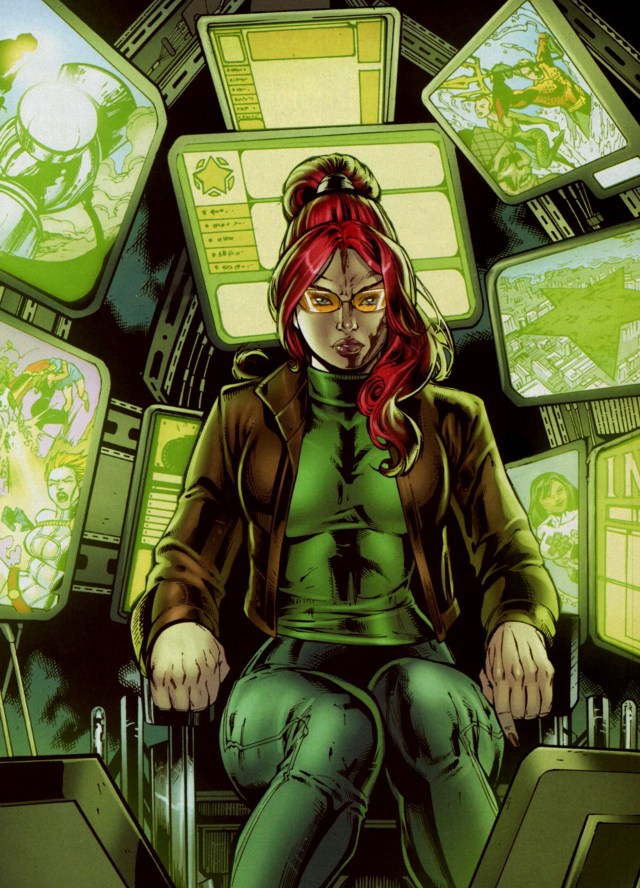
Oracle from DC Comics

Writing characters with handicaps isn’t easy.  Some people may think it is, but those fall into two categories.  They either have the disability themselves or they’re about to make several mistakes.  Ideally, an author would want to know what they’re doing when tackling a disability.  It is a sensitive topic as well as one that can open the door to many interesting story events.  So, what are some things to keep in mind?

  1. RESEARCH!!!  Unless you have the disability, you won’t really understand.  The closest you can get to it is doing a lot of research.  Talk to people who have the disability and read up on how it works.  Look at helpful tools and adjustments that can be made for a person.  Examine the psychological effect.  The list keeps going, but the point is to get as close to reality as you can even if it’s fiction.
  2. Physical disabilities aren’t ‘one size fits all’.  A person who is legally blind may be able to see objects to some extent.  They don’t always see total darkness.  There is a range of ability that falls into a disability.  So, go back to your research and decide on the degree that you want your character to have.
  3. Did the character become disabled later in life or were they born that way?  This is an important question.  Someone who became paralyzed later in life would have a different mentality than one born that way.  They may be bitter or still be adjusting to a loss instead of having adapted already.  When it comes to sensory disabilities, it can determine how much a character knows about their surrounding world.  The memory of a sight or sound can help them understand situations while one who never had that will not have that extra information.
  4. The disability needs to have an impact on the character.  This requires that you always remember it exists.  There are simply some things that they either can’t do or have to accomplish in their own way.  So, every challenge, conversation, and event needs to be looked at from this character’s perspective to make sure they are reacting correctly.  For example, if you establish that a hero is completely blind, they shouldn’t be reacting to visible flares or blinding lights.
  5. I know this next one is very tempting for some authors.  They think it’s positive and uplifting to do this.  What is it?  REMOVING THE DISABILITY!  This is a very risky plot twist.  Some people want to see this happen while others will get more inspiration from a character who succeeds without ‘curing’ themselves.  By eliminating the disability, the character no longer has that connection with readers who don’t have that option.  Keep in mind that many disabilities are permanent, so it could be seen as a slap in the face if one goes this route.
  6. Consider the world in general when writing a character with a disability.  This connections to the research and how long they have been disabled, but it needs to be mentioned.  Societies are typically designed solely for those without disabilities, which means those who have them will run into problems.  Not every building will have a elevator or be wheelchair accessible.  Brail isn’t always an option.  This becomes very true in fantasy when you may use a more medieval setting.  Those time periods and worlds don’t even try to accommodate others.  So, you have to decide on if the world will be altered for these characters or they will be forced to struggle without any adjustments made by those around them.
  7. Consider how other characters will react.  More on this tomorrow.
Posted in Uncategorized | Tagged , , , , , , | 9 Comments

A Christmas Carol and Holiday Reading

Hi, SEers! You’re with Mae today, as we enter the countdown for Christmas. Just under two weeks away—can you believe it? All photos courtesy of …

A Christmas Carol and Holiday Reading
Posted in Uncategorized | 4 Comments