(This type of poem is called a Sestina. It has six stanzas with six lines each. The final word of each line is reused until each one has been in each position. I loved the challenge of this type of poem because you had to be careful with your word choices. Found it best to use it when telling a story.)
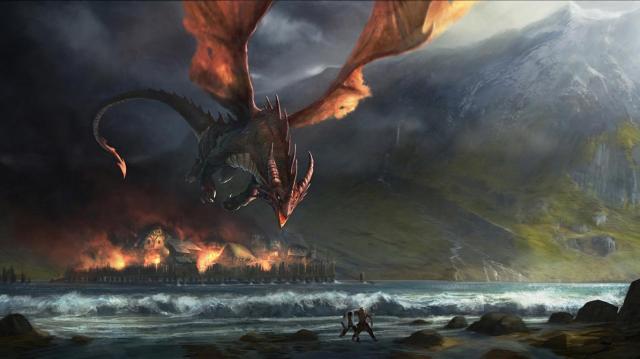
The rain fell heavy upon the town.
As the stranger drew his unused blade.
A battle would ensue today.
Hungry steel would meet a starving fire.
Leaving carnage on the ground
And ashes in the air.
The beast was ready for a fight today.
Its claws tearing at the ground.
Eyes locked upon the naked blade.
Held by the armored stranger to this town.
An eerie coldness creeps into the air.
Threatening the dragon’s eternal fire.
The stranger swings his trusted blade.
His voice bellows a challenge in the air.
To which dragon merely stomps the ground.
People peer to witness the battle of today.
Knowing soon the streets will bathe in fire.
They have little hope for their muddy town.
The dragon launches a spout of fire.
Determined to live and win today.
The stranger feels the energy in the air.
Letting it course along his blade.
Ignoring the quiet from the shabby town.
As he bats the fire into the ground.
The dragon soars into the air.
Leaving footprints made of fire.
It soars and roars above the town.
Always eyeing the stranger on the ground.
A dangerous opponent has arrived today.
One who possesses the fearsome blade.
The dragon darts toward the distant ground.
Aiming for the intruder within his little town.
Hoping to win the day with hellish fire.
Never see a subtle glimmer in the air.
Until its chest is ruptured by thrown blade.
Making the great defender fall today.
( I couldn’t avoid this topic. Hopefully, I handled it well, but you never know.)
This is a question I get asked a lot and it always throws me. Personally, I put my heroes through the wringer regardless of gender. If they’re a warrior then they’re going to be in a fight and get hit. They will suffer loss and know victory to put them into an emotional twister throughout their adventure.
The only time I consider gender is when I’m deciding on clothing, pronouns, and romantic interests. Even then, it depends on personality and preferences of the character. Still, I get asked about this because people think I’ve created some strong female characters and I’m male. Let’s keep that last part in mind too. An author’s gender and identity will color their perspective to some extent whether they realize it or not. So, here we go into a topic that always gets a little messy.
Historically, female characters have been reduced to a handful of roles when it comes to fantasy. You do have some big names in mythology, but those were religions at the time they were first created. It’s really hard to view them under the same lens as modern fiction, which is aimed primarily at entertainment. Hence, there’s more freedom in terms of character design and role.
Even so, women tended to fall into the position of damsel in distress, which is typically nothing more than a trophy with a pulse. Any female heroes who appeared were usually part of a group where they were either a sorceress or a healer. You can find several examples throughout mythology and modern fantasy that designate magic as a feminine trait. I think part of this is because women have the ability to give birth, which people can see as bringing them closer to the primal energy that would be magic. That or male authors genuinely believe childbirth is done entirely through magic. Either way, you would find the majority of female characters in these roles with a handful of outliers who are warriors. I remember there being a rise in female protagonists when I was growing up, but then abruptly stopped and restarted only recently. Not really sure what happened there, except we seem to be starting at square one again.
There is a big social challenge when it comes to writing a female character because people are quick to analyze them. With such a lack of representation, there is a lot of pressure to get it right. Unfortunately, everyone has their own definition of what is right and wrong. I’m not going to get into the details of that because this isn’t really the medium. We’re here to discuss how to write a female character who is more than irrationally molded armor or lack thereof. I will admit I did think women had specialized armor for about half of my life because of fiction, which is a problem. You really need to do research here to separate the real from the traditional falsehoods in order to get the proper depth.
These days, people will swiftly call you out because there’s plenty of resources to help avoid these mistakes. You are bound to make a few on some level, but that will hold true for any character. It’s just that female characters come under more scrutiny due to a history of misuse, trivialization, sexualization, dehumanization, or plain ignoring. So, research is worth the time and effort. If you can’t go wandering the Internet for this information then sit down with a woman and talk to them about what they would like to see in a hero. Tell them what you’re planning and show them your creations to get their insight. It will make these characters more believable and less likely to come off as stereotypes.
Check out the rest of this hot button topic in Do I Need to Use a Dragon? on July 3rd!
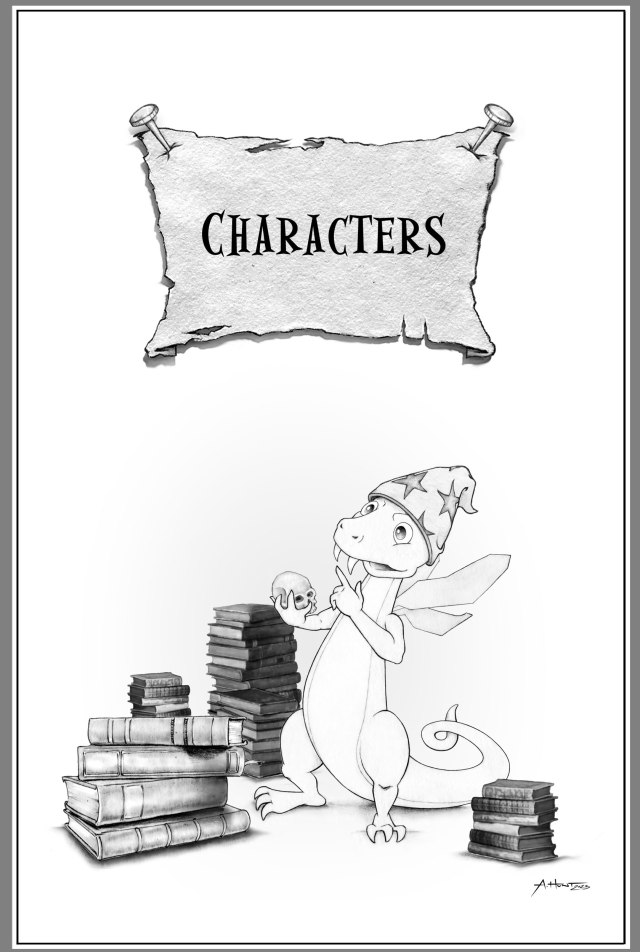
Characters are rather important to a story. Even if you only have one, they need to have some kind of personality. That’s why I dedicated a section of Do I Need to Use a Dragon? to this topic. It covered a lot of ground, especially if you’re looking at fantasy-specific concepts. Here are the questions for your own amusement:
What is your favorite character type to write/read?
What is the hardest character type for you to write?
What is an aspect of writing characters that you learned the hard way?
(Now we dive into the Character section. Of course, that brings up the question of comedy, which people sometimes try to jam into a story. It doesn’t always work because there are a lot of factors though. Needless to say, I had to tackle the subject since I try to add humor into my stories without diminishing the drama.)
I enjoy adding humor to my stories. This is a personal preference because I believe laughter is a great way to get people to keep reading. So, I do gravitate towards the thought that it should be in a story if it fits the tone.
Shoehorning comedy into a story that doesn’t work with it will be disastrous. Yes, people may crack jokes to handle stress or grief. That doesn’t mean a somber funeral scene needs to have a pie thrown into somebody’s face. Always remember that context and tone are important, which I would even say is the second rule of adding humor. Consider the mood you want to set and the character personalities before injecting comedy. Now, let’s get to that essential and commonly ignored first rule:
Comedy is subjective and differs from person to person.
Jokes and gags don’t always hit the way we want or expect. This isn’t always due to our own sense of humor being off, but what the reader finds funny. A slapstick moment can be hilarious to one person and seen as purely abusive by another. Word play jokes can be missed by a reader who lacks prior knowledge or strong comprehension skills to make it work, so the interaction appears strange instead of funny. A crude joke can cause a reader who doesn’t like that kind of humor to stop reading. This means with every attempt at garnering laughs, you are going to risk getting the opposite or no reaction. It’s no different than a stand-up comedian doing a set since not everyone in the audience will laugh at every joke.
Now, you may think running the jokes by your friends will help, which is a logical conclusion. This can fail too because your friends most likely either share your sense of humor or get your jokes, so they won’t see any issues a stranger will lock in on. This is why some authors try to steer clear of comedy and keep their stories 100% serious. Well . . . That ends this section . . . Guess not. (To prove my point, I thought this gag was funny while one of my beta readers seemed confused.)
With comedy being a double-edged rubber chicken, you have to use it with caution. Accept that you won’t get a laugh out of everyone, so focus more on the joke working within the scope of the story. Consider these questions:
Do you go out of your way to make it? Then, it’s no good.
Would the character making the joke actually say that? If no then it’s a scene-cracking dud.
Plenty more of this topic, which you can read on July 3rd when Do I Need to Use a Dragon? goes live!
To be honest, I’m not talking about the Earth actually spinning. I’m talking about the dizziness I have Friday night while I write this. This week was busy, stressful, and ended up a day that was both horrifying and amazing. Don’t worry. It will make sense when I explain.
Last Saturday, I was put on a medication for blood pressure. I’ve been bouncing around 127/82 and 145/99 a bunch. Really it’s the 82-99 bottom number range that was of concern. So, I was put on a medication that was supposed to be mild and only have swollen feet as a common side-effect. The first night had a headache and I woke up with some disorientation. I didn’t take the ashwaghanda gummy or Zzzquil. Second night was with the gummy and I had more disorientation in the morning. Third night was the Zzzquil and that had the same thing. I figured it was just me getting used to things, so I eventually tried all three. A little rough sleeping, so I stopped the gummy again. I had the same effect the next . . . Let’s just jump to Thursday night.
I took the blood pressure medication, gummy, and Zzzquil as I did before. I’d had a stressful day with my son having another final, us running around with errands, and a field trip at work. Maybe that was a factor. All I know is that I wasn’t in bed for more than 30 minutes before I realized something was ‘off’. I still fell asleep, but woke up after midnight feeling like I was going to die. It wasn’t pain, but a sense of terror that my body wasn’t functioning correctly. Went to the bathroom, did breathing exercises, and even took the ‘when needed’ anxiety medication. My blood pressure wasn’t any higher than normal, but I was freaked out. I’ve had panic attacks before, but this was a new breed that had me texting friends because I was terrified. I eventually passed out, I think, and woke up feeling like my brain was scrambled.
Now, I still went to work because one of our students was having his graduation ceremony and the others were getting yearly awards. I refused to miss that and I knew this had something to do with the blood pressure medication. Ended up being functional by the time I got to work and was feeling good, but drowsy by 9:30 PM. Everything looked like it was going good until I started heading home and got hit by fatigue, a weak cough, and a sense of panic. My blood pressure ended up leaping to new heights (over 100 on the bottom) and I was starting to freak out again. Made it to therapy, which helped and gave me the strength to not take the medication again. Couldn’t get in touch with my doctor though. I spent the rest of Friday struggling to function and having no appetite. Since I’m writing this on Friday, I don’t know how well I slept.
Needless to say, I’m still scared and confused. I looked up the medication and saw that there were only mild side-effects listed. Then, I found a site where people reviewed drugs and found people talking about the same stuff that hit me. Sometimes it was even worse and it looks like it was just bad luck of genetics. The medication has a small chance of making anxiety worse, which is what it did to me. The other things I take to help me sleep may have interacted with it, but I don’t sleep well with the blood pressure medication alone. So, I’m going to have to figure out another way. Potassium is supposed to help lower blood pressure, so maybe supplements like I’m doing with Vitamin D.
What else happened? Well, I finished the outline for Darwin & the Beast Collector, which I will start writing at the end of the month. At least I’m going to try as long as I’m healthy enough. Fine-tuned the Amazon site for Do I Need to Use a Dragon?and hoping it does well. Helped my son with studying for tests, which had him stressed out and irritable. Classes for him and me ended up Tuesday, so he had half-days and my students do too. I have to stay until the end of the day though. Anyway, most of the week was a hodgepodge while I tinkered with the medications.
I get a 3-day weekend to recover and hope that this isn’t something worse. Really want to be healthy because my graduating student is having a party tonight and we’re all invited. I want to make it to Father’s Day brunch with my family tomorrow too. That’s why I’m going to try and rest today. I don’t want to destroy myself, which would cost me the party, Father’s Day, my son’s graduation this week, and put our upcoming trip in jeopardy. I could still go, but would be a useless lump that won’t be leaving his room very often. Not a great outing, so I’m going to be careful.
As you can see, Friday pretty much overshadowed everything else. It was great to see one of our students walk with his cap and gown. My son got passing grades on his tests throughout the week. As far as writing goes, I really only tackled a few October posts, which is the obscure monsters I wanted to highlight. Might do more of those if I have the brain power this weekend and next week. So, let’s get to the goals:
(I end the three big sections by touching on short stories. These tend to work differently than full novels, so I felt they should get their own entries. This is part of the one for the ‘World’ section.)
Before we move on to the ‘Character’ section of this book, I’m going to touch on the challenge of world-building on a smaller scale. Spoiler: I’m going to get into short stories at the end of each section. The reason is because these types of pieces operate differently than novels and series. You have more restrictions, but also more freedom depending on how you look at the situation. Also, authors of any genre may indulge in a short story when they have an idea they know can’t last for a novel, but feel it is worth telling. Some even use short stories to enhance their established worlds by introducing concepts and locations that will appear down the road. Regardless of the reason, there is an itch to scratch here, which still requires some level of world-building.
The difficulty with a short story really stems from having a limited amount of time and space. If you make it too long then you’re into novella and novel territory, which can result in stretching what you have to make yourself feel comfortable. There are these weird areas of page and word amounts where authors aren’t sure what they made, so they will either butcher or extend what they have to get out of that zone. It can work to make a stronger story, but it’s more likely to come off as either empty or padded. This is why many find it difficult to do a short story, but a novel is easy. With the latter, you don’t have to worry about crashing through a wall and finding yourself in the ‘wrong’ category.
People typically go by word count too, which can add to the confusion and attempt to fudge the numbers. For example, people will say a short story is less than 20,000 words and a novella is between 20,000 and 40,000 words. An author aiming for a short story may focus more on the word count than the actual content. In truth, these are guidelines and there is plenty of wiggle room. Your average reader won’t know the difference between a short story and a novella. They just want to enjoy the story.
We’re going to stay on the disadvantage side in order to end on a high note. The limitation of time and space means you have to work with less. Events may have to move faster because you can’t have much in the way of meandering scenes. The main plot has to be moving at all times. Subplots need to be ignored or intertwined with the central story in a way that they can both advance with the same actions. For example, one of the stories I wrote in The Life & Times of Ichabod Brooks has the titular character and an enemy trapped on an island from the beginning. There is the main story of finding a way to escape and two subplots, which are them getting along and them surviving a strange beast. To escape, they need to advance the subplots, which coils all three together instead of having them handled one at a time like you may see in a novel.
To achieve a quicker pace, you can use these three tools:
Discover the list when you buy a copy of Do I Need to Use a Dragon? on July 3rd!








 Legends of Windemere