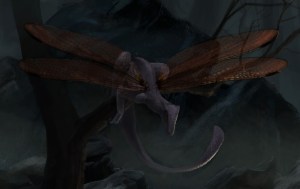
Hair– Purple Scales Eyes– Changes depending on mood Race– Drite Hometown– Visindor Forest Career– Guardian of Visindor Weapon(s) of Choice– Magic and Hallucinogenic Breath Weapon Debut Book– Legends of Windemere: Beginning of a Hero
Originally the guardian of Visindor Forest, Fizzle met Luke Callindor during the warrior’s first adventure. He was already known to Selenia and her students, especially since he routinely appeared in the cafeteria to claim an apple pie. Having learned Tradespeak from a child, Fizzle had some trouble explaining his thoughts, but he still became a vital member of Luke’s team during his time at Hamilton Military Academy. To the surprise of everyone, the small dragon decided to hand over his duties to his cousin and follow his new friends on their adventures.
Fast, cunning, and powerful, Fizzle has proven to be a threat to the Baron’s agents, including the deadly Stephen Kernaghan. His fierce loyalty to the champions has caused him to take the lead and challenge beings that are much stronger than himself. Yet, Fizzle always has a trick in mind or simply attempts to make his enemies ‘go poof’ with a disintegration spell. Outside of battle, his knowledge of magical creatures and lore is essential. Although, he is easily confused when in cities, especially when he sees aspects of society that he can’t connect to something from the wild.
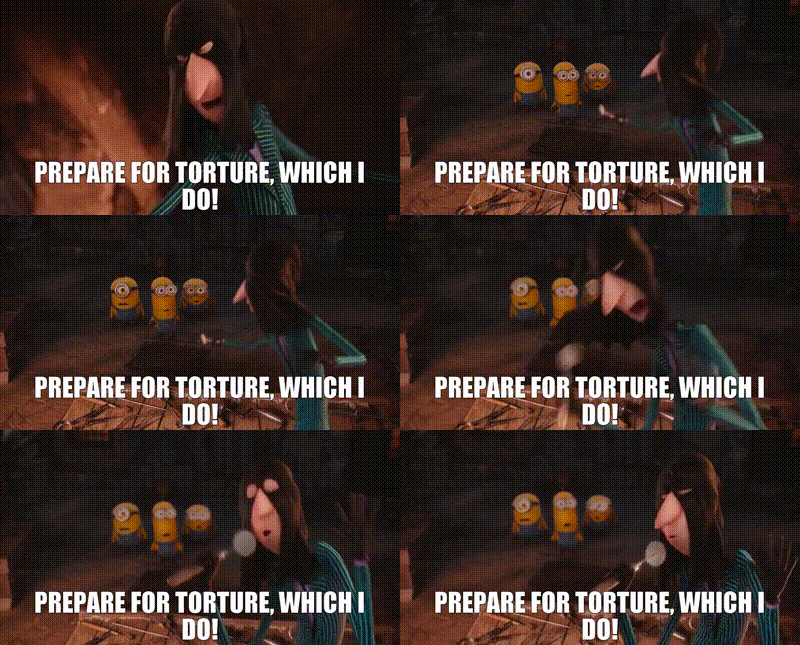
I’m sure most people can think of a story where the heroes are captured and about to be tortured. Sometimes they don’t escape in time, so pain gets inflicted. I did that several times in my two series. Didn’t even think twice though, which now strikes me as odd since torture is horrible. Yet, it’s so common in fiction.
There are three reasons that I can think of for this:
The villain is shown to be ruthless and evil. Most people see torture as one of the worst things you can do, so it solidifies the villain’s reputation. It’s makes cheering for them much more difficult because you have to rationalize these actions. So, authors can do this later in a series if they feel like the villain is becoming more popular than the hero while still being evil.
A hero who withstands torture gets a boost to their toughness. Even if they were proven to be durable and strong before, the readers now see that they can hold up to extreme pain. Think about how we feel about real soldiers who were captured, tortured, and survived without breaking. They are rightfully called heroes and gain respect. So, a watered down version of this happens for the hero.
The opposite can happen as well if you want your hero to break or a supporting character to ‘betray’ without turning villain. For the hero, you now have a recovery arc while they try to regain their courage. It helps if they’ve become so strong and brave that you can’t reasonable write them losing. Now, they’re back to the start. With the supporting character, they may have already been seen as weaker, so them giving in to torture isn’t surprising. It garners sympathy though and allows the villain to get an advantage without sacrificing another character.
So, there is definitely a use for torture in terms of story and character development. It’s still a difficult tool to use because it can be triggering. People who have trouble seeing others in pain might have a hard time with such scenes or turn off to the book entirely. I think this makes the use of torture a gamble and should be considered very carefully before being added. There are other ways to have a villain come off as evil without going this route.
As stated, I’ve used torture before in my books. The champions in Legends of Windemere seemed to find themselves in such situations a lot. Probably the roughest torture scene I wrote was with Luke Callindor, which made me feel gross afterwards. I still stand by it because I needed him to go through a trauma for the rest of his story to make sense, but it’s rough. Taught me that empathy for my characters could make such things tricky, so I had to turn it off for a bit.
So, what do other people think about the use of these scenes? I know many won’t want to go near them, especially if you don’t like specific genres.
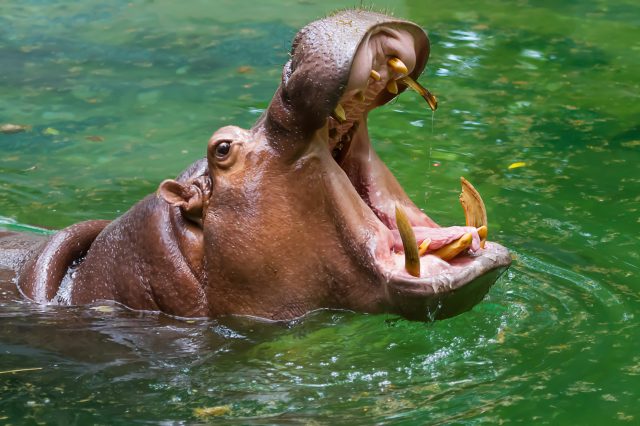
Today is ‘World Hippo Day’. I thought I would repost the one about the two types of hippo species. Enjoy.
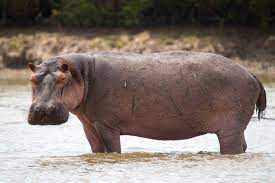
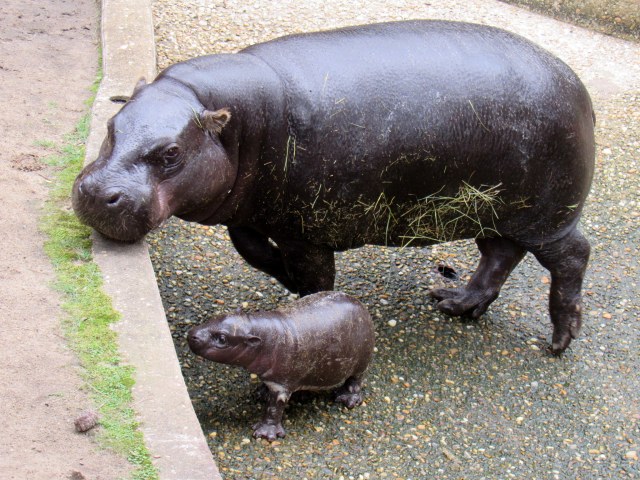
There are two types of hippopotamuses. First, you have the common one that we tend to think of when we hear the name. The one that is the top killer of humans in Africa and listed as vulnerable. There are about 150,000 in the wild. Then, you have the pygmy hippo, which is listed as endangered and doesn’t kill people. There are about 3,000 in the wild. So, what are the similarities and differences?
Common hippos are large and fat with heads that are bigger compared to their bodies. Pygmy hippos are small with heads smaller compared to their bodies.
Common hippos can run 29 mph while pygmies run 18-19 mph.
Both are herbivores.
Common has a bite force of 2000 pounds per square inch while pygmies have 1800 pounds per square inch. Not bad for a much smaller animal.
Common hippos have thick, fatty skin for protection while pygmy hippos have thin skin to keep cool.
Pygmy hippos are antisocial and avoid attacking while common hippos live in groups and are violently territorial.
Pygmy hippos can reproduce easily in captivity while common hippos have trouble.
Common hippos have no real predators aside from humans while pygmy hippos are hunted by leopards and crocodiles.
Pygmy hippos have shorter legs to help them move through rainforests. Common hippos live in shallow rivers in the plains.
Both species produce a sweat that acts as sunscreen and is antibacterial.
Common hippos are polygamous while pygmy hippos are monogamous.
Both have muscles that close their ears and nostrils when they dive.
Pygmy hippos have a four-chambered stomach while common hippos have three chambers.
As expected, the week before winter break was challenging. Only because everyone was getting more restless and tired as we got closer to the weekend. It’s how it always goes at both work and home. So, I am surprised that I accomplished anything, especially since tensions are still high from my son not going on his trip. He’s doing better thanks to his friends, but the whole incident is still a source of frustration.
Last weekend, I was able to get a lot of April blog posts set up. I’ have 4 to go and even came up with some for May, which involve art and mental health. This might not sound like a major accomplishment, but I really couldn’t bring myself to do any writing because of my mindset. Even after my son was here for two days, I didn’t have it in me to try to outline ‘Phi Beta Files’ much less write chapter sections. Needed to make sure he was okay and keeping up with school since he had a bunch of tests. We did the best we could with all of that.
It wasn’t until Thursday and Friday that I managed to open up Darwin & the Joy Path once more. I got a section done though. That leaves me with 10, which I could finish before my son comes home Wednesday night. I’m still nervous about how the penultimate challenge takes place in one chapter and goes right into the final one without any pause between them. Part of me feels it’s rushed, but I also know that there isn’t any logical delay to prevent Darwin and his friends from going right into the finale. There’s nothing to discuss or plan. So, it’s going to be a chaotic sprint through a barrage of enemies who have been converging on the area. On the plus side, the sections I will get to over the weekend are easier to figure out. Gives me time to think about the rest while I do a daily Pokemon Go outing.
I guess I’m lucky that I already caught what I wanted from the current Pokemon event. I only have to go out for a bit this and tomorrow afternoon for a bit. After the weekend, I have even less of an interest in going out more than once to do the daily stuff. I might even be able to get 3 sections done on Monday and/or Tuesday. I shouldn’t get too greedy, especially since I’m supposed to get together with a friend to hang out. Really should reach out to him at some point to figure out a time and place. Worse case scenario, I can write the final sections while my son does his own thing.
My main goal for winter break really is to finish writing Darwin & the Joy Path. I want this project done before things get chaotic for the rest of the school year. The weekend after break is a big Pokemon event too, so not having to juggle writing and participating in the season finale weekend would be nice. I think I want to spend a few months outlining future ideas too. ‘Phi Beta Files’ isn’t too far from completion and then I have to decide on the next series involving a group. Keep looking at ‘Coven of the Gray’ only because I can’t remember the overall concept beyond ‘witches in Windemere’.
The temps are starting to rise, but not enough to rapidly melt the ice and snow. I think some of it does melt, but freezes on the road overnight. Makes me worried about driving around, so I’m being careful. Hoping that my son and I can make a trip to the zoo like we normally do. Winter trips there are fun because you have fewer guests and some of the exhibits are closed, so you move through faster. Overall, it’s simply nice to get away with my son and spend the day chatting . . . Or me talking while he catches Pokemon or texts with his friends. I’ll be happy if I get a grunt of acknowledgment, but at least we’re spending time together.
Winter break is always a downer anyway. The weather is never nice or comfortable, so you can’t do much outside. Inside activities are crowded if you can get into them in the first place. That’s why it’s the perfect time to get home projects done, causally get together with friends, and simply recharge. The next break isn’t until April 1st too, so it’s 5.5 weeks of school without a rest. That stretch always wears on the students and teachers to the point where people are nearly dragging themselves to the finish line. Really wish a federal holiday would be made in March.
So, what are the goals of the week?
Rest during my break.
Finish writing Darwin & the Joy Path before returning to work.
Time with son during my half.
Finish the April blog posts.
Finish a Lego set.
Start a puzzle.
Tinker with ‘Phi Beta Files’.
Make food at home more than bring in.
Catch Pokemon to get fresh air.
Buy ‘Castlevania Bundle’ for Nintendo Switch since it’s really cheap.
I’ve been staring at the screen for a while, but I wonder if anything has to be said in regards to healing. We should all know that people need time to recover, including in fiction. You don’t just bounce back after receiving damage. Definitely learned that one personally last year. So, what should be said?
Honestly, the only thing I can think of is that there are people out there who don’t let others heal. In regards to physical injuries, they will wait until you appear functional or show the earliest signs of recovery. Then, they start making demands. Others won’t even wait that long and never stop with their stress-inducing manipulations. It’s worse for mental injuries because these types won’t acknowledge that you’re suffering. Yet, they’ll milk their own mental issues without hesitation.
I guess my point is to be the opposite of that. Be caring if you sense that a relative, friend, or anyone in your circles is suffering. Maybe a casual ‘are you okay?’ or helping in small ways when possible. The person might not want others to know what they’re going through, but you can still show basic human kindness. I’m glad I know more people who fall into this category than the previous one.
To connect this to fiction, you should have your heroes do the same. Even a villain might be like this when one of their allies is sick or injured. As long as it’s somewhat in their nature, it works.
Healing takes time. Something as minor as a papercut doesn’t disappear in seconds. So, a broken bone, virus, bacterial infection, depression, anxiety, grief, and everything else won’t vanish quickly either. Give people the time they need and the positive energy, which can speed up the process. Having doctors who joked around, smiled, and made me feel comfortable did more than I realized at the time last year. Friends texting to chat and visiting me in the hospital too. Just keep all of this in mind.
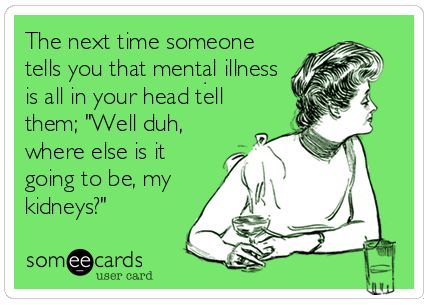
This is a tough one to tackle because it’s hard to fully define mental injuries. The most general definition that I’m going to work with is when a person is psychologically and/or emotionally hurt. This doesn’t mean it’s a long-term mental illness, but that could happen depending on the circumstances. It’s all in where you want to go with this, but it’s definitely more complicated than physical injuries.
Perhaps one of the best ways to explain this situation is to use the example of grief in fiction. It may seem like one of the easiest character-building emotions to inflict on your characters, but it can be tricky. Even if you go with the immediate response to a loved one’s death with a surge of anger, you’re going to have to touch on the 5 stages at some point. You can’t have the hero get over the death within a few pages, but you might not want them to hold onto their grief for the remainder of the story. You can’t have them functionally perfectly while also bawling and claiming to have no energy because of their loss. In other words, you need to make sure the emotion behind mental injuries don’t come and go like a wisp of morning fog.
The most important thing to take away from this is that you need to maintain the emotional impact instead of having it be a blip. You need to play it out like a major plot point because a character typically can’t continue in the same fashion if they are mentally suffering. There is the option to have them push the pain down and barrel forwards, but you need to touch on the situation at some point. Saying a hero has been hit by doubt and anxiety, but continues without any hesitation comes off as a lie. They have to act accordingly and, if you want them to recover, find ways to heal.
Another issue is when authors don’t create an emotional impact with or for the characters at all. If you expect the readers to feel a certain way then you need someone in the scene to demonstrate. Not bluntly, but use them to transmit the desired emotions to the readers who will hopefully made a connection by this point. Otherwise, you’ll have arguments, deaths, losses, and just about every negative event with no real depth. People will simply go through the motions of the story like the characters and walk away to probably forget about what they read. So, the emotional damage you inflict on heroes can be what makes your stories worth remembering and sticking with. Sounds dark, but people love seeing someone knocked down and get back up.
Getting back up shouldn’t be easy too. I know I said this before, but it is worth repeating in the same post. A way to figure out how to do this in a timely fashion could be to partake in research. Read up on how real people have dealt with the emotions and mental issues you are using. For example, the 5 stages of grief are a common and useful tool when handling loss. You can learn how people get through their lives while handling depression or anxiety. Even something as ‘minor’ as a sense of loneliness may require delving deeper into the emotion to see how harsh it can be.
Maybe I should add this to the post as well:
Sadness is NOT Depression.
Nervous is NOT Anxiety.
This is just a pet peeve of mine because I’ve seen people use these terms as synonyms all the time. A person who is nervous or sad tends to be so in a temporary situation, which just occurred. When they are hitting depression and anxiety, the person has been mentally battered for an extended period of time. The former can be changed with either the end of the situation or a simple talk afterwards. The latter continues LONG AFTER the triggering situation(s) is over and needs a lot of work to handle. Another point I would make is that anxiety and depression can be life-long battles, so you have to be careful if you inflict them on your heroes.
So, what do you think about mental damage in fiction?
(I still find it funny that I planned on keeping her lineage a secret. By the time I reached her debut, I was done with secrets and big reveals. The idea of making it known she was the Baron’s daughter from the start appealed to me a lot more.)
The last of the champions, but one who has been involved in the prophecy for centuries, Dariana is an immortal telepath. Born from the light and the darkness, she has repeatedly been put to sleep and awakened to interact with each generation of heroes. Because of this, she is unsure of herself in social situations and is unable to make friends. Others have to make the first move with her and be ready to handle whatever questions and odd reactions that come out of her. Typically, Dariana will apologize even if she has not done anything wrong.
While she is immortal, Dariana can still get injured and be killed if she sustains enough injuries or is starved. Due to her telepathy, her mind is always susceptible to an attack and she can accidentally react to thoughts if she lets her guard down. This is another blow to her confidence, which the other champions set out to bolster. Becoming the first friends she has had in her life, Dariana is very protective of them.
This is not to say she is always timid and socially aloof. When faced with an event that is specific to the champion prophecy, Dariana becomes very focused and driven. Able to adjust her strength and pain tolerance, she is very dangerous in combat. If an enemy manages to avoid her fists and feet, they still have to get around her psychic attacks long enough for her to run out of energy. She tends to keep her full power hidden, so she tends to fight without major enhancements or only for 5-10 minutes at a time. The reason for this is that her immortality and connection to the prophecy puts her under a different set of rules from the other champions. Specifically, her great power is kept in check to avoid the prophecy from being undone and causing even more damage to Windemere than her enemies.
I make mistakes in this arena a lot, but I thankfully get rid of most of them when I do editing runs. It’s something I very conscious of because I write a lot of action scenes. So, I have to really be aware of physical injuries as I move along. I mean of the characters and not myself. *shudders at memories of 2025*
A physical injury is very important, especially in action scenes. We might be used to seeing heroes continue on with severe injuries, but that requires the audience to suspend a lot of disbelief. It seems to be easier with visual mediums too. We can see how bad the wound is and how the hero is pushing on, so we rationalize it. Books require the reader to imagine stuff, which can’t always go in the right direction. A reader is more likely to question how a character is moving around after suffering a major injury because they aren’t seeing the physical cues of adrenaline and grit.
That doesn’t excuse visual medium entirely too. Walking around with a gaping hole in the stomach is common in action movies. Characters will get stabbed or shot in the shoulder, but still have full use of their arm. Leg injuries don’t hamper jumping or speed. It can get ridiculous enough that you lose some people, especially if the villains and supporting characters don’t get the same superhuman abilities. This is why it’s very important for anyone telling a story to remember what happens to their characters. Forgetting an injury can make or break things.
This isn’t even something that is solely about action scenes. Any injury that is noted should have an impact. If a person gets a papercut then they should get a bandage and have some minor restrictions on that finger. It doesn’t have to last longer than that scene, but you have it happen for a reason. Not wanting to deal with the aftermath probably means you shouldn’t have it happen in the first place. After all, a reader may come along and wonder about the inclusion if nothing comes of it. That’s if an editor or beta reader doesn’t catch it first.
It does get annoying to remember physical injuries because you want to keep the momentum and action going. Yet, each one should weaken and wear down your hero to some extent. This becomes an issue when you’re having it be one fight after another, which is another reason why authors should include downtimes. Aside from letting the tension dissipate and avoid oversaturation, it gives you an opportunity to have your characters get medical attention. This doesn’t have to eliminate the injuries entirely, but enough can be done to explain how the hero is still able to operate at a high level. For example, the first John Wick movie had him doing a lot while injured, but there was also a scene where a doctor tended to him. He was also given medication that would allow him to keep fighting, but his stitches would rip. This allowed him to fight at full strength without any questions.
An alternative that I’ve seen is that the heroes simply don’t get hurt. This gets applause in some situations, but not by everyone. The longer your hero goes without getting hurt, the less interested the audience becomes. There’s not threat of death or failure. If such things do happen then it doesn’t make sense since they avoided all previous injuries. The only time this works is if the character has invulnerability. At least then it would be some kind of shock.
The funny thing is that it really isn’t as hard as one would imagine. As I said at the beginning, I usually fix things up with edits. When writing an action scene, I initially focus on getting the general flow of events down. The injuries are including and force some changes in the moment such as change of momentum. Big ones I remember and they have an immediate influence over the rest of the fight. Once I have everything set up, I wait until it’s time to edit and make adjustments. Thankfully, you get better at doing this in the moment as you write more action scenes with injuries. There still tends to be some polishing such as realizing a jump can’t be done with an arrow in the thigh or a character just headbutted someone wearing a full helmet.
So, how do other authors work with physical injuries in stories? It doesn’t have to be action scenes, but just in general.
It’s Super Bowl Sunday, which means . . . commercials and food. Pretty sure most people who follow my blog don’t care. Not to mention I’m a NY Giants fan, which means I haven’t cared about a Super Bowl in a long time. Only watched a few games this year while I was doing other things. Honestly, Pokemon Go took priority because at least some winning would be involved there. Still going to root for them next year as best I can, but I was never a big sports guy anyway. Anyway, enjoy the funnies:









 Legends of Windemere