The Four Horsemen of Writing: Perfectionism

Google Image Search

This one is definitely the sneakiest of the horsemen.  It can undo an author without ever being noticed.  That’s because we can see it as a positive trait when it can really be the main obstacle in our path.  A demon disguised as an angel, which can destroy an author before they even get to their first draft.

Perfectionism

I’ve met many authors who pride themselves on going for perfection.  Can’t think of any of them who made it very far.  There are probably some, but most crash and burn.  The reason is because perfectionism is impossible.  An author will always find a flaw in their work because of doubt and us being our own worst critics.  Even after publishing, an author will see how they could have done something better.  Those who try to avoid this fate will succumb to fear, which masks itself as perfectionism.  As I said, they pride themselves on this to the point where they refuse to accept that it might be what is holding them back.

Perfectionism can take many forms too:

  • It can be an author who is determined to be 100% original.  Every time they are told or see something that is even remotely like their story, they scrap it all and start anew.  It creates a cycle that can only end when they realize everything can be connected to something that already exists.
  • They might hate where the story is going because the characters don’t fit the established plot points, so they keep working on it until it’s a mess.  That mess is a blot on their perfectionism, but they refuse to change their path.  So, they keep digging themselves deeper into the hole until they give up.
  • Others get hung up on developing the perfect style, so they constantly read ‘how to’ books.  They watch videos, read articles, and go to seminars to develop a style, but it never feels right.  They adopt whatever they are told will work in the hopes of unlocking the key to success.  These authors may never get to even an outline much less a story because nothing seems to be 100% to them.
  • Another type of perfectionist is one who doesn’t make it out of the planning stage.  It is similar to the first one in that they are trying to design the perfect world with the perfect characters.  They may have stories outlined, but they won’t move on until they have their entire world flushed out.  It is possible, but the chances are higher that it will always fall short.  Why?  Because fictional worlds and characters do need some type of organic growth, which comes from the first draft and proceeding edits.  Otherwise, they’re really only theories and potentials.

I’ll admit that I never suffered from this horseman, but it’s here because I’ve seen so many fall to its power.  Let’s hear it for my anxiety and battered self-esteem!  Don’t clap too loud on that one.

So . . . Question time!

  1. Have you ever found yourself held back by perfectionism?
  2. Do you think it’s a lofty goal or a dangerous path?
  3. What would you do or think to avoid this horseman?
Posted in Questions 3 | Tagged , , , , , , | 16 Comments

The Art of Genuine Apologies

Google Image Search

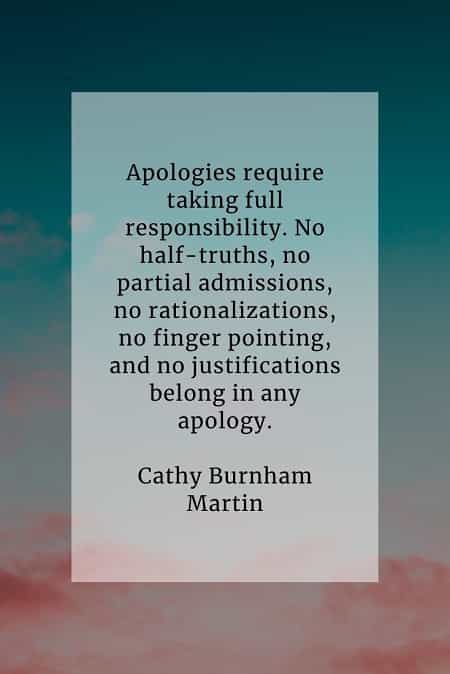
This doesn’t have a lot to deal with writing.  It could if you want to know how to have a character genuinely apologize.  Mostly, I’ve run into too many people who do these ‘non-apologies’ and then expect forgiveness.  So, I really just want to get this off my chest and then do a ‘7 List’ on Wednesday.

One of the things we try to teach our children when they are young is the phrase ‘I am sorry’.  We want them to accept responsibility for their actions and show that they are sorry for what they did.  We correct them when they use the phrase as a kneejerk reaction or add to it in a way that undoes the effect.  Most parents really try to drill in the concept of being apologetic and accepting responsibility.  Of course, this ends up falling apart as the child gets older and notices that the parent doesn’t practice what they preach.

To be fair, most people will stumble on an apology and undermine their own words.  They do so by:

  • Adding ‘but’ after the apology.  This word means that they still think they’re right.
  • ‘But’ goes right into a rationalization.  It makes it feel like the person is sorry for what they did, but they are sorry that they are in trouble.
  • Shifting the blame is another common addition to an apology.  ‘I’m sorry, but you shouldn’t have done the thing that made me do my thing.’  Very popular among abusive partners and parents.
  • Simply repeating the action that caused the apology again.  I think children pick up on how these apologies are fake quicker than adults.  Children are watching adults for modeling and pick up on patterns with a more analytical mindset than adults who may overthink things.

There are more ways to undermine an apology.  All of them do the same thing though.  I don’t mean just making the apology worthless.  By giving an empty apology, you come off as manipulative.  The person, if they are paying attention, will pick up on the fact that you aren’t really sorry.  This leads to the belief, probably true, that their feelings aren’t being taken into account.  After all, you are reacting to hurt feelings when you are apologizing even if it’s over a physical action.  By rationalizing what you did, you are saying the feelings of your victim doesn’t mean anything.  You’re now more concerned with getting out of trouble and haven’t learned your lesson.

Crying is another thing to factor in when it comes to apologies.  It seems easier to write a character crying while apologizing than for it to happen in real life.  Once tears turn up, you know it has gone to a high level of emotional conflict.  This can go one of two ways:

  1. The crying apologist has now realized the pain they caused and are wracked by guilt for their actions.  If only this was the way it always went.  This is when you know an apology means something and the person will learn from their consequences.  Well, you hope it means that.   We are a cynical species, so there’s a moment of thinking we’re being played.  If the person doesn’t usually do this and stay a wreck for longer than the apology, you can believe it easier.  The fact that #2 exists makes this harder to believe.
  2. We all know what this one is going to be.  The crocodile tears!  A person turns on the waterworks while apologizing, but it’s a defense mechanism.  It isn’t that they feel sorrow or regret.  They’re trying to manipulate the person they hurt by stirring those feelings in them.  It’s a show designed to end the conversation before self-reflection can kick in.  From personal experience, you know this is what is going on when the crying starts almost instantly.  Then, it stops as soon as the confrontation is over and there are no signs of being upset left.  Some people will do this during every apology that is forced out of them too.

Who would thinking apologizing was so complicated and difficult?  When we’re children, it’s made to seem so easy and common.  You get in trouble, you apologize, you think about what you did, and you don’t do it again.  Yet, so many adults don’t follow this system that we expect of our children.  Instead, it’s get in trouble, apologize, rationalize, shift blame, cry if need be, and possibly repeat the action.  Makes me wonder if genuine apologies are a lost art.

Posted in Thoughts | Tagged , , , , | 13 Comments

MKTG #22 – Wrap-up

Greetings, SE’ers. It’s Jan again. Since July 2021, I have explored a variety of different avenues of book marketing opportunities, and I’ve come to …

MKTG #22 – Wrap-up
Posted in Uncategorized | Leave a comment

The Bison: Again, These Are Not Buffalo

Last weekend, I made a post about true buffalo.  Those species are found in Asia and Africa.  Today, I’m going to talk about bison, which also get called buffalo.  Both groups are bovines, but there are differences. Bison have humps, larger heads, beards, thick coats that they shed, and their horns are both shorter and sharper.  Now that we got the disclaimer out of the way, let’s get going.

Surprisingly, there are two species in the genus of Bison.  First is the European Bison, which is found in Europe and the Caucasus.  The other is the American Bison, which is what many of us are probably used to.  The big, burly animals that charge through open plains in Westerns.  There are actually two subspecies of American Bison, which are the Plains Bison and Wood Bison.

Going to jump into conservation part right away because it is rather interesting:

  1. The European Bison is considered Near Threatened because it was extinct in the wild due to hunting and habitat loss. In 1927, the last wild one was shot and that left only 60 in captivity.  Since then, they have been gradually revived through a breeding and reintroduction program to bring the number of wild individuals up to around 6,200.  Not bad, but still a ways to go.
  2. The American Plains Bison faced the same overhunting and habitat loss.  They also have benefited from a breeding and reintroduction program.  They went from 325 in 1884 to a current population of 500,000.  This pulls them away from extinction, but they are still at risk from genetic contamination by cattle, disease, habitat destruction, and some extra human stupidity.  That last one is a false belief that bison can spread diseases to cattle, so they are killed.
  3. The American Wood Bison is considered threatened in Canada, which is where it is typically found.  Their population is at 2,500.  Again, it’s thanks to breeding and reintroduction programs.

Now, is there a difference between the American and European bison?  American bison are heavier while European are taller.  American has hairier bodies while European have hairier tails.  European bison hold their heads higher because their are browsers while the American bison is lower due to being a grazer.  American bison have their horns pointing more sideways and up than European bison due to the former fighting with butting/charging and the latter doing horn-locking battles.  Finally, American bison have fifteen pairs of ribs and four lumbar vertebrae while European ones have fourteen pairs of ribs and five lumbar vertebrae.

Some other tidbits:

  • Both bison are the largest are the largest land mammals of their areas.
  • Yellowstone National Park is the only location where American bison have continually lived since prehistoric times.  All other places had them extinct until reintroduction.
  • Bison show their mood with the tails.  Hanging down means calm and standing straight up means angry.
  • Bison can run 35-40 miles per hour.  They can also jump 6 feet vertically.  Keep in mind that these are animals that can weigh over 2 tons.
  • Bison roll in dirt to shed hair and get rid of flies.
  • Bison have poor eyesight, but good senses of hearing and smell.
  • The hump of a bison is all muscle.  Its purpose is to help use the massive head to plow through snow.

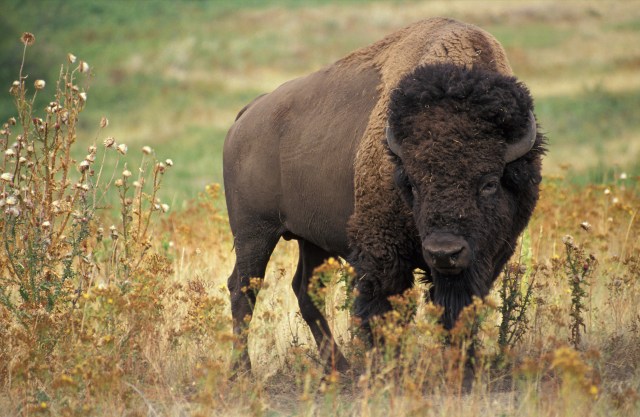
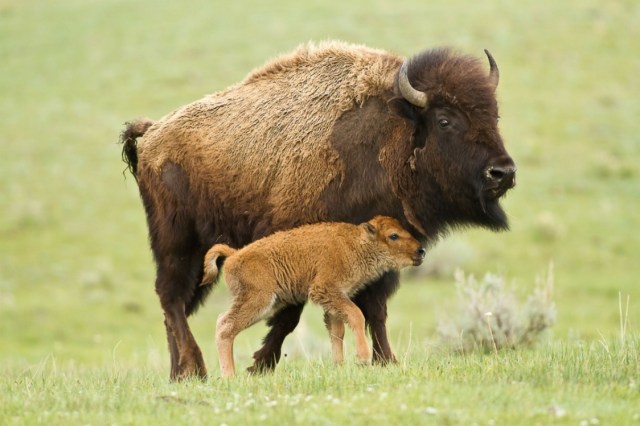
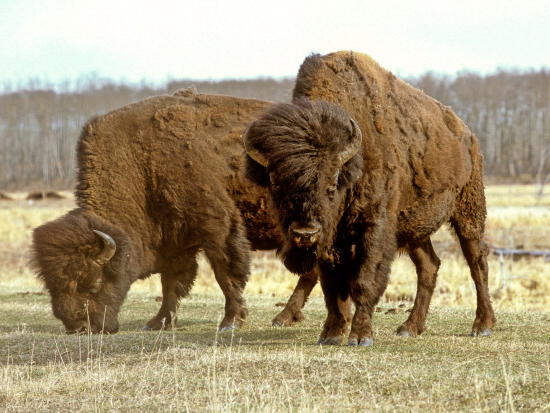
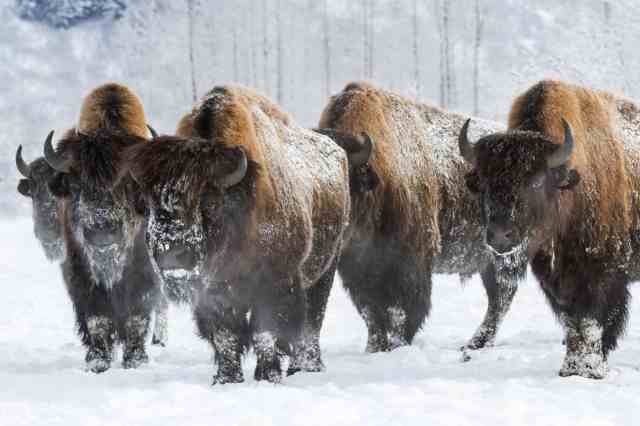
Let’s see some pictures and videos.  I went with two for each species/subspecies since there were only three.

American Plains Bison

American Plains Bison

Wood Bison

Wood Bison

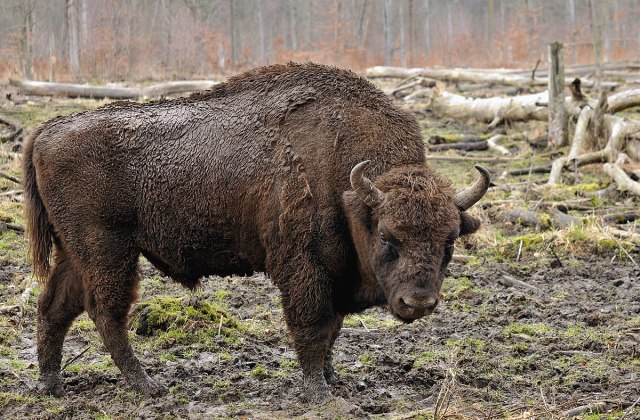
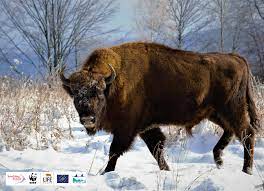
European Bison

European Bison

(Had to take one video from the Bronx Zoo.  Always love seeing calves running around.)


Posted in Animal Posts | Tagged , , , , , , , , , | 21 Comments

A Week of Disease Dodging!

Well . . . The title says it all.

The week started with me getting a cold, but my son catching the flu.  I guess we catch it quickly and gave him meds fast enough that he only missed three days of school.  A lot happened during those days, so a lot of scrambling to get information and make sure he didn’t fall behind occurred.  I ended nearly every night exhausted and not sure what I should bother doing.  Went to bed early a lot too, so I didn’t get a lot done.  The other side of the coin didn’t help.

There’s a lot of covid going around.  I ended up having to pray that I avoided that too.  As I’ve said before, my anxiety attacks come with cold/flu/covid-like symptoms.  Put plenty of swabs up my nose and thermometers in my mouth this week.  I’m clean as of Friday night, but I’m drained and want to take it easy.  It’ll be more of the same next week because people really start getting sick as we get closer to long breaks.  Nobody knows why, but it seems to be the trend. Fingers crossed that I make it to the finish line with enough health to get some writing done.

Sadly, writing didn’t happen this week.  I’m struggling with the desire to start writing Darwin & the Demon Game today.  Be nice to get the prologue done and then aim to get the first third of the book written by the end of the Holiday Break.  I’m just not sure I can pull it off.  My brain isn’t in writer mode even though my heart is.  Keep staring at the outline and feeling like I’ll screw things up from the start.  I’ve never felt doubt and fear like this before, so I might have to settle for tackling March blog posts.  Can’t figure out what triggered this issue either.  Been feeling it ever since December started. Guess I’ll see if biking and breakfast is enough to get me motivated.

It probably doesn’t help that we have to clear some stuff out of the crawl spaces.  Work is going to be done in my room during the break, which means I’m losing a day of writing.  I can try to write in the dining room, but there’s too much noise and traffic.  Anyway, today might get spent primarily going through everything.  I haven’t entered one of the crawl spaces in over 5 years.  We’ll see what we find there.  Besides the dust that’s probably gathered.

Might not be anything else to talk about.  Just finished an anime called ‘How a Realist Hero Rebuilt the Kingdom’.  It’s about a guy who got summoned to another world, but he ends up instituting social reforms and focusing on the economy instead of adventuring to stop a demon army.  Weird take on the story with a lot of talking only episodes, but it wasn’t that bad.  Promised a student that I would rewatch ‘My Hero Academia’ by the end of the year since he started it.  I’ll have to begin that today since it’s 132 episodes.  I can’t go into Season 6 though because that just came out and I only watch the new stuff with my son.

As I said, next week is going to be crazy busy with work and parenting.  It’s the last week before Holiday Break, which means plenty of tests and homework.  So, I have no real ambition until Friday night when I either start or continue writing Darwin & the Demon Game.  I’ll use the other nights to work on March posts.  I don’t know where I’m going with this series either.  Publishing might happen next year.  It might not if I can’t find a cover artist or find time for proper editing.  Someone mentioned that I might want to just write books and not think about publishing until my son is done with school and off to college.  It’s a possibility, but that will be a long 5 years and I doubt I’d be able to keep this blog going for that long with releasing new works.  Not that I can sell books with this blog either.  Really can’t figure out where I’m going any more.

Goals of the week?

  1. Help my son with tests and homework.
  2. Help students with their last week of school before break.
  3. Stay healthy.
  4. Start writing Darwin & the Demon Game.
  5. March blog posts.
  6. Finish the Optimus Prime Lego Set.
  7. Go through crawl space boxes.
  8. Buy a bottle of whiskey for the break.
  9. Potato latkes tomorrow!
Posted in Goal Posts | Tagged , , , , , , , | 9 Comments

Writing Reactions to Disabled Characters

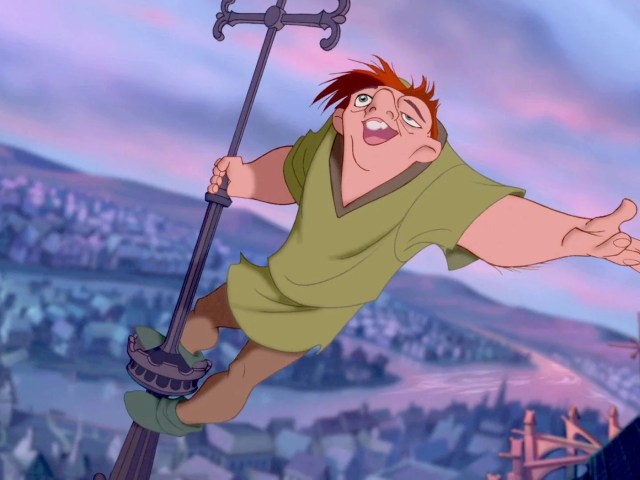
Quasimodo

On the surface, this looks rather easy.  How hard could it be to have one character react to the disability of another?  We all know what we would do, right?  The list isn’t even that long:

  • Ask questions
  • Show sympathy
  • Tell the person they are strong
  • Start helping them at every turn
  • (for conflict) Look at them with disgust
  • Treat them poorly (again for conflict)

Do you notice something about all of the default reactions authors tend to use when a character is revealed to be disabled?  The character is immediately treated either as a ‘freak’ or a broken person.  It doesn’t matter if they’ve already shown themselves to be confident and capable.  As soon as another character notices, the author starts having them fixate on the disability as if that’s the other person’s entire identity.  Unfortunately, that is very common in our world, but fiction can take another route.

First, I want to make it clear that these reactions do have their uses.  The negative ones are especially good for villains or heroes who need to grow.  Having a character learn that a disabled person isn’t a ‘freak’ or helpless can teach real people this lesson.  Readers may recognize their own biases and actions in these characters.  It’s more difficult with the ‘helpful’ ones though because they are hidden behind the concept of giving aid to those ‘in need’.  For that, a person needs to realize that a disabled person can accomplish some tasks.  At the very least, you really should ask before helping.  That’s probably a key factor in this in my opinion.

Stepping away from reality, fiction gives us other options too.  If the story isn’t about the character adapting to having a disability then it means they have already done so or are in the process.  In an action story, they may have learned how to fight, use magic, get around, and bring skills to the adventure.  Having the other characters treat them like a porcelain doll or a liability decimates their role.  Again, it works if the idea is to have them stand up to their peers and get them to understand.  Yet, that has to happen sooner rather than later if that isn’t the key part of the story.  If it’s only one character being a pain then you can draw it out longer, but the more people who treat the disabled hero as lesser, the quicker you need to resolve that and get to the main story.

That’s a big part of this as well.  People tend to expect a disabled character to be treated as a lesser.  So, authors feel obligated to have some kind of big reaction towards the disability instead of immediate acceptance.  You rarely see a character reveal that they are blind and the others go ‘Cool . . . So, about that rampaging dragon?’  It’s like there always has to be drama or a conversation about it, which is something I get.  We want to draw attention to the challenges of living with a disability.  In doing so, we tend to forget that one of those challenges is being treated like a ‘freak’ or an infant.  Maybe we should consider trying to have the characters be accepted and treated like everyone else unless they actually ask for help.

I’m sure everyone has their own opinion on this.  Mine is probably seen as wrong by some people, which is okay.  So, share what you think about other characters reacting to disabled characters in fiction?

Posted in Thoughts | Tagged , , , , , , , , | 17 Comments

Fairies, Myths, & Magic II

Let’s welcome a special guest to Entertaining Stories today. Coleen is a long-time friend and she has something to share with us today. This is her …

Fairies, Myths, & Magic II
Posted in Uncategorized | 1 Comment

Writing the End – Part II

Greetings Storytellers!  Last month I introduced the topic of endings and how important they are to creating a satisfying and lasting impression of …

Writing the End – Part II
Posted in Uncategorized | 2 Comments

Poetry Day: Cycle of Egos

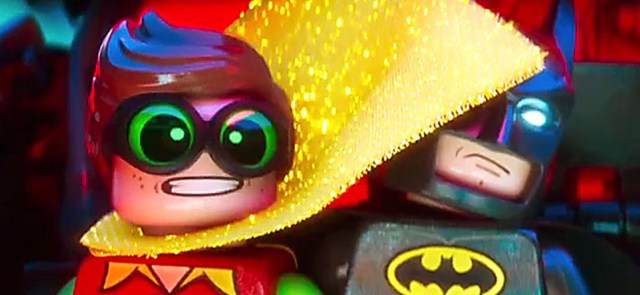
Lego Robin (Also Lego Batman)

(Not the biggest fan of the title now, but that’s what I picked.  It’s really about abuse.  A person who batters at another’s sense of self-worth and will stop long enough for them to recover.  I’ve dealt with too many who are like that, but then play the victim as soon as you stand up for yourself.  The scars don’t entirely disappear if it goes on for long enough. I did try to end this one on a good note.)

*****

Here we are again

The beginning of the cycle

You try to stroke my ego

Which you have beaten

Into a whimpering coma

Through harsh words

And mighty posture

Pushing me

Until my misery

Leaks from my pores

And ebbs from my eyes

My fury grips the air

Palpable to all

But there is a single source

You notice this

Sensing from your haven

That you pushed too much

Bringing us to here

The awkward stumbles

Of thanks and praise

Emotional treats

For your abused dog

Hoping

To avoid a bite

Do you know I’ve learned?

I see the pattern

Realizing that this dance

Has been done by us before

I believe our time has come

This cycle is no more

It will be shattered

Posted in Poems | Tagged , , , , , , , , , , , | 8 Comments

Check These Out: Brand-New Bubbe and A Songbird Dreams of Singing: Poems about Sleeping Animals

Today, I am privileged to be here with two amazing picture book authors who are no strangers to the blog: Sarah Aronson and Kate Hosford. Sarah is …

Check These Out: Brand-New Bubbe and A Songbird Dreams of Singing: Poems about Sleeping Animals
Posted in Uncategorized | Leave a comment