
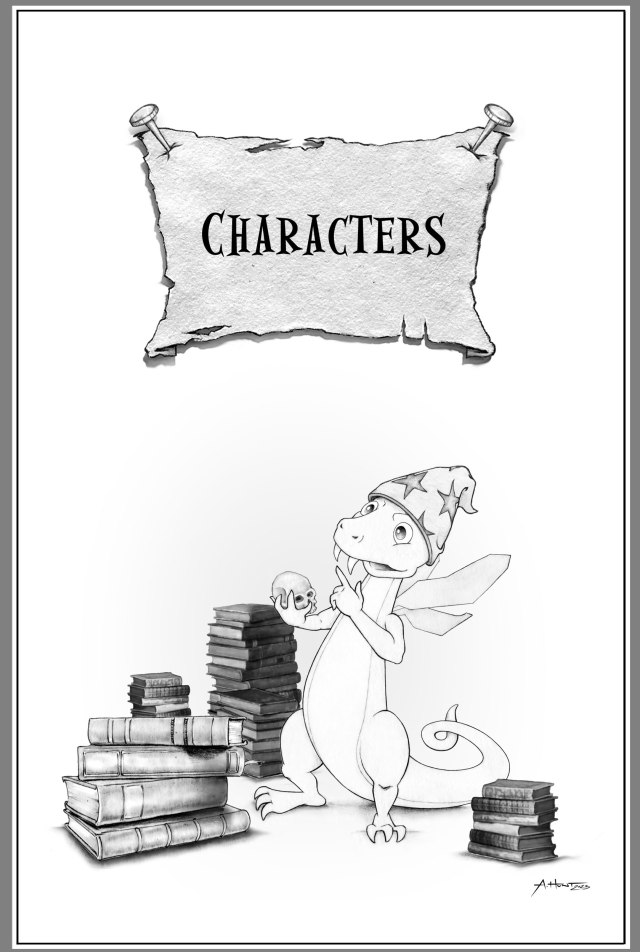
Art by Alison Hunt
(This is another topic I felt was unavoidable in Do I Need to Use a Dragon?. Romance is one of the most common plots and subplots. It’s also one that brings in a lot of controversy, especially when it shows up in other genres. Like I said, unavoidable topic.)
I want to make it clear that I’m talking about romance and not sex. What’s the difference I hear a few people ask?
First, that’s a rather telling question.
Second, romance is when characters become emotionally attached and close to each other. It can be the catalyst for moments of great joy or deep sadness in both characters and readers. Sex is simply the act of procreation, which humans will also do for pleasure.
The addition of this type of story can be seen as a mistake as well. There are plenty of strong opinions on romance being added to a story, which isn’t primarily about character relations. As you can expect, those aren’t all positive thoughts, which is why this can become a controversial topic. Some would even say that a romance is what an author does to destroy their characters and story. That’s rather extreme, but you’ll see how that can come about.
Romance is possibly the most common subplot you will find in stories that don’t have it as the core conflict. People may also call it the most infectious storyline because it can take over a book if one isn’t careful. This happens when a romance involves a lot of drama, tension, and swerves. Character relationships can be hurt thanks to the couple either getting together or breaking apart. Those around them may be written to take sides or the team can no longer function due to the remaining tension. So, the romance ends up overshadowing and nearly consuming the main story. It’s no longer about the quest or politics, but the relationships that are being created, strained, or broken.
This occurs because some of our most powerful emotions are stirred by romances. Love, hate, passion, sadness, doubt, angst, and fear are all thrown into the mix as things move from introduction to being a couple and beyond. Authors strive to put emotions into their works and readers hope to have such things evoked in their own minds, so it’s easy to fall into the rabbit hole. By the time you realize something is wrong, the damage has been done, which is why many try to avoid romances entirely. This isn’t any better than going too far.
The reason why an author shouldn’t swear they’ll never write a romantic subplot is the same one for why they’re so common. Romances are a part of life whether they be good, bad, or absent. A person can be in a loving relationship, a toxic one, or be yearning for anything that makes them feel wanted. Humans are social creatures and love is a driving force that most people can understand. Characters who never fall in love, or pursue relationships beyond friendship, can be seen as missing a humanizing aspect. This isn’t necessarily true, but that’s the perception some readers will create in their minds
Even if it’s a crush that is never made clear or seen to fruition, the demonstration that romance is possible is important. It can come from the secondary characters instead of the primary, which can help prevent the subplot from consuming the entire story. Yet, a romance is there in some fashion. I’m not saying this is entirely necessary, but it’s a powerful option an author should never throw away out of fear or hate. All one has to do is be careful and make sure it doesn’t become so big that it sucks all the air out of the book.








 Legends of Windemere