Not much else to say. Enjoy the Halloween memes/funnies and one of the best Halloween songs/music videoes ever made.
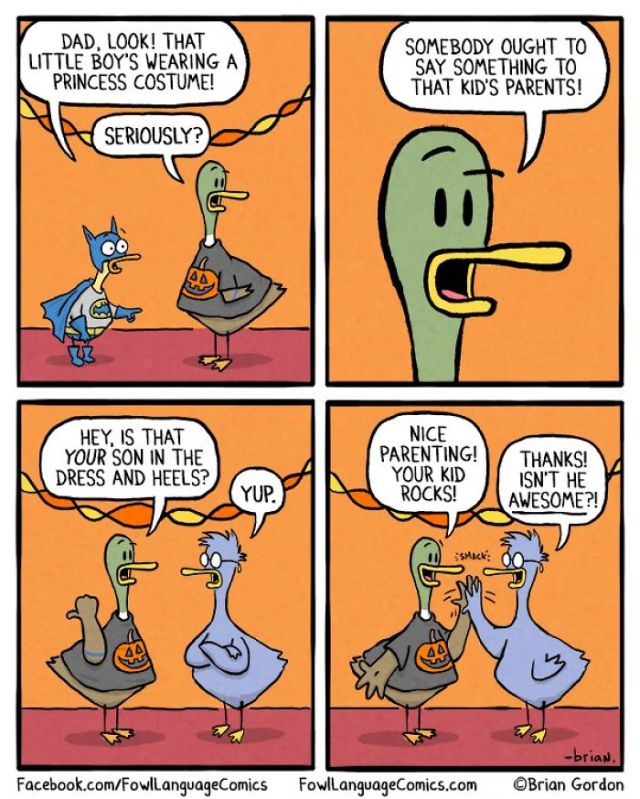




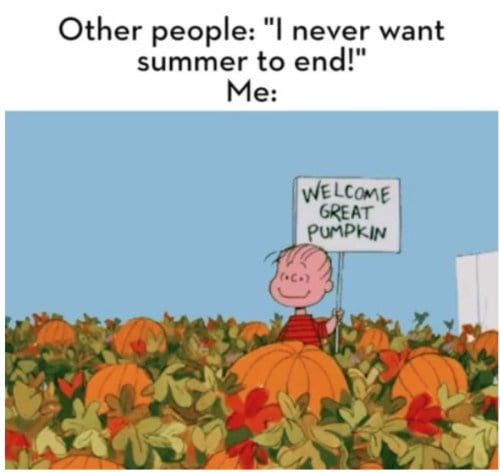

Not much else to say. Enjoy the Halloween memes/funnies and one of the best Halloween songs/music videoes ever made.

In the Halloween edition of Colleen’s Coffee Klatch, guest author C.S. Boyack detailed his latest writing pursuits. Discussing his paranormal, …
Colleen’s Coffee Klatch: C.S. Boyack, & “Goodbye Old Paint, The Hat, Book 7

I’m thrilled to have on the blog once again the marvelous Mary Winn Heider, who is here to discuss book 1 of her new middle grade series, The …
Check This Out: The Stupendous Switcheroo
Google Image Search
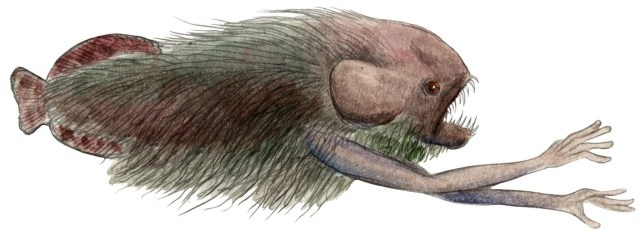
Here we are at the last monster of the month. This one comes from the Yanomami of Brazil and Venezuela. Definitely looks like a dangerous critter. There’s also not a lot of information out there on them.
As you can see, the Aun Pana is a fish with sharp teeth and a hairy body. It also has two muscular arms that can grab prey. Another name for them is the Pehiwetinome, but some sites said that this was a separate creature that they traveled with. Both are vicious predatory fish that hunted in schools throughout the rivers and lakes. I actually learned a new term with this guys, which is anthropophagus. That’s a fancy way of saying they eat people.
The only story that I kept finding was about the Aun Pana chewing on the supports of a wooden bridge. They wanted to get the Yanomani people walking across into the water for easy devouring. It did collapse, but the remains turned into a raft. Those who got onto the raft survived to turn into monkeys and pigs. Although, it wasn’t entirely clear of those who were changed really escaped.
The Aun Pana supposedly has some magical powers such as transforming others. That might be why the humans were turned into monkeys and pigs. Maybe this made them easier prey? These creatures are supposed to be highly intelligent enough to use swarming tactics to take down larger prey and defeat obstacles. Aun Pana also made alliances with other monsters to help get food. At least, that’s what I found on a few sites, but no stories to prove this.
A big reason that I kept his monster here and put it at the end was because I ran into a common problem. Many fantasy authors and fantasy RPG makers had created their own versions of some monsters. The Aun Pana showed up most times with the same story and origin, but also stats or a fictional biography. I guess their appearance and being fairly unknown makes them rather enticing for anyone trying to build a bestiary for their worlds. Dragons, unicorns, and the like are all over the place, so throwing a few obscure mythological beings can spice things up.
Unfortunately, this can muddy the waters for anyone trying to research the actual mythology. If you’re in a rush, you might not notice that you are taking information from a fictional source. Sometimes, the story isn’t a clear fabrication because the author is writing it as real for their world. This is why one has to diligent and apologetic if they made mistakes. Fingers crossed that I didn’t screw up too often over the course of this month.
So, what obscure monster do you have in your head that others might not think of?

Sunday might not be the best day to do this, but I thought I’d try.
Wednesday is National Author’s Day. I thought about promoting Do I Need to Use a Dragon? and then considered expanding on that. It’s going to be really simple. I was just going to make a post that lists a bunch of indie books with the titles linking to the sales page. Nothing special, but it would work to get a bunch of books out there on a barely known holiday with a single post. Probably pin it for a day or two as well.
If anybody wants a book listed then comment with the title and sales page in the comments. I’ll put the information into the scheduled post as soon as I can. If you know an author who might want to be listed then feel free to share their information (with permission) or send them along.
Fingers crossed that we get something from this.
Google Image Search
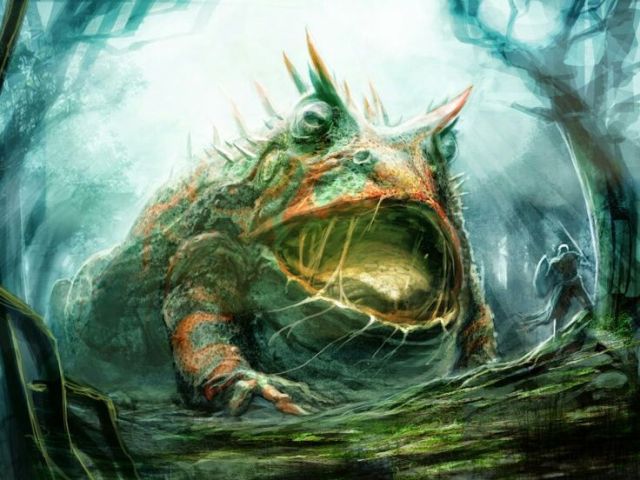
The Tiddalik comes from Australian mythology and is connected to a popular creation myth. Specifically, this creature comes from the Australian Indigenous Dreaming Stories, which some people call ‘Dreamtime’. To be honest, I couldn’t figure out if some of these terms were correct or born from brutal colonization. That’s not what this post is about, so let’s get to the creature.
Long ago, Tiddalik the frog woke up with a great thirst. He ended up drinking every drop of freshwater in the world, which caused plants and animals to start dying. In some stories, this is what turned him from a small frog into a bloated, gigantic one. The owl suggested that they get Tiddalik to laugh and release all of the water. All of them tried and failed until an eel started dancing. He twisted his body into different shapes, which caused Tiddalik to laugh and release all of the water back into the world. Other versions have it be a platypus dancing and tumbling around to cause the laughter.
Another version has this plan resulting in a great flood, which killed many animals. A pelican set out to save as many as he could. For some reason, the story has it that he got aggressive when a human woman refused to be his bride. So, he painted his all black feathers white as a sign of war. He ended up being killed by another pelican who didn’t recognize him. Pelicans have black and white feathers in his honor. This creation myth definitely tries to cover a lot of ground.
As for Tiddalik, he shrunk to his former size, but had laughed so hard that he could only croak. It’s said that he was based on the ‘water-holding frog’, so his descendants practice every night to try and regain their voice. They also attempt to repeat what Tiddalik achieved on a smaller scale.
Another story with Tiddalik has him discovering that Echidna was hording water. After his tale, he was used an animal who despised those who kept water for themselves. So, he followed Echidna and dove into the secret stash. He also shouted that the water was for everyone even though he had lost his voice at the end of the creation myth. Either way, the other animals arrived and threw Echidna into a nearby thorn bush, which is how he got his spines.
As I stated, it is believed that Tiddalik is based off the ‘water-holding frog’. They burrow underground and only emerge during the rain to drink a lot of water, breed, and find some food. The interesting thing is that the story is usually connected to the Gunai Kurnai people, who don’t live in the water-holding frog’s territory. The two possibilities are that Tiddalik is based on a different type of frog OR the tale comes from a time thousands of years ago when this frog had a broader territory.
Like many mythological stories, the tale of Tiddalik does have a lesson. It may be two-fold this time. One is that a person shouldn’t keep all of a precious resource to themselves in a time of need. This pushes the idea that a community needs to work together to survive. It can also be a way to tell people about the water-holding frog. People would dig them up and use them as a water source during times of drought. Not a bad survival lesson to learn.

Greetings, SE’ers! Beem Weeks here with you again. Today, I’m giving an update on my post concerning Amazon’s Kindle Vella. The previous post can be …
A Look at My Vella Results!

Mel Brooks
(I really don’t know what triggered this one. Clearly, I was angry at someone who had power and influence.)
Edicts and procedures
Hurled from the mountaintop
Forcing the drones to moan
Adding complications
To a convoluted system
Steps of unimportance
Yet lethal if ignored
A forest’s worth of forms
Created for this foolishness
Jobs are changed to fit
Like square pegs in a blender
Confusion and frustration
Run rampant through the cubes
The proclaimers ignore this
Saying all is well
Ignorant of the destruction
They leave in their wake

Time to throw some more bait in the water and see what rises. I’m talking about my newest release, Goodbye Old Paint. This time I wanted a monster …
Swarms