Revisiting Legends: Delvin Cunningham the Subtle Warrior #fantasy #adventure

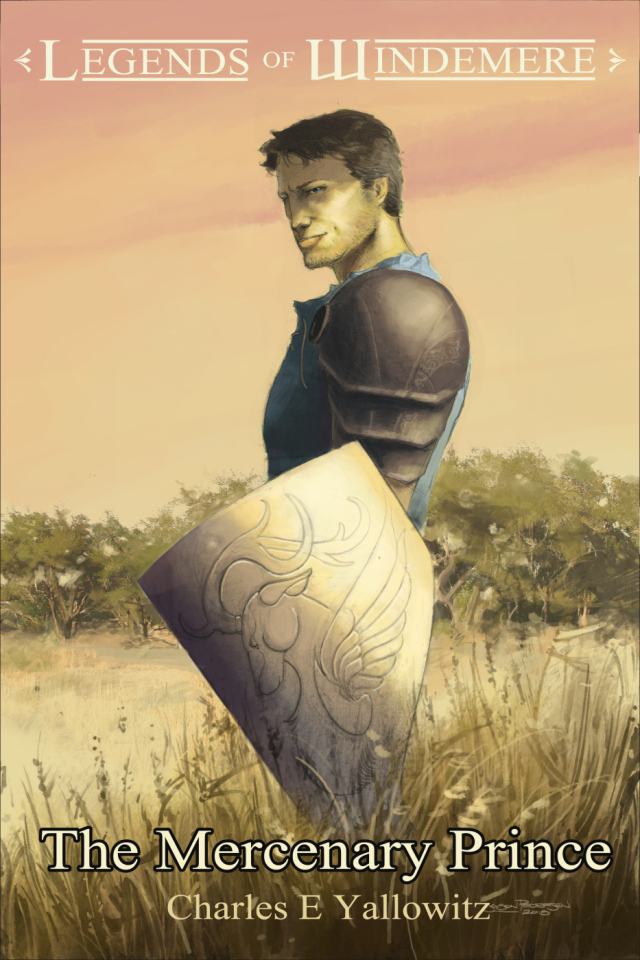
Cover Art by Jason Pedersen

In the initial planning of Legends of Windemere, I didn’t have anything special for Delvin Cunningham.  He grew into the tactical leader of the champions, the secondary peacemaker, and the kind of romantic interest of Nyx.  This was unfortunate because he had a lot going for him in terms of character.  A lot of world-building stemmed from Delvin, which is why I redid my plan to give him a book that focuses on his personal story.  After all, everyone else had it while Delvin got his big debut at the end of Family of the Tri-Rune.  So, he was overshadowed by Timoran appearing earlier and kind of came off as an afterthought.  Was this because of how he was?

Oddly enough, I think Delvin’s initial laid back demeanor allowed him to be introduced in a more low key method.  He proved himself as a character fairly quickly by showing that he could meld into the group without a problem.  There wasn’t a learning curve with him because he could figure out the strengths and weaknesses of people almost subconsciously and adapt.  Having been trained by Selenia Hamilton, he has a more standard fighting style than the flashier champions.  Again, Delvin is more passive and patient since he’s about defense and looking for an opening.  The only times he’s very aggressive is when Nyx is injured or he’s following Luke’s lead, which is something he quickly becomes aware of in the series.  He probably came the closest to figuring out the cores and how they affect others before the final book.

Two world-building areas got boosted and flushed out thanks to Delvin.  First, I called him the Mercenary Prince, which led to me creating the organized system of mercenaries. This was established by Selenia Hamilton, his teacher, before she retired to run her academy and hand over the Mercenary Queen title.  I had it that there are the four ranks that are given to the most successful mercenaries, which tends to be agreed upon by the community.  The Queen, King, and Prince were active in the series with the Princess only making a brief appearance.  This means I’ll have to do more mercenary stuff down the road.  She’s still a mystery to me though, but I have a feeling that I know who will be showing up with the title in the future.

The second area that I worked on was the Yagervan Plains, which is a huge chunk of the Ralian continent.  Delvin came from this region, which is inhabited by wandering groups that follow various migratory animals.  It isn’t part of the Serabian kingdom, so there is a stark break from forest and meadows to grasslands.  Walls have been put in a few areas where there are more aggressive nomads since not all of the groups have trade treaties with their neighbors.  So, Delvin is actually a foreigner because he was lost as a child when his family followed a herd into the icy region of the north.  Bullies pushed him onto a piece of ice that floated away and he was eventually found by a ship.  His story involves going home, which is difficult since his people are superstitious.  Nobody looked for him because he was thought to be dead and they would mistake him for a ghost, which means they are being cursed.  By the way, The Mercenary Prince is also where Mab from War of Nytefall makes her debut to create a crossover.  Definitely a fun story that you should check out.

Delvin’s core was one of the most difficult things to figure out because he had similarities to Timoran in terms of behavior.  I considered one being honor and the other loyalty, but that felt like Delvin was being overshadowed again.  It was only when I put him on a solo adventure with his old crew of mercenaries that I got an inkling of what really made him tick.  Friendship is a very important part of Delvin’s life.  He doesn’t look at the champions or the Frozen Blades as simple allies and coworkers.  They’re his friends.  He makes strategies that will not put them in harm and he does whatever it takes to get everyone out of situations alive.  Even the powers that awaken within him are more useful in helping others than strengthening himself.  That isn’t because of how they work, but it’s how he functions.  Delvin is the last one on his own mind when he is planning, so he puts friends ahead of him almost out of instinct.

A final note is that I still put Delvin in a category that is similar to Sari.  I feel like I could have done more with him.  Unlike Sari, who fought me on such things due to remaining broken, the challenge here was Delvin being very passive.  It’s described as lazy early on in the series, but that isn’t the case.  While Timoran would sit and listen to conversations, Delvin would sit and observe.  He is always analyzing the world around him in case he needs to make a strategy.  This forced him into the background fairly often because it really wasn’t in his nature to be running wild.  Maybe I should say that I could have done more, but he wouldn’t let me?
Posted in Character Origins, Legends of Windemere | Tagged , , , , , , , , , , , , , , , , , , , | 9 Comments

Jung’s Archetypes: The Ego Quartet

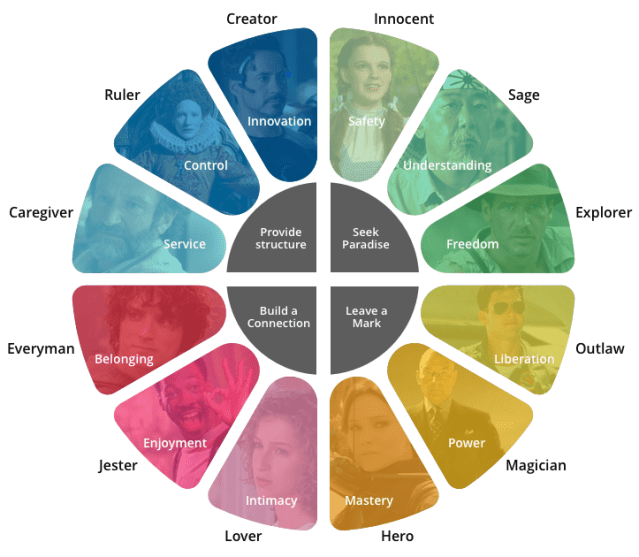
You can see examples of each one in the above picture, which I’m going to attach to each of the posts.  This one is going to be about the 4 Ego Archetypes, which are Innocent, Everyman, Hero, and Caregiver.  As you can see each one is in a different cardinal section, which helps further divide them.  Now, I’m going to do my best to give my own take on this in terms of writing.  Will it be perfect?  No, but I’m hoping to get clear points across and help people in the character creation.

The Innocent

Motto– Free to be you and me.

The Innocent falls into the ‘Freedom’ cardinal, which is a desire for paradise.  These are characters that want safety and are scared of doing something wrong.  They might have a severe fear of punishment, but also a naivete that allows them to be led into unwittingly going against their own desire.  Innocents can be overbearingly optimistic and some readers will find them annoying because they will continue smiling even when bad things are happening.  Many authors use them as obnoxious side characters that are destined to be broken over the course of the story.  Still, there is strength in an unwavering positive attitude if written correctly.  It can even be their greatest weapon.

Reason for this one being under ego is because they are fueled by ego.  It is their personal belief that there is good in everyone that drives them.

The Everyman (Also Called ‘The Orphan’)

Motto– All men and women are created equal.

The Everyman is part of the ‘Social’ cardinal, so they have a focus on connecting to other characters.  They want to belong and fear being left out, which can also turn into a fear of standing out.  Unwilling heroes can fall into this category even though they may have to eventually change to another archetype.  An interesting aspect of the Everyman is that due to wanting to be part of a group, they have a high risk of losing their individuality.  This can be a character who is taken over by a belief system that causes harm to them or others.  You might think these characters are weak, but they do have a strength in that they tend to be very grounded.  Unlike the Innocent, they aren’t as positive and have a level of standards.  That possibility of brainwashing isn’t as easy to do as you would think because the groups they join needs to attract them.

Now, I mention ‘The Orphan’ here, which is an alternative and darker version.  These are characters who have been emotionally and/or mentally betrayed.  A sense of abandonment is here to some extent. Characters want someone to take over their life or at least guide them to a better one.  Failure to connect creates more disappointment, which can turn them into an angry and manipulative character.  Personally, I’m not a fan of this being called ‘The Orphan’ because of the connotation.  I would call it ‘The Outcast’, which would be the Everyman’s shadow.  Both want to connect, but one is still trying for good while the other is using the connections to lash out.

The Hero

Motto–  Where there’s a will, there’s a way.

This is probably the archetype that everyone can imagine fairly easily.  The Hero is the character who sets out to leave a mark on the world.  You see them in mythology and modern tales, each one sharing the same courageous core.  This archetype actually has a fear of being afraid, which can lead to arrogance and reckless behavior.  You get a variety of ego here though.  Some characters will acknowledge their limits then work within those or seek to extend them.  Others continue on as if they are perfect, which is asking for trouble.  Even if you knock a Hero down a few pegs, they continue marching on or find an alternate route.  Don’t think I really have to say more about this one since it’s the clearest of the 12 Archetypes.

The Caregiver

Motto–  Love your neighbor as yourself

The Caregiver is part of the ‘Order’ cardinal, which is why they are focused on protecting other people.  It isn’t always the same level.  Some characters will want to defend all they see while others have a single charge that they are focused on.  Martyrs are fairly common here.  While the Everyman has empathy, the Caregiver is even more so.  The former senses the emotions in regards to their own state while the latter feels the emotions of others to know how to react.  Seeing pain and sadness will drive them to fix the problem.  Sacrifice is not uncommon for these characters, which can make them very powerful.

The downsides here are that they can be easy to manipulate or cross a line in their desire to protect.  A villain can force a Caregiver to work for them by taking hostages.  It’s not a great plan since it falls apart once the people are hurt or the Caregiver finds a way to free them.  Still, this is a commonly used weakness.  The crossing of a line is when you have a villainous Caregiver.  They are determined to protect someone to the point where they are hurting other people.  Best example that I can think of is the version of Mister Freeze who was trying to help his cryogenically frozen wife.  He was doing evil deeds to protect and revive her.  Villains like this can be turned hero if their charge is rescued from a situation or convinces them to change their ways.  On the other hand, they can also go full berserker if the one they protect is killed.

What do you think of the Ego types?

Posted in Thoughts | Tagged , , , , , , , , , , , , | 20 Comments

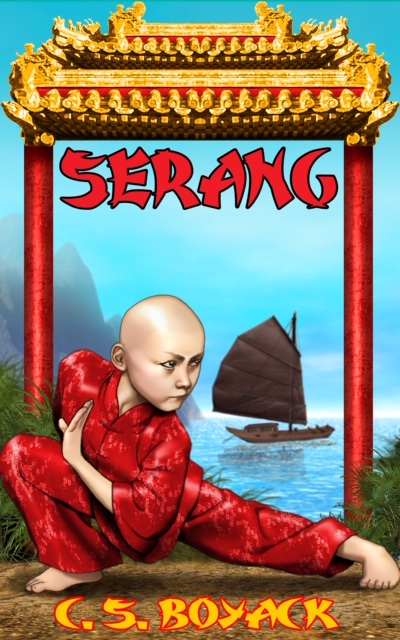
New Release: Serang by C.S. Boyack #fantasy #adventure (What Do You Think of Prequels?)

(Today, I have C.S. Boyack, who is here to promote his newest book.  It is called Serang and is a prequel to Voyage of the Lanternfish.  It’s his first prequel, so I asked him to talk about this experience.  Enjoy.)

Thanks for having me over again, Charles. I decided 2019 was the year I dove into series work. I’m taking on two of them, in two different styles. One is the kind that uses the same characters in new stories and can last as long as I have ideas for them. The other one is intended to be a classic trilogy, and that’s the one I want to talk about today.

Voyage of the Lanternfish is a pirate adventure/fantasy. I’m knee deep into the second story right now. One of the things I tried to do is pepper the crew with a colorful cast from all over the world. In my mind, pirates were kind of the downtrodden and outcasts of society. To that end, a character named Serang joined the crew.

I made an effort to give the more important pirates a line or two of background, but nothing that would be considered an info-dump or excessive backstory. It all worked out pretty well, allowing me to keep focus on the main tale, but the character of Serang fascinated me.

We visited her home country to pull off what amounts to a big con job, and the country itself had a lot of potential. It occurred to me that it’s popular to write a supporting story for a series these days. One of my partners over at Story Empire did it, and they were good stories in their own right. It made sense for me to write Serang, and it has the added bonus of holding fans over until I can finish the next book in the trilogy.

That’s where the problems began, or so I perceived. On the one hand, Lanternfish has a lot of comedy elements. Serang is not one of them. She’s a very serious, and even dangerous character. You can see this problem taking shape in the form of what to do with reader expectations. New readers won’t have expectations, but Lanternfish fans will. Will they expect the ass kicker version of Serang they already know, or will they expect more of that Lanternfish undertone of humor?

Splitting the baby might seem like a reasonable option, but that’s not what I did. This is a coming of age story about a girl who’s seen a lot of violence and suffered great emotional trauma. She went through the fire and came out steel. Serang is the story of that fire.

It’s still one of my stories, so there are some light moments and some fun banter, but I knew whatever I wrote had to lead toward the character Serang is in Lanternfish. It’s a neat exercise for an author, because you have to think a bit deeper about where you’re going to wind up. At the end, she has to be the person we saw in Lanternfish, or nearly so.

Lanternfish has fantasy elements, like sea monsters and magic, some of which is Serang’s magic. She doesn’t completely understand it, but I had to include bits about how we got there. This book has bits and pieces of an explanation that will let readers understand the basics without totally explaining it. That’s also a tightrope, because magic shouldn’t be completely explained.

I needed to keep that compass pointed toward the version of Serang we saw in Lanternfish, so I added bits about one of her masters who plays an odd clay flute, this is how she came to adopt her own bamboo flute. I added snippets about her strange attire, and readers will understand why she wraps her fists and forearms all the time. (She’s hiding something.)

I’m pleased with the end result, but readers will be the true judge of how I did. Serang is a stand-alone novel, which is something I built my writing career around, but it also supports the Lanternfish trilogy. I hope your fans will give it a whirl.

***

Monastic life is all about duty, service, harmony. For Serang, a young girl abandoned at the temple by her mother after the death of her father, that life becomes all she knows. The monks give her purpose, and become her new family.

When political upheaval causes chaos throughout the land, Serang again loses everything and everyone she loves. Alone, she struggles to survive. She convinces a wandering monk to take her under his wing and complete her training. Thus begin her adventures through strange lands and her trials to become a confident, capable, independent adult.

This is a coming of age story set in a fantasy world. It’s filled with monsters and martial arts, difficulties and dangers. The serious situations preclude the story from the levity of its predecessor, Voyage of the Lanternfish, but it provides a compelling look at the origin of one of the saga’s most fascinating characters.

Purchase Link http://mybook.to/Serang 

Social Media:

Blog My Novels  Twitter Goodreads Facebook Pinterest BookBub

Posted in Guest Blogging, Spotlight | Tagged , , , , , , , , , , , , | 19 Comments

Jung’s Archetypes: Brief Overview

This coming week, I’m going to make three posts about Carl Jung’s Archetypes.  I will be taking the 12 and discussing them under the 3 categories of Ego, Soul, and Self.  Now . . . I think I missed something.  Oh yeah!  People might not have any idea what this is, especially since I can’t call myself even close to an expert.  I really stumbled onto this and remembered hearing a little during my psychology classes in college.  That’s why I’m doing this post to help people get an idea of what I’m going to discuss on Monday, Wednesday, and Friday.

First, this site has a great amount of information and I will be using it to help me formulate my posts.

I’m going to talk about how these archetypes help with writing characters, which brings up the idea that understanding psychology can aid fiction authors.  This sounds like a no-brainer, but not everyone thinks this.  The more you understand the human mind, the more varied and deep your characters will be.  It doesn’t have to be a thorough understanding, but learn enough to prevent yourself from birthing only two-dimensional beings.  Carl Jung’s archetypes alone can be very helpful, which is why I’m going to do my best to introduce them throughout the week.

Archetypes are originals, typical examples, or recurrent themes that can be identified, but we’re going to look at the second one more.  Jung found 12 archetypes that cover the full range of human motivations and everyone has a dominant.  He believed that the psyche can be defined by these and the 12 have been analyzed to great extent.  Each one has a weakness, strength, something they seek, fears, and talents much like how we look at zodiac signs.  There are various divisions for the archetypes as well, but I’ve seen two very common ones:

  1. Ego, Self, and Soul is one of them, which I will touch on throughout the week.  The 4 in each category share the same focus in what to fuel.  It’s very similar on the surface to Id, Ego, and Super Ego, which shows the connection between Jung and Freud as you see in the picture above.
  2. The other is 4 orientations that focus on what the archetypes desire.  They either seek to leave a mark on the world, provide structure, connect to others, or seek utter freedom.  You can already tell how this can be used to forge characters both good and evil.

Going back to the point about each person having a dominant archetype, this doesn’t mean that you only use one for a character.  They can have multiple ones with a single being at the core.  This gives them multiple facets and the person may even change as they progress through the story.  It is for this reason that an author using Jung’s work to help in their writing needs to understand and look into all of the categories.  Cherry-picking here will prevent you from getting the full picture and leave out some very valuable pieces of the human psyche.  We might not like all 12 archetypes, but that might be because there are those that are opposite of our own personality.  This is when we have to step out of our heads and be neutral.

What are the 12 Archetypes?  (Ego 1-4, Soul 5-8, Self 9-12)

  1. The Innocent
  2. The Everyman
  3. The Hero
  4. The Caregiver
  5. The Explorer
  6. The Rebel
  7. The Lover
  8. The Creator/Artist (All of us probably know this one to some extent.)
  9. The Jester
  10. The Sage
  11. The Magician
  12. The Ruler

As I look over these, I can see that they are fairly basic and straightforward at times.  Each one has a motto that I’m going to share since they’re very clear.  The bluntness of some of these makes it clear why you need to mix them up.  If someone was solely a Ruler who believes in power then that’s a bland villain.  Combine a Ruler with a Caregiver to get a benevolent leader.  There does seem to be polar opposites here at times and they show how the human psyche is designed to be balanced.  You need one archetype to temper another even if it’s not as pronounced.

Well, this is only an overview to get people ready.  I don’t want to go into too many details and leave myself nothing for the week.  Hope people check out that site, which I’m going to mention again HERE.

Posted in Uncategorized | Tagged , , , , , , , , , | 16 Comments

9 Ways To Market Your Book With No Money

Nicholas C. Rossis's avatarNicholas C. Rossis

This is a guest post by Kurt Walker. Kurt is a digital marketer and a college paper help writer at Easyessay.org. Besides that, Kurt is a guest blogger at AustralianWritings, UK.bestessays.com, and Superior Paper writing service. Kurt specializes in email and social media marketing. He is the father of three kids and a passionate New York Knicks fan.

Books | From the blog of Nicholas C. Rossis, author of science fiction, the Pearseus epic fantasy series and children's books

9 Ways To Market Your Book With No Money

While publishing has never been easier, selling one has never been harder, especially for independent authors who have to rely on their own skills and professional networks. A report claims that 2.2 million new titles are published worldwide each year, so you definitely have a lot of competitors to deal with.

The situation gets even more difficult for authors who want to promote their works on a shoestring budget. It’s a very tricky situation, but don’t fall into despair…

View original post 863 more words

Posted in Uncategorized | 3 Comments

Goal Post: Notes from the Comedy of Errors Weekend

Last weekend, I could have feasibly written 9 chapter sections since I had three days to work.  Minus one for helping a friend and another for a gathering, so I should have been able to get 6 down.  I only wrote 3 . . . What went wrong?

Saturday–  I wrote in the morning and went to help my friend with some packing.  This involved a lot of old things and the dust was flying.  I returned home with a bad cough, so I was chugging tea to clear my throat.  The night did look promising, but I never start writing until I do the phone call with my son.  It was almost 9 PM when I heard from him, so there went that night.

Sunday–  Wrote in the morning and hoped to do some more before heading out.  It didn’t happen because I got stuck with errands and that cough came back a bit.  Had fun at my friend’s and headed home thinking I had Monday for a full day of writing . . . Oh, what a fool I was?

Monday–  WTF!?  My television died!  You might think this is a godsend, but I have a 1o-year-old.  He isn’t going to agree that it being dead is good because daddy can get more writing done.  So, I spent the morning hunting for a new one.  $500 later, I have a new Smart TV that I tinkered with for a few hours.  Got some writing done afterwards, but I ended up having to rush through several other things.  This resulted in me getting locked out of my house.  Thankfully, my neighbors have a spare key and I got back in, but I was off to my son’s martial arts class to say hi.  No writing at night because I had to pick my parents up and there was an . . . issue with the ex-wife.

That was that and the week commenced.  I had a lot of fun at work, but Friday was rather crazy.  Had to stay behind from a field trip, which I understood.  This had me covering classes left and right, so I wasn’t bored.  That’s really all I’ve got as far as work/school goes.  I’m 15 days away from being able to hand in paperwork to become a TA Level III, which is cool.  Kind of slowing a bit because I’ve had so much on my plate, but I can’t do much else until next year.

Let’s see . . . I’m looking at a February release for War of Nytefall: Eradication, so my 2’s of fans should be happy.  I added a few more Clyde necklace mentions in the book, but I noticed that I kind of stopped halfway through.  He’s still wearing it, but I couldn’t find any easy spots to make note of it.  Need to work on a blurb too, which might be in December since I’m having trouble figuring one out.  Been so long since I wrote one, so I’m a little stumped.  Want to keep my ‘opening hook, 3-4 sentences of plot, and closing question/hook’ setup though.

Not sure what else to talk about here.  I’ve been looking more at my superhero stuff, which I might make a Sunday post again soon.  Need to get all of that together and figure out what goes under the umbrella.  Does it make sense that I’m putting them and my alien bounty hunter in Windemere?  Superheroes are everywhere, so I think having them operating in a fantasy world would be a unique twist.  I’d use them to flush out one of the other continents like Legends did for Ralian and Sin will do for Cerascent.  Not much happens on Canst’s Fields beyond ‘Ruins of the Zodiac Gods’, so I need to do something there.  Maybe categorizing books and talking about them when I need a Sunday post will work for a bit before I give them individual posts next year.

Okay, I’ve done enough rambling.  I have my son this weekend, but I might be able to get a little writing done.  He has activities this morning, which gives me 2 hours to get something started.  My sister is visiting too, so she wants to have an outing with him and that can give me the afternoon.  Nighttime may help as well, especially since I’m out of television stuff to watch for now.  This can make next weekend when I already have an appointment and a gathering easier to handle.  Will I finish 10 of the 20 chapters before 2020?  Doubt it, but I may be close.

Going back to the television thing, I finished ‘Wynona Earp’ and have been searching Netflix and Prime for something else.  Got another season of ‘Glow’ left, but I’m not feeling like I’m in the mood for it right now.  Looking at ‘Altered Carbon’, ‘Haven’, ‘Man in the High Castle’, ‘iZombie’ and ‘Carnival Row’.  Got ‘The Witcher’ coming in late December, but that’s a ways off.  Anybody watch any of those other shows or knowing anything fantasy/sci-fi that’s worth watching?

Goals of the week:

  1. Finish Chapter 4 of Eradication.
  2. Tinker a little with my series/book list.
  3. Tinker with the fantasy tip book.  This is taking a lot longer than I expected.
  4. Get stuff ready to cook a dish for school Thanksgiving Feast.
  5. Play video games with the munchkin, but not too much.
  6. Read more ‘Cardcaptor Sakura’ . . . Don’t judge me!
Posted in Goal Posts | Tagged , , , , , , | 14 Comments

The Infamous Retelling of An Old Story (7 Tips!)

The meme is right, but I’m going to talk about retellings more than remakes.  Is there a difference?  At first glance, I thought there wasn’t.  Then I considered the nuances a bit more and realized it was subtle.  A remake/reboot is when an idea is totally overhauled almost to the point where it’s only related to the original by a few scraps.  These are left to retain the minimal level of connection for nostalgia purposes.  Retelling is when much of the original is kept, but is changed to suit the new narrative.  Perhaps the perspective is being done from the villain’s side or it changes the time period.  The audience can still identify many similarities while getting a sense of new.  Not an easy thing to pull off, so what are some thing to do?

That’s right . . . I’m going back to the post title and making this a 7 list.  Mostly because my brain keeps going into that layout.  Damn thing has gotten bossier ever since I cut back on the rum and vodka.

  1. Read the original and as many retellings as you can.  Do not go in with only a general idea of the source material.  You might think that knowing too much many influence your own take too much.  I’d say that isn’t as possible as being ignorant and botching the delicate union of new and old.  You may find some unique angles in the plot that haven’t been explored or discover minor characters that can be flushed out.  There’s no telling what might happen, but at least you will know enough of the past to show it the respect it deserves.
  2. Do NOT badmouth the source material and act like it’s an inferior product that should be honored by your attention.  Seriously, I’ve seen people do a retelling, remake, or reboot then spit on the original.  This makes you come across as an asshole who wants the built-in nostalgia and possible money of the original, but thinks very little of the fans and story.  Again, you need to demonstrate some respect unless upsetting people is part of your marketing scheme.  That’s entirely possible in this day and age.
  3. Ask yourself questions about the original.  This can lead to covering plot holes in your own version.  It may be something that other people are curious about, so you can help to give an analysis of the original.  With it being in your story, it won’t be true canon, but it fits into the fun of discussing stories.  These questions can be about characters, plot, setting, or anything that will help you build your retelling.
  4. Any major changes need to be thought out beforehand.  If you’re going to retell ‘The Little Mermaid’ and put it in a desert then you’re going to need to explain yourself.  It can’t be done on a whim since her being in the ocean is pretty central to being a mermaid.  Maybe they’re sand mermaids or live in an underground sea.  Just imagine this issue like you’re working with dominoes.  When you knock down one, a few more are going to go.
  5. Don’t be obsessed with originality to the point where you’re barely touching on the source material.  The goal is to tell a known story with a new twist instead of something entirely fresh.  If you’re that focused on being 100% original then retelling isn’t the genre for you.  Even if you’re hoping to get a foot in the door, you need to realize that there are major limits here.
  6. Please take notes.  Whether it be on the original or your ideas, this can really help you keep things on track.
  7. Accept that you will be compared to the original and other retellings.  Some people won’t like what you do.  This is the nature of the beast and some is better than everyone hating your work.  Don’t get into fights after publication.  You can explain why you made some decisions, but be respectful even in the face of venom.  Stepping into the arena of beloved stories means you’re going to make enemies, so the sooner you realize this, the easier it will be.
Posted in Thoughts | Tagged , , , , , , , , , , | 11 Comments

The Horrific History of St. Albans Bible

Nicholas C. Rossis's avatarNicholas C. Rossis

You may remember Erik Kwakkel or Leiden University from earlier posts like A Fantasy Tip From History: Medieval Spam. Erik recently shared the incredible history of St. Albans Bible. I hope you enjoy it as much as I did!

A Horror Story

In 1964, the New York rare book dealer Philip Duschnes (d. 1970) bought and subsequently broke a splendid medieval Bible produced in early-fourteenth-century Paris.

St. Albans Bible | From the blog of Nicholas C. Rossis, author of science fiction, the Pearseus epic fantasy series and children's booksLeaf from the St Albans Bible auctioned at Christie’s on 10 July 2019 (now part of the McCarthy Collection). Source

Every page is adorned with exuberant decoration, usually with gold leaf. With so much beauty on each page, to Duschnes the manuscript must have seemed ideal for breaking and selling by the leaf. In 1965, he began offering individual leaves for sale in his catalogue 169, stating that others from the same manuscript were available. Cut to order.

Yikes!

Breaking a book

St. Albans Bible | From the blog of Nicholas C. Rossis, author of science fiction, the Pearseus epic fantasy series and children's booksSt…

View original post 587 more words

Posted in Uncategorized | 3 Comments

Derailing Bedlam: End of the Brakeless Line Part 1 #fiction #adventure

As usual, here is your warning that this story has cursing, sex (not graphic), innuendo, and violence.  It’s my Rated-R action adventure called Derailing Bedlam.  This is the fourth outing (third official) for Cassidy and Lloyd, so feel free to click on one of the two covers to see how it started.  Each one is 99 cents!

Cover by Jon Hunsinger

Cover Art by Jon Hunsinger

.

.

.

.

.

.

.

.

.

.

Continue reading →

Posted in Bedlam Series, Derailing Bedlam | Tagged , , , , , , , , , , , , , , , , , , , , , , , | 6 Comments

What is an Homage?

The picture above really does answer the question, but you would be surprised how often people don’t consider the possibility of an homage.  It might not be a common phrase, especially in these days of reboots where it’s more likely to be a copy.  Still, it is a thing and one that I’ve had to consider because of the following:

This slideshow requires JavaScript.

On the left is the cover for the first ‘Castlevania’ video game.  On the left is the cover for my story Quest of the Brokenhearted.  I did research and talked with my cover artist about the concept of an homage.  The story is heavily inspired by those games and I wanted to do a tribute with the cover.  I asked what the limits were and we stuck to those, but I get someone calling me a copycat about twice a year.  People see the picture and jump right to the conclusion that I copied with the hope of not being found out.  It can be frustrating and frightening, especially when it’s a public call out.  You’re stuck deciding between responding, which is dangerous, or leaving it alone and coming off guilty.  I’ve yet to know exactly what to do, but I’m lucky that things have diffused.

So, what are some things to consider if you’re doing an homage?

  1. Check the limits of what you’re about to do.  Homage does come very close to plagiarism regardless of ‘imitation being the sincerest form of flattery’.  That really doesn’t save you from a lawsuit and Cease and Desist letters.  Research is important here and you may have to follow your instinct.  If you think something goes too far then don’t do it.
  2. Don’t hide that it’s an homage.  Dive into it and wear it as a badge.  I wouldn’t say it in the blurb, but mention it on social media.  If you do an interview to promote the book then slip that in there.  Talk about it before your creation is available.  Make sure it is out there that you were inspired by another work and this will make it easier to prove this is an homage.  As I said before, people are more inclined to jump to the plagiarism idea than consider an alternative.
  3. Do not confuse retelling with homage.  The latter is a work that acts as a tribute to a previous creation by way of nods and influence.  The former is taking that original creation and remaking it.  If you do this and try to say it is an homage then you have made a mistake.  People will hold you over the coals for it.
  4. If called out for plagiarism while you know it’s an homage and did your research, do not get nasty.  People make mistakes and they get defensive of stories and characters that they love.  They don’t want to see someone steal from their beloved tales.  You can ignore the comments, which may work.  It can also leave the accusation hanging for others to latch onto.  Responding may be easier if you’ve already done #2 because you can prove it is an homage.  Be polite even if facing insults.

What do you think of when you hear about an homage?  Have you ever done one or would you do one?

Posted in Uncategorized | Tagged , , , , , , | 75 Comments