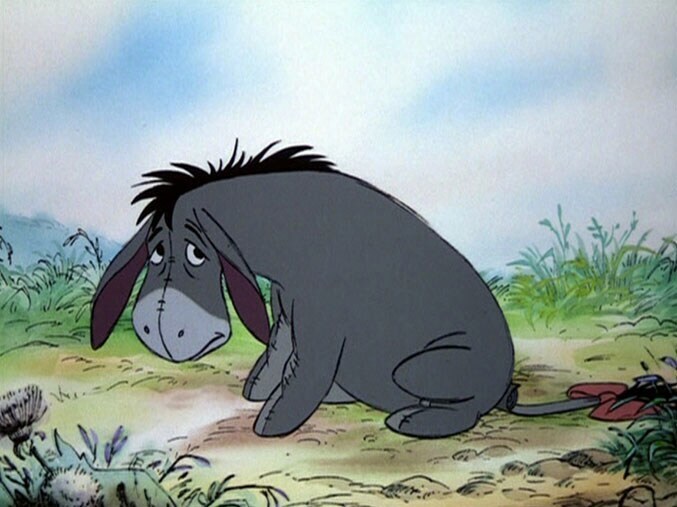
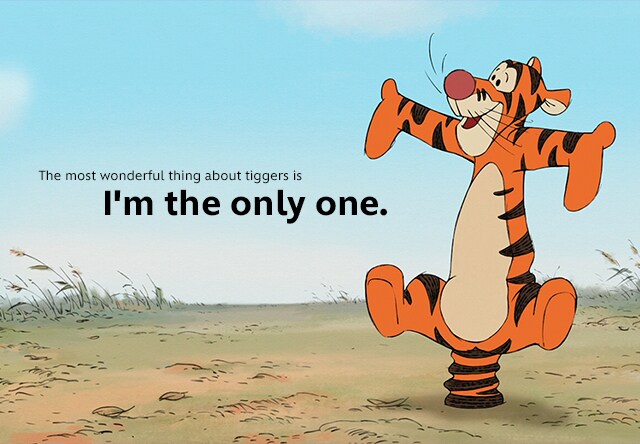
Today is National Winnie the Pooh Day because it’s also A.A. Milne’s birthday. I was thinking of what to post for it since I remember watching the Disney movie of Pooh Bear a lot as a kid. I even had a 100 Acre Wood game on the computer way back in the 1980’s, which involved finding missing items. No moving graphics and totally old school compared to today. That made me think of noting my favorite as a kid and the one I relate to more as an adult:
Kid– Tigger because I was always bouncing around and happy. I mean, most kids loved Tigger with his high energy and song.
Adult– Eeyore because he’s not that happy, but still does stuff and socializes. He finds moments to be happy while not letting it go too far. Eeyore strikes me as a pessimist with anxiety and some depression, but he’s not letting it destroy him.
So, who is your favorite Winnie the Pooh character?
Not a single day went smoothly this week. If this was a rollercoaster, it would be nothing more than spinning with random parts where the cart has to jump a ramp. Pettiness, high emotions, health stuff, and the Verizon outage were all there. Guess I’ll dive into this and try to find some positives.
I did manage to finish chapters 12 and 13 of Darwin & the Joy Path. It didn’t happen last weekend though. One of the sections took a lot of juggling as well as me waking up later than expected. So, I only got one section done that day, which meant I didn’t have enough time to finish. It wasn’t too bad since I needed some thinking time, but not as much as others. With all of the scenes being walking and talking, I didn’t have to consider high action. I’ll take it even though the result was creating a twist in one character’s purpose and shifting a few other things. I may have inadvertently created foreshadowing for this . . .
(Okay, I’m apparently writing this post while my computer tries to update itself. This has been going on for an hour and I want to get the post done. My son has midterms to study for and we want to get some Pokemon in before the weather turns too much for driving to be a sane endeavor. Why do things keep shifting and the window needs to be clicked again?)
. . . Well, the Verizon outage resulted in me not being able to do anything outside of the house. That meant I couldn’t go to the Pokemon event much like nearly everyone else around here. So, I managed to muster what little energy I had to write the end of chapter 13, which is where a bunch of changes happened. I guess they’re changes. They do give Darwin a bit more urgency and focus without altering the whole story. Others involved were heading in this direction, but I kind of pushed them further along. Guess I’ll see how it goes whenever I do an editing read down the road.
Work was really busy since we have (why did the screen go black for a minute?) midterms coming up. This means a big change of schedule for a few days, which can cause a lot of tension. Not only with the students, but us too. I’m not sure what I’m going to do for parts of the day since I can’t bring my laptop along. Pretty rude to be writing after the kids go home while my coworkers are around. So, I might just relax and save chapter 14 for the evening or next weekend. It’s another 3-parter, which means I have a decent shot at getting it done.
An added frustration with the outage was the timing. The beginning of the week still had weather that allowed me to walk outside for a bit. Only my son had a lot of work and Tuesday was a wreck. It was nearly dark by the time I got home, so my son and I had to do our Pokemon stuff and chatting at the mall. At least on Wednesday I could go to a different park and get fresh air before the polar vortex returned Thursday morning . . . Only Verizon was out and my phone was basically useless. I couldn’t even play music, which made the walking around difficult. I like having music or a game to keep me focused a bit. So, I just drove home and finished chapter 13.
There really wasn’t anything else of note this week because the rest was just ridiculous drama. Stuff I can’t go into here even though I want to. Some people are insanely petty and will go scorched earth at the slightest provocation. I’m still dealing with the fallout from one of these people. Glad I have a 3-day weekend with my son to help take my mind off these things.
I started re-watching ‘Fallout’ on Amazon Prime too. Season 2 came out, but I’m not able to watch the long episodes that quickly. The final episode should be released around the same time I catch up. If not, I’ll throw on a comedy or anime. Hard to get the exact timing down since I can’t predict how chaotic things will be. At least the show is entertaining enough that I don’t mind it being the second time through.
Let’s jump to the goals:
Help son study for midterms this weekend.
Work on March blog posts when he studies on his own.
Lego sets for screen break.
Pokemon outing before weather turns or at mall.
Biking on days I can’t go outside.
‘Phi Beta Files’ tinkering.
Laundry and house cleaning because I’m an adult with responsibilities.
Sleep in if possible.
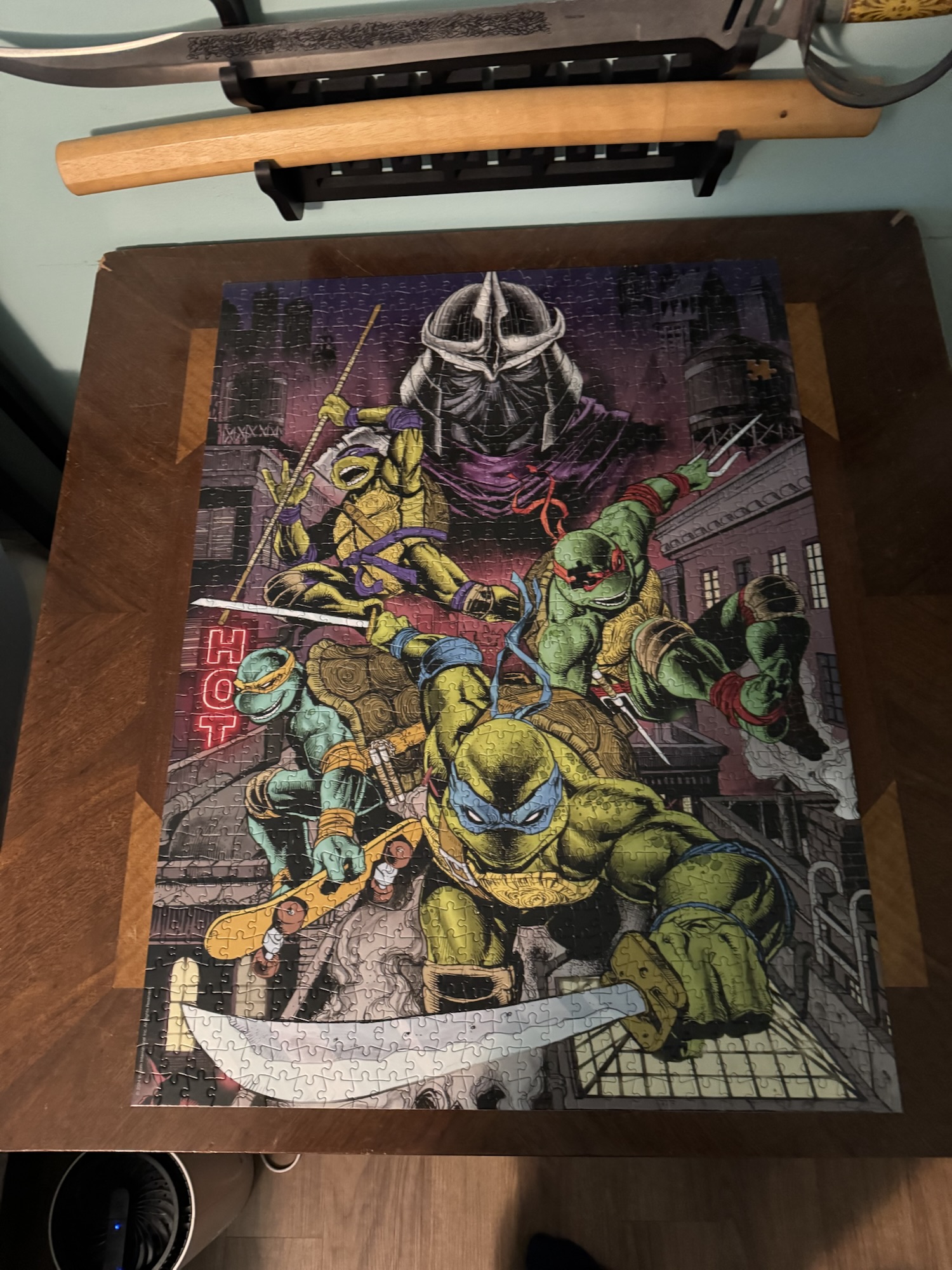
Finally finished a puzzle I started before my hospital stay and recovery. Took a while because I couldn’t sit down for very long. It was a challenge even recently because I’m still having days where I’m sore. Here it is:
Greatest invention for an author. Sure, pictures can tell a story, but words are what I work with.
(Anyone ever try to go so far off the norms that they get stuck?)
I wish to tell a story
For all the world to hear
Using neither prose
Or poem form
I do not want a dialog
Or meters with strict rhyme
I do not want dactyls
Or descriptions that carry on
I wish to tell a story
But I do not want a scheme
I want to write it freely
Using my own way
Depending on a rhythm
That beats within my head
Flowing like a river
That has rapids now and then
I wish to tell a story
Yet I fear my path is false
Because I dodge the standards
That we have all been taught
I risk the wrath of peers
Who hold the rules so high
t makes me wonder slightly
Should I carry on?
One of the interesting things with the flight ability is that one can say it comes with a bunch of secondary powers. It usually isn’t mentioned or gets explained by having the flight come from a special source. For this post, we’re going to talk about what would come with pure flight powers that don’t come from a device or other power.
Temperature Resistance
It gets really cold in the upper atmosphere, especially if the hero can get into the low Mesosphere. I think. Didn’t take Earth Science. I know it gets really hot at a certain point as well. Not to mention reentry can create heat. Still, these characters don’t react to any temperature changes that can come from being high above the planet. Even the high winds don’t have much effect on them.
Radiation Resistance
As you get higher in the atmosphere, you get exposed to more radiation. There is less ozone protection up there. I think that’s how you explain it. Either way, a hero flying high above everything would be exposed to this energy more than someone on the ground. So they would need some type of power to protect them from negative effects. This can range from using the radiation as a power source or simply being immune.
Improved Breathing
The higher the altitude, the less oxygen a person has. This is why people bring oxygen tanks when climbing Mt. Everest. Now, a flying character might go even higher than this, but they show no signs of lacking oxygen. This can be explained by a secondary power where their bodies are able to absorb and/or process oxygen more efficiently to compensate for the lower levels.
Eye Protection
With the speeds that these characters fly, one might imagine the wind going into their faces. There may even be bugs and some small debris like one would notice hitting a windshield. Now, how are these characters still able to see when they have these going into their eyes? There’s the threat of the eyes drying out as well. Birds have this solved with a three eyelid system where the third is a horizontal one for moisturizing and cleaning. People would notice this, so there could be another power protecting their eyes from the effects of fast flight.
Enhanced Hearing
Again with the wind here. Without protection, the flying hero will have the sound of whipping winds in their ears. How can you hear anything else with that noise? I mean, a window down in a moving car can make it hard to hear music, so this has to be much tougher. This would require something that either enhances their hearing or gives them the ability to filter out ambient noises.
Navigation Power
This might not be a big one, but I think a flying person would have trouble finding their way around. They would know cardinal directions, but going to a specific location from high above can be tough. We are used to seeing landmarks from the front instead of the top, so it would take the hero time to figure out a landscape. This doesn’t even explain identifying a person from above since you can’t see faces. A power that allows for navigating and recognizing individuals from above would help here. This would mean the hero won’t have to keep stopping to figure out where they are going.
Hair– Black Eyes– Violet Race– Half-elf/Channeler Hometown– Gaia; Birth town unknown Career– Caster Weapon(s) of Choice– Magic Debut Book– Legends of Windemere: Prodigy of Rainbow Tower
Casters require years of training to master the gestures, incantations, and ingredients that are needed for spellcasting. Nyx can create a tornado of flames if she sneezes, which means she is in a class by herself. Orphaned at the age of 2, she has been raised by Willow and Cyril in the esteemed caster school called Rainbow Tower. Nyx has excelled at her studies with the knowledge that she is meant to face an ancient darkness. Having no skills at surviving outside of a city and not getting along with horses, this young woman has just as much of an uphill battle as Luke Callindor.
It doesn’t help that she has spent most of her life ostracized and feared by the other apprentices. This has caused Nyx to be rather standoffish and short-fused when she is first encountered. Yet, her bond with Luke helps to soften her edges and reveal that she is a fiercely loyal hero. Having lost her family at such a young age, she sees the champions as her brothers and sisters. Except for Delvin Cunningham, who is in the unique position of making her blush on a daily basis. Still, many enemies learn that threatening anyone in Nyx’s family is unhealthy since she is prone to invent spells on the fly. This can include a fire blast that will avoid a hostage and incinerate an enemy, but she does have a love of fighting.
Over the course of the series, Nyx proves to be the most powerful of the champions. This results in her being targeted more often than her companions. Sometimes it is to kill her while other enemies are interested in using her as a living weapon. No matter what their goal, they always find that Nyx is a force to be reckoned with.
Flight is an interesting power. It can be done in multiple ways, which I wanted to list as best I could. The challenge is that I kept thinking of other methods of flight as I came up with the idea. So, I’m just going to diver right into the list and people can add ones I missed in the comments.
Winged Flight– This is when a character flies by the use of wings. It can be natural wings like angels or Man-Bat (Batman villain). It can also be artificial ones like Icarus and The Vulture (Spider-Man villain). The concept is very simple in that the character can fly because they have these wings. There’s not question as to how they work because we think of birds.
Non-Winged Device Flight– This one I’m not going into much detail with because it just came to me. I’m looking primarily at Green Lanterns who can fly through the power of their rings. It isn’t a set of wings or flying simply because they can. There is a clear source that they can lose.
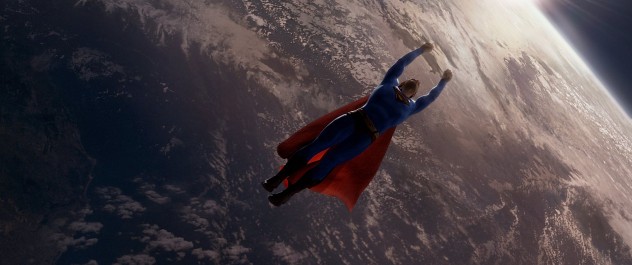
Wingless Flight (Unexplained)– Superman. Up, up, and away going against all forms of physics. These characters simply fly with no real explanation. Sometimes they will get one that makes sense in their world, but isn’t really necessary. You get this a lot in comic books because flight has been around for so long.
Gliding– A minor version of flight that depends on air currents. These characters can use a device or a power, but they can’t fully control their flight like those with the full ability.
Wingless Flight (Wind Control)- Gliding can turn into this if the character can control air currents. Think Storm of the X-Men. She can fly because she rides the air currents, which she commands. The riding is kind of like gliding, but her control is what turns it into actual flight. At least from what I remember.
Telekinesis– I wanted to put this one on here because I’ve seen it in comics a few times and always found it interesting. These characters can move things with their minds, which ends up including their own bodies. This has to take a lot of control and one would expect it to be slower than other forms of flight. It does get enhanced when characters have quick mental reflexes, but it gets tricky.
Booster Tech– Only way I could explain methods of flight depending on propulsion technology. This isn’t using wings, but some form of jet propulsion. Think Iron Man or the Rocketeer. Of course, this usually comes with a suit or some type of enhancements to protect the user. I like when this version has a level of danger since it can be damaged in-flight and result in falling.
Magic– Spells! Don’t think I really have to explain more of this one.
Winged Mount– Adding this only because it technically counts. The rider can fall off though.
The Batwing– Only because I know someone would mention flying a personal jet if I don’t.
Gravity Manipulation– Almost forgot this one. It’s similar to telekinesis, but the power focus is on the area around the person instead of the body. This ability can be used to explain wingless flight as well.
Those are all the ones I could think of while writing the post. Any that you can add?
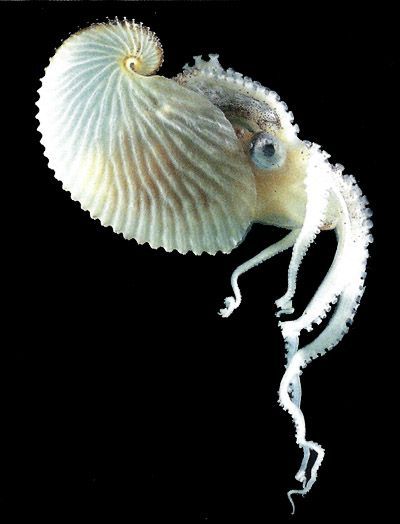
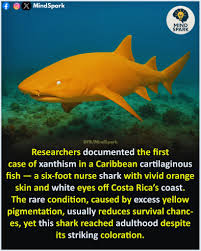
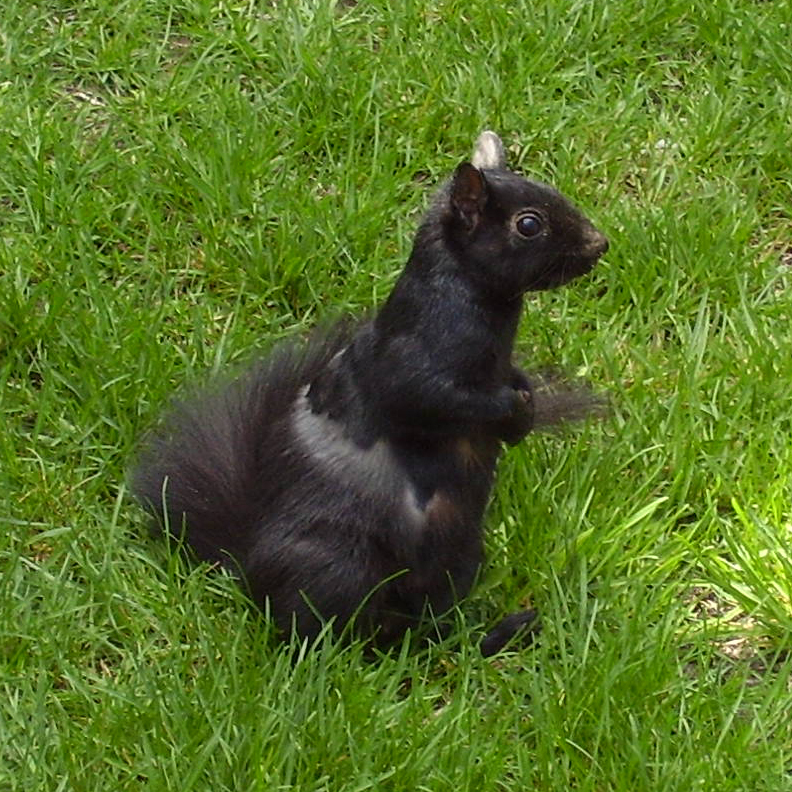
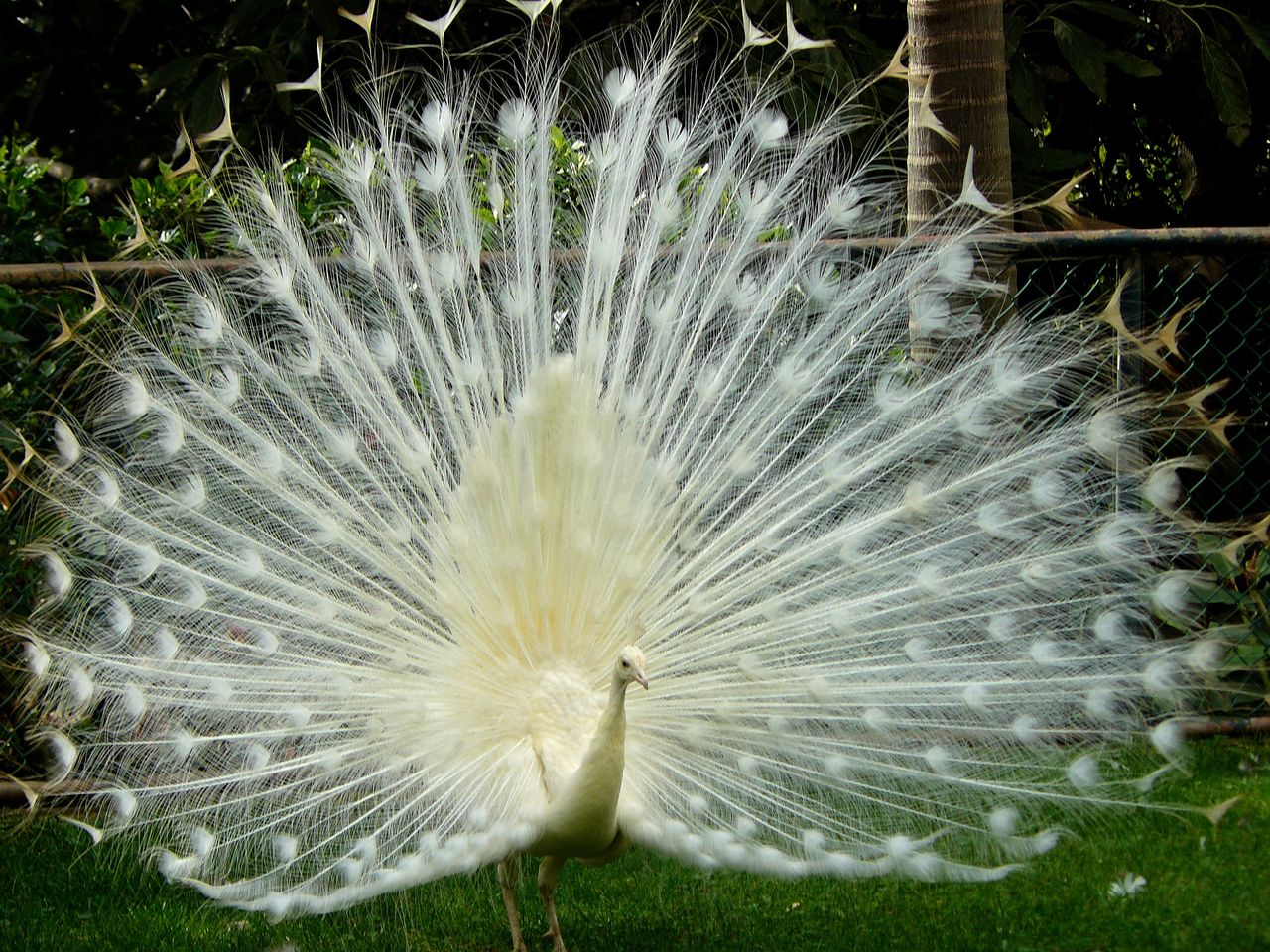
Way back I saw a news story on an orange nurse shark found in the wild. Soon after, I read an article about a snowy owl with orange coloration among its white feathers. I thought they were fake, but apparently they both had Xanthism. This is when there is excess of yellow or orange pigmentation. I got curious to see if there are others along with examples.
First, albinism would fall under this category, but I figure everyone knows about it. This one is popular from what I can tell because albinism in humans shows up in fiction. There is also the interest in white tigers and white alligators. This is when there is a lack of pigmentation (melanin), which affects the eyes and skin. So, what about the other ones in the animal kingdom? (Names and explanations in captions of Google Image Search pictures.)
Xanthism, which creates a yellow/orange coloration. This shark also has albinism.
Axanthism is when there is no yellow pigmentation production\
Melanism, which is excess of melanin
Erythrism, which is caused by an absence or excess of pigmentation to make the organism red
I remember when a new year would feel like a change. There was a sense of a fresh start and things could be left in the past. Oddly enough I think this sensation only existed in elementary school and college. The time in between and after always had years that reminded me that years are a human construct.
So, this week was all about work and parenting. The weather was frigid until Wednesday, but it got cold at night. This meant I had maybe 3 hours of usable decent weather time all week. All other attempts to get fresh air were met with cold temps, darkness, wind, and a park cop telling me to leave as I made my way to my car. I’m not running or power-walking, so I’ll get to where I’m going eventually. Scarred area is still sensitive, especially to cold temps.
Sadly, writing didn’t really happen. I opened Darwin & the Joy Path one evening in the hopes getting some of it done. Instead, I got pulled away by urgent texts and other stuff going around on this side of the laptop. My son wasn’t even here, so I can’t say I was parenting. By the time everything was cleared up, I was so exhausted that I decided it was better to get extra sleep. Tried again Friday night, but my fatigue from the week had caught up with me.
I’m hoping that I can get 4 sections done this weekend. It’s supposed to be really rainy, especially this afternoon. So, I’m going to finish chapter 12 this morning before hitting the park for an hour before the storm arrives. With any luck, I can start chapter 13 before I go out to an event at the mall. Tomorrow should be easier with no events going on. It should work out because the 4 sections are all traveling and talking after three chapters that were predominantly action. If I’m lucky, I’ll be able to finish Darwin & the Joy Pathby the end of February.
Something else I put off for a while is the March blog posts. I’ve got 15 of them to do with a few being fairly easy to write up. My method was typically doing the posts while my son got ready for bed or did homework. That hasn’t been possible due to fatigue and having other things to do. This is why ‘Phi Beta Files’ hasn’t moved much either. If a month hits and I’m not done with the posts then I’m going to have a problem. I can’t write them in ‘real time’. Given how chaotic April is going to be, I might make that a month of revived posts from the early days. Looking back, my recovery throughout December is another reason I’ve slowed down. I couldn’t sit on my desk chair or keep my laptop on my lap due to my issues. It took all day simply to write a chapter section intermittently as long as the meds or pain didn’t knock me out. Guess I’m still recovering in some ways.
I know this is all negative . . . Not sure where I was going with that one. Look, it’s been a rough week with not much to show for it. Don’t ask me what I have to show for this week because I just stared at my screen for 5 minutes struggling to think of something. I don’t want to pick survival because I always do that. To be fair, a big reason for this is certain entities decided to start the year continuing to antagonize me. They know of my anxiety and how to trigger it, so they make sure to do things that will upset me to the point where I’ll react in an ‘uncivilized’ manner. Basically, I’ve reached the point where I promptly tell them to go fuck themselves and the ensuing complaint about my language is met with ‘fuck off’. Look, emotionally abuse someone for years, expect them to eventually treat you with no respect and manners because you’re now a monster. That’s all I’m going to say about that.
This coming week is going to be more of the same with work and meetings at the beginning. I don’t want to tackle any of Darwin & the Joy Path since I have my son for the MLK Jr. weekend, which is right before midterms. During the week, I’d be able to get one section done, but then have to wait awhile. That caused some continuity issues in the past, so it might be best to hold off. So, it might be a focus on March blog posts and then some ‘Phi Beta Files’. I might tinker with that thief guild idea, which changed in my mind during a drive home. Then, I hit a pothole and ended up losing the concept . . . Is that a normal thing or should I be worried?
Goals of the week time:
Finish chapters 12 and 13 of Darwin & the Joy Path.
Get an hour of fresh air each day if weather permits. This includes Pokemon.
When he’s here, help my son study for mid-terms.
Stationary bike since I got back into it last week.
Post, and maybe complete, March posts.
Work on ‘Phi Beta Files’.
Puzzle time when I need a screen break.
Continue to go to bed around 10 or 10:30 to avoid fatigue.
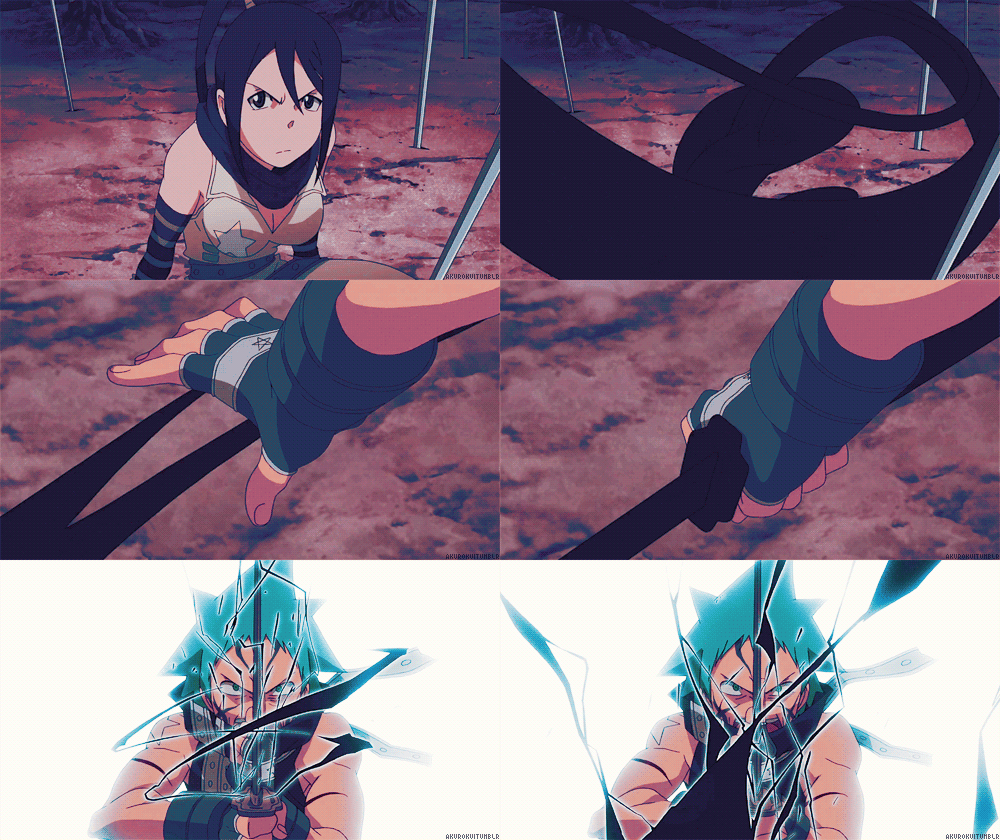
While it isn’t common, I have found a few stories that have people who transform into weapons. Most times, it’s a curse that the character wishes to break. They are wielded by a friend and cannot change back and forth. Yet, there are a few, such as above, that can shift from human to weapon at will. So, how can this work?
People will be looking for an explanation of how, which tends to be magic. Though, another option is the mutant route where you have people who are simply born with this ability. It feels like you can either go simple with a faint explanation or go detailed, but you can’t linger in the middle. Readers will want it to be a solid power or system, so trying to be coy can make it feel more like a pointless gimmick. This is a major setting piece to the world and story too.
Another thing to consider is if the person feels pain or can take damage. Swords chip and can even break, so what does this do to the human form? One would assume that a shattered sword means death. At the very least, massive amounts of broken bones and internal bleeding. Some stories have done it that the person is stuck in weapon form until they are repaired by a specialist. This shouldn’t be without repercussions like scars or loss of strength. Either way, there should always be a risk in regards to the transformation and then use.
You also have the wielder to consider because having just anyone grab this humanoid weapon can be odd. Typically, there seems to be a connection either through blood, marriage, or friendship. For example, ‘Soul Eater’ has the weapons and users partnered up in a training academy. They are connected through lessons and friendship then later by experience. A key point is that the weapons are also assigned, so there is a bond. This means nobody else can use them effectively, which creates a tighter system. Otherwise, everyone is going to be picking up every human weapon, which is confusing and possibly unsanitary.
Personally, I think this ability is more niche than transforming weapons in general. It fits this week’s topic, but it isn’t something you can use often. Stuffing it into your fantasy or science fiction story could be fun, but also clunky. It isn’t like other superpowers or magic because the person has to be wielded by another. They can’t just transform and then hop around as a sword. So, there’s a symbiotic relationship required, which comes with its own subplot. It’s almost required, so you can’t really just use it as a pure gimmick without much thought. That will just make the concept fall flat.
So, what do other people think of this type of power/concept?