( This post originally went live on November 16th, 2022.)
Google Image Search
The one issue I have with writing this post is that omniscient is a pain to write. I get it wrong half the time. So, I might cut this short to stop getting frustrated. That and I think it’s fairly straightforward.
Now, I write in a present tense 3rd person style with a limited POV. I went with limited because it never felt right to have characters or the audience know things that weren’t shown in the book. I push the boundaries whenever I can when describing new locations, but I really have to use dialogue and discovery to get the facts out. This includes character thoughts because I always imagine others standing around waiting for inner monologues to end when I picture a scene. Still, that’s just me and I probably work fast and loose with the rules here. Might even have it wrong now that I think about it. It’s another reason why I needed to look a bit more into this.
So, what are omniscient and limited POV?
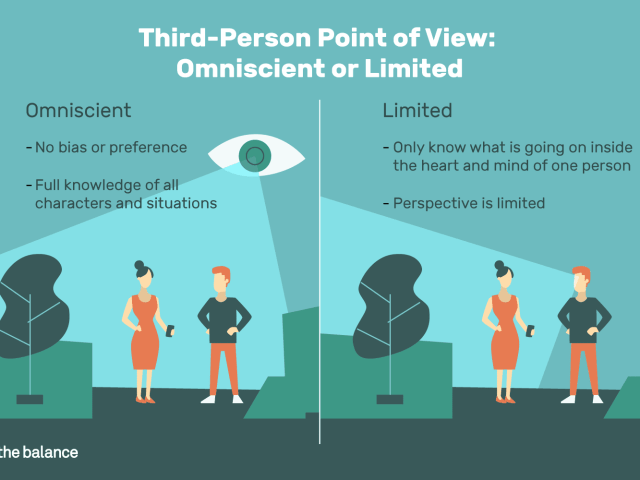
- Omniscient is when the narrator knows everything. They are aware of all events, thoughts, and feelings in a story. This also means that the audience is aware of all these things as well even if the characters are not.
- Limited is when the narrator relates only what they are aware of. They cannot share any thoughts, feelings, and knowledge that they do not have.
Right off the bat, I can see why my own style is going to require a third category later in the post. Anyway, these POVs work off stable and established narrators even if that role changes by the chapter. It’s why people don’t like things switching in mid-chapter and get confused on who they are viewing the world through. After all, POV is the lens that you use to reveal the story. So, you need it to be clear on who is talking and showing the world even if it’s a faceless/bodiless narrator.
I’m sure most people would agree that one is not better than the other. With omniscient, you can share a lot and not be restrained by having to holding some things back. The feelings and thoughts of characters are out there. With limited, you can’t be as free, but you can easily establish more tension and mystery. You’re hiding a lot until the right moment and people will understand why it wasn’t shown at the start. There are different levels of this too, especially since you can be flexible. Most audiences are only subconsciously aware of POV, so that gives you wiggle room. Means beta readers are helpful to see if the ‘feel’ is right.
Now, I did find that there is a third category: Limited Omniscience. This is probably what I use without realizing it. Part of this is due to the present tense since past tense makes it easier to use the two main POVs. Now, this one has the narrator experience actions through a character, but not the thoughts and feelings. You can get that through actions and expressions, but the inner workings of a character are kept hidden until they reveal them. That is the limited part while the omniscient part is knowing all of the experiences and actions that are going on. For example, Luke Callindor’s actions in battle are omniscient POV while his feelings and thoughts are predominantly limited until he makes them known.
I really like the combo, but that’s because it’s what I’ve been using for years. So, I’m rather biased on this. What do other people think about this topic? It’s both fairly simplistic and complicated, which makes it hard to write about. I think it doesn’t help that we all use POV differently even slightly.