
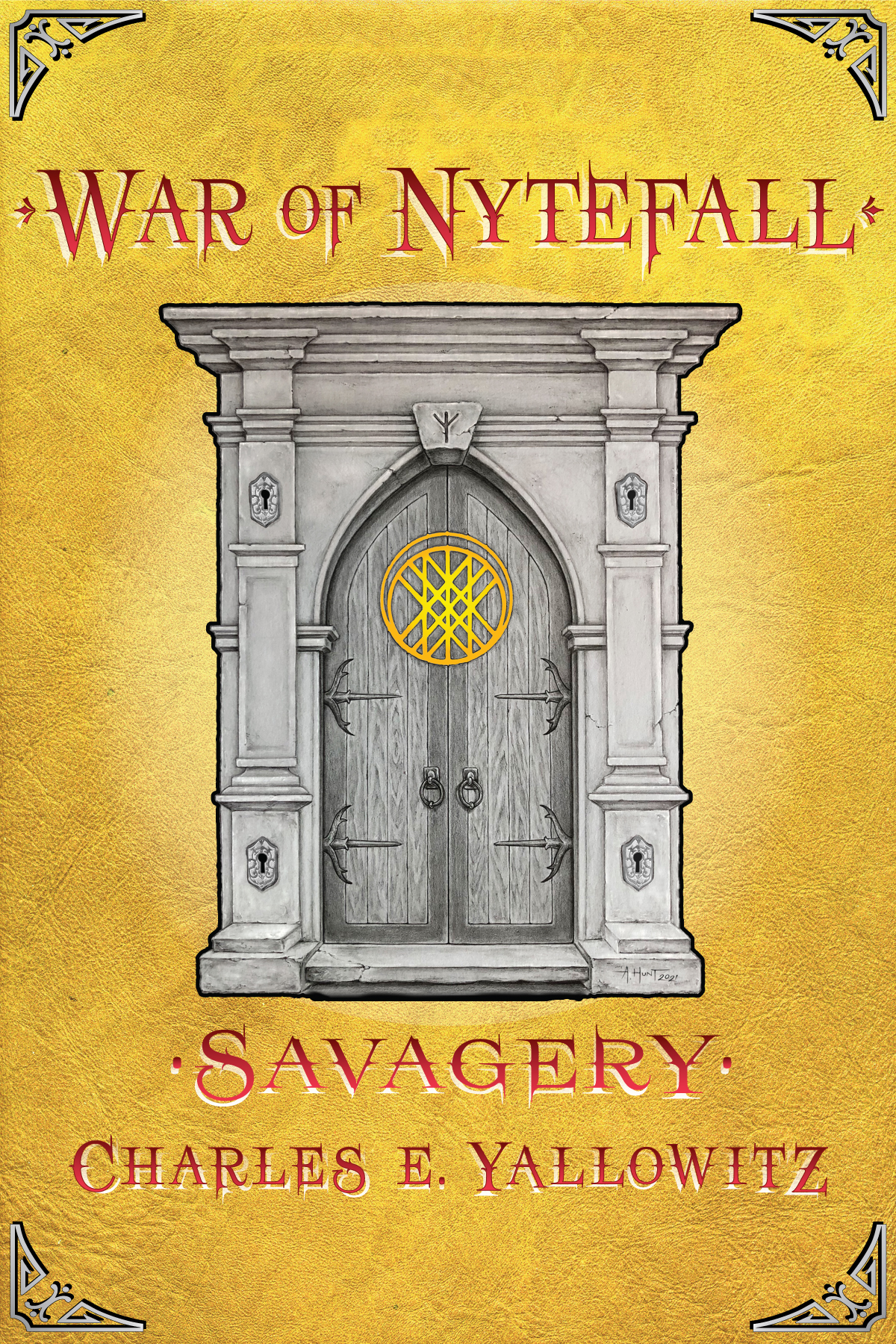
Cover Art by Alison Hunt
This excerpt is from the early parts of War of Nytefall: Savagery. It starts off a mystery that Clyde won’t like the answer to. Mab isn’t looking too good either.

The power of color extends far beyond mere aesthetics. In book-writing, colors can serve as silent storytellers, weaving emotions, symbolism, and …
Using Colors in Your Books
Google Image Search
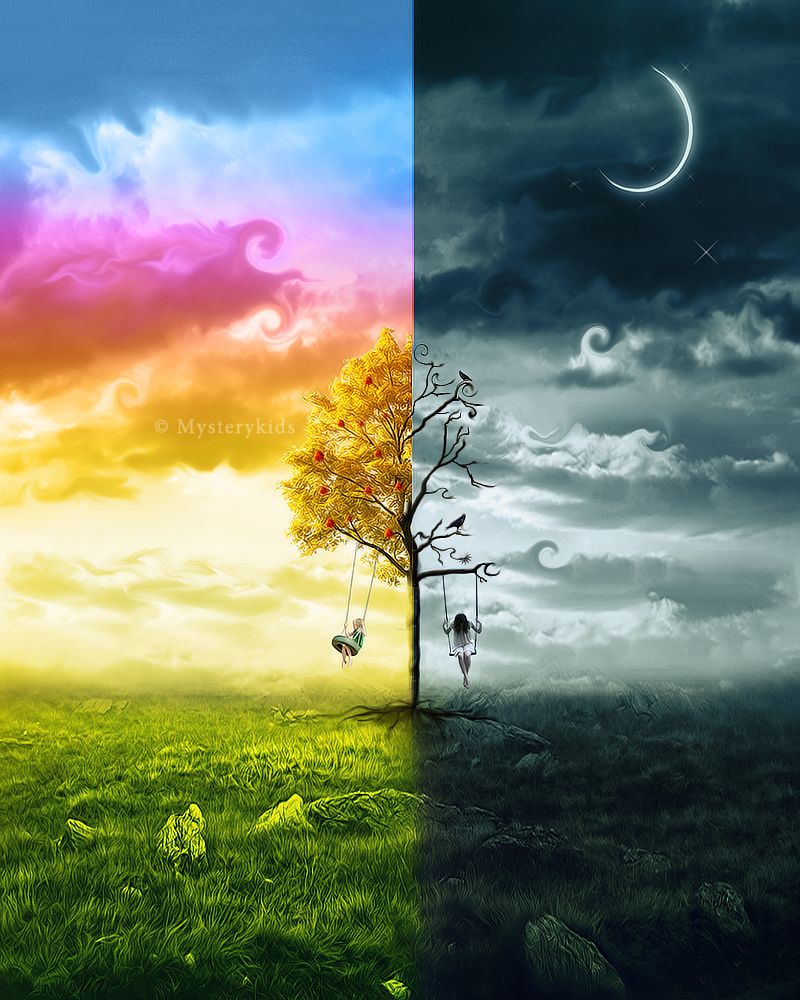
‘Life vs Death’ is probably one of the most basic concepts that any person can wrap their head around. Living things don’t want to die, which means we will root for the hero to survive. We see almost every genre having at least some grouping of stories that involve this conflict. Of course, we’re not looking at genre here because these themes can span all of those.
Adventure and action stories are what would normally have ‘life vs death’ conflicts. A person is in a situation where they are facing death and will struggle to survive. It could be a fantasy story about adventurers, romance about lovers lost at sea, or a drama where someone is fighting to survive cancer. You can see that these will have various levels of action as far as physical violence. There has to be a near constant worry that the heroes will not survive. Even if a person sees plenty of pages left, they need to know that death is possible to achieve this theme.
Some would even call this survival from nature because it is primarily about a death that doesn’t involve purposeful pain. A character who dies simply fails to get away from the threat or make the right decision. There isn’t malice or a desire to make the hero suffer if they fail when it’s a simple ‘life vs death’. The person either lives or dies with nothing in the middle. Again, the simplicity is key and helps to get readers to connect to the overall concept. Going beyond that is another conflict theme that we’ll get into on Wednesday, so please don’t jump ahead.
As someone who writes adventure and action stories, I can see a lot of ‘life vs death’ themes in my work. I do enjoy having my heroes come through scathed, but they still survive. This theme doesn’t mean a hero won’t be touched by violence or harm, but they will simply be alive at the end. So, I feel that you can do just about anything to them as long as they don’t die or end up in a state that prevents them from completing their adventure. Doing so can extend the tension because a hero who is weakened as time goes on will have a higher chance of dying. Increasing the likelihood of death in an adventure is difficult, but pays off better than decreasing the chances.
One of the downsides to this theme is that it ends with more finality than the others. You can’t really go back after death has been achieved. Sure, fantasy has resurrection spells, but that’s a genre thing. It’s also something that shouldn’t be abused unless you’re an epic anime/manga series involving 7 magic orbs. Seriously though, most stories are over when the main character dies or have to create a replacement. This makes ‘life vs death’ a fairly limited theme when compared to others. There is none, or at least very little, gray area to this finale. At best, you can have the death be ambiguous, but that requires sacrificing some closure.
Overall, this will always be one of my favorite story types to write. I like the simplicity even if I’m covering it with complicated machinations. The heroes either live to see another adventure or die. Well, they can retire too, but that’s still living. Either way, I always enjoyed these survival adventures because of the tension they gave me. Then again, I read a lot of books with groups of heroes, which allows you to have the theme end in different ways for each character. That’s another way to skew and expand on this conflict.
So, what do you think of the ‘life vs death’ theme?

Maslow’s Hierarchy of Needs
I stumbled onto an article called The 9 Types of Stories and How to Master Them by Joe Bunting. Don’t know who that is, but I was looking for inspiration for writing-based posts and this came into my search feed. Highly recommend giving the article at least a skim because it had some interesting stuff.
The basic theory seemed to be that all stories are built around 6 values, which come from Maslow’s Hierarchy of Needs. These can be used to create 9 basic stories. I don’t mean genres like fantasy and science fiction. The 9 are:
Yes, some of those are the names of genres, but it’s more about the category. It’s pointed out that you can combine these into a single story. Also, genres tend to work off these 9 types. For example, fantasy can be a story that touches on these values and types with the addition of magic. It’s the magic that makes it fantasy and not the action, adventure, mystery, etc. So, we’re going to push genre to the side of the conversation for the next two weeks. Think about story category.
Now, I’m not going to give each type it’s own day. That didn’t give me as much to work with as I wanted. Instead, I’m going to use the 6 values, which I will list after this paragraph. These values can cover 1-3 types, which I found interesting. Shows how closely connected some of these stories are. So, what are the values taken from Maslow’s Hierarchy of Needs?
Really hope everyone enjoys these posts coming up on Mondays, Wednesdays, and Fridays. Enjoy the rest of your weekend. Please read that article for more information if you’re interested.
To be fair, I do plan on starting the edits on Darwin & the Demon Path. My original plan was to start Friday night, but I decided to write this post instead. Well, I ended up having a glass of whiskey while I cooked dinner and it went right to my head. It hit right after I stopped working with fire and hot oil. It was a homemade Korean Beef Bowl, but that’s not important. Anyway, maybe I did tackle the prologue before bed, but it’s more likely that I decided to call it an early night.
The reason for my not being able to write was that this week was crazy busy with work and parenting. Not to mention I’ve been cooking dinners every night, except Tuesday because it was a busy day. So, no time to dig into the book. It was work, home, parenting if I had my son, cooking, Pokemon Go, and then bed. That’s basically how my week is going unless I can get to the park before work. I need to do that more often and leave my non-parenting weeknights for editing. Maybe next week if I have the energy, but I only have Thursday to attempt it.
I won’t say my time was entirely wasted. Managed to get about half of the November blog posts scheduled AND worked on ‘Phi Beta Files’. Thankfully, my brain wasn’t scrambled so much that I couldn’t do notebook work. Oddly enough, I seemed to be better at coming up with character names and ideas since my mind was already drifting away from my daily issues. Not that I want to make this a habit since this isn’t healthy. On the plus side . . . I got nothing since I also burnt my mouth on the Korean beef bowl.
That’s pretty much the theme of this week too. Actually, the best analogy to my week is how I started every morning. A spider keeps creating a web between a bush and the car parked at the end of the driveway. Started this on Monday and I have blindly walked into the web every morning since then. Just stumbling into one sticky situation and stressful event after another this week. This is why I didn’t have the energy to edit even on the nights I didn’t have my son. Needed extra sleep and relaxation. I’m hoping next week is easier, but we’ll have to see. Probably still start the day walking into that webbing and praying the spider isn’t on me as I drive to work.
Really wish I had other news to share on this post. Started making the ‘Dungeons & Dragons’ Lego set. Been watching this old SyFy series called ‘Eureka’ to give myself a break from anime. My fresh air and exercise has been Pokemon Go for at least an hour every day. Finished my son’s Halloween costume and am only waiting for the wig to arrive from China . . . I already did tons of sewing, so styling a wig isn’t a skill I want to test my luck with since the color isn’t easy to find. Anyway, this is has just been a week of making it to the end. A really sad existence in my opinion.
Having the house to myself should work to my advantage this weekend. Aside from a Pokemon Go event from 2-5 today, I have nothing else planned beyond editing, laundry, and cooking dinner. I should be able to get through at least 4 chapters, especially if I can push myself to 11 PM tonight. I tried to bring a chapter to work last week, but never had the time or quiet space to start in on it. Maybe I’ll try again this week, but it’s probably better to wait until I have a clear night like . . . Dang it. Forgot that a big reason I can’t get time to edit or relax is because of all the appointments I have to attend. They’ve gotten really bad and I’m not even the one making most of them or involved, but I need to be there for reasons.
Let’s jump to the goals of the week before I keep babbling:
Google Image Search
I was going to make this a long post about the topic, but I think I’m going to open the floor to other authors.
Similar to jumping timelines, a story can have events going on at the same time, but in different locations. This always has the challenge of timing, especially if they are going to influence each other. For example, you can’t have a character blow up a dam at night and the other one deal with the immediate flood in the afternoon. Much of this can be fixed in editing by changing the setting, but you still have to remember information from one event to carry over to the next. Even a conversation between characters explaining what they did can be tricky.
I did this in Tribe of the Snow Tiger where most of the heroes were handling the main adventure in one area and the other three were on a small adventure somewhere else. My tactic was to give a few chapters to the focal story and then give one to the other one at a point where you could step away. This seems like a common method and it works as long as one story is more essential than the other. Can’t see two equally important stories doing this without one coming up short. You can’t swap every chapter either because that would just be choppy. Maybe for that, you would have to create separate books/short stories and simply match up the timelines. Seems safer to do that than risk destroying both ideas.
So, let’s open the floor:

Greetings, friends. It’s Jan back with another look at how we can enhance our writing by choosing more impactful words. Today’s word is a doozy – …
Words that pack a punch – part 8

Gods from Disney’s Hercules
(Touching on religion and creation here. Let’s see what happens.)
Genderless being
Both of one body
And an army of forms
It stands
Amid the beginning
Waiting for time
Balls of light
Burst into existence
Firing elements
Into the greatest void
Where they coalesce
Into orbs of grandeur
The being searches
Following a dream
Choosing
From among the globes
A single ball of dirt
Beautiful to its eyes
Creatures stir
Nurtured by its essence
While feeding its great will
They join in symbiosis
Until the being grows old
Decaying to the ground
Last ounce of strength
Pushed upon its death
Toward an imperfect beast
Helping it grow
To rule the world
Powered by ancient essence
The beasts excel
Their numbers flood the landscapes
Adopting dreams
Like their benefactor
Touching on a truth
That always evades their grasp
Time passes on
While the beasts evolve
Deciding on the makers
Naming them
When they had no name
Or any sense of self
Pantheons erupt
To give a sense of birth
They touch on its vast forms
Resurrecting it
As a horde of natural divas
That erode as time moves on
Another view takes hold
As the pantheons disband
The solitary benefactor
Focusing on the body
That housed its power
And granted it to others
The beasts continue
Through the countless years
Evolving their maker
And changing it
To suit their dreams
Granting it an endless life
Google Image Search
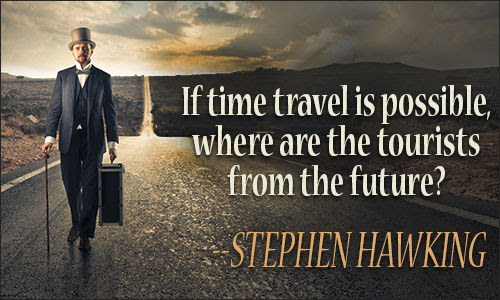
First, I will say that I know what day it is. Last year, I did a regular post and got a few private messages asking if I forgot what today is. I live in New York, grew up in New York, went to college in New York, and remember EXACTLY where I was and what I was doing when 9/11 happened. I talk to the friend I was with every year about it since we walked to the same anthropology class that day only to find it was canceled. As faded as the images are in my head, I still remember the facts and emotions. Now, let’s get to some tips about writing a story with two eras.

Source: Newsboy, Alaska. , None. Photograph. https://www.loc.gov/item/2016821813/. Hello, Story Empire Readers! Liz Gauffreau with you today. In a …
Extra, Extra, Read All About It! – Using Newspapers to Inform Historical Fiction


 Legends of Windemere