Yahoo Image Search
I was trying to find what would be the opposite of ‘Plot Armor’ when I came across this term. It is:
Idiot Plot– The story is only able to continue because everyone involved is an idiot. This means that they either cannot recognize the easy solution or are unable to gain the knowledge needed to get to that conclusion.
Pretty sure all of us can think of a movie, show, or book where we thought the characters were idiots for not seeing the clear answer. This happens a lot in horror movies, but fantasy and science fiction get it too. These genres are filled with characters who aren’t that bright or their IQ drops at the worst possible moment. I think that second option irks me the most because it’s so blunt. At least with people who are idiots from the beginning, you expect them to screw up.
Funny thing is how realistic the ‘Idiot Plot’ is, but we still get annoyed. It’s frustrating to see an answer that the characters don’t notice, which causes the story to keep going. Yet, we run into situations where people make decisions that we see as clear mistakes. Then, disaster occurs and we’re left steaming over feeling like the only ones in the room who know what they’re doing. In this way, I think the ‘Idiot Plot’ is more believable than ‘Plot Armor’.
Even with the realism, authors can get crucified for using this concept, especially since we don’t always realize it’s there. In our minds, we see a perfectly good reason for the characters to make certain decisions. Maybe we couldn’t find a way for them to get all of the information that they need or it’s simply in their personality. Either way, the ‘Idiot Plot’ is camouflaged until a reader gets into the story. They add their own experiences, knowledge, and personality to the scenarios, which shows them the obvious answer that the characters miss. Gets hard for some readers to continue following heroes who seem to be their own worst enemies.
My methods for injecting the ‘Idiot Plot’ into a story have been simple, but they still kind of backfire:
- I make it so that the character’s personality drives him or her to making a bad decision that keeps the story going. Luke Callindor is a great example. He’s impulsive and reckless, so he’s prone to creating messes or deviating a story. He utilizes the ‘Idiot Plot’ to keep going because that’s his nature. Readers still complain about him not seeing the obvious.
- I create situations where the characters don’t have time to think. People make mistakes when rushed, especially with delicate problems. If it’s clear that they can’t step back and think then a reader can see that they will jump to an idea that isn’t the real solution. Again, some readers will ignore the time constraint and complain about the blunder.
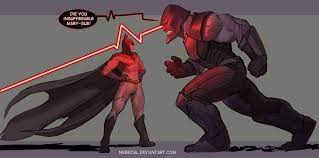
It’s a fairly simple concept, which might be why it can come under fire. Have a character make a mistake and watch the story continue. Heck, the biggest one that I just thought of is the infamous ‘why doesn’t the villain just shoot the hero?’. I genuinely wonder if people who ask this realize that this would end the story so quickly that it isn’t worth paying attention to. Unless it leads into a revenge tale, but that needs to be established earlier too or saved for a sequel that will be met with a similar question. Really is an endless cycle that requires stupidity in there to make it interesting. Think that’s why I really like this term and using the technique at times.
Have you ever used the ‘Idiot Plot’? What do you think of it?