
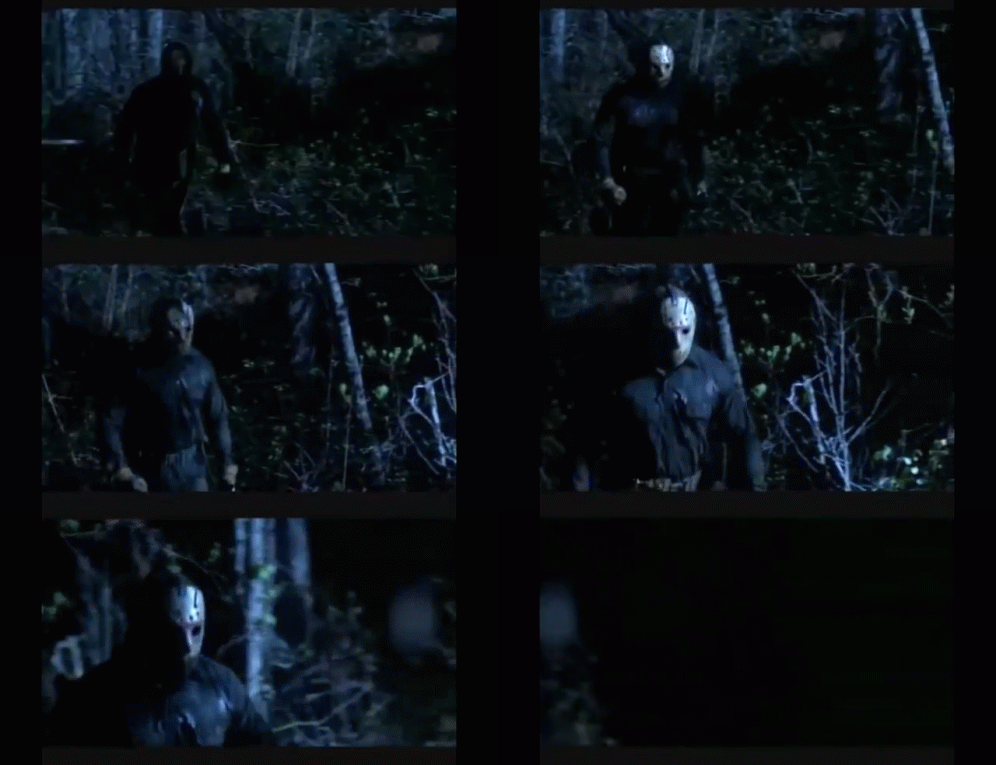
Friday the 13th
One type of action scene is ‘The Chase’. It doesn’t happen as often as fight scenes unless the story involves vehicles or running, but it’s a big one. A challenge here is to bring across the pace and feelings of those involved. You can’t bounce around from one POV to the other or it will be a mess. So, you have to pick either showing the chase through the eyes of the Pursuer or the Pursued. We’re going to the former today and the latter in two days. Enjoy.
- The Pursuer is fixated on catching their prey, so they need to show that this is their only real concern. Don’t have them deviate from the chase unless it’s an attempt to cut the other person off. Whenever the Pursuer stops thinking and talking about the chase, the tension drops. With these scenes being limited on time, you can’t risk that happening because you can’t guarantee it can be recovered.
- One exemption of the previous tip is if you have a Pursuer who is also concerned with innocent bystanders. Typically, these people are ignored or always manage to get out of the way. Yet, you can show that the Pursuer isn’t a bad guy or why they aren’t catching the enemy easily by having them dodge obstacles. Much of this depends on who is the protagonist and who is the antagonist.
- Pursuers are characters as well, so you need to make sure that they demonstrate emotions. They may be mostly calm, but there has to be more if they’re willing to drive or run after someone. Let this be shown in what they say or think. You can also have their emotions change as the chase progresses. Frustration may set in if things start taking a long time.
- Moments of panic for the Pursuer can be created by them losing track of their prey. It is their POV that the reader is following, so this would be a time when one may think the scene is over. Did they lose their target? Are they going to be able to get them back? Continue having them move to keep the questions flowing until you either end the chase or have it continue.
- Try not to jump to another POV as soon as the chase is over, especially if the Pursued got away. You want the readers to see how the Pursuer takes the loss. They were the focal point of this scene, so you need to bring some closure. This can be done with a single paragraph or even a single piece of dialogue. Show that this person is either happy or upset with the outcome.
- Pursuers tend to have a better plan than their prey if they’re the ones who initiate the chase. This means, their POV will hint or flat out tell the reader what they are planning. Normally, this would eliminate the suspense because there’s no element of surprise. At least, in terms of what the others will run into. The suspense has to come from if the plan will work and, since they tend to fail, if the Pursuer is able to adjust in the face of changes.
- If you decide to use multiple Pursuers, show the others through the POV of the one you’ve chosen. It’s tempting to jump to another one who might be doing something exciting at the time. You start describing what they’re doing and end up switching POV without noticing. Instead, imagine that you are the person who is watching this and write it as such. The POV character might not know what the other one is doing, so it can be a description that isn’t entirely clear or has judgements. Some information may be missing if the POV character stumbles into this stage of the chase. It’s possible to show big events in these scenes from an outsider perspective without minimizing them or messing up the focus. It’s just really tough.














 Legends of Windemere