Survival Stories: More Common Than One Thinks?

Resident Evil

I was going to make this exclusively about ‘Survival Horror’, but I thought I would branch out here.  Most people don’t get into that type of story while they may be interested in other types of survivals.  ‘Hatchet’, ‘Lord of the Flies’, ‘Castaway’, and the like would fall into this category without being horror.  So, what makes up a survival story?

I think it’s a person struggling to stay alive.  That seems simplistic, but it’s what you find at the center of these stories.  I mean, it’s also in the genre title.  Whether it be getting out of a zombie-infested city or finding supplies on a deserted island, the main character is in a deadly situation.  One wrong move and bad decision means their story is over.  Sounds pretty easy when you boil it down, but you just know there are more tricks.  If not, people would be writing amazing versions of it all over the place.

Survival stories require the ultimate stake, which is the main character’s life.  General action stories have heroes protecting others, but here we have someone who is simply trying to keep themselves alive.  They don’t typically have the skills, strengths, powers, and knowledge of those from the other action subgenres.  This is why they are struggling to survive instead of skipping along with a machinegun in each hand.  Even if they had the training, they won’t have the equipment and will need to handle their obstacles with whatever is around.  The stakes remain the same and repeatedly come to the edge of being lost.  This is what builds and maintains tension.

I think it helps if a survival hero is alone as the focal point of the story.  Even if they are part of a group, the reader should be concerned with their survival.  This way, other characters can die and have more impact on the tension.  Slasher horror does this with a central target of the killer who avoids getting murdered while the others are taken out over the course of the story.  As other targets are eliminated, the survival of the main character becomes less and less assured.  By the time it’s at the climax, they don’t have a large group to help with a plan and might even be trapped in a one-on-one fight against an opponent who has proven to be powerful and deadly.  This wouldn’t work if you have 10 survivors piling onto the killer at the end.  It’ll be either an embarrassing defeat of the bad guy or a rapid slaughter that wouldn’t feel entirely right.

The obstacles are something to consider as well.  Too easy and there is no doubt that the character will survive outside of a ridiculous contrivance.  If you make them too difficult, which is more likely, the success of the hero becomes fairly unbelievable.  They are no longer viewed as someone in peril, but a lucky character who is surviving due to plot armor.  For example, an young, lost girl surviving in the jungle is being hunted by a jaguar and ends up killing it with her bare hands.  Over the top example there, but you get the picture of how an obstacle needs to be a challenge while not being impossible for the survivor.  They need to have a way to get through without shattering a reader’s ability to disbelieve.

I’m going to be going into more ‘how to’ stuff come Wednesday, but I think this is a really tough subgenre to pull off in written form.  It’s certainly easier for movies, TV, and video games because it depends on tension.  Music and lighting can set the stage while proper use of jump scares can keep the audience at the edge of their seats.  For a book, you need the reader to get drawn into the fight for survival and use their imagination to do the heavy lifting.  It’s not impossible, but it depends a lot on pacing and descriptive language.  You can’t rush or take too long between obstacles.  There needs to be points of victory and failure to keep the hero moving forward, but still be human.  As I’ve been saying for years about many things, it’s a juggling act.

So, what do you think about survival stories?

Posted in Thoughts | Tagged , , , , , , , | 14 Comments

It’s a #newbook

It’s getting close to the Halloween season, and that means I have a new release. I’ve been sitting on this manuscript for a long time, and it’s …

It’s a #newbook
Posted in Uncategorized | 2 Comments

Three Elements in a Writer’s Life

Hi, SEers, You’re with Mae today, and I’d like to address three major elements that are key to the writing life­—patience, a support system, and a …

Three Elements in a Writer’s Life
Posted in Uncategorized | 2 Comments

Common vs Pygmy Hippo

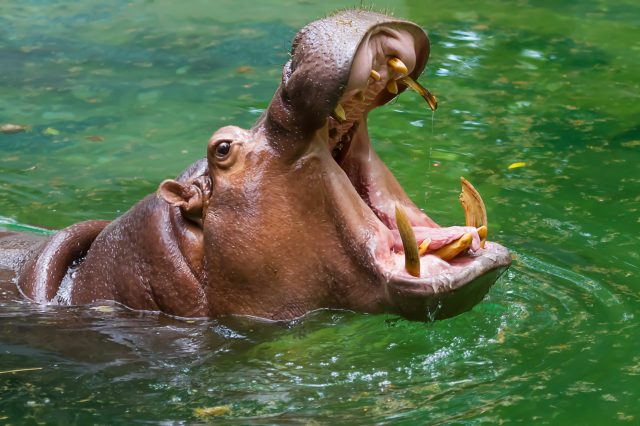
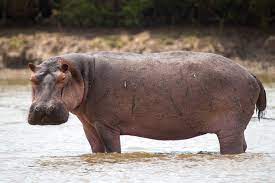
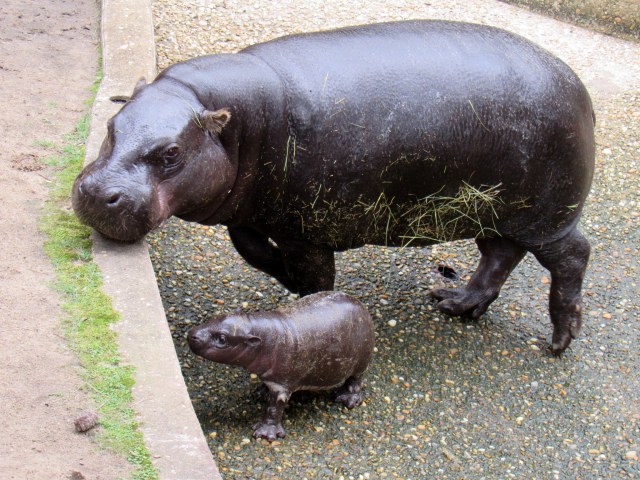
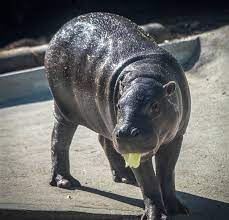
There are two types of hippopotamuses.  First, you have the common one that we tend to think of when we hear the name.  The one that is the top killer of humans in Africa and listed as vulnerable.  There are about 150,000 in the wild.  Then, you have the pygmy hippo, which is listed as endangered and doesn’t kill people.  There are about 3,000 in the wild.  So, what are the similarities and differences?

  1. Common hippos are large and fat with heads that are bigger compared to their bodies. Pygmy hippos are small with heads smaller compared to their bodies.
  2. Common hippos can run 29 mph while pygmies run 18-19 mph.
  3. Both are herbivores.
  4. Common has a bite force of 2000 pounds per square inch while pygmies have 1800 pounds per square inch.  Not bad for a much smaller animal.
  5. Common hippos have thick, fatty skin for protection while pygmy hippos have thin skin to keep cool.
  6. Pygmy hippos are antisocial and avoid attacking while common hippos live in groups and are violently territorial.
  7. Pygmy hippos can reproduce easily in captivity while common hippos have trouble.
  8. Common hippos have no real predators aside from humans while pygmy hippos are hunted by leopards and crocodiles.
  9. Pygmy hippos have shorter legs to help them move through rainforests.  Common hippos live in shallow rivers in the plains.
  10. Both species produce a sweat that acts as sunscreen and is antibacterial.
  11. Common hippos are polygamous while pygmy hippos are monogamous.
  12. Both have muscles that close their ears and nostrils when they dive.
  13. Pygmy hippos have a four-chambered stomach while common hippos have three chambers.
  14. Common hippos evolved from pygmy hippos.
  15. Both can hold their breath for 5 minutes.

Now for the pictures and videos:

Common Hippo

Common Hippo

Pygmy Hippo

Pygmy Hippo

Posted in Animal Posts | Tagged , , , , , , , | 16 Comments

Goal Post: Which Week of School Was This?

This week feels like it took forever to reach the end of.  There was plenty of drama . . . I think.  To be honest, my hay fever has been so bad that my head is foggy.  It got so bad that I had low grade fevers on Thursday night and took Friday off to get myself tested just in case.  I feel bad about that because I have to take Monday off for a personal thing that I can’t talk about in public.  Think the only times I’m emotionally okay with missing a day with my students and coworkers is if I’m truly bedridden or there’s a big event going on with my son.

Speaking of my son, he’s getting used to high school.  He’s getting better with breakfast and there haven’t been any fights about homework.  Well, not much.  The workload is definitely heavier than middle school even though it doesn’t look that way if you see the assignment list.  Weekly essays and multi-page packets being on the list means more work than he realizes.  Still, we’re finishing stuff and still having time to play Pokemon Go every now and then.  That’s not doing my allergies any good, but it works as a reward to help him focus.  Found out yesterday that masking up reduces the lung devastation, so at least I have a plan for the future.

Looking at my calendar for the week, I don’t see any big events that happened.  That means my time was mostly parenting, working, and setting up November blog posts when I was able to focus.  I did manage to get one section of Darwin & the Beast Collector done yesterday since I was home.  With any luck, I can finish the rest of the chapter by the end of the weekend.  Maybe even step into the next one, which can give me an opening to get a bit more done during the week.  No idea which evening that would be since Wednesday kicks off a long line of events going into the following week.  I’ll be happy with whatever I can get though.

I wish I had more excitement to share.  No big sales.  My son and I are slowly making our way through ‘One Piece’ on Netflix since we don’t get much time to watch episodes that are so long.  We’re only up to the 4th one, so we’re hoping to get further next weekend.  When I’m alone, I’m re-watching ‘Keinichi: The Strongest Disciple’ because I’ve been dozing off fairly early.  It’s easy to stop an episode halfway through and pick it up the next day while I try to wake up.  Not sure if I should be proud or ashamed of that.  I’ve been really tired lately, so it’s not like I have a choice.

That is one thing that’s going on.  I received the sleep apnea home test yesterday and decided to use it last night.  It was either last night or tonight, but I didn’t have any assurance that my allergies would be better.  So, I might as well get it out of the way and do my best.  This machine gets strapped to my chest then gets connected to a sensor on my finger and a breathing tube that sticks into my nose.  It’s not very different than the one I used in 2017, which wasn’t very comfortable.  Thankfully, it only needs 6-7 hours to get a good reading and not 8+.  I’ll send it back today when I decide to head out and then wait for my next appointment . . . in November.  Maybe I’ll get lucky and my readings will be so bad that they’ll rush me ahead of the line.  Fingers crossed?

As I said, this week is going to be busy.  I have stuff at school, appointments for myself, appointments for my son, a birthday party, and then bracing for Yom Kippur.  Needless to say, I’m going to be crawling into the following weekend.  This is why I might not get my hopes up on writing after Sunday.  There will always be the first weekend in October to get more done.  The books aren’t going anywhere.

Goals of the week:

  1. Return sleep apnea test.
  2. Recover from hay fever.
  3. Help son with schoolwork.
  4. Have fun at work.
  5. Continue eating chopped salads.
  6. Continue making chopped salads.
  7. Buy supplies for chopped salads.
  8. Exercise more since not much Pokemon Go this week.
  9. Write this weekend.
  10. Sleep.
Posted in Goal Posts | Tagged , , , , , , | 13 Comments

Hero for Fame and Fortune

Leorio

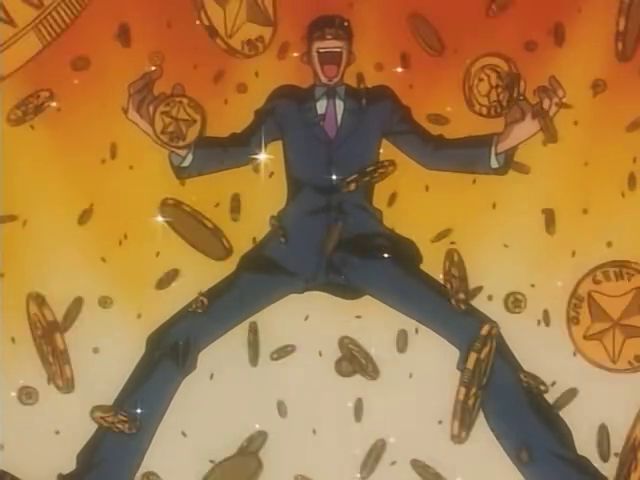
I can already sense people heading for the comments to talk about how they hate these types of heroes.  They are selfish, arrogant, rude, and/or terrible teammates.  You can usually expect them to make the wrong decision if money or fame is promised for that path.  How can anyone really enjoy characters like this?

Well, that depends entirely on the author.  You can make a vain and greedy hero who wants nothing more than fame and fortune.  They are what the reader sees and have no motivation beyond wanting these things.  Of course, they can eventually turn more noble and realize that they need to be a role model.  They might fail at being a hero because they put money and reputation first, which causes them to reevaluate their choices.  That gives them more depth, but it requires that they change to a Hero of Justice or even a Hero for Fun.  This doesn’t always have to be the case.

In general, a hero who does things for money differs from a villain because they aren’t willing to break the law.  Anti-heroes fall into a gray area here, which I’m saying because I know somebody is thinking about Deadpool.  Mercenaries are a weird group that can go either way, so it’s hard to call them full heroes too.  A hero who wants money and fame won’t intentional shift to evil deeds because they have limits.  They still have a code of honor and some loyalty if they’re well-written. You can shift some of their morality around, but they need to stay on the side of good for the most part to avoid becoming more of a villain.

These types of heroes as have a strange sense of self-awareness if you want them to go the distance.  On some level, they are aware that their fame and fortune require a positive public persona.  Possibly more so than the Hero of Justice, a Hero for Money/Fame is very concerned with their reputation.  If that falls apart, they will no longer have what they want.  So, they can be less likely to cause property damage than other heroes because they don’t want to get blamed or forced to pay for the repairs.  They can be more likely to put rescuing bystanders above other actions because this will earn them fans who will spread word of their greatness.  While their reasons for doing this aren’t pure, these heroes can be designed to have more caution and foresight than their peers.

There are two examples that come to mind when I think of this type:

  1. Booster Gold– For those who know DC comics (isn’t the repetitive), Booster Gold took a bunch of hero gear from a museum and went back in time.  He used his knowledge of past events to be a hero for fame and money.  He was arrogant and rather annoying at the start, which also stemmed from being immature.  Over the years, he has grown into a more noble and dependable hero.  I haven’t read the comics in over a decade, but I remember him saving the multiverse and taking on a Hero of Justice role.  This is because he realized there were more important things than money.  I don’t remember if he also realized that saving the multiverse could make him famous.
  2. Leorio Paradinight– This is a supporting character from the manga/anime ‘Hunter x Hunter’.  He enters an event called the Hunter Licensing Exam to become an official hunter.  This is a dangerous job that can make people rich, which is the reason he risked his life to get it.  One of the first quotes from him is, “For the right price, you can buy not only treasures, but dreams, hopes, and even peoples lives!” His goal is to make tons of money, which sounds selfish.  That is until you find out his childhood friend died of a curable disease because the family couldn’t afford the medicine.  Leorio’s goal is to use the hunter license to help him get into medical school and make enough money to open a clinic where people don’t have to pay to get better.  I think he’s a perfect example of a Hero for Money/Fame that has a perfectly good reason to be that way.

So, you can see how a character can start this way and evolve as well as a way to rationalize their desire for fame and fortune.  This is why an author has to decide on where the character is going to go when they begin.  Do they want them to transform into a more noble hero, keep their motivations for a specific reason, or fall from hubris/greed?  If you don’t put some thought into these types of heroes then they have a high chance of becoming fairly two-dimensional and lose their appeal fairly quickly.  This can force a change or a retirement, so there’s a benefit in thinking about things first.

Posted in Thoughts | Tagged , , , , , , , , , , | 11 Comments

Poetry Day: Followers of Identity

Google Image Search

(I don’t really know what prompted this one.  It deals with people who transform themselves into others.  They don’t create their own identity, but try to turn into a person they idolize.  It can be physical and psychological.  I’ve seen it a lot throughout the years, so this was probably triggered by such an encounter.)

Why do some just follow?
Altering their outer shell
To become another being
A muted copy
Of another that they praise


Do they hate their soul?
Disgusted by what they are
Wasting strength
To transform into a butterfly
When they were born a tadpole


At what point do they stop?
Settling into a comfortable skin
Putting an end
To the constant flaying
That leaves them a patchwork poser

Posted in Poems | Tagged , , , , , , , , , , | 14 Comments

A Hero for Justice!

All Might

Been staring at the screen because I don’t know how to tackle this one.  It isn’t because a Hero for Justice is complicated.  It’s just that we all know the type:

Superman . . . Batman . . . Spider-Man . . . Punisher . . . All Might . . . *add your own here*

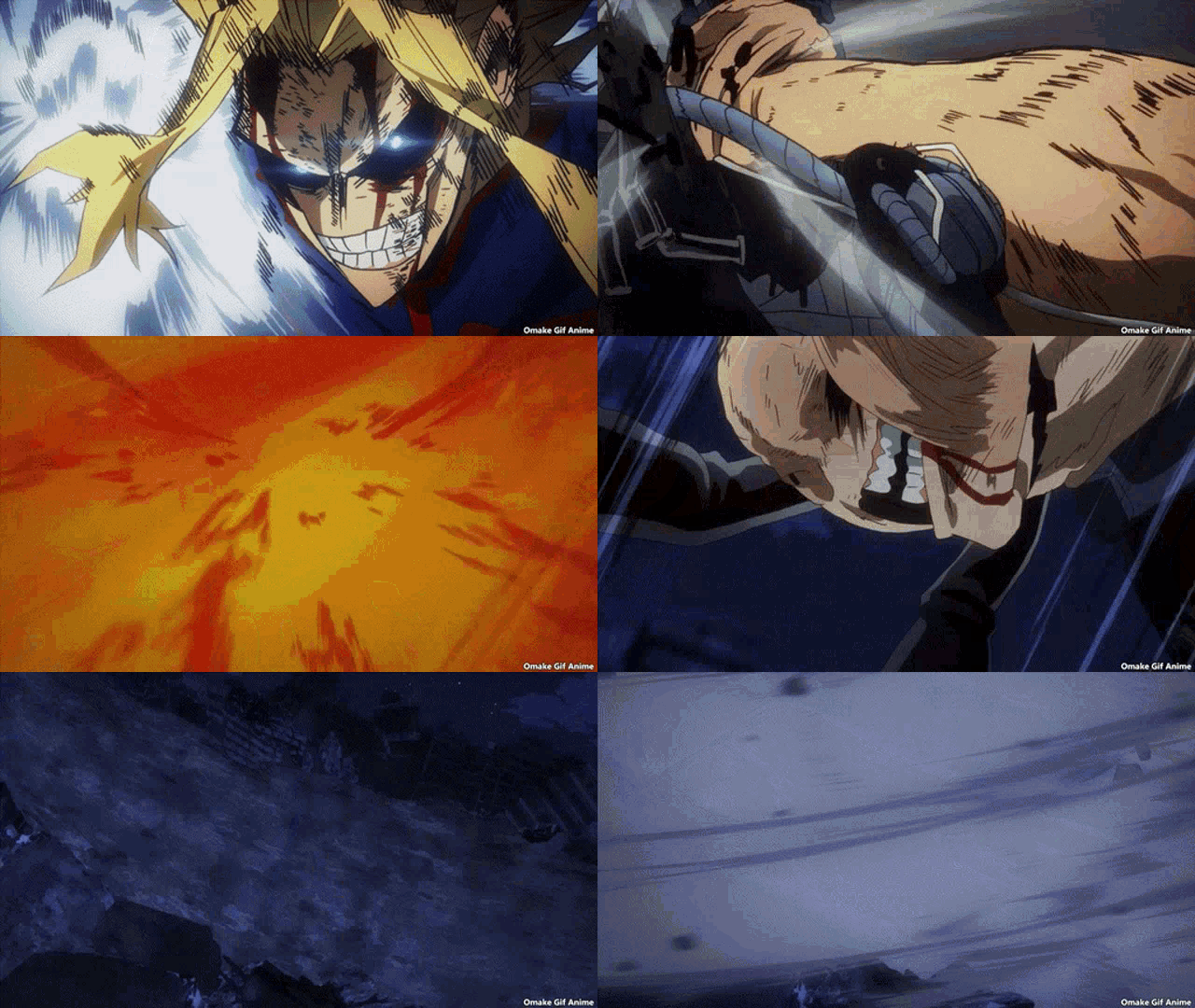
This is probably because the concept of heroes tended to stem from stories involving righting a wrong.  Whether it be fueled by revenge or to protect society, these characters set out to deliver some method of justice.  They aren’t in this for fun or profit.  It’s their desire to deliver justice or at least protect society.  This is where you find many boy scout heroes, vigilantes, anti-heroes, and the like.  So, Heroes for Justice cover a lot of ground here.

I can already hear some people saying that pushing for vengeance or killing bad guys isn’t justice.  That’s because we tend to say ‘Hero for Justice’ when we speak about the pure good heroes like Superman and Captain America.  I think this adds the belief that these types of heroes have to work within society and act as maintainers of the status quo because they are pushing the accepted method of justice.  Yet, that’s only one version of justice, which isn’t as simply defined.  You have personal senses of justice as well.  This can be expanded when you add codes of honor to the mix, which creates an even broader umbrella for heroes.

The maintaining of the status quo isn’t even a solid factor in heroes who fight for justice.  I mean, the biggest example you can look at are the X-Men.  They are trying to change society by making it a safe place for mutants.  So, they are pushing for social justice instead of legal justice.  This shows that it really comes down to being a hero for the good of society or a specific group.  Attempting to protect the lives and rights of anyone means it isn’t being done for selfish purposes.  Well, it usually means that unless the hero is doing solely for attention and money.  If you haven’t guessed, we’ll be touching on those types on Friday.

We also have ‘Brutal Justice’ and ‘Blind Justice’, which can go hand-in-hand.  Brutal justice is when the hero uses a high amount of violence and even kills enemies.  They become judge, jury, and executioner like Punisher or Judge Dredd.  Blind justice is when the person doling it out doesn’t consider anything other than right/wrong and good/evil, so they can be working in extremes.  This can be seen with Judge Dredd, but not as often with Punisher.  You can also see how these two similar characters get treated and viewed differently.  Punisher is doing this in our real-world society, which means he is seen as a big trouble like his targets.  Meanwhile, Judge Dredd is a hero because his society allows and supports the system that gives him such ‘legal’ powers.  This shows that justice can differ depending on the society, but it still counts as some form of justice.

As authors, we can adjust the definitions and parameters of justice whenever we write our stories.  If it’s in the real world then we do have to stay within the law, but we can alter these things for the heroes in question.  They don’t have to believe that the legal view of justice is 100% correct.  Even Superman has had moments where he questions society’s stance on justice and does things differently.  I think this is an overlooked aspect of Heroes for Justice.  They usually start either wanting to help others, get revenge for a personal slight, or earn redemption for a mistake.  This doesn’t always mean that they adhere to the bigger justice system, but the majority of their personal stance may match up.  This is where an author can bring some nuance and conflict into a hero, who may otherwise be viewed as boring.  For example, they might have a specific crime that they have no problem killing over or are exceptionally brutal towards.  They’re still Heroes for Justice, but you have this one area that they go from Boy Scout to brutal justice.

So, what do you think about Heroes for Justice?

Posted in Thoughts | Tagged , , , , , , , | 12 Comments

Guest Post – D.L.Finn – Deep in the Forest Where the Poetry Blooms – #newbook

I am so pleased to have Denise Finn visit the blog today. Denise writes terrific books and also beautiful poetry. She’s here today to tell us about …

Guest Post – D.L.Finn – Deep in the Forest Where the Poetry Blooms – #newbook
Posted in Uncategorized | 2 Comments

Tightening our Prose: Dialog Tags

Greetings, Storytellers. Diana here today to continue the series on Tightening our Prose. As I suggested in the first post, tight prose has a …

Tightening our Prose: Dialog Tags
Posted in Uncategorized | 2 Comments