Google Image Search
I was on the fence about writing about this because I thought it was a given. Then, I ran into people who didn’t know the difference. Others swore that a good story is one where the main character doesn’t change. Guess we live in a world where ideal heroes are preferred over flawed ones. I mean, really flawed characters instead of slapping arrogance or a mild shellfish allergy, which don’t cause any issues. Okay, I’ll get back to this rant in a bit.
What are we talking about here?
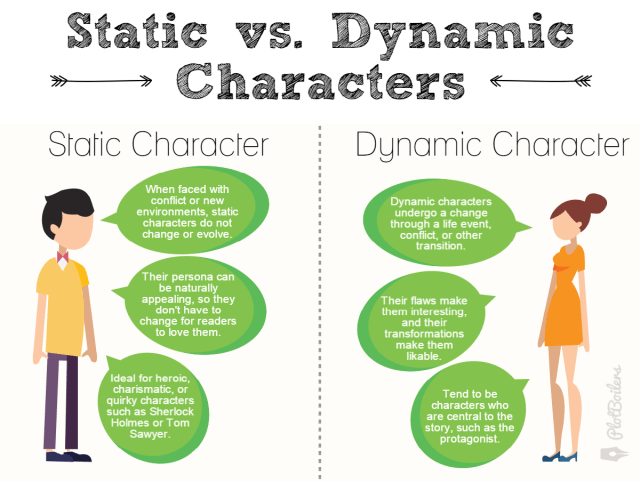
Dynamic Characters– These are the ones that change over the course of a story. They are your protagonists and antagonists, but can also be supporting characters. The whole point of them is that they do not end a story where they started. Their flaws are conquered or accepted, which makes them stronger. It isn’t the toys and powers they get either, but the way they change as people. This need and ability to change creates a personal story arc, which adds tension to the overall tale. For example, a superhero who starts off being selfish and ends knowing what it means to be a hero. (Nobody say Iron Man because he had this story arc in at least 4 movies. Guy has the memory of a brain damaged goldfish.)
Static Characters– These are typically found in supporting areas where they have no need to change. They end a story the same they started because none of the events forced them to evolve. A reason for this is that they aren’t designed to be anything more than pushing the story, evolving the main characters, and showing that there are other beings living in this world. They have no story arcs and their personalities can revolve around one aspect without causing harm. You find your comic reliefs, mentors, goons, henchmen, and other limited roles in this category.
I remember this being a very basic lesson that I learned in middle school. It wasn’t about writing either, but about identifying the two character types. You were shown how the dynamic ones had the spotlight while the static ones came off more as set pieces. It helped us understand the concepts of protagonist and antagonist because those were always the dynamic ones. Didn’t take long to get the concepts, especially when it was paired with talking about conflict. Dynamic characters are heavily affected by conflict while static characters aren’t. Seems simple.
Yet, I keep seeing people push for characters who won’t change to be the protagonists. I don’t think I’m seeing a majority, but it’s enough to make me worry. People attack heroes for their flaws even though these are things that are going to be worked through. They complain about the hero being anything other than the ideal, which means they want them perfect from the start. These readers are fine with the flawless protagonist gaining more abilities and toys, but they don’t want quirks. Arrogance disguised as rude confidence seems to be the exception because it’s ‘strength’. Fairly easy to get rid of arrogance too with the hero having one loss, acting sad, and then coming back to save the day. They change a little, but not enough to alter their personality.
As an author, you have to decide on if you want static and dynamic characters as your main cast. It’s fine to do either, but you have to accept the cons. As I said, dynamic means the heroes can start off rough, unlikable, and weak. Readers with no patience for the hero’s journey will be vocal about their boredom. Those who enjoy the long evolution of a flawed character will be quiet because they know it will take time. So, you can get hit hard with negativity. It can cause you to consider rushing the evolution, which will be sloppy and annoy the other group. I think it’s best to do what you feel is right for the story and the readers who want to see it through to the end will stick around.
Static characters avoid the initial negativity of those who don’t like their heroes with any real flaws. You may get a false sense of confidence here too. People who expect protagonists to change will read along expecting a plot event to knock the hero down and force them to evolve. A static character doesn’t do that unless you switch them to being dynamic. If they’re static the whole time, some readers will leave because they feel the story is boring. There’s no sense of tension or possibility of the hero really failing. All their mistakes are minor or swiftly fixed with no long-standing consequences. Some even fail into victory. This is why static characters don’t really make good protagonists for long stories. They could work for short stories and parodies where they don’t need to evolve or the action always resets. Kind of like a sitcom where everything goes back to ‘normal’ at the end of most episodes.
Is this really a personal preference? Maybe. Certainly feels that way considering how often I argue with people about protagonists. I really can’t wrap my head around heroes who start off perfect and stay that way. Even Goku and Superman lose fights and have to evolve over the course of their adventures. There’s no harm in having a hero who has flaws and needs to grow. Not only grow, but work hard to survive and become the perfect version of themselves. If they’re just handed everything, they’re going to stay static because nothing happened to alter their personality. Anything changes after they are given things feel superficial and forced. As if the author did it because they felt they had to instead of being natural.
So, what do you think about dynamic and static characters?