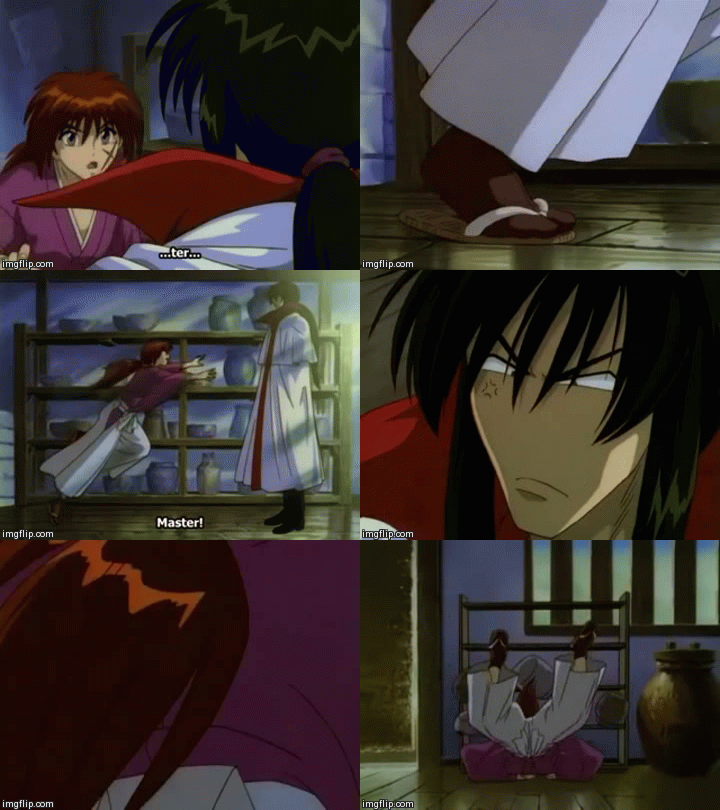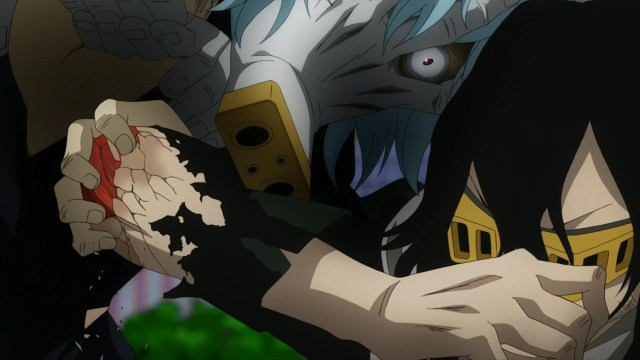
Shigiraki from MHA
As I said, touch attacks are fairly niche. They appear in a lot of stories with magic and superpowers. Yet, they tend to also get taken for granted. So, what are some things to consider when using them?
- You need to be consistent in how these attacks work. They can’t be 100% lethal in some situations, but leave a scratch during others. If the touch attacks seem to be entirely at the whim of the author, they will lose their urgency.
- Duration of touch should be considered when deciding how they work. Some attacks need only a slight contact to have full effect. Others will require that the person hold on for an extended period of time. You need to establish this fairly early on and stick to what you decide. If you wish to change it then you need to demonstrate how or why the consistency has shifted.
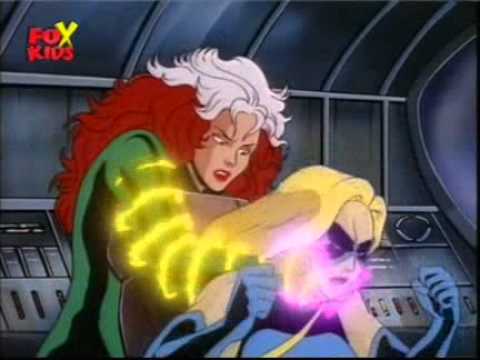
- If this is a power that cannot be turned off then you have to remember that it exists at all times. The best example is Rogue from the X-Men. Her power was always on and she couldn’t make skin-to-skin contact. The writers and artists had to be sure she wore gloves whenever she touched someone. If she didn’t and her power didn’t work then it would be a clear mistake. Such a thing constantly happening would result in the power being seen as inconsistent and messy.
- A magical touch attack requires some type of catalyst. This can be an incantation, gesture, or sprinkling something on the caster’s hands. You really only have to show this a few times before you can make it a given. Although, if you don’t have a visual effect after the spell is activated, you may need to continue the catalyst to make sure the audience knows it’s around.
- Try your best to avoid the MIDAS TOUCH ENDING!
- As stated on Monday, remember that having to deliver a touch attack means getting within swinging range. The attacker is aware of this danger and will know to act accordingly. This means, they may focus on stealth or dodge around until they have an opening. Some may even have touch attacks that respond to being struck, which means they want to get in close. Play around with this downside to see if you can turn it on its head.
- On the other side of the coin, characters who know they are up against someone who uses these attacks will be prepared. They won’t go rushing in if they know that a single tap means death. This turns some fights into a game of strategy and ‘keep away’, which can be fun if you don’t drag it out for too long.