

Teen Titans
The Young Adult market is pretty bad. One of its staples is having a teenage protagonist, which gets some interesting responses. Most people seem to relate to these characters on some levels, but you have the occasional audience member judging them as if they are full adults. This is a downside to teenage protagonists, which also turns out to be one of their biggest strengths. How so?
First, let’s look at their buttressing groups:
- Pre-teens are very young and are limited in what they can do and know. They are still highly dependent on the adults in their lives, so they tend to need help more often than teens. This is extremely true in terms of transportation. You also have people not relating to them and sometimes calling them downright annoying. Teenagers get this as well, but not to the same degree because pre-teens do have a lot less maturity. They can’t all be ‘mature for their age’.
- Adults are on the other side of this advantageous group. They have the resources, knowledge, and skills to do many things. Of course, they’re also so mature that people expect them to act a specific way. Adult characters are judged rather harshly by some audiences. If they haven’t find their niche or are actively looking for it, they can be labeled as a loser and mocked. The exception is if finding their path is a key part of the story.
Meanwhile, teenagers hit that sweet middle spot when it comes to development and expectations. They still get judged, but have more flexibility. These protagonists can be admired by younger readers who are excited to reach that age. They can also be understood by adults who remember being that age. Of course, that’s a difficult caveat considering how many adults seem to forget that they were ever young and had the maturity of an unripe mango. In other words, we’ve all been there, so there is a higher chance of a reader at any age to relate to a teenager on some level.
Teenagers are also fairly easy to put through character development. They are at that life stage where they are trying to find their path. It doesn’t even have to be a central plot point because people expect them to not be where they want to be. So, they have the freedom of exploration and experimentation. It isn’t surprising when a teenager makes a mistake or moves ahead suddenly. As stated, those of us who remember those years can relate to the emotional and social rollercoaster. Adults strive to not have all that chaos and little kids are in a different growth stage, but teenagers are right there in the middle. They are growing like pre-teens while pushing towards the stability of adulthood.
Because of this fluidity in their maturity and growth, teenagers get more leeway when it comes to their decisions. At least, they should. Those years are rife with mistakes and shaky decisions. We’ve all been there. A teenager’s decision can really twist a story around too. It won’t feel contrived as if an adult made a bad call because people expect the teenager to not have the same insight and forethought. Their age creates a cushion of immaturity that helps them stay in the good graces of the audience. As long as they learn from their mistakes, which is essential.
I won’t say teenage characters are perfect and don’t have flaws. They can be shortsighted and their immaturity may turn off some older readers. Skills and knowledge are still not at the level of an experienced adult, so they may have some limits. This is easily fixed by having them learn such things, but it can get iffy when a protagonist always claims they study something just when they need it. You have to be careful with how much they know and how much they need to learn. An author can go too far and forget that there are still some knowledge gaps.
The other hindrance comes from the emotional highs and lows of being a teenager. This is what draws authors to focus on romances and loners. Many teenage protagonists become fixated on love or fall into that ‘I am an outcast’ faux emo/goth exaggeration. It’s a trap when an adult writes a teenager and doesn’t do their research. Sure, you will connect with some people, but these two tropes tend to appear regardless of what the overarching story is. So, one has to find that balance of emotional immaturity and growth to avoid the clichés.
So, what do you think of teenage protagonists? Do you have trouble connecting to them?

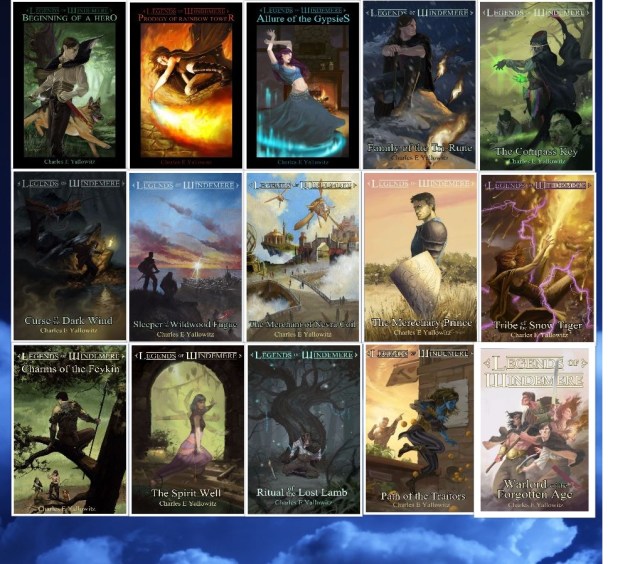













 Legends of Windemere