

Hi SEers! D. L. Finn here to talk about what I learned after writing the book. Over twenty years ago, I tried to find my children’s book a publisher.…
AFTER THE BOOK IS WRITTEN: WEBSITE & SOCIAL MEDIA
Hi SEers! D. L. Finn here to talk about what I learned after writing the book. Over twenty years ago, I tried to find my children’s book a publisher.…
AFTER THE BOOK IS WRITTEN: WEBSITE & SOCIAL MEDIA
Yahoo Image Search
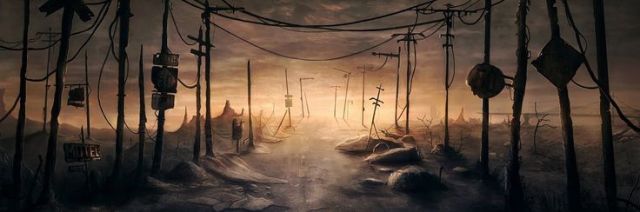
(This is a small poem and I don’t know what made me write it. Clearly, it’s about a person who used to be rich and is now fading away. Maybe I was going for the fact that it doesn’t matter how much you have because we all die and become dust in the end. That or I saw a dusty road at some point.)
He drags his feet
Down the barren road
Wisps of dust
Ebbing off his form
His noble robes
Shredded into rags
Leaving him a husk
Torn by harshest wind
Every step forms cracks
Rising from his heels
Thicker wisps will flow
Until his body fades
Becoming dust within the dirt

Welcome to another post about “Once Upon a Time in the Swamp.” These are promotional in nature, but I want to make each of them unique. Today, we’re …
Mentors, animals, and ghosts #Newbook
It might appear easy to add a quirk to your city. Some people think they can just slap one on as they move along. That can work at times, but there are moments where you have to think about what you’re doing. After all, this set piece is supposed to catch the eye and become a symbol for the location. There’s a lot more depending on it working out than one would initially believe.

Hey, SE Readers. Joan here today. D. L. Finn posted last week about book formatting. If you haven’t read it, you can do so by clicking this link. …
The Interior of Your Book
Cover Art by Jason Pedersen
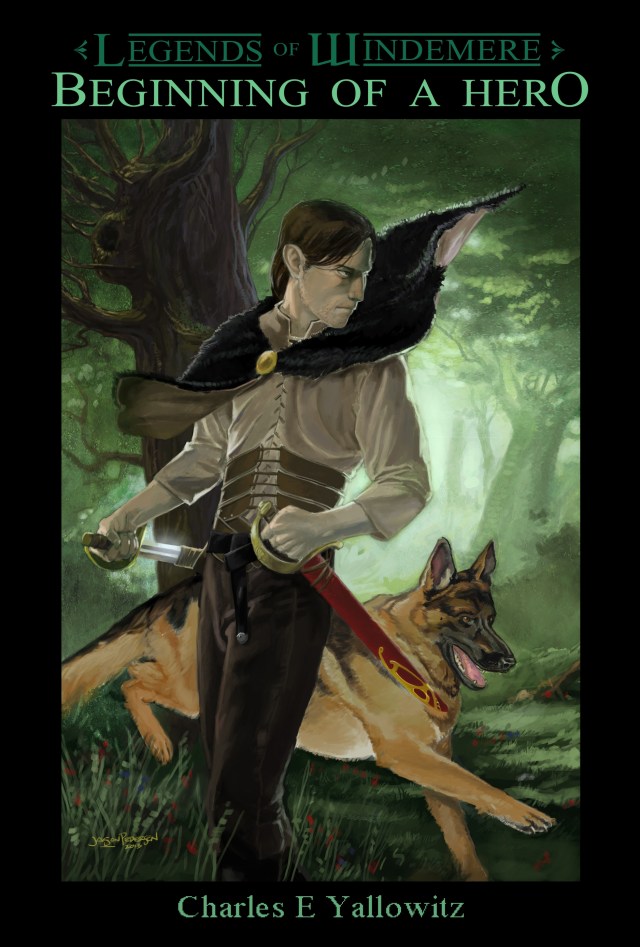
(So, I think I’m going to repost some character origin posts from way back. I’m going to add to the end of them too since their series are done. Best way to start is with Luke Callindor from Legends of Windemere.)
For those who haven’t read my books, Luke Callindor is the first of the main heroes in the Legends of Windemere series. You meet him before the others, so you spend the most amount of time with him. This also means that Luke changes and goes through the most. So, where did he come from?
Luke Callindor was created in my freshman year of college when I joined the Storyteller’s Guild at SUNY Oswego and entered my first college D&D game. Prior to this, the games I played were done more for comedy and destruction, so having to design a character with some depth was a new challenge. So, I made a half-elven ranger who used twin sabers and looked like an idealized version of me . . . with pointy ears. Back then, Luke didn’t even have a last name. That appeared a year and a half after I created him when the guy running the game said “you guys are going to Luke’s hometown, so I need name.” Of course, the highly original ideas of mashing two words together (‘Swordarm’, ‘Fleetfoot’, etc.) was attempted before I just started flinging letters onto Microsoft Word. A couple hours and Root Beers later, I had Luke Callindor written on page 5 of a very long and idiotic list.
Now, the game version of Luke was basically a standard hero mentality with sudden eruptions of reckless ideas when under pressure. The sudden creativity was more me than Luke at the time because I didn’t want him to die. Remember that unlike in a book, a game character’s life is not always in the hands of the person playing him. You face bad rolls (the high agility Luke tripping over a rock because I rolled a ‘1’), the guy the running the game decides you need to be punished (every high-level character took an opportunity to hit Luke in the stomach), or the guy running the game overestimates the players (1st level Luke vs. demonic assassin!?). So, the game version was much more cookie-cutter hero and safe than the version that appears in the book. The key differences are that book Luke is already highly skilled with a sword and he is a lot more reckless because there are no fate-driven die rolls to punish him for thinking like a teenager.
Aside from personality and better skills, Luke underwent a transformation of purpose that changed the entire landscape of Windemere. Originally, he was just an 18-year-old runaway with a pair of swords and desire to save the world. In the first draft of the book this was about as interesting as the backside of the cover. So, with his new flawed personality, I made Luke a descendent of legendary heroes. It was around this time that we saw many children of successful people rise into the media for the sole reason of being the child of a successful person. I thought it would be interesting if Luke was praised and idolized since childhood even though he never did anything. His drive, which he states several times due to an initial level of immaturity, is to prove himself. This drive is what became the core of his reckless behavior and his ability to think on his feet in the middle of a crisis. It also created an early habit of Luke’s to have sudden doubt whenever he was overpowered. If you haven’t figured it out yet, I love flawed characters because it gives them something to overcome and it makes them feel more believable to me. Through this drive to prove himself, Luke forced me to create a world where a god controls the destiny of mortals. It created a theme of free will vs. destiny, which the god himself wonders about at times.
I can safely say that I am happy about how Luke came out and feel that he is superior to the version I played for 2.5 years in college. Sure, the game was fun, but that Luke never felt like an individual being. I think my favorite thing about book Luke over game Luke is that there is more space for evolution than simple leveling up. Yes, Luke will gain new powers, skills, and abilities as he travels his path. More importantly, he will mature like a real human being, which was an important goal of mine. I have read so many books where the hero starts out perfect, rises to perfection with ease, or never evolves from their immature beginnings. It’s boring to me, so I hope when you begin reading Luke’s adventures that you see him not as a finished product, but a character who is going to grow and evolve before your eyes.
2023 Addition– I finished the Legends of Windemere series in 2017. Luke Callindor went in a direction that I didn’t entirely see. I put him through a lot more torment than the other characters. It made it difficult to keep him a 100% positive and determined character because I couldn’t see him as anything other than somewhat broken. He needed to work his way back up to that, but I don’t even think that’s always possible. Luke certainly grew up and matured, but he was left with physical and emotional scars that may have been worse than the others. Do I regret it? No because I think it makes his character more interesting and relatable. It isn’t like he gives up. He just moves forward with more of a limp and some adult caution.
Time for another post about my newest publication. This one is a solo title, and was inspired by the Spaghetti Westerns of my youth. Inspired by, …
Spaghetti Westerns #newbook
Water 7
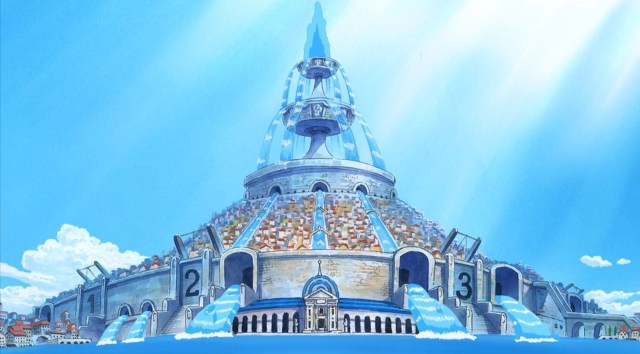
I thought about this while watching a ‘One Piece’ episode. Sadly, I couldn’t find a good picture of Fishman Island’s water tunnel transports. Instead, I went with Water 7 and it’s canals. So, what is the point of this?
A lot of fictional cities have a unique structure or aspect to them. This is very common in fantasy and science fiction. Most often, it’s some kind of transportation that replaces buses and subways. It can be a technological advancement like the tubes in ‘Futurama’, natural like dragons in Pern, or magical like teleportation runes in any number of video games. These set pieces become the identifying mark of the city. Readers, players, and viewers will think of them whenever they hear the city’s name. Sometimes, they might think of this when they hear the series.
Now, I don’t think this is necessary, but it’s a nice touch of flavor. If you’re not working with Earth, you don’t have to be constrained by what we have. Magic and technology can change how urban areas evolve. Even if the buildings are structured similar to medieval times, they can have an awe-inspiring aspect. For example, most of the locations I made in Windemere are European medieval in appearance. Yet, I put a unique piece in each location such as the griffin mountain in Gaia or the booby-trapped rooftops in Rodillen. I found that this prevents the locations from being identical and not seeming to be very important in the grand scheme of things.
After all, you want locations to be seen as important to both the story and the world, especially with large cities. There are many people here, which means it has to be big and highly developed. Just like what we have in the real world, a big metropolis will have something to make it stand out. This can be a single building too, which may be a source of tourism. It can also be a local event or creature that the characters will be interacting with. The entire point is to give the location a quirk that allows it to stand out from other areas. Even if the characters only spend a chapter there, it will be seen as important and worthwhile. At the very least, people will hope that they get to go back to the city and explore it some more.
The truth is that these are only as difficult to create as you make them. I’ve found that the more complicated the quirk, the bigger the potential headache. The payoff is pretty good though, so many would say it’s worth it. Much of it depends on what you need to happen in the city too. Something that is more for window dressing or quickly moving around don’t have to be very complicated. They just have to be functional and/or flashy enough to get attention. If the quirk is plot essential, you’re going to have to put more meat into it, which is where the difficulty can be amped. Again, this is very much worth it to many authors because it draws readers in and makes the area memorable. It can also set up the level of technology or magic in the overall world.
As I’ve said, I try to do this with as many of my locations as possible. I want them to be unique on some level. It does get more difficult as I make more cities because I don’t want to copy anything. The easier quirks obviously come to mind first, but I end up feeling like I have to constantly outdo myself. By the time I’ve hit Darwin’s series, I’m having to take about 30 minutes to consider location quirks. Sometimes I just write and see what turns up while I’m doing the initial description. You can get pretty far that way, which is a big reason why pantser and plotter combo is a preferred way to go.
So, what do you think about cities with a unique set piece? Do you have a favorite?

Photo by Karl Callwood on Unsplash Hello SEers. John is with you today and want to wish you a Happy May Day. I’m not sure folks still prance around a…
Let’s Twist Again Like We Did Last Summer
I was going to do another animal post, but the week was looking kind of iffy. Figured I would see if there was an interesting holiday. My eyes went right to ‘National Bugs Bunny Day’. I grew up watching Looney Tunes, so I couldn’t resist doing a post. Enjoy.

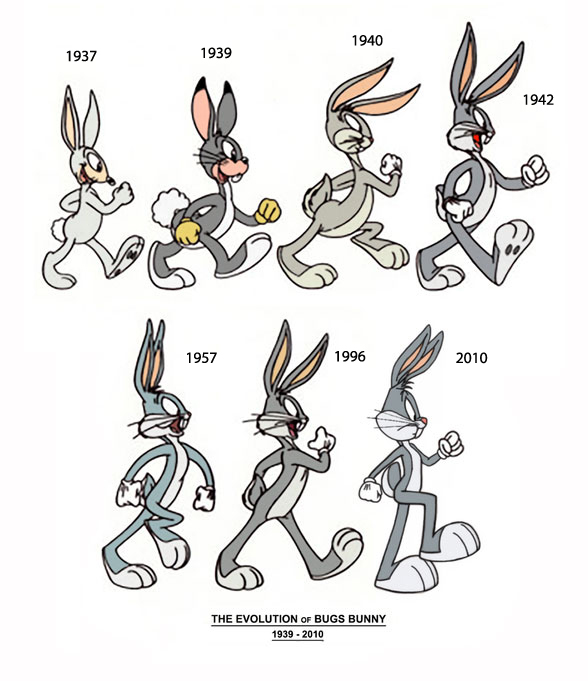
(I always loved the Tasmanian Devil episode.)



 Legends of Windemere