Why Is It Usually Zombies?

Zombieland

I’m probably going to open up the floor pretty quickly because everyone has a fun opinion on this.

Whether you like zombies or not, most people are aware of them.  They’re a staple of survival horror, which can seem rather repetitive.  How many times can you watch a hero run away from a shambling horde?  Well, some people can watch it hundreds or thousands of times.  For the rest of us, we might be left wondering why zombies are so common in survival horror stories.

I actually wondered about this many years ago when I got a critique.  The person was complaining that I had zombies in Windemere.  Apparently, zombies weren’t seen as a fantasy monster, but a horror one.  Makes all those D&D games I fought zombified creatures rather strange.  I guess the person had a point though because zombies tend to be pigeonholed into one genre.  That would be survival horror.  So . . . Why?

  1. The Uncanny Valley–  This is the theory that humans are made uncomfortable and sometimes even scared of anything humanoid.  These are beings that look and act human, but clearly aren’t human.  Usually, this is used in regards to androids, but it works for zombies too.  After all, a zombie is a rotting person, so it has human features and movements.  Yet, it’s clearly not, which makes it unnerving.
  2. Infection–  Similar to werewolves and vampires, zombies usually turn humans with a bite.  The difference is that one doesn’t get any useful powers and gradually becomes a mindless, rotting, groaning corpse.  That means there isn’t even a slight upside to being infected.  It also tends to look rather painful when one turns, so there’s an added fear of an excruciating death.
  3. Cannibalism– If you aren’t turned into a zombie, you’re devoured.  This has to trigger our instincts from when we were hunted by predators in the wild.  The idea of being pounced on, torn apart, and eaten sends chills down many spines.  It’s even more gruesome when you remember that zombies aren’t like animals.  They won’t kill you first and then start munching.  You’re alive when they eat you.  An added horror is the possibility that they leave enough that you become a partially eaten zombie and have to drag yourself along the ground for eternity.
  4. Swarms–  I’ve read a few articles about how humans don’t like swarms.  We can tolerate them if we prepare or get used to them, but there’s a limit.  A beekeeper being around bees while in a protective suit can be calm.  They’re trained, experienced, and protected from being stung.  That typically isn’t the case when zombies are involved.  You have a mob of shambling or sprinting human corpses, who might have been stirred into action by a loud noise.  Even if you get into a safe place, you’re trapped and have to hope they don’t get in and go away before you need supplies.  I guess you can compare them to Hollywood’s version of piranha, which doesn’t makes things better.
  5. Partial Invulnerability–  This isn’t a big one, but it could be a factor.  Most zombie stories require that you damage their brains.  So, shots to the torso won’t do more than push them back a bit.  Arm shots are useless for the most part.  Leg shots can be helpful, but it only means you have crawling zombies.  Those can be forgotten and get you by the ankle if you’re not careful.  So, you can’t really go plowing through zombies unless you have a vehicle, chainsaw, or rocket launcher.  Oh, and flamethrowers sound like a good idea until you consider that you might just have fiery zombies trying to tackle you.

So, those are the reasons I think zombies are big in survival horror.  What do you think?

Posted in Thoughts | Tagged , , , , , , , , | 12 Comments

Metaphysical Elements in Fiction Writing – Scents

Hello, SE’ers!! It’s Jan again to talk about another aspect of the Metaphysical world: Scents. We often hear advice about incorporating all five …

Metaphysical Elements in Fiction Writing – Scents
Posted in Uncategorized | Leave a comment

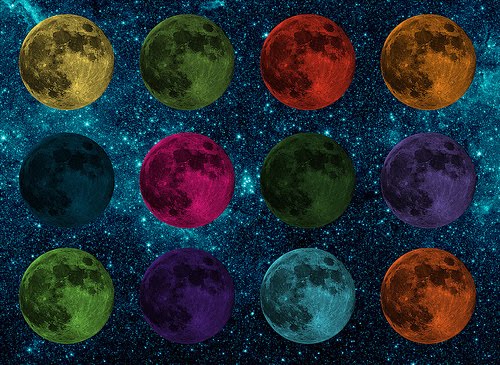
Poetry Day: Four Season Moons

Yahoo Image Search

(This one is pretty simple.  It was a short poem about the four moons of Windemere.  They debuted in Legends of Windemere.  I still have to stop and consider the season whenever I write night scenes.  With each one being a different color, I need to make sure the color and visibility is right.)

Bloody Vir brings summer blaze

Before the wind of amber Ult

Who is driven off by Tavon’s ice

Until emerald Canst frees the land

Then Vir reclaims his throne

Posted in Poems | Tagged , , , , , , , , , , , , , , , , , | 9 Comments

7 Tips to Writing Survival Stories

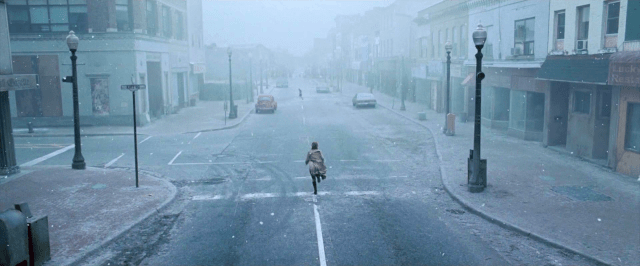
Silent Hill

I might start leaning more towards Survival Horror here.  Still, most of the advice should be able to work for non-horror survival stories.  I was wondering if Swiss Family Robinson would count too.  I mean, things seemed a bit too easy in that movie even when things were getting dicey. That should be a good segue.

  1. A hero who is struggling to survive can’t be overpowered.  They are an underdog and the selling point is the looming threat of death.  If they’re able to defeat every monster or create every comfort they need on a deserted island then there isn’t any tension.  A reader will never fear for the hero’s life and start to feel like they’re dealing with a ‘no stake’ story.  So, they need to be a balance of defenseless/weak and capable.
  2. Obstacles need to be difficult, but not impossible.  Just like in #1, making things too easy eliminates tension.  Authors tend to avoid this, but they’re more likely to create an unwinnable situation.  This comes from a desire to make the victory that much sweeter, which is fine.  Unfortunately, an author can go too far and make an obstacle that the hero shouldn’t be able to survive.  The results are either death/end of story or an unbelievable success that reduces the sense of danger.
  3. Survival heroes need to have some victories.  Even if it’s simply getting out of a situation alive with injuries, they cannot continue losing.  It can reach points of comedy or, at least, have the readers wondering why they don’t change tactics or learn from mistakes.  Survival stories benefit a lot from a rollercoaster series with several ups, downs, and loops.
  4. Turning to those stories that use a villain or monsters, you don’t have to have other targets to show that they’re deadly.  Having them kill other characters is the easiest way to create jump scares and increase tension.  It’s just not the only way and can result in readers seeing their appearance as a sign that someone will die.  Alternatives can be them giving chase to the hero, causing non-lethal injuries, and forcing them to hide until the coast is clear.
  5. Don’t overuse jump scares even in books.  Less is more here.
  6. A key point to surviving is having an idea of what is coming or at least a sense of what needs to be done.  A hero who is running around without a clue or plan is going to die fairly quickly.  That or depend exclusively on luck.  You don’t have to drop huge hints or have every expected scenario happen.  Yet, a hero with a sense of forethought opens the door for more believable victories.
  7. Having a mystery to solve alongside the survival is fairly common, especially in survival horror tales.  At least, the video games do this.  Adding this creates a subplot, which maintains the readers’ interest.  Now, it is no longer just about the hero surviving, but also discovering what caused their situation.  The hero may want to know this information as well.  The only downside here is that it’s fairly easy to get convoluted or create plot holes that make one wonder either how things went wrong or how anyone survived the initial event to be the survivor hero in the first place.
Posted in Uncategorized | Tagged , , , , , , , , , | 12 Comments

Homonyms with Harmony, Part 7–Commonly Misused ‘D’ Words

This post explores the origins of homonyms—words spelt and pronounced the same but with different meanings. We’ll discover how we use them in …

Homonyms with Harmony, Part 7–Commonly Misused ‘D’ Words
Posted in Uncategorized | 2 Comments

Revisiting Origins: Kira Grasdon

Cover Art by Sean Harrington

Within the pages of Legends of Windemere, one character will always stand out to me as the wild card.  The reason is because she was unexpected, but she also developed a really big love/hate relationship with readers.  Some seemed to hate her more than Stephen Kernaghan who was an unapologetic rapist.  Still, I stuck to my guns and didn’t kill her off and even gave her a solo adventure in Quest of the Brokenhearted.  I did this because she had a story to tell.  Now, I’m going to try to explain it in pieces, which means we’re stepping away from the regular structure.  Let’s take a look at Kira Grasdon from beginning to end.

Origin: Who in All of Windemere Are You?

Keep in mind that the Legends of Windemere series is based off a Dungeons & Dragons game I played in college.  I say this a lot and point out who in the cast is from that version.  Kira Grasdon was never in the original game, the original write-up, or the original outlines.  She was added during an editing run of Beginning of a Hero when I realized that I needed more students.  So, Kira debuted in one chapter section as a spoiled, whining girl named Linny.  I actually came up with her in 2014 when I needed a student who seemed like an obvious royal heir.  Originally, she was based on Paris Hilton who was popular at the time for her reality TV show.  Every few editing runs, I found that I needed something and I would plop her into that role.  She sparred with Luke in one scene and was made to be a decoy in another.  That’s when something odd happened.

Linny developed a good backstory since I needed her to be more than background and one-time comic relief.  She was the heiress of a merchant company who has lived her life under the expectations of others.  Prior to this adventure, she merely became whoever she needed to be in order to survive in her upper class world.  It was actually the same ‘born into fame’ origin as Luke Callindor, but the opposite path.  While he railed against it to remain true to himself, Linny used it to her advantage and nearly lost her identity until this story.  The characters really hit it off and a romance blossomed, which led to the name of ‘Kira Grasdon’.

Unfortunately, I ended up having another problem on my hands.

The Hated Open Relationship

Before Kira entered the story, Luke Callindor was supposed to build a strong romance with Sari.  Even though she was set to be kidnapped and comatose for a bit, they were going to be a true love tale.  I always had trouble with this since it seemed too perfect and Sari was evolving differently in my head.  Things became worse when Kira and Luke became a couple in the first book.  It threw all three characters into a horrible meat grinder that I needed time to figure out.  After all, Kira came off as love and stability while Sari had passion and excitement.  A Luke who wanted to settle down would go for Kira while one that couldn’t shake the wanderlust would go for Sari.  It was frustrating and my solution wasn’t clean.

First, I decided that this was not going to be a smooth and pretty relationship for any of those involved.  There would be pain, confusion, and mistakes.  Still, I needed to allow for Luke to be romantically linked to Kira and Sari WITHOUT it being an affair.  This is when I designed the Bor’daruk culture where you are allowed to date multiple people before getting married. Once you’re hitched, you stay hitched because the punishment for divorce was exile.  This is due to a period where rampant divorce was tearing the social fabric of the desert city apart.  Anyway, Kira allowed Luke to follow this tradition even though there were protocols..  You’re main squeeze needs to be introduced to all of your other suitors and they get to have an opinion on it.  Since Luke was traveling, he couldn’t really do this and here we have the problem.  It wasn’t a good situation and was rife with mistakes, which made sense since these characters were young, immature, inexperienced, and one was a little broken.

Sadly, this would be a problem for many readers, but not until a character appeared saying he slept with Kira.  It was in Allure of the Gypsies and she didn’t even appear in that book.  I saw people wanted her to be killed off and insulted even though it was established that this was perfectly fine for her culture.  A few people wanted Luke to kill the other guy or at least attack him, but he had agreed to this open relationship.  It’s what led to him feeling like he could strike one up with Sari, which would go on to affect the relationships between all three.  I see this as doing the following:

  1. Luke was made to think more about the kind of future he wanted and evolve in how he interacted with others.
  2. Sari was helped to heal a bit since it was a loving relationship.  She also discovered how she got a better sense of fulfillment from loving connections that were closer to friendship than romance.
  3. Kira was made to see how the traditions of her family/culture, which she had practically been a slave to, had some major flaws.

This is probably the biggest part of Kira Grasdon when it comes to the main series, which is kind of sad.  You might even see comments about this below.  Back when the book came out, I noticed some people would only turn up if her name was mentioned.  I’m still amazed at the impact she had, but I wish it was more positive.

Fate of Kira Grasdon

This post is getting long, so I’m going to sum things up.  Honestly, I could probably make a whole week for Kira by touching on her origin, the open relationship issue, and the parts I’m about to go over.

Kira had an amazing evolution where she went from a spoiled heiress to a formidable warrior.  Even her appearance changed from a blonde white girl to a Middle Eastern appearance based around Princess Farah from ‘Prince of Persia’.  Not being destined to fight the Baron, she found herself in a bad spot that would usually cause her pain.  Much of her misery stemmed from this, but she continued fighting and pushing forward.  I had her reappear with slight reinventions every time to show that she was training, changing, and improving when she wasn’t in the adventure.  It started with her mastering her kusari-gama (chain and sickle) and then I had her come up with various combat tactics.  She had the resources to get her hands on special equipment, which helped me flush out the artifact/relic system.  Eventually, she was able to stand side-by-side with the champions in the final battle.

And then she fell from grace and entered her own adventure.  Quest of the Brokenhearted was inspired by Castlevania and I had it sitting on the shelf since college.  It finally worked when I put Kira into the adventure, but she always started as a shell of her former self.  It became a story of life and death in that she wasn’t sure which one she preferred.  Maybe I was too mean to Kira, but I find that she always surprises me and pulls out of it.  The finale of her solo adventure is no exception.

(Hope everyone made it to the end of this one.  Sorry that the middle section took up so much space.)

2023 Addition–  What else can I say about this one?  She was the character who refused to stay in the background.  As I said, she changed during every edit of the first book and then evolved while I was doing the outlines.  Eventually, I stopped fighting it and just let her grow the way that felt organic.  This created a more interesting story for Luke Callindor and Sari.  It also fixed my one-shot ‘Lacarsis’ issue because I could never get a real sense of the hero or story here.  I don’t even think I would change the parts that resulted in her becoming a despised character of some readers.  Just like Luke and Sari, Kira was a character who ended up being designed to make mistakes and stumble into messes.  Will she ever appear again?  Maybe one day in some form.  You never know.

Posted in Character Origins, Legends of Windemere | Tagged , , , , , , , , , , , , , , , , , , , , , , | 14 Comments

Survival Stories: More Common Than One Thinks?

Resident Evil

I was going to make this exclusively about ‘Survival Horror’, but I thought I would branch out here.  Most people don’t get into that type of story while they may be interested in other types of survivals.  ‘Hatchet’, ‘Lord of the Flies’, ‘Castaway’, and the like would fall into this category without being horror.  So, what makes up a survival story?

I think it’s a person struggling to stay alive.  That seems simplistic, but it’s what you find at the center of these stories.  I mean, it’s also in the genre title.  Whether it be getting out of a zombie-infested city or finding supplies on a deserted island, the main character is in a deadly situation.  One wrong move and bad decision means their story is over.  Sounds pretty easy when you boil it down, but you just know there are more tricks.  If not, people would be writing amazing versions of it all over the place.

Survival stories require the ultimate stake, which is the main character’s life.  General action stories have heroes protecting others, but here we have someone who is simply trying to keep themselves alive.  They don’t typically have the skills, strengths, powers, and knowledge of those from the other action subgenres.  This is why they are struggling to survive instead of skipping along with a machinegun in each hand.  Even if they had the training, they won’t have the equipment and will need to handle their obstacles with whatever is around.  The stakes remain the same and repeatedly come to the edge of being lost.  This is what builds and maintains tension.

I think it helps if a survival hero is alone as the focal point of the story.  Even if they are part of a group, the reader should be concerned with their survival.  This way, other characters can die and have more impact on the tension.  Slasher horror does this with a central target of the killer who avoids getting murdered while the others are taken out over the course of the story.  As other targets are eliminated, the survival of the main character becomes less and less assured.  By the time it’s at the climax, they don’t have a large group to help with a plan and might even be trapped in a one-on-one fight against an opponent who has proven to be powerful and deadly.  This wouldn’t work if you have 10 survivors piling onto the killer at the end.  It’ll be either an embarrassing defeat of the bad guy or a rapid slaughter that wouldn’t feel entirely right.

The obstacles are something to consider as well.  Too easy and there is no doubt that the character will survive outside of a ridiculous contrivance.  If you make them too difficult, which is more likely, the success of the hero becomes fairly unbelievable.  They are no longer viewed as someone in peril, but a lucky character who is surviving due to plot armor.  For example, an young, lost girl surviving in the jungle is being hunted by a jaguar and ends up killing it with her bare hands.  Over the top example there, but you get the picture of how an obstacle needs to be a challenge while not being impossible for the survivor.  They need to have a way to get through without shattering a reader’s ability to disbelieve.

I’m going to be going into more ‘how to’ stuff come Wednesday, but I think this is a really tough subgenre to pull off in written form.  It’s certainly easier for movies, TV, and video games because it depends on tension.  Music and lighting can set the stage while proper use of jump scares can keep the audience at the edge of their seats.  For a book, you need the reader to get drawn into the fight for survival and use their imagination to do the heavy lifting.  It’s not impossible, but it depends a lot on pacing and descriptive language.  You can’t rush or take too long between obstacles.  There needs to be points of victory and failure to keep the hero moving forward, but still be human.  As I’ve been saying for years about many things, it’s a juggling act.

So, what do you think about survival stories?

Posted in Thoughts | Tagged , , , , , , , | 14 Comments

It’s a #newbook

It’s getting close to the Halloween season, and that means I have a new release. I’ve been sitting on this manuscript for a long time, and it’s …

It’s a #newbook
Posted in Uncategorized | 2 Comments

Three Elements in a Writer’s Life

Hi, SEers, You’re with Mae today, and I’d like to address three major elements that are key to the writing life­—patience, a support system, and a …

Three Elements in a Writer’s Life
Posted in Uncategorized | 2 Comments

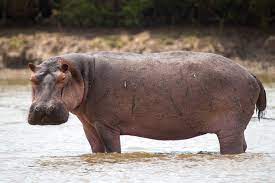
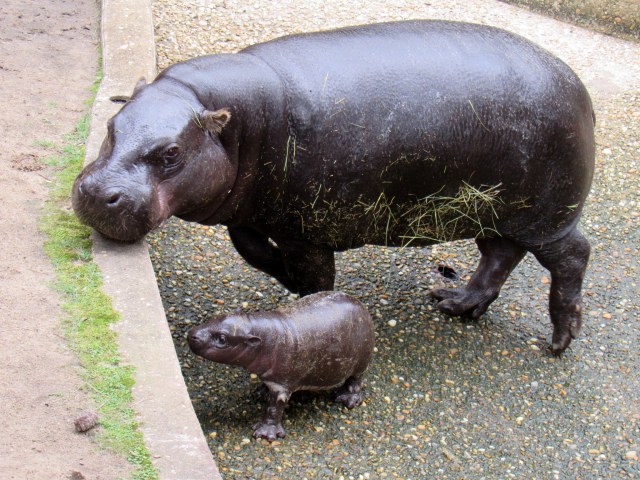
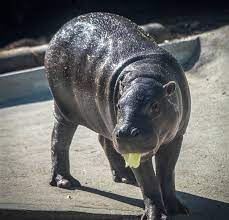
Common vs Pygmy Hippo

There are two types of hippopotamuses.  First, you have the common one that we tend to think of when we hear the name.  The one that is the top killer of humans in Africa and listed as vulnerable.  There are about 150,000 in the wild.  Then, you have the pygmy hippo, which is listed as endangered and doesn’t kill people.  There are about 3,000 in the wild.  So, what are the similarities and differences?

  1. Common hippos are large and fat with heads that are bigger compared to their bodies. Pygmy hippos are small with heads smaller compared to their bodies.
  2. Common hippos can run 29 mph while pygmies run 18-19 mph.
  3. Both are herbivores.
  4. Common has a bite force of 2000 pounds per square inch while pygmies have 1800 pounds per square inch.  Not bad for a much smaller animal.
  5. Common hippos have thick, fatty skin for protection while pygmy hippos have thin skin to keep cool.
  6. Pygmy hippos are antisocial and avoid attacking while common hippos live in groups and are violently territorial.
  7. Pygmy hippos can reproduce easily in captivity while common hippos have trouble.
  8. Common hippos have no real predators aside from humans while pygmy hippos are hunted by leopards and crocodiles.
  9. Pygmy hippos have shorter legs to help them move through rainforests.  Common hippos live in shallow rivers in the plains.
  10. Both species produce a sweat that acts as sunscreen and is antibacterial.
  11. Common hippos are polygamous while pygmy hippos are monogamous.
  12. Both have muscles that close their ears and nostrils when they dive.
  13. Pygmy hippos have a four-chambered stomach while common hippos have three chambers.
  14. Common hippos evolved from pygmy hippos.
  15. Both can hold their breath for 5 minutes.

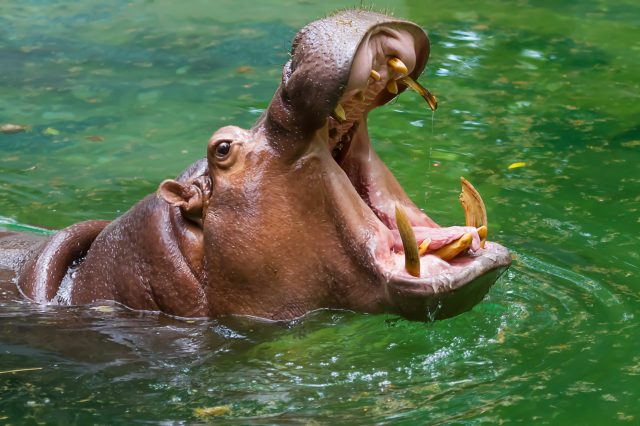
Now for the pictures and videos:

Common Hippo

Common Hippo

Pygmy Hippo

Pygmy Hippo

Posted in Animal Posts | Tagged , , , , , , , | 16 Comments