Story Development and Execution Part 10: Macro-Level Self-Editing

Staci Troilo's avatarStory Empire

Ciao, SEers. Today is part ten of the series, and we’re getting into self-editing. The first step in the revision process is to work on the macro-level, or on the biggest issues. Joan introduced us to the basics in self-editing in this post. I’m going to dig a little deeper. I suggest two read-throughs in this section. The first just to get a feel for the story. The second is when you start to make notes on issues. Here are the things to look for.

First, hooks. We’ve already talked about this. The beginning of your novel needs a great hook, but to a slightly lesser extent, all your scenes do. Do you have great hooks? Did you start with a compelling first sentence, then grab the reader with a fascinating concept? Do they come early in each scene? Do they inform and be informed by character, conflict…

View original post 489 more words

Posted in Uncategorized | 5 Comments

Poetry Day: Buried Alive

Google Image Search

(A small and creepy one.  Pretty self-explanatory.)

I hear your steps above

As they echo through the earth

I refuse to yell or scream

For fear of eating soil

A taste I will not love

Instead I kick and beat

At objects out of sight

Hoping to catch your ears

Before I sleep again

Posted in Poems | Tagged , , , , , , , , | 14 Comments

7 Tips to Writing Underwater Fantasy Adventures

Google Image Search

There’s a lot to consider when writing an underwater adventure.  It gets even more difficult if you’re writing in a fantasy world.  That or it’s easier depending on how much you want to mess with the laws of nature.  We’ll try to be more general here.  I’m also going to say that there is probably a lot more than 7 tips for this undertaking.  Let’s try to cover as much grou . . . water as we can.

  1. RESEARCH!  Just read up on what it’s like to be underwater.  We always remember that one can’t breathe, but many forget other factors.  If the water is murky or the heroes are going deep then visibility is an issue.  Past a certain point, the water pressure would crush an unprotected body.  Temperatures can be freezing or even boiling if there are volcanic vents.  The effects on the body should be researched as well to get an idea on if the heroes can function down there or if they will be weakened upon their return.
  2. Preparation is key for the heroes.  This is more complicated than most other terrains because of all of the challenges.  There should be a build up to the adventure where the heroes are making plans and getting supplies.  Even if the author is a pantser, the characters shouldn’t be diving into the depths without a plan.  For one thing, they need to have a way to breathe and readers might not be willing to believe that they just happen to have the gear for doing so on-hand.  So, take even part of a chapter for the heroes to discuss the challenges.
  3. Unless a hero is diving into the shallows, they aren’t going to run into any buildings within minutes.  Shipwrecks and sunken structures don’t normally hover in the water or stay near the surface.  If they did then more people would visit and they wouldn’t be mysterious.  An adventure that requires going underwater typically means searching a rarely, or never, visited area.  So, there needs to be time given towards the journey down, which helps with tension as well.
  4. I mentioned that there’s going to be a visibility problem in murky or deep bodies of water.  Every location doesn’t have crystal clear water and even that has a depth limit before light can’t go any further.  This means that you need to consider darkness when designing the setting.  You can go for full darkness until a lit place is reached or having there be some light source.  Bioluminescence . . . How did I write that correctly on the first try . . . Anyway, this is when a living creature gives off light.  Many authors use this to create a brighter scene and explain how the characters with no natural ability to see underwater can notice things.  There may still be shadows and patches of darkness that creatures can emerge from, but this helps create a more mystical and alien scene instead of going for the tension of isolation.
  5. Think about the creatures you want the heroes to encounter if they’re going to run into anything at all.  Will they be friendly or aggressive?  The reason for this is because these animals will always have the advantage.  They are naturally designed to function underwater, which includes quick and precise movements.  Adventurers are visiting and will either be in a machine or using magic to survive.  This does not mean they will be able to fight and move with the same level of skill as they would on land.  Aside from moving against the water, they have to change their perspective to a 360 view.  These animals can attack from any side, but also from above, below, and at other angles that are impossible on land.  So, think about your creatures because this will give you an idea as to how your heroes need to move.
  6. Something we haven’t brought up yet deals more with the ocean than more contained bodies of water like lakes.  Though, rivers can have this issue as well even they don’t have the depth. I’m talking about CURRENTS!  Water typically isn’t standing still, so whatever is inside will be pushed along.  The only way to not get dragged away is to have the strength to fight against the currents.  This can be tiring for anyone who is too weak or just strong enough to fight.  Another method is to ride the currents and move along them, which takes knowledge that average adventurers wouldn’t have.  Also, this means they might not come up at the same location that they went down.  Same goes for whatever they are searching for since an object might not fall straight to the bottom and sink more at an angle.
  7. As we’ll get into on Friday, you need to figure out how the characters will get underwater and stay there.  Anyone can swim down a bit and come back up for air, but these are adventures where the heroes need to stay down there.  So, are you going for a magical, technological, or combo solution?  Each one has benefits and weaknesses, so you need to think about where you want to go.  Also, the heroes need access to these options.  For example, if they can’t get a submarine then they have to take the magic route.  Doing otherwise would twist reality a bit too much for the reader.
Posted in Uncategorized | Tagged , , , , , , , , , , , , | 10 Comments

Series Fiction

Hey, SE Readers. Joan with you today. In my last post, I spoke of story length. Today we’ll discuss writing a series of books. First, let’s talk …

Series Fiction
Posted in Uncategorized | Leave a comment

Sŭbmarine-Ër #New Book – Guest Blog by Robert G. Williscroft

Since my dad was a naval aviator in World War II, I have been interested in all things Navy. I am therefore delighted to have as a guest Robert G. …

Sŭbmarine-Ër #New Book – Guest Blog by Robert G. Williscroft
Posted in Uncategorized | 3 Comments

Teaser Tuesday: A Merchant and His Assassin

Google Image Search

I haven’t really highlighted any of the villains.  One needs to remain a secret, but I have these two fun ones.  Really enjoyed writing Urian Coy because I don’t get to do pompous merchants as often as I’d like.  Eris is another character type I’ve used and tossed away rather quickly.  Hope both of them know what they’re going up against . . . Yeah, they really aren’t ready for Darwin.

Continue reading

Posted in Slumberlord Chronicles, Thoughts | Tagged , , , , , , , , , , , , , | 8 Comments

Writing an Underwater Adventure and Not Getting Wet

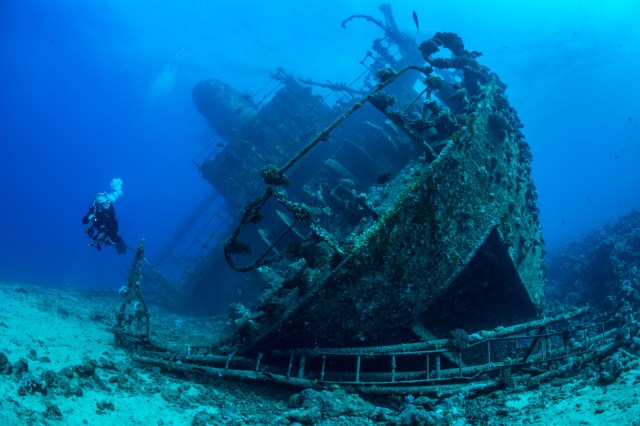
Wreck of Giannis D

I remember this happening in a few Dungeons & Dragons games.  We’d be land-based heroes with the occasional ocean adventure involving ships.  Then, our group would be thrown a curveball in the form of a quest that takes place nearly entirely underwater.  It can throw a group off because the tactics aren’t the same.  In fact, this is a different adventure than anything our adventurers ever met.  Needless to say, it’s also why I don’t do this very often.  Lots of things to consider.

The one time I went all in with an underwater adventure is a story in The Life & Times of Ichabod Brooks.  I thought it would be easy and did what I could to make it as similar to a land adventure as possible.  Magical devices were given out to assist with breathing, swimming, and the pressure one would face.  Since this was a short story, I didn’t go all out with explanations.  So, I don’t think I touched on every challenge that comes from this adventure.  I did just enough to demonstrate that the heroes had to take precautions.  Looking back, I think I’d do a few things differently just to spice it up, but it still works for what it was.  This is another reason I began thinking about this specific topic.

As I stated, going underwater brings about multiple questions.  Will the heroes be using magical items or traveling in a machine?  Are there dangerous animals in the water?  How will heroes deal with breathing, temperatures, pressure, and movements?  All of this needs to be factored in because most readers have experience with water.  Even kids get a sense that being underwater makes it harder to move and impossible to breathe.  So, you have to tackle the basic questions to make this adventure believable.  After all, the unfriendly and deadly terrain is part of the challenge.

I think some authors mix underwater adventures with ocean voyages too.  Aside from the latter having a boat, there are other differences.  Most importantly, is the scenery.  An ocean voyage is rather lonely with nothing to see for miles besides water.  You can’t always have an island in view.  Underwater is similar in that you may have total darkness, but you need a visual.  So, authors always have things glowing or give the heroes lights to reveal the scenery.  Being underwater is like being on an alien planet in that you see formations and life all around you.  Things will loom out of the darkness instead of gradually approaching from the horizon.  There’s a deadly beauty to being underwater unlike the isolation of journeying on a boat.  It’s an important aspect of this scene that can make the difference between vivid and flat settings.

The decision to go underwater is a rough one for authors.  Unlike other terrains, you can’t just want to an area and go exploring with the right gear.  This is a region of the planet that will have its own mountain ranges and rival the size of continents.  Fantasy worlds tend to mimic Earth in land to water ratios, so you’re looking at a greater area to explore.  Heroes can’t just drop into the ocean at any point.  They need a reason to go, especially since they’d see it as a riskier adventure than anything else they’ve done.  One can see how a person would be more comfortable facing extreme heat or cold than the possibility of drowning.  Part of that is because there’s a sense you can counter those issues with gear or retreating.  Submarine or water-breathing ring breaks at 1,000 foot depth?  You’re going to die without question.  So, a lot of preparations have to be made by the heroes for the readers to get a real sense of the danger.

I’ll get more into this on Wednesday and Friday.  I think there’s a lot more to unpack on the challenges here.  Of course, I’m talking about heroes who aren’t able to naturally function underwater like Aquaman and sea elves.  This is all about taking a land-based hero into the uncharted depths.  The possibilities of what they find are endless, which is what makes this so much fun.  You can create nearly anything down there and the tension is easy to maintain since everyone has a fear of drowning.

So, what do you think of underwater adventures?

Posted in Thoughts | Tagged , , , , , , , , , | 9 Comments

Life as a submariner

I’ve been on the Voice of Indie Podcast and had a great time. The guys are still going strong, and today they’re promoting a book by Robert …

Life as a submariner
Posted in Uncategorized | Leave a comment

When Characters Try to Run the Show

Hi, SEers John with you today. I hope your Monday is starting well. How about those characters? I mean, who gives them the right to walk off with a …

When Characters Try to Run the Show
Posted in Uncategorized | 3 Comments

The Dhole: Endangered Asiatic Wild Dog

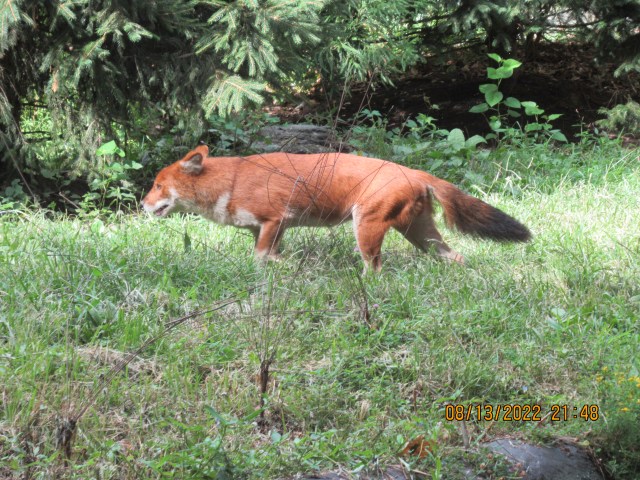
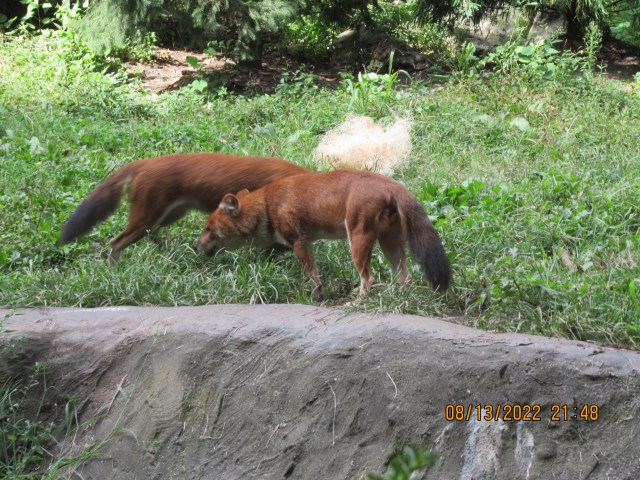
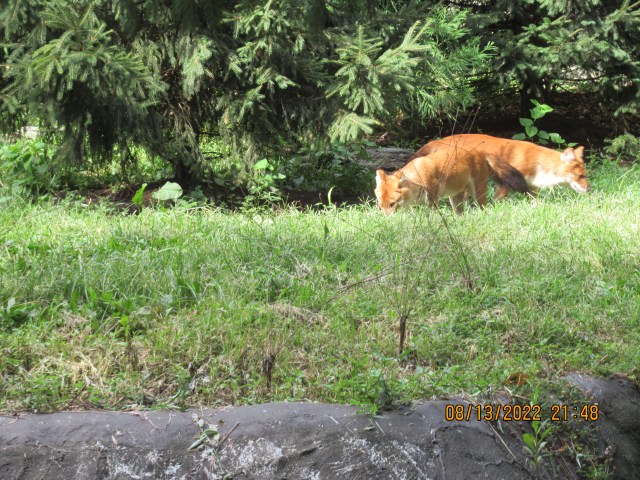
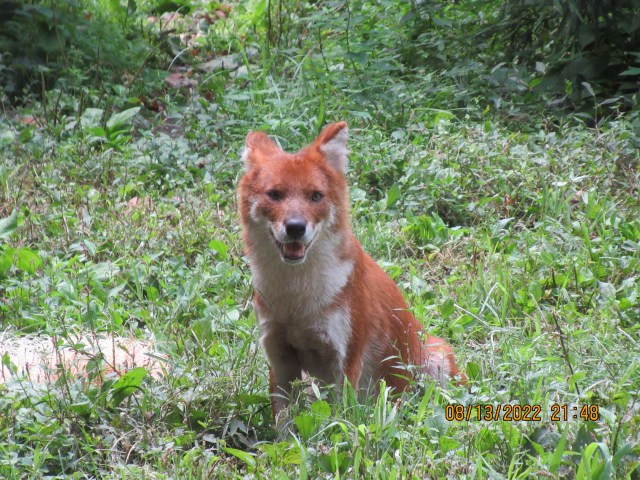
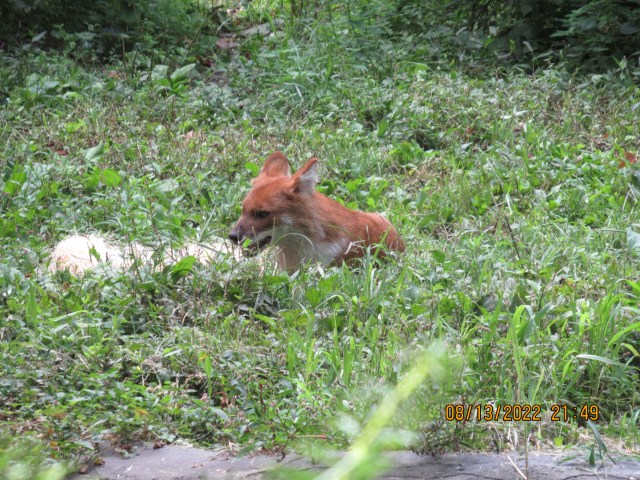
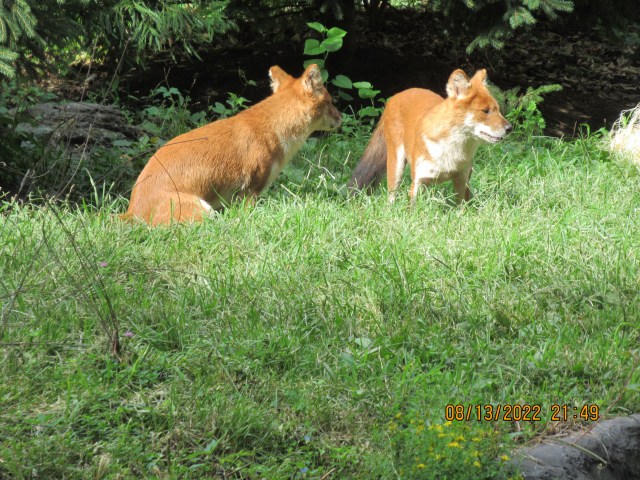
My son and I first learned about the Dhole (pronounced like Dole) from an episode of the Wild Kratts.  These are wild dogs are found in various areas of Asia.  They have many names too.  Whistling dog, red dog, mountain wolf, Asiatic Wild Dog, Asian wild dog, and Indian wild dog are options besides Dhole.  So, you may have heard them referred to without realizing it.  Actually, the red dogs from ‘Jungle Book’ are the dholes, which makes people think they are very aggressive.

Dholes are pack animals and they resemble red foxes, but different.  You can’t really see the differences since it’s mostly tooth and skull structure. One thing that does stand out is that they cannot be tamed.  They will always be either shy or aggressive, so you can’t have a pet dhole like you could with a dog or fox.  This is probably why they’re able to compete with tigers and leopards when it comes to food.  Of course, they work in a pack and use numbers to help against the larger predators.

It’s unclear why their numbers have dropped below 2,500.  There’s no market for them as pets or food.  Their fur has a small market, but not a significant amount to explain the numbers going down.  So, what are the theories?

  1. They were hunted by the British for sport long ago, but now they are sometimes killed to protect livestock.  There used to be bounties on them in India, but it was stopped when people killed too many to maintain the reward.  This is not as common, but it is thought that enough damage had been done to start the ball rolling.
  2. Deforestation is a big problem, which also leads to a lack of prey.  Dholes need a lot of hunting space.  They may need even more than tigers and leopards because the pack is feeding multiple mouths.  So, they need to cover a lot of land for the best chance at finding prey.  Less space means less food and more competition with the bigger predators.  They’re also more likely to interact with people, who see them as vermin and start killing them.
  3. Diseases from domesticated dogs may have gotten into the Dhole population.

There are breeding programs at some zoos.  Also, there is an odd fact for them, which is kind of gross:

Dholes urinate while standing on their front paws.  So, they pee while doing a handstand.

Here are some pictures (from our latest Bronx Zoo trip) and videos from YouTube:

Posted in Animal Posts | Tagged , , , , , | 7 Comments