Goal Post: At Least I Made It . . . Did I?

First, Do I Need to Use a Dragon? has sold about 18 copies.  Not bad.  It’s still 99 cents, so feel free to grab one for yourself.

Not really sure where else to go at this point in the post.  Darwin & the Beast Collector saw some progress, but not as much as I expected.  Various life stresses got in the way and I ended up needing a lot of rest.  Even now, I feel oddly off while writing this post on Friday night.  Got the doctor soon, but that’s to see how the blood pressure medication is going.  Let’s just jump into that.

The biggest surprise obstacle was that the medication I was on may have started battering me a bit.  Not as bad as the last one, but I was really feeling off last weekend.  Reached a point where I got myself tested for Covid just to be safe.  Negative, but the dizziness and bouts of fatigue continued.  It wasn’t even full fatigue.  There were just moments where I was at half energy and my brain was foggy.  This is the big reason why writing didn’t get as far as I had hoped.

There is a chance that the heat was doing some damage too.  I felt like this last summer when I had long Covid and it was hot out.  For all I know, I still have long Covid issues that come to the surface once the temperature and humidity reach a certain point.  Haven’t been sleeping the best even with the AC on too.  That could be sleep apnea getting worse, which I have to ask about.  You have the general exhaustion and medication effects as well, so who knows what in the world is going on.

As for my blood pressure, it’s definitely lower and was out of hypertension levels at several points.  In fact, the numbers only went really high again when I started feeling dizzy and tired.  Doesn’t make any sense since I read that this would happen if my numbers dropped too low and not when they shoot up.  I should just give up on figuring out my body and pray things pass since I can’t keep going to the doctor every week.  Hopefully I’m better in the morning and just needed some good sleep.

On the family front, my son started camp this week.  Not a lot to say about this, but he’s having fun.  Getting used to the camp and kids in his group.  They’re definitely more into sports than him, so he doesn’t know what to do sometimes.  He had a fun field trip to a bounce house place.  Think he made a new friend too.  Guess we’ll see how things go during week two.

Only other thing that happened this week was I finished this Lego set:

It was a lot of fun to put together.  Didn’t know what things were going to turn into until I was done too.  So, there was a good amount of surprise in this set.  Glad I managed to have enough energy to get it done.

I wish I had more to share, but it’s been a primary focus on health, work, and parenting.  Nothing exciting.  Just hoping that first category finally settles down because I’m getting tired of constant bouts of issues.  Trying to eat healthier, exercise, and I’m on meds, but I feel like I’m in worse shape at times.  Makes no sense unless it’s entirely stress doing some damage.  Fingers crossed that I can get that under control.

Goals of the week:

  1. Working.
  2. Parenting.
  3. Writing.
  4. Resting.
  5. Biking.
  6. Sleeping.
  7. Medicating.
  8. Reading.
Posted in Goal Posts | Tagged , , , , , | 4 Comments

Difference Between Editing ‘How To’ and Fiction

Google Image Search

Now, I mentioned that I used beta readers for Do I Need to Use a Dragon?, which is kind of rare for me.  After I added their suggestions and fixed up problem areas, I jumped in to do editing on my own.  Probably one of the worst author experiences of my entire, beleaguered life.

There was just something wrong.  I’ve edited my fantasy books all the time and never had this mix of doubt, confusion, and anguish.  It was on such a deep level that I had to take long breaks from continuing.  Nothing felt right or wrong, so I couldn’t be sure of what needed to be tightened up.  Mostly, I went back to the beta reader suggestions and looked for any repeated issues.  I went through fixing all of those and fine-tuning anything that had similar explanations.  It resulted in me jumping around the editing process with no clue when I would be done.  Felt more like I gave up than finished because my head was just spinning.  So, what happened?

The problem for me was that I was still trying to edit like I do with fantasy.  I go through to make sure the character voices are right and that their actions remain within the scope of their personality/beliefs.  That can’t be done in a ‘How To’ because the author is basically the only character.  So, I had to see if this advice still fit with my mentality, which should be a solid yes.  Not when you’re a person who ends up playing devil’s advocate with his own brain.  This comes from a lifetime of people telling you that you’re wrong or questioning everything you say and do.  One ends up doing the mental sabotage on their own to beat others to the punch.  That’s what started happening here.

I wasn’t even trying to make the entries better too.  I found that I was simply trying to mess with everything.  My editing focus turned into one where I was seeing how all of my opinions could be torn apart.  The doubt I usually had was being fed by this new sensation that couldn’t be stopped by saying ‘the character would do it’.  So, I had to keep walking away and rethinking my editing tactics.  This is why a ‘How To’ author needs a ton of confidence in their own beliefs.  Even the smallest amount of doubt can balloon out of control when you go looking for problems to fix.

This was a different experience from editing fantasy or my dystopia books.  As I said, I was looking at those stories through the eyes of the characters.  Consistency was key in terms of actions, voice, and decisions.  There was an unbreakable skeleton in there, which allowed me to edit without junking the whole story.  As long as it worked with the characters and plot, I could at least alter it to fit perfectly.  I had doubts, but they were pushed aside by enough confidence in the characters to keep them minimum.  The editing would be a big focus on plot holes too.  All of this came with a foundation of notes and sometimes previous volumes.

Do I Need to Use a Dragon? didn’t have the benefit of characters and prior volumes, which added to the difficulty.  I had to make sure I was keeping the general belief and idea even if I was changing some things.  Yet, I kept the entries fairly simple and easy to understand, so I was always skirting dangerously close to the core concept.  There was no solid shield to stop me from delving too deep and thinking that I needed to change the whole thing. It was like walking a tightrope over a pit of whirling blades.  Lean too far to one side and I’m chop meat.

Thankfully, I did make it through the editing and I support what I wrote.  It was an exhausting endeavor, but worth it.  I mean, I had to do at least one editing run to be sure of the quality.  Maybe this helps keep it feeling like a collection of blog posts made to be laidback and easily understood too.  Guess we’ll find out as time goes on.

As stated multiple times, Do I Need to Use a Dragon? is available on Amazon as a 99 cent eBook and a $20 paperback.  Enjoy.

Posted in do I need to use a dragon | Tagged , , , , , , , , , , , | 9 Comments

Writing Echoes: How to Avoid Echoes

Pixabay image Greetings, Storytellers. Diana here today to talk about echoes in our prose. Echoes aren’t always as obvious as the echo in my title, …

Writing Echoes: How to Avoid Echoes
Posted in Uncategorized | 2 Comments

Poetry Day: Family vs Friends

Yahoo Image Search

(I’ve met people who say family are forever.  Others who say friends are the family we choose for ourselves.  Really depends on how you’re treated by either group.)

You have no choice in family
They are there when you are born
The kinsmen by your side
Or throwing pains along your path
Supporting you when they agree
Dragging you down when they do not
They are a fickle crew
That you can never truly leave


You have a choice in friends
As you meet them in the world
The kindred spirits by your side
The ones who battle by your side
Shoulders marked with tears
And fights over growing tastes
Many friends will come and go
Yet the truest will remain


Which of the two are closer?
The ones of blood or bond
A simple question asked through time
An answer different for each asker

Posted in Poems | Tagged , , , , , , , , | 9 Comments

The different types of publisher – make sure you know exactly what you’re signing up for #publishing #selfpublishing

Originally posted on Alison Williams Writing: I often see authors on Twitter celebrating a publishing deal. I almost always have alarm bells ringing,…

The different types of publisher – make sure you know exactly what you’re signing up for #publishing #selfpublishing
Posted in Uncategorized | 4 Comments

7 Tips to Writing ‘How To’ Books

Google Image Search

I’m not an expert on writing ‘How To’ books.  In fact, Do I Need to Use a Dragon? will probably be the only advice book I write.  (Get it now as a 99 cent eBook by clicking on the title!)  Still, there are some things I considered and noticed in the way I wrote my advice.  It may be helpful for someone else who wants to try to teach others how to do whatever activity they’re into.

  1. PRACTICE WHAT YOU PREACH!  I mentioned this on Monday, but I’m going to repeat it.  Whatever advice you’re giving, you need to have at least tried to use it.  If you are only giving suggestions that were given to you, but you failed to put into practice then you’re kind of lying.  You’re passing on information that you haven’t tested out yourself.  Even if it failed, you can still mention trying it out and point out what went wrong.  A reader might be able to use the advice that failed you because they learn from your example.
  2. Tailor your jargon and explanations for the skill level of your audience.  The more industry words and catchphrases you use, the less likely you’re going to help a novice.  They won’t know what you’re talking about and can be intimidated.  You can counter this by explaining the phrases, but that can turn into the ‘How To’ version of an info dump.  If you’re routinely defining words then you might be aiming your book at the wrong audience level.
  3. Be careful using asides and examples into your own fictional works.  Spending more time talking about your stories then the craftwork can feel right.  You’re showing examples and authors tend to go on at length about their own creations.  From the outside, this can look like gloating or a sales pitch.  Selling copies of your other books is secondary at best.  You’re real goal with a ‘How To’ is to teach the reader some tricks on how to write their own books.
  4. Resist the urge to go on at length about ‘show, don’t tell’.  This is more of a personal pet peeve, but this phrase has been plaguing me since high school.  Many people will hear it and spout it as criticism without knowing what it means.  They won’t factor in the writing style, which might be more telling than showing.  For example, third person present tense like I use tends to get this criticism a lot.  If you must use this cliché chestnut of advice then try to give it some nuance and explanation.
  5. Try to have some organization to the book.  I might be saying this more to pantsers, but I don’t really know how that kind of author would tackle a ‘How To’.  I could be entirely wrong in thinking that they’ll grab a topic and just go then move on to the next one on their mind.  Guess that still works as long as there is some kind of organizing before publishing.  This way, the reader doesn’t feel like they’re jumping around the topic of writing.  For example, I went with categories of Author, World, Characters, and Quest to help organize Do I Need to Use a Dragon?
  6. Be honest and open.  Don’t be afraid to reveal some of your mistakes and embarrassing moves.  Similar to designing a fictional character with flaws, you need to make yourself out to be human.  You are the only character of a ‘How To’, which means you can’t make yourself out to be infallible and perfect.  If you talk as if you’ve never made a mistake or learned something the hard way then a reader might think you’re hiding something.
  7. Use beta readers whose opinions you trust.  This can be a very personal book because you’re exposing your thoughts.  Getting people to read it beforehand for clarity and consciousness may be crucial.  The danger comes form having someone read it and them disagreeing with every piece of advice you have.  This can cause an author to give up entirely on the project, which means any good advice they have will never see the light of day.  So, pick beta readers who understand that you are voicing an opinion that they might not agree with, but you still want to say.  They will help you clarify your advice for the audience instead of change the advice entirely.
Posted in do I need to use a dragon | Tagged , , , , , , , , , | 16 Comments

Choosing Your Character’s Occupation

Hi, SEers! It’s time for another Mae Day on Story Empire. Thanks for joining me for an up-close look at character occupations. This is one of the …

Choosing Your Character’s Occupation
Posted in Uncategorized | 4 Comments

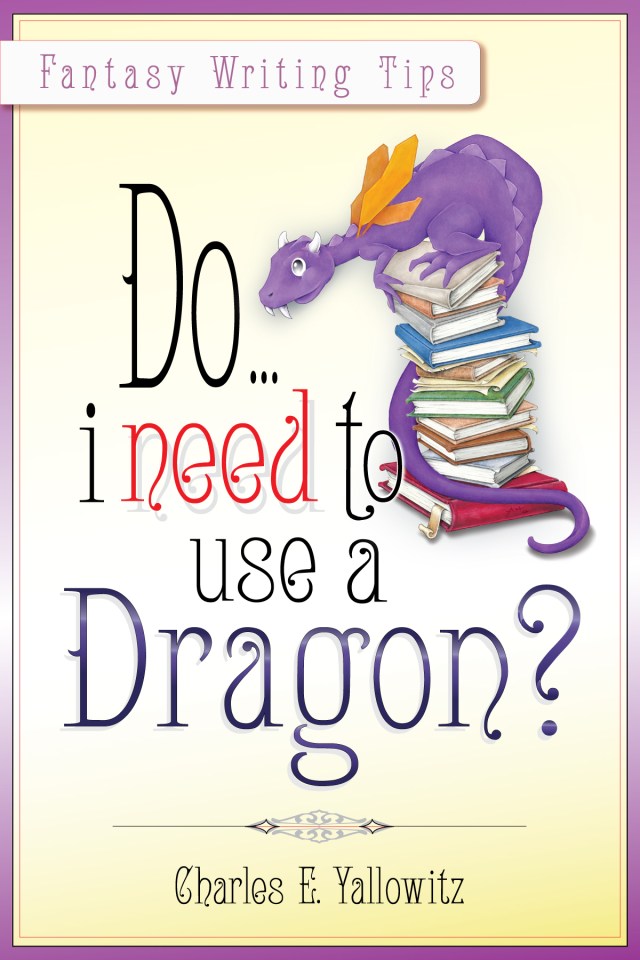
Get Your Copy of ‘Do I Need to Use a Dragon?’ for 99 cents!

Cover by Alison Hunt

Curious about craftwork? Tempted to try writing fantasy? Then grab a copy of Do I Need to Use a Dragon? as a 99 cents eBook!

Posted in do I need to use a dragon | Tagged , , , , , , , , , , , , , , , , , , , , | 5 Comments

On the air… again

I’ve been blessed to get an invitation to Fresh Ink Group’s “Voice of Indie Podcast,” once again. We’re doing this live on Wednesday at 7:00 East …

On the air… again
Posted in Uncategorized | 2 Comments

Thoughts on Writing a ‘How To’

Spongebob Meme

With the release of Do I Need to Use a Dragon?, I’ve been doing some think on the overall process.  Of course, this also got me thinking about the existence of ‘how to’ books in general.  They’re a pretty big industry from what I can tell, which surprised me for about a minute.  Then, I realized why they’re so popular.

Many people want to learn about a trade, art style, or activity.  They don’t necessarily have access to courses or experts.  Take someone who wants to be an author as an example.  It always comes off as an easy undertaking until a person starts.  Then, they’re told to take writing courses or join an author group.  Yet, they might not have the money for the courses or be anywhere near a group.  Others might not be confident enough to take that step into a group because they think only serious authors are there.  A ‘How To’ book will fill that void and give one insight into the path they are going to follow.

‘How To’ books have been around for a long time.  One can even extend that time if we consider that textbooks and instruction manuals count.  That is what ‘How To’ books do at their core.  They are written to instruct a reader on how to do something.  They differ a little slightly from informative books because they aren’t simply telling you about their topic.  A ‘How To’ book’s goal is to get you to understand the topic enough to do the activity on your own.  That means, an author has to be very careful and clear in their descriptions.

That was something I noticed about a bunch of ‘how to write’ books that I checked out before tackling my attempt.  Some authors were used a lot of jargon and spoke almost entirely about their internal process.  It was almost biographical and someone just starting out might not understand the terms.  This is why I tried to use simpler language and define anything that I thought might be labeled as jargon.  I didn’t want my readers to be confused and think I was talking to people with more experience.  After all, I want even the greenest of authors to get something from the book.

Perhaps ‘How To’ books go in levels too.  I vaguely remember there being a few books that said beginner, intermediate, expert, hard, and a variety of difficulty descriptors.  This makes sense considering you have people of different experiences and training looking for advice.  A newcomer might be scared off by an expert level book while an experienced author won’t get much or anything out of a beginner book.  That means the person writing the ‘How To’ needs to consider their audience.  Probably more so than most other types of authors because these are instructional.  You can’t aim for beginners and bombard them with language that only those with experience would understand.

A final point that crossed my mind with ‘How To’ books is to authors specifically.  One of the reasons it was suggested by some for me to do this is because it might help sell my fiction books.  I didn’t think much of it at the time.  Now, I realize how this works.  A person who likes your advice is more likely to check out your books to get a better sense of your style.  At the very least, they will see it in action and see if you follow your own tips.  It would hurt all of your books if you don’t practice what you preach.  People would wonder why you wrote the advice in the first place and think you’re trying to trick them.

An author who writes a ‘How To’ would also have to use examples from their own books instead of others.  This isn’t mandatory, but it makes things easier and safer.  Some people told me to use LOTR, Narnia, GoT, and Harry Potter to prove my points in Do I Need to Use a Dragon? I realized pretty quickly that I’d get in trouble because I don’t have the rights to those.  I could get in trouble for noting them since copyrights and trademarks are highly protected.  This is why I think most authors who do a ‘How To’ stick to their own creations.  You don’t run the risk of a lawsuit.

So, I’ll get more into my thoughts on the ‘How To’ genre throughout the summer. Don’t forget that Do I Need to Use a Dragon? is available on Amazon as a 99 cents eBook (for 1 month only) and a $20 paperback.

Posted in do I need to use a dragon, Thoughts | Tagged , , , , , | 11 Comments