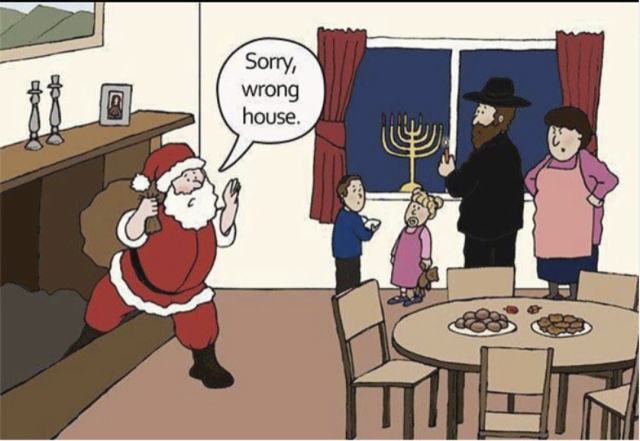
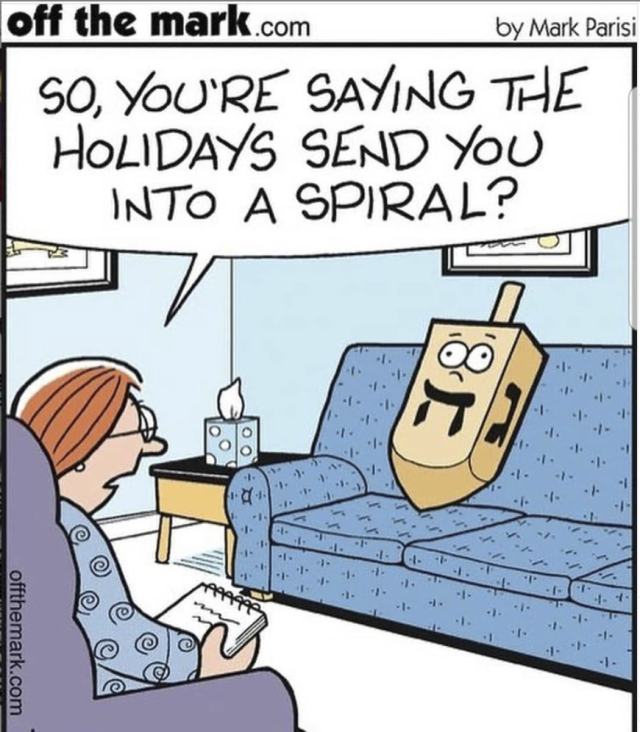
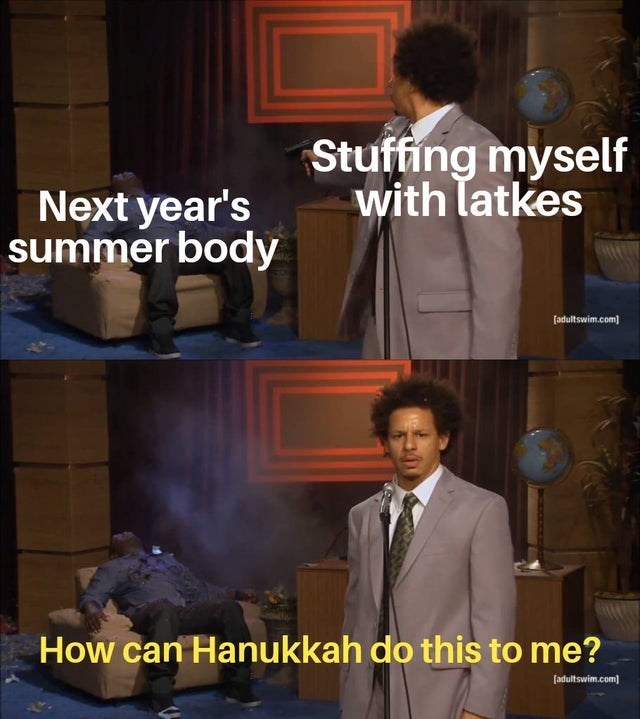
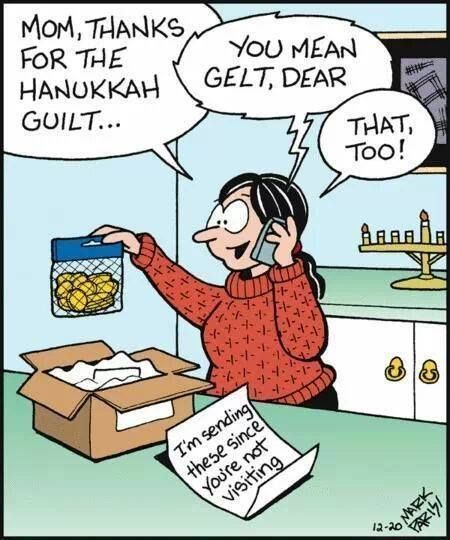
Last night was the first night of Hanukkah. Guess that’s how we’re spelling it this year. Anyway, enjoy these funnies and have a relaxing weekend. Feel free to grab a copy of Beginning of a Herotoo. No reason other than I haven’t pitched that book in a long time. It’s free!
(Fairly certain this stemmed from parental conflict. Children rarely do exactly what the parents expect, which causes friction. It can be worse when the parent is so locked in how the world was when they were growing up that they can’t see the new challenges their children face. So, you have incidents where adult children are treated like toddlers, idiots, or disappointments. This kind of works off that concept. Not a fan of the flow or word usage in a few lines, but it is what it is.)
You scoff at our decisions
Because they are not the ones you like
You criticize our choices
Because you believe you know best
You crow about your experience
Because you refuse to be told no
You swear that you took no help with us
Because your parents were always underfoot
You remind us of the damage that we do
Because you never made mistakes
You tell us about the horrid future that we build
Because you are the parental prophet
You pout and curse when we refuse your path
Because you are the most mature around
We tell you thank you, but please go away
Because we are not as stupid as you think
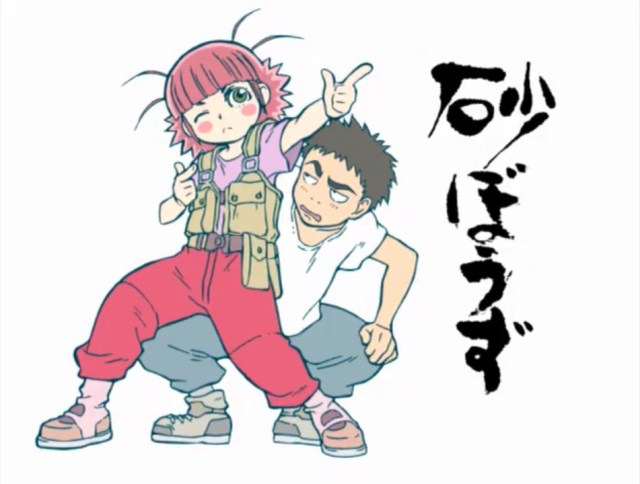
This post was inspired by the anime ‘Desert Punk’. It’s fun even though it gets fairly crude at some points. It does something that is fairly interesting as well. The anime is 25 episodes long and Kosuna (the girl/apprentice) ends up taking over for the main character Kanta on episode 21. Won’t say why this happens or what the events that ensued, but it was shocking the first time I watched it. Did it work though?
The truth is that Kosuna was a fun character and she did kind of work with the spotlight, but it didn’t have the same impact as the previous episodes. The anime was called ‘Desert Punk’ and Kanta was Desert Punk. So, you watch the final episodes wondering where the twist is going to be. I would say for something so short, it didn’t hurt the story and it picked up at the end. Yet, I’ve seen some stories attempt a full switch to a new main character and fail. What are some reasons?
New hero doesn’t have the same charisma as the previous hero.
Fans refuse the change entirely and begin to abandon the series or demand a return to the status quo.
It gives a sense that the story is just dragging on and should have ended.
New hero taking the spotlight results in popular supporting characters being benched/eliminated as well. So, you have an amplification of the second issue.
Author simply isn’t feeling the change like they had hoped, so they go back.
The switching to a new protagonist in the middle of a story definitely comes with a variety of risks. You never know how people will take to it even if they requested the change. A group of vocal fans could want an apprentice/sidekick to take the helm, but then realize that some of that character’s charm disappears. Once the new hero gets their promotion, they get more attention, scrutiny, and responsibility in terms of story. Their decisions carry more weight because they are one of the major plot progressors. For example, this shift is very distinct when a comic relief apprentice takes over because they will typically have to shed their goofier habits. That doesn’t always appeal to fans because they liked the character’s comedic side.
You run into issues with the villains as well. If the previous villains remain, the new hero has less of a connection. Even if they are avenging their master, they lack the same depth of history. As an apprentice, they were probably spending most of the previous adventures as back-up. The villain knows about them and has probably interacted, but not to a great extent. Maybe they were a hostage at some point or had a few moments of spoiling the evil plan, but they weren’t the focus. A connection needs to be rebuilt, but you can’t rush this or take too long. Doing either will result in a mess and the chemistry needed for a good hero/villain dynamic is lost.
One of the easiest ways to accomplish this switch is to make it a spin-off. Give closure to the previous hero in some fashion. Retirement, achieving their personal goal, death, disappearance, or any number of ways to remove them with an ending. Then, start a new series with the apprentice and have them set out for their own reasons. If they are only there to continue their master’s quest then some fans will be asking why the previous hero couldn’t be used to finish the job. Remember, audiences don’t like unnecessary changes in established stories. You have to justify your reasoning beyond ‘I wanted to’ and demonstrate that the overarching story is improved by the change. Posing the new hero as getting a spin-off helps in doing this because you establish that things are starting at square one.
Personally, I’m always leery of this kind of change. I don’t like the idea of doing it myself since my stories are very character centered. As a reader/viewer, I can get behind it if the event is presented well. Shock value changes make me finish watching or reading out of begrudging loyalty. Probably a big reason on why I really don’t want to try it unless I can make a really good reason in my own head. This might just be me though because I can see how changing the protagonist can erase stagnation and keep an overall story going.
So, what do you think of an apprentice taking over a story?
Weaver of Destiny. Lord of Hell. Father of the Song Casters. The Tri-God. This guy has a lot of names that I haven’t even discovered yet. Now, it is awkward doing an origin for Gabriel because he’s all me and he was never in the game. I decided to have the gods of Windemere act similar to the influential Greek Gods, so I began making a pantheon of beings who would pull the strings of mortals. Their powers tend to be absolute and I can go as wild as I want with their description, so the challenge is always their personalities.
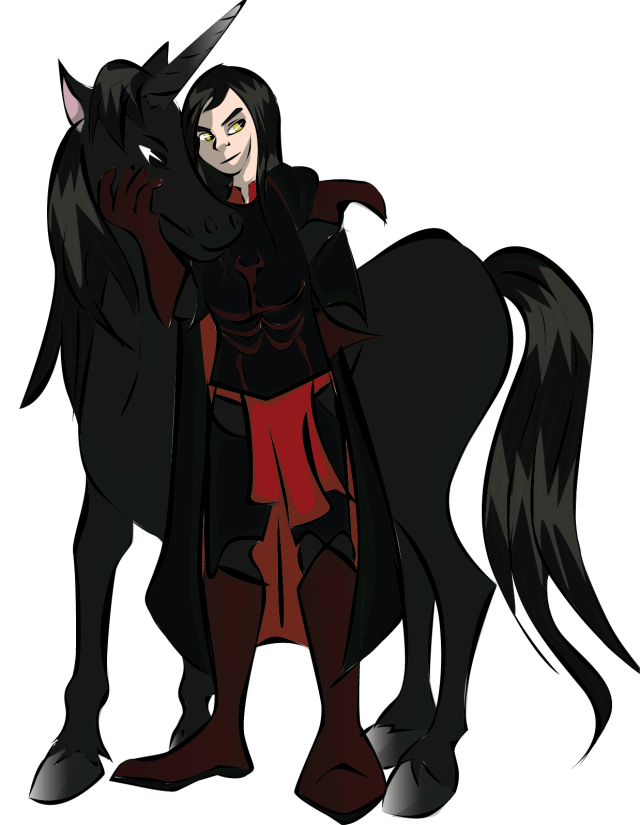
The first to be designed and flushed out was Gabriel, the god of destiny. Somewhere along the line he gained the last of the black unicorns, the ability to cast magic by singing, and rule over Hell. This was before he ever stepped outside of his one-page character bio in my notebook. By the time he appeared in Beginning of a Hero, he was a force to be feared and respected. I loved him and despised him at the same time. His personality came about without any influence from me besides the force of my fingers on the keyboard. It took me some time to uncover the nuances of Gabriel and much of that time was from inner conversations with him. These conversations tended to make me feel like I had something in my head that was waiting for a chance to take over, but I couldn’t tell if he was for good or evil.
It struck me that a weaver of destiny wouldn’t be responsible solely for the heroes of Windemere. He’d have to be in charge of the villains too. So, I got the idea that Gabriel was playing an eternal chess game with himself and he was essentially blindfolded. He never knew which side would win because he had to make space in his plans for freewill. If he prevented freewill then a backlash could occur, which is how he went from mortal to god in the first place. This fine-tuned his personality because he was always arrogant, but there were occasional undertones of sorrow and frustration that would slip out when his defenses were down. Making a god have human qualities in his personality is very difficult when you’re still trying to push the fact that he is an immortal, ultra-powerful deity.
Gabriel is the one character that will have a hand in every Windemere story that I write. Whether he’s a major player in events or simply shows up once to talk to somebody, he is going to get the most mileage out of my characters. It’s only fitting considering he is the Master of Adversaries (gotta remember that one).
2023 Thoughts– Sadly, I did forget that last nickname. I’ll have to use it the next chance I get, which could be soon since Gabriel does have a minor role in Darwin’s stories. Can’t say I would change any of his origin or usage. He was a driving force in Legends of Windemere and that created my on-going theme of ‘destiny vs free will’. I originally thought it wouldn’t get further than the one series, but then I kept playing with the concept. Gabriel became a bigger and more complicated character as well. The best part is that he’s still growing. Every series that he operates in should add more to his personality, evolution, and mystery.
Reality- You can’t touch dreams. They might be in your brain, but you can’t really interact with them. Most of your kind fade away within a few minutes of waking up.
Dreams- We still exist on some level. That’s why many of us are recurring.
Reality- Things you experience are kept in memory too. In fact, those things can be accessed to create all of you. A person can’t dream of something they haven’t seen or experienced.
Dreams- Then, what about those who were the first to dream about dragons or flying?
Reality- Dragons from finding dinosaur fossils and flying from watching birds. Totally logic explanations.
Dreams- Funny that you’re talking about logic. My rules might not make sense outside of their specific dreams, but they stay the same . . . Usually.
Reality- Name one part of reality that makes no sense.
Dreams- Scientists debate water because some think hydrogen bonds do not fully explain its molecular composition. Also, human males have their highly sensitive reproductive organs on the outside where they can easily be hit, squished, or sat on.
Reality- Well, nobody said evolution was perfect.
Dreams- People drive on parkways and park on driveways.
Reality- Stop it. You’ve made your point. Dreams are still nothing more than frivolous escapes from me.
Dreams- Everyone needs that at some point. Many of these escapes result in us understanding or altering you too. A person had to have dreamed of exploring underwater before inventing the submarine. A person had to dream about preserving food before finding ways to do so. Dreams are where creation is born.
Reality- Well, reality is where action needs to be taken. What’s the point of this conversation?
Dreams- As usual, this blogger wrote a note for a post and forgot the initial idea. He’s faking it until he thinks he’s done enough.
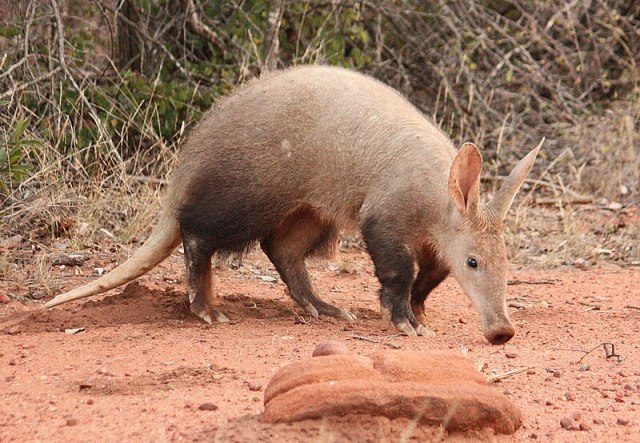
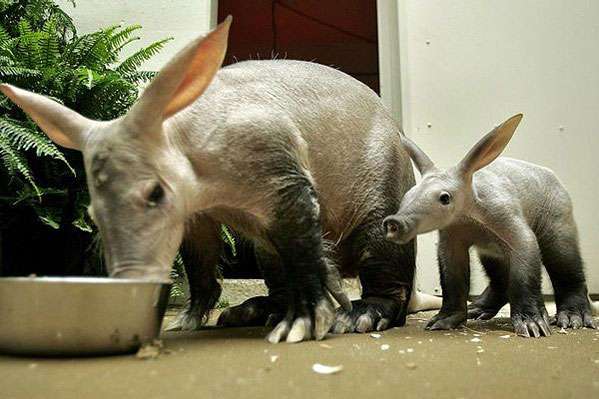
First, Aardvark apparently comes from the Afrikaans word ‘erdvark’. This means ‘earth pig’, which I think is a cool nickname.
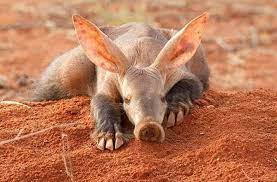
How to explain an aardvark? Well, it’s a burrowing mammal from Africa that is mostly active at night. It is an insectivore and it finds its food using its long snout to sniff them out. They are listed as ‘least concern’ and can be found in the southern 2/3’s of the African continent. So, what are some fun facts?
Aardvarks are afrotheres, which is a group of mammals with living members that either live in Africa or have African origins. Other members are elephants, golden moles, tenrecs, manatees, and more.
They are also considered a living fossil due to their genetic makeup staying relatively unchanged for 50 million years.
Their tongues can be up to 12 inches long and are used to get into termite and ant nests.
Aardvarks avoid rocky terrain because they need to make burrows for home, child-rearing, and protection.
They eat about 50,000 insects a night.
They swallow their food whole and grind them up in a muscular area of its stomach, which is similar to a gizzard.
Aardvarks rarely drink water, but get it through the food they eat.
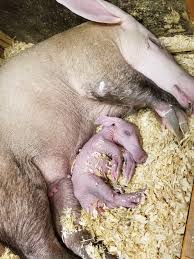
A female aardvark is pregnant for 7 months and can only give birth to one pup at a time.
Babies are weaned at 3 months, leave home at 6 months, and can start breeding at 2 years.
Aardvarks have four toes on their front feet and five toes on their back feet.
While people imagine them to be small, they are actually around 7 feet long and can weigh from 130-185 pounds.
Their burrows tend to be 30-40 feet long.
Abandoned aardvark burrows are used by other animals such as snakes, owls, warthogs, and wild dogs.
Aardvarks have poor eyesight, but they have most olfactory turbinal bones of any mammal and a highly development olfactory lobe.
That covers a lot, so let’s get to the pictures and videos.
The big victory was that I finished writing Darwin & the Beast Collector. I had a lot of trouble with the finale since I had Darwin leave the area a little too early. That had to be fixed and then the ending had to be more solid. Just don’t know how it came out because it doesn’t have a hard ending like most of my books. It’s kind of a soft parting between the surviving characters. No foreshadowing for the next adventure. Just a ‘well, that adventure is over and now we go our separate ways’ type of thing. I mean, it works for the characters, but my desire to be epic isn’t letting this go. Guess we’ll see what happens when I edit it in a few years.
That was pretty much the only writing I could accomplish. Never got to my notebooks or preparing any blog posts. Parenting, work, and the ‘life event’ took all of the oxygen out of my lungs. I was lucky enough to get to bed at a decent hour and sleep, which is getting better. Still ended every day on the verge of collapse and didn’t bother touching any shows to relax. Just ended every weekday crawling into bed around 10 PM, hooking myself to the CPAP, and passing out.
I think a big factor was Monday and Wednesday. Some of our life skills students were helping out at evening events with our coffee cart. They needed support, so me and the other life skills TA went back to help. That meant I handed my son off to his mother, wolfed down Taco Bell (Monday) or leftover dumplings (Wednesday, and drove back to spend 2 hours a night with our students. It was really one who helped out and he had such high energy after a long day. No idea how he does it, but keeping up with him helped my energy levels. Unfortunately, it meant I crashed when I got home. 7 hours of sleep wasn’t countering the high level of activity.
The week ended with a big field trip too. I was out of it and fought to keep up, which took most of my energy. All I had left was the power to drive to the sleep doctor and get checked out after being on CPAP for over a month. Blood pressure is normal, apnea events are within normal human parameters, and the fatigue I feel is simply sleepiness instead of utter exhaustion. Probably take a few more months before the fatigue issue improves. Discussed me not being able to sleep within Zzzquil, but I can’t try to ween myself off that until holiday break. That might be part of the drowsiness problem, but not a big one.
Another thing that put a damper on the weekend was that the ‘life event’ took a fairly big step forward. At least, it did from my end. It also let me get a bunch of pent up stuff out, which left me emotionally exhausted. Still don’t like the situation and have very little control over it, but I may have gained a bit more of the reins this week. Hard to say until the next ‘life event’ round. I’m going to be spending the next two months getting my psyche’s bell rung though. Fingers crossed that I make it through, which I probably will even if I’m a little chomped on.
This coming week is going to be similar to last week, but without the evening events. I have to make it through 3 weeks before I get to a break. Hanukkah starts on Thursday evening, so I have to wrap presents on Wednesday. Next Sunday is the big latke celebration for my family too. Feels like all of the holidays are rushing forward and the end of the year will strike before I know it. Can’t think of anything else big going on after this weekend either, so maybe I’ll get some rest.
Tonight, I’m going with my family to see the holiday lights at the Bronx Zoo. Been a member for about a decade and have never gone. Usually, I can’t get tickets in time because the weekends get messed up. So, I’m happy to finally go. Means another late night and a late dinner, but it’s worth it. Won’t post pictures of it until January 7th when it’s over. Don’t want to spoil it and I already have the Sunday posts set, so I’m too lazy to move stuff around. I’ll have Sunday to rest up even though it will probably be a Pokemon Go day. Depends on how we do with homework today, but it looks feasible. Reminds me that I should finish an online course I started as well. Should only have an hour of that to go. Far too many little projects left that I need to tackle and finish off.
Goals of the week:
Wrap Hanukkah presents when son is not around.
Parenting as usual.
Get back to biking since this week was too crazy.
Finish online course.
Possibly start outline for Darwin & the Joy Path
Do a few February blog posts.
Really should finish that one character in ‘Phi Beta Files’.
Improve sleeping habits.
Probably have a life event thing that will turn up.










 Legends of Windemere