
(Originally posted on May 14, 2023.)
The axolotl is a very unique type of salamander. We’ll get more into that with the facts because there’s a lot to delve into. I tried to write it in paragraph form, but there was so much information that it got messy. Lists are so much neater.
First, I want to note that the axolotl is critically endangered. There are only 50-1,000 left in the wild. There are about 1 million in captivity though. Why? Axolotls are found in only one area, which is the Xochimilco lake complex near Mexico City. With the expansion of human civilization, there has been an increase in pollution and some of their territory has dried up completely. For example, Lake Chaco was a major habitat for axolotls, but it has destroyed. Other threats are overfishing since they are considered a delicacy and introduction of invasive species like perches.
There is a big self-preservation reason to push for the axolotl to survive and not go extinct too. They are very important to researching regeneration because they can regrow limbs and organs. Other species can, but they are one of the few that are able to be bred year round and quickly. This makes them very useful in finding ways to help our own medical field. Specifically, their genetic makeup could hold clues towards curing age-related diseases and aging in general. Not immortality, but to make it that our bodies don’t break down like they tend to do.
So, what are some axolotl facts?
- They have a rare condition called neoteny. This means that they don’t lose their larva features when they become adults.
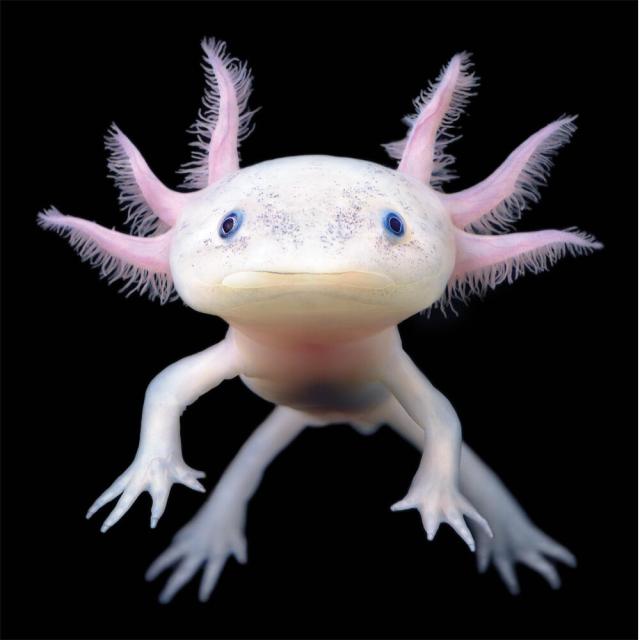
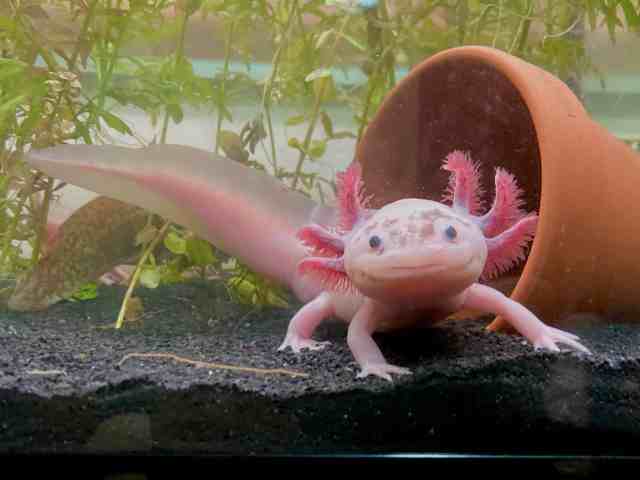
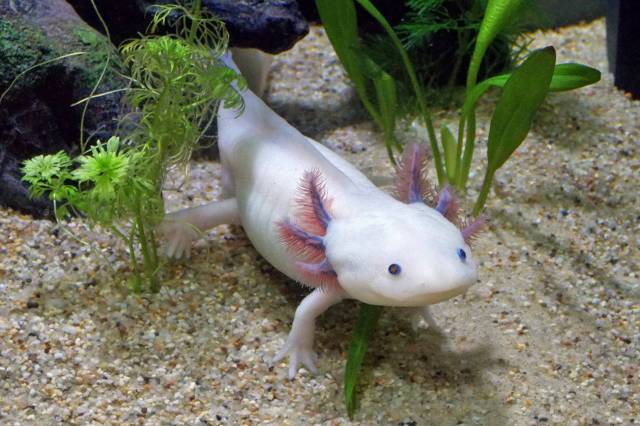
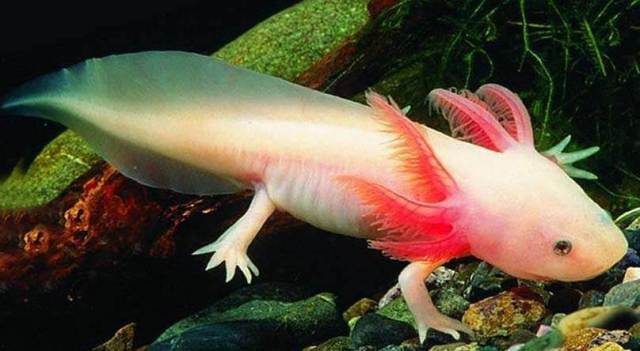
- The larva features they keep include feathery exterior gills and a rear dorsal fin.
- Axolotls still grow lungs, which they use to get air from the water’s surface.
- Unlike other amphibians, they are 100% aquatic and do not leave the water.
- They come in brown, black, albino, grey, and pale pink colors.
- Axolotls are larger than other salamanders.
- Their skeleton is made mostly of cartilage instead of bone.
- Aztec mythology says that the axolotl is the god of fire and lightning in disguise.
- Axolotl regeneration has gained attention because their new limbs regrow perfectly and there is no markings between new and old flesh within a few weeks. This makes it highly efficient.
- They can regrow the same limb up to five times.
- Their genome is 10 times the size of humans at 32 billion DNA bases. Two genes have already been identified in connection to regeneration.
- Axolotls reach sexual maturity at 6 months.
- They are also called the Mexican Walking Fish.
- The axolotl is 1,000 times more resistant to cancer than mammals.
Time for some Google Image Searched pictures and YouTube videos.



















 Legends of Windemere