

Jacqui here at Story Empire. My theme for 2025 is: 2025 Writers World: Trends, Questions, Concerns, More This monthly post will discuss topics that …
Does learning to be a good writer matter anymore? Or will AI fix your problems?
Jacqui here at Story Empire. My theme for 2025 is: 2025 Writers World: Trends, Questions, Concerns, More This monthly post will discuss topics that …
Does learning to be a good writer matter anymore? Or will AI fix your problems?
Apparently, it’s also Marmot Day and Hedgehog Day. Lots of rodents today. Well, let’s hope the varmints give us good news.

Okay, who’s bright idea was it to jam so much chaos and crazy into a single month? I feel like I’ve aged 5 years and it’s only been 31 days. This week wasn’t much better and I even got Wednesday off for the Lunar New Year. Happy Year of the Snake to everyone who celebrates.
On the plus side, I didn’t have a cold this week. I can only imagine I was so stressed that even viruses and bacteria didn’t want to go near me. Can’t even tell you what caused the mess, but work was definitely wild on a few days. That left me tired and then helping my son with stuff put me over. All I really accomplished was a bunch of April blog posts while I was waiting for appointments to start or since I only had 30 minutes of free time. So, not a stellar author week.
That isn’t to say I did nothing. I did almost nothing! The only progress I made on Darwin & the Beast Collector was printing out the whole book. I wanted to start editing it on Wednesday when I had off, but a bunch of appointments left me too unfocused to start. I want to dive into this book with a semi-fresh mind since it’s one that I’m uncertain about. Changing the ending and realizing a few issues that might not really exist has me in doubt. For example, a group of monsters have individual names, but I don’t know how to introduce those since they don’t really talk and nobody can research them. Right now, everyone uses a descriptor with a species until names start getting discovered. Is this a good thing to have for most of the book?
Another issue is that my villains didn’t come out as evil as I wanted. One is almost nice and another is simply a creepy jerk. Guess this also isn’t a bad thing since it can open the door for more sensible actions. The more evil a villain is, the more outlandish some of their actions can be. Am I just giving myself excuses?
My plan is to start editing Darwin & the Beast Collector today between running errands and attending a Pokemon Go event. Tomorrow will have more open time, but I’ll be fine bringing chapters to work to edit during breaks after I start. Really didn’t want to begin with other people around. We have a break in February that will help me get through a bunch of chapters too. I’m looking at finishing this by the summer, which means typing it in during that time. I might even be able to start Darwin & the Joy Path by end of August. Fingers crossed.
I’m feeling like this is a precursor to the 7 week stretch of no days off between winter and spring break. That’s always stressful because the weather is changing, a lot of events are going on, the 3rd quarter push, and meetings. This is both as an educator and a parent, so I’m getting it from both barrels. It’s weird because I’ve done office, retail, and food jobs with these kind of stretches, but that didn’t drain nearly as much as working in education. It isn’t the physical drain either. It’s the emotional one, but that could also be due to the personal stuff I’m getting battered with. That’s going to be getting fairly interesting this coming week too.
Speaking of next week, I’m not going to plan out a lot because there are changes coming down the road. Mostly, a new doctor for something that is a weekly appointment. The place isn’t as close to home as the previous person, which means I lose more of at least one evening. Plus side is that I was successful enough at this Wednesday’s Pokemon Go raid that I don’t have to go out for the next one. I can do some catching after work, come on home, and maybe do some editing. Guess this is balancing out, but next weekend is Super Bowl and we’re having a party. That’s going to change things a bit.
Haven’t talked about what I’m watching these days, but I only tried a few fringe anime series that sounded interesting. One was decent and the other I stopped halfway through the first episode. Last night, I started a show on Amazon called ‘Cross’, which is based on the Alex Cross series. Stars Aldis Hodge, which is why I started it, and I like it so far even though it’s not my norm. Probably finish it before Monday since it’s only 8 episodes. Be even easier if my back continues giving me trouble and I have to stay lying down with a heating pad.
Goals of the week?
This post originally went live on February 21, 2024.
Cardinal Symbols
I mentioned that there have been plenty of uses of the cardinal directions to create fantasy and mythological systems. Sometimes, you even have a 5th direction of ‘center’, which is important when we get to Wu Xing. I wanted to give a list of various cardinal systems that have been created in mythologies. Many authors use these for inspiration even though only stick to the one that is from their own culture.
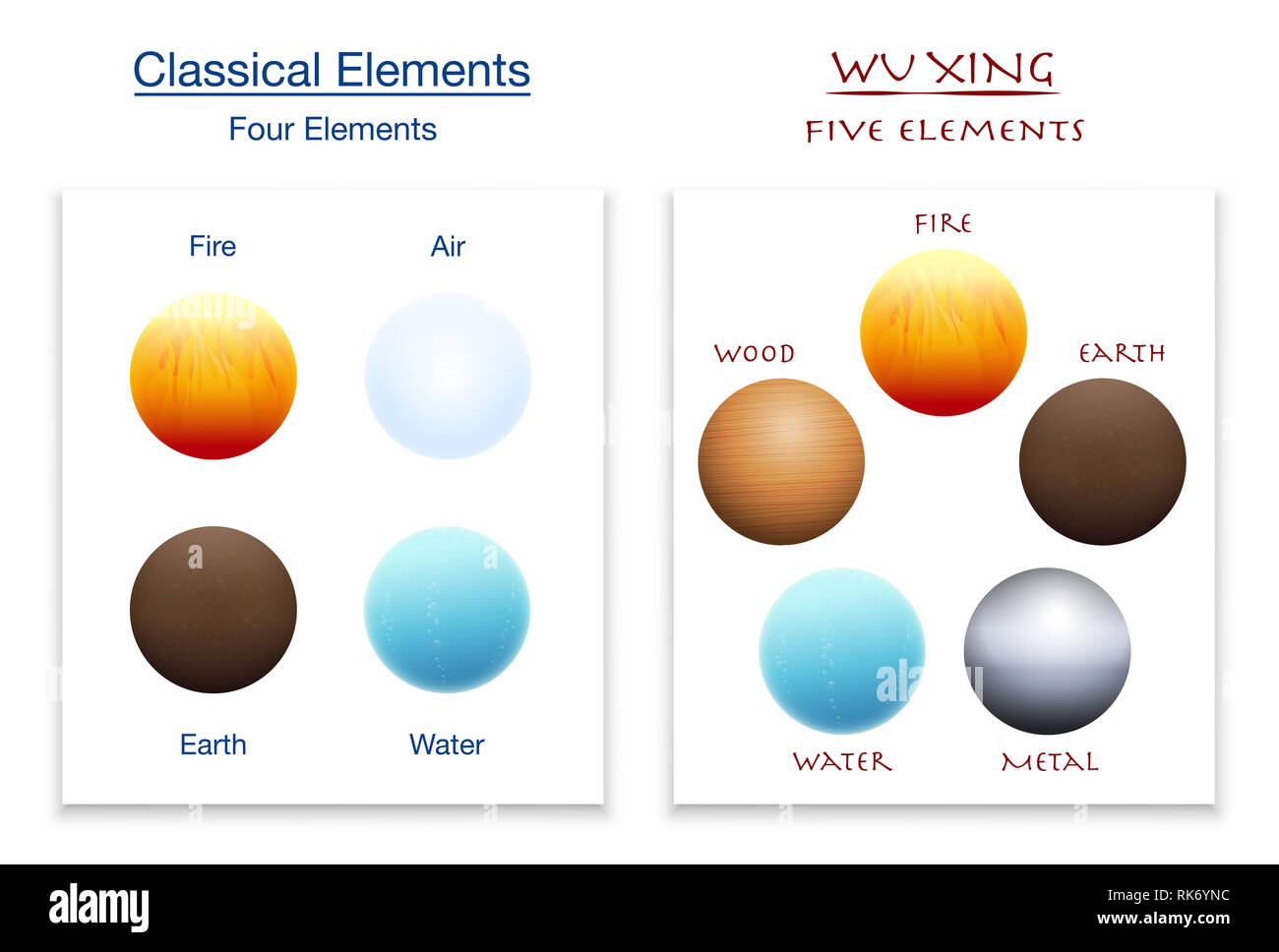
Four Classical Elements
This is very common in Western fiction because it is what we are used to. Earth, Wind, Water, and Fire are the elements that we focus on. They’ve been connected to many fictional stories such as ‘Avatar: The Last Airbender’. Now, authors may mess around with the connections here, but the traditional version is:
Authors will occasionally switch things around to make Fire vs Water and Earth vs Air oppositions. This is because the compass is used as compatibility tool.
Wu Xing (Five Elements)
Similar to the four classical elements, Wu Xing comes from China with 5 elements. They also use a 4 element system that ditches Earth, but this is typically done when the beasts are involved. I’ll get to them next. Before you ask, ‘Air’ is not one of the elements for a variety of cultural reasons. This Five Element/Direction system looks like the following:
It’s interesting how fire is in the same spot as the previous system. Earth being central makes sense if you think of it more as the planet than dirt. Don’t really know about the others off the top of my head.
Wu Xing Four/Five Auspicious Beasts
These guys get used in anime a lot. I can think of three series right off the bat that used them as either villains, monsters, or plot points. Each of the beasts is a god-like guardian of each direction. They are connected to a direction, color, season, emotion, and many other things. Authors may use them as a simplified Zodiac sign determined by birth season or person’s natural temperament. Either way, a direction tends to be associated with each one.
Japan uses a 4 beast system off this with names too.
Greek Skies and Winds
Greeks actually had two cardinal direction systems. Not sure if Rome copied the one that was about astral phenomenon, so I’m going to leave them out. Does look like they made a 12 cardinal direction system. Anyway, the Greeks had one cardinal system to work off of sky events and another with where winds came from. It was originally only North and South winds, but East and West were added. These systems can be useful if you’re working with a large sailing culture who would be focused a lot on stars and wind.
This is a simplified version of this. From what I’ve read, more complicated systems were created over time. Homer may have implied that there were 8 wind directions. Aristotle made a 10-12 wind/direction system, which the Romans seem to have copied. This just means authors have a lot to work with if they use Greek mythology and history for inspiration.
Native American
This one is difficult to look into because every tribe had their own symbols. At least from what I can tell. So, take this with a grain of salt because I’m trying to find connecting information. Basically, the four cardinal directions can be connected to the four seasons AND the four stages of life. This can be depicted on what are called medicine wheels in some cultures. Each one has a season, stage, and an animal connected to it. For example:
Now, this can be very problematic if you take it as this across the board. First, not every area in the Americas has the same weather during each season. Summer in Florida is WAY different than summer in Alaska. So, the life stages might differ if you don’t have harsh winters and the summers are the most brutal season. Second, those animals are not found in every region. This is an important note for fantasy worlds too. If an animal does not live within the territory of a culture, why would it be a symbol? It shouldn’t even be known unless talked about by foreigners, which wouldn’t put it on the same spiritual level as the local fauna.
So, those are a handful of cardinal direction systems. There are plenty more out there and much more details for each of these.

Posted by Joy York What is a cliché? A cliché is a French word meaning “stereotype.” It was originally used long ago to describe stereotype: a metal …
Should You Use Clichés in Writing Your Book?
Samurai Champloo
(This poem came after a series of arguments with someone. They were always right and I was always wrong in their eyes. It eventually hit a point where anything I said or did made them upset. Hence, the situation you see below.)
We look through different prisms
See the world in different light
And neither of us wrong
You rail against my thoughts
Ripping at my words
When I simply say my heart
If I do the same to you
I am the ignorant fool
While you are the wisest sage
I seem to lack your insight
That brings up your boiling rage
My beliefs do you no harm
Since they are mine alone
I never push them forward
Or utter them out loud
I only mention them when prompted
Then shunned for being me

I’m often asked if someone can make a living from fiction writing. That was certainly my ambition when I started writing. I believed in my story and …
Essential Tips for Success as an Author in 2025

This one is definitely universal. I think people can use their own personalities for this as well. Just really curious how varied the answers will be, especially if people are going to be honest.
Scenario
You tell your friend that you have a crush on someone, but you’re too scared to ask them out. Totally normal. Your friend tries to give you confidence and keeps warning you that someone else might ask your crush out if you don’t act. Fear of rejection is met by being told that you can’t tell the future. You try to convince your braver friend to talk to your crush on your behalf. They hesitate, but agree under the rule that they can’t reveal your true feelings. All you can tell from now on is that your friend and crush are hanging out a lot, which was your plan.
Then, you notice they are getting closer. Finally confronting your friend, you find out they are dating your crush. It was your crush that asked your friend out. Your friend said yes because, after getting to know your crush, they found that they have a lot in common and developed feelings. They do seem happy together, but you still have your own feelings towards your crush.
How do you feel? What do you do? Is this a betrayal or a self-fulfilling prophecy of doom?
The most popular post by a mile first appeared on April 24, 2019.

Fictional World Map (Created by Dan Meth)
Continuing the topic of naming locations, I’m going to do my best to come up with some useful and humorous tips. I only had to create one new place in War of Nytefall: Rivalry, so these are going to have to go outside of the new release. Apelios doesn’t really give me a lot to work with either. Here we go:



 Legends of Windemere