This list isn’t going to work for every author, reader, or story. Going to try to be as general as possible, but we’ll see how it goes.
If you want to remove a basic skill from a character halfway through a story for ‘flavor’ then you probably shouldn’t do it. If you’re going to take away something that all other characters know from one then you should do it from the beginning. Sure, it could be a shock that a hero can’t read or write, but bringing it up late in the story and out of nowhere should require a special edit. For greater impact, you need them to avoid situations that would reveal this secret early. Otherwise, it does come off as a random choice.
Even though it isn’t really basic, cooking is not a female-only skill. So, a male character cooking shouldn’t be surprising solely because of his gender. He shouldn’t be standing there as an anomaly since most people learn the basics. For that matter, not every woman knows how to cook, sew, clean, or possess other ‘housework’ skills. That isn’t genetic. Much of these are basic skills that everyone needs to learn.
A character who doesn’t know a basic skill shouldn’t gain it within a few days. The reason these skills are considered basic is because nearly every adult has them. They were taught when the adults were children, who tend to be curious, interested in learning, and no shame in lacking the skill. This is why it is harder to teach an adult these things than a child. So, if you create this as an obstacle alongside a greater story, they are going to be distracted and limited in progressing. Nobody learns to read overnight.
A skill that requires advanced training isn’t something that every character will have unless you establish it as being taught from a young age. A town of hunters would be skilled as they teach their children. Expanding this to the entire world where people live in different biomes and civilizations doesn’t work. This means you need to consider if such a skill should be unique or general. If the latter, you will need to explain how everyone knows it.
Just because a person can’t read or write, it doesn’t mean they talk like an uneducated caveman.
Yes, it’s possible for someone to be a natural. One could even argue that a protagonist should be this since they are the most important character. They are seen as special and more advanced than those around them, which is why they have the spotlight. All of that being said, doing this all the time creates a boring, unchallenged hero who nobody can see failing. Even if they do fail, the audience will find it unbelievable since they’ve already been shown to be perfect. Giving them ‘basic’ or more advanced skills that they struggle or are unable to learn would help avoid this problem.
There are different categories of basic skills that one should consider. You have those needed for basic living such as reading and writing. Then, you have those that are general career based such as hygiene, organization, and maybe driving. After that, you have job/role specific skills that one still has to learn for their purpose. This last one can include carpentry, hunting, magic, swordsmanship, piracy, and the list keeps going. The point is that on top of basic skills needed for a person to simply survive, there are basic skills for their roles as well. Just makes this whole seem much more complicated.
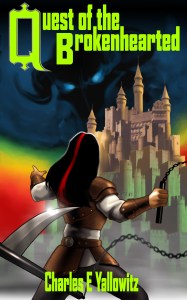
Here’s an excerpt from Quest of the Brokenhearted. This is part of a bigger scene, which I trimmed down the best I could. It shows what became of Kira Grasdon about the battle with Baron Kernaghan. My original plan had her doing a job that would make a lot of readers upset and criticize her as a human being. So, I kept her in that setting, but changed her role for some fun. Not sure if that comes through entirely in the excerpt, but the book has the whole thing.
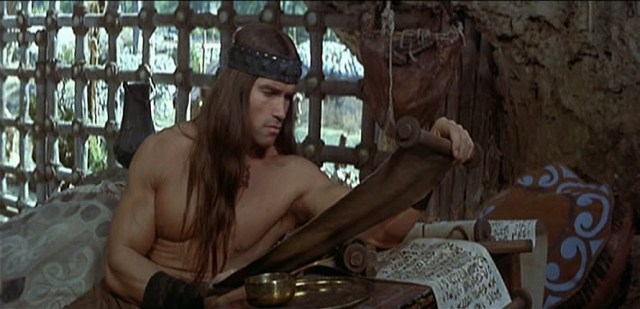
This stems from something decades ago. When making some 3rd Edition Dungeons & Dragons characters with players, one was asking why his barbarian wasn’t allowed to start with reading and writing. He had to use points to give himself these skills that everyone else had. I let him get the skills as long as we explained how he had them, which was pretty simple. Since then, I’ve never taken a basic skill away from a character unless it was important to their development or the main plot. Yet, there is still something to ponder in here.
There are plenty of skills that we take for granted. Reading, writing, basic math, walking, hygiene, and more. For many, it’s baffling that anyone would become an adult without these skills. We probably forget how hard it was to learn them when we were children. It could also be a learning disorder or no opportunity. The latter is the reasoning behind D&D barbarians not knowing two of most basic skills. Still not a fan of that, but you can see the logic. It gives them an obstacle they can’t berserk their way out of too.
Now, while I do understand why certain skills may be removed from characters, I don’t agree that it should be done to entire groups. Yes, the barbarians being a ‘primitive’ society could mean no reading or writing. On the other hand, we have seen real-world ‘primitive’ cultures still have these skills, but in their own language. Barbarians aren’t typically isolated from societies too, so cultural diffusion is bound to come about. I think saying an entire group lacks reading and writing skills is denoting them as stupid and almost lesser. It would make sense for a group to not know how to fish, hunt, or bathe regularly. Plenty of human societies have had that throughout history. Yet, reading, writing, and basic math have existed for centuries on some level.
This is where the taking things for granted come into play as well. The author may take all of their ‘basic’ skills and use them as the foundation for characters. Any who don’t have them are seen as lacking or uneducated. This can give them a chance for growth as person, which is a good thing. It can also denote a clear segregation in society where you have a poverty class who can’t learn the basics to success. Not that they won’t, but they can’t. This is usually only done with conscious effort for good reason since, again, the author is unwittingly assuming all people have their skills. We all do this on some level too, so nobody should feel called out.
I do have an issue when the skill isn’t really basic and is found in an area that doesn’t make any sense. For example, I’ve read stories where a character knows how to fish, but they come from a desert or mountainous area. The terrain of their homeland lacks bodies of water necessary for fishing to be necessary. No explanation is given and they have no issue with the skill. Now, I live on what could be called an island and fishing is a thing even though the charter boats are expensive. I’ve gone a few times and still have no real skill in it. So, I find it hard to believe a character who grew up without access to oceans, lakes, and rivers will be an expert fisherman without an explanation. My assumption here is that the author knows how to fish or knows nothing about it, so they put it on their list of basic skills.
Guess that’s another part of taking skills for granted. We see some used so often in stories that we forget they can be difficult to learn. If it isn’t noted as difficult, we don’t treat it as such. So, we get to our own story and slap it on everyone without doing the proper research. Oops. On the plus side, your average reader might not notice this issue and it’s usually pointed out by those who worked hard to acquire the skill. Even then, they might not think it worth making a public fuss over. Still, it is best to step back and consider if a skill is part of a basic set or even slightly more advanced.
So, what do you think of adding or taking away skills we can deem as basic?
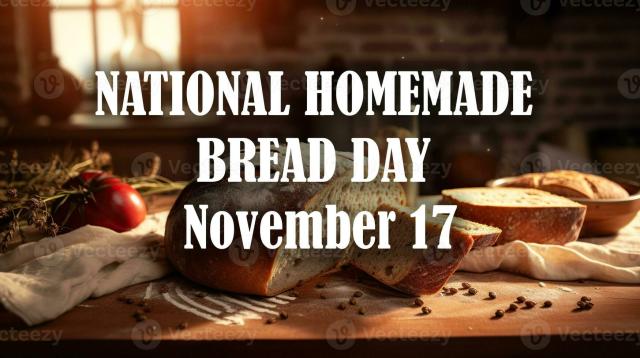
Got really busy with life, so I almost forgot to make a post for today. It was either this, unfriend day, or hiking day. Figure ‘Homemade Bread Day’ was the best choice since I don’t do hiking and unfriending isn’t positive. So, where did this holiday come from and why?
Well, bread is believed to have been invented 10,000 years ago in Neolithic Europe. It would be a very long time before sliced bread was invented, but that’s a different post that I won’t bother with. Jumping to the 1980’s and you get this holiday, which was about making and sharing bread with family. Supposedly, the National Homemade Bread Committee in Ann Arbor, Michigan came up with it. You know, I keep thinking this is a joke, but it’s apparently a thing.
I remember my mom would make homemade bread a lot and I would help with the kneading. Eventually, she wouldn’t have the time to do so, but the activity lasted for a while. I’m not any good at baking, so bread isn’t my thing. The best I can make is ice cream bread, which still has a decent success rate. I use THIS recipe and it’s worked pretty well. Funny thing is that I’ve yet to try it with vanilla ice cream, which is what most recipes ask for.
Anybody here make bread and have any interesting recipes? Definitely reaching for a blog topic today.
I’m writing this up Thursday night for a few reasons. First, nothing really important is going to happen on Friday, except for taking my son to a nighttime light display. I’ll add some pictures to this post before I go to bed, but having it written beforehand will mean I don’t have to stay up late. I have a haircut Saturday morning too, so I don’t have to wake up early to get this out before the day begins. Guess that was the second reason, but my point is that I’d rather get this written now then squeeze it in later.
Well, a third reason is that not much progress has been made. I finished the posts for January and edited a single chapter of Darwin & the Demon Game. That’s nowhere near what I was hoping to accomplish. Everything fell apart soon after my post last Saturday went live too. If I had known what was coming, I’d have . . . Not been able to do a damn thing, which brings me to the bulk of this post.
Let me explain what happened last weekend:
So, I did editing on Saturday and some Pokemon Go like I originally planned. It was really cold and I was exhausted from work, but I got a rather meaty chapter cleaned up. Then, I learned that family was coming over on Sunday. Keep in mind that I live my parents for ‘reasons’ and this means that I have no out for family events. Well, they were coming over in the morning and I already bought a ticket to a Pokemon event from 2-5 in the afternoon. There goes the day. My best friend since 1st grade called and asked me to watch the NY Giants game. I then found out the family event was going to be somewhere else, so I told him he could come over in the morning (9:30 AM game from Germany). I figured this would give me time before and after the Pokemon event to get editing done. It would be Sunday morning that I would learn the plan changed again and family was coming over. I had no say in any of this beyond agreeing to watch the game with my friend, which haven’t been able to do all season. I barely had time to do laundry during on Sunday. By Monday, I got my son and he had schoolwork to do. Editing was left at whatever I could accomplish Saturday before I realized I lost Sunday.
This type of scenario has been happening many weekends where I don’t have my son. I’m pulled into plans at the last minute and saying no results in me getting a bunch of grief. It has repeatedly been suggested that I go to the library to work, but that means I can’t have anything to eat or drink. It’s also very open at the library now, so I don’t get the sense of privacy that I used to. Not to mention there have been times in the past where someone has tracked me down there to tell me I’m needed back home. I can’t go to the park since it’s cold and the wind makes a mess of my manuscript. My laptop still can’t be closed, so that’s out as well. In other words, I’m stuck and have to decide between my books and getting a few days of tension.
Another issue is my work hours changed in August/September. Last school year, we would start around 7:55 and end around 2:26. Now, we start at 8:25 and end around 2:52, which doesn’t give me a lot of afternoon/evening time. I can’t sleep in either because my son still has to be at school by 7 AM, so I’m waking up at 5:30 like last school year. By the time I get home, it’s around 3:15 and we have to do homework, dinner, and a variety of other things. By the time I get a moment to relax, it’s around 9 PM. That gives me 30-40 minutes to get ready for bed and MAYBE watch a short TV show. My anxiety hasn’t been dropping enough most nights for me to avoid the 3 AM panic attack.
You might be wondering why I still have these problems on the nights I don’t have my son with me. Well, that would be the appointments. He typically has at least 2 appointments every week. It’s looking like it will be a minimum of 4 for the rest of the year. This means every weekday has an appointment for him and I have my own weekly therapy session on Fridays. There isn’t a single day that I get to leave work, do a little Pokemon while grocery shopping, and go home to relax for a few hours. If I don’t go to the appointment, I don’t get to voice my opinion or even know what is going on. So, I have no choice, but to go and continue to wear myself down to a nub.
A final issue that I want to add before I go to the list is the health one. In 2023, I was improving my health because stress was low and I was able to put time aside each day to relax. That isn’t the case. Now, I am hitting the weekends where I don’t have my son with a sense of sickness. I believe the theory is called ‘leisure sickness’, which is when a person pushes their body for so long that it finally gives in to the stress and weakness once you start to relax. This results in me feeling lethargic, having sinus issues, lacking energy, and even having trouble regulating my body temperature. In fact, it usually results in me spending the morning trying to figure out if it’s exhaustion, flu, or Covid because I feel that bad. By the time I’m better, it’s late afternoon and I may have learned that I won’t have Sunday to finish editing.
That is my life right now and it has been that way for most of the year. I’m not joking when I say 2024 is the worst year of my life. Pressure from all corners have made functioning a challenge. If I only had to deal with one of the big problems, I’d be in better shape. For example, I could more easily handle the new work schedule if I was dealing with the custody/ex-wife/daily appointments on top of that. I get no time to let the tension flow away and it keeps building. It reaches the point where editing is a challenge because my focus and confidence are shot. Will it improve? I’m hoping one day, but not in the near future.
So, here’s the goal list and below that should be some pictures:
Play Pokemon Go with son this weekend.
Stay warm because it’s freezing.
Try to edit at least one chapter of Darwin & the Demon Game
Accept that I probably won’t because this week is the big finale of the Pokemon Go autumn season. Special events from 6-7 every weeknight and then big ones from 10-6:15 on the weekends. Early morning and evenings might be required on the weekend, but I don’t know if I’m going to go crazy. Maybe raid in the morning for the few Pokemon that I want and then just go shiny hunting for 2 hours in the afternoon.
Clean bathroom for Thanksgiving.
Choose a dinner to cook for me and my parents next weekend. The main reason is so that I can bring leftovers in for lunch on Tuesday and avoid McDonalds.
Try to think of February blog post ideas. Maybe do the poems and Tuesday Teasers.
Try to figure out if I can add biking to my crazy schedule since it’s too cold to do a lot of walking outside. Morning and evening are out. I really hate this time of year when it’s cold all day and gets dark at 4:30 PM.
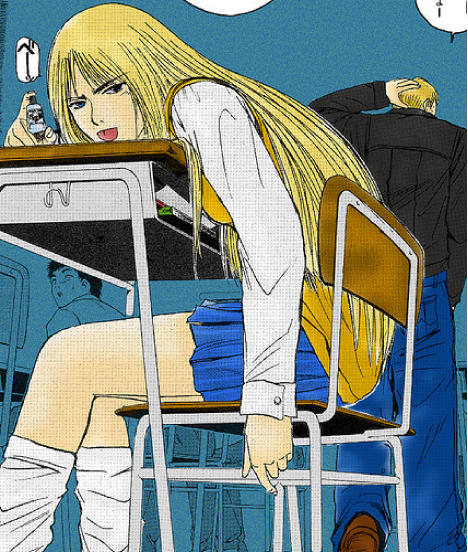
So, this is the other character type I was thinking of last time I re-watched ‘Great Teacher Onizuka’. Now, the story is that Onizuka is a former motorcycle gang member who is determined to be a teacher. He gets a job at a private school where he is given a class full of students who hate teachers. The principal’s plan is that an non-traditional teacher like Onizuka can reach these troubled and rebellious teens when all previous attempts have utterly failed. For example, one of their previous homeroom teachers ends up quitting to stay at home eating snacks. Another I believe ends up in a psych ward, which is to show how dangerous these kids are. Keep in mind this is a comedy with dramatic, coming-of-age undertones.
While watching the anime and reading the manga, I did sense that the author was purposely going over the top. For example, Irumi Kanzaki up there (super genius with a traumatic past) pulls some messed up pranks such as blowing up trashcans around the school to break the windows. To be fair, that was when she was pushed into a PTSD trance type of thing. Prior to that, she almost got Onizuka arrested for being a pervert in public, made a garden snake look like a cobra before it bit him on the *censored*, and tried to get him into debt for buying them expensive sushi. He got out of that last one by doing a dine-and-dash then getting hit by a car whose driver he convinced to pay the bill as part of the damages . . . I said over-the-top.
I’ve done enough set up here, but I think going over-the-top is the best way to go with teenager delinquents. First of all, adults seem to have trouble writing these age demographic believably if they try to be serious. The immature teenager ends up acting older or younger than they are. This makes the audience have trouble either believing they’re a teenager or simply spending more time thinking about how they would have done things differently. I don’t know if there’s any way to effectively counter a reader forgetting that they are more mature than a teenager, so their decisions would differ, but it becomes a bigger issue for troublemakers. Why would that be?
If you don’t go over-the-top, you run the risk of their actions being unforgivable and any explanation of why they act like the do won’t matter. We live in a world where people are a lot less forgiving and understanding to both real and fictional characters. For some, it doesn’t matter that the teenager who has been stealing lunch money because their family can’t afford food. Wrong is wrong to these people and they will at the very least go negative on the family instead of realizing that a teenager might commit bad acts out of desperation or trauma. Empathy is lacking, which is why it could work better that these characters go big and the reader ends up being foisted out of escapism a bit to remember they are reading a book.
Perhaps another part of this is making sure nobody gets really hurt by the antics. Bumped around or ‘injured’ for a panel is one thing. Permanent or long-term injuries is when readers will think the teens have gone too far. Makes sense since this would get a teenager sent to juvenile detention at least in the real world. Yet, that ends the story and an author might want them to do something else for redemption. Again, we can run into an issue with an adult writing a teenager. While some decisions might be too mature, there is a habit to put the ‘act without thinking’ on a teenager character in order for them to injure another one. Kids are more aware of this possibility than we realize unless they are fueled by powerful emotions. Delinquents don’t always mean loners too, but authors tend to do a group hivemind thing with nobody pointing out the issue. If anyone does, they’re tossed out and we get ‘Lord of the Flies’. Remember that the dissolution of civility took maybe around two months and it was full survival. This would be within civilization, so teenagers won’t be as feral.
This is where I think ‘Great Teacher Onizuka’ really works out. Yes, the antics are almost cartoonish, but those that go too far tend to have at least one of the students wonder if they should stop. As the story progresses, those who accept Onizuka actively try to stop those who are still campaigning against the teachers. Maturity is gained in a fairly short period of time because of experience and finding an adult who listens, understands, and makes them enjoy things again. As I said, there is a coming-of-age aspect to this series as well as one about healing from trauma. Both of which can be helpful for teenagers even if they aren’t going through the same level as the characters.
Maybe these characters should be written primarily for their own demographic. Then again, adults might get some insight into how troubled teenagers think and act instead of always writing them off. That’s kind of hopeful.













 Legends of Windemere