Five years and 1,100 posts after hitting Publish for the first time on WordPress, I have now been joined by thousands of people who tune in on a daily basis. How can I be anything than thankful for each and every one of you? Thank you for sharing your journeys with me and allowing me to share mine!
To celebrate Thanksgiving, and with Black Friday only a couple of days away, I’m participating in a Bookluver giveaway with not one but two of my books! Even better, this will get in the right mood for Christmas with a Kindle Fire, plenty of eBooks and paperbacks, an Amazon shopping spree worth $50, and more:
This comes from Legends of Windemere: Charms of the Feykin (Book 11) and it’s part of the beginning of the adventure. The core of the story is that Delvin Cunningham and Sari have gone missing in the jungle. Now, their friends are off to see what happened to them. It’s never a good thing when cultists get involved.
Full confession: I get irritable and depressed if I go for 3 days without writing. It doesn’t have to be much. A few notes about a character or idea. Maybe outlining a chapter or two when I have a few minutes. Just whatever I need to keep the imagination sharp and the creative juices flowing. This is one of the reasons why I have 30+ ideas spread out across large piles of notebooks. When you’re working other jobs, you end up using your lunch time to get the ideas out.
Still, it seems like adulthood is very anti-creativity unless you already have the right job or enough money to muck around with life. The stress and worry builds up a lot to the point where you might begin to fear that your imagination is seeping away. At least, that’s something that has happened to me a lot. One of the reasons I outline and plan so much is because it helps assure me that I haven’t lost the spark. That love of crafting a world that I can draw people into and give them the sense of escape that I had when writing every word of the book. When I write, I go on the adventure alongside my characters and this is an experience I always hope to share. Yet, I always have this fear that I might wake up one day and lose the ability.
I might be getting off topic, but there was a moment many years ago where I hit such a darkness that I couldn’t write any more. I don’t even remember how long it lasted or exactly how I got out of it. I can only recall two things. One was that it was a frightening experience for me. It made me think my entire life up to that point was a waste and that reality had robbed me of something special. The other is that I used notes and outlines to help start the recovery. Not sure if they jogged things back into place or came afterwards, but they were part of it. So, I take these activities very seriously because they have become my tether to my imagination when I can’t do full books.
One reason I bring this up is because I’ve had several moments this year where I fear that I’m about to go back into that abyss. Stress has been high and I’ve felt like my entire support system has decided to step out from beneath me. It’s hard to continue going when you get daily mentions of how you’re walking a flawed path, money issues, and all around shame at being associated with you. Yeah, this post is taking a dark turn, but some people have made it clear that they never wanted me to succeed in the first place. So, I’m a little bitter during the writing here. My point is that even the tried and true outlines that keep me going can lose some of their power. Writing is my mediation and it is getting muddied by negativity.
So, how much peace and tranquility do you get from writing? Is it a job, a calling, or a lifestyle for you? I’ll fully admit that I’m a combo of 2 and 3.
You may be excused if you have forgotten this post series by now, as the last installment was posted back in May. Then, life interfered with my good author friend’s, William R. Bartlett’s, best intentions, so this penultimate part is only published now. It continues his discussion of all things firearms. If you have missed the rest of this brilliant series on firearms, you can check it out here. As always, Bill includes some great tips on writing about older firearms and some common writing blunders. His next, final post will continue part 6 with Flintlock weapons. Enjoy and bookmark!
A Writer’s Guide to Firearms by William R. Bartlett
Part 6: Firearms before the Modern Age
Prologue by William R. Bartlett
Thank you for all your kind responses. This is the final part in my Writer’s Guide to Firearms series and here I’ll discuss weapons for those who…
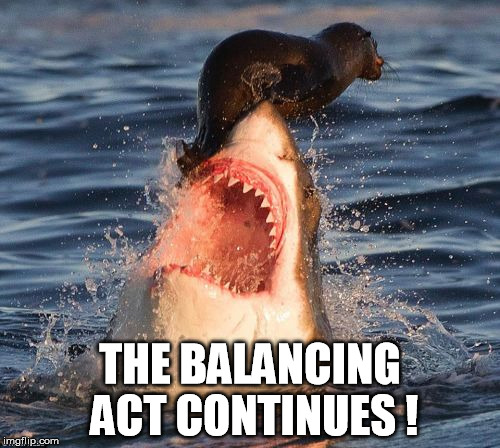
Teeter totter
Trying not to tumble
Holding the plates of life
On flimsy sticks
That threaten to snap
Wind pounding on the stacks
And shaking my perch
A tight rope gaining ice
Suggestions are given
To ease my burden
Jettisoning plates
That others think are pointless
Yet may be dear to me
Every step met with fear
And a chorus of boos and cheers
Creating a maelstrom
That threatens the whole act
Teeter totter
Will I stay or tumble?
The title really says it all. I got called back about a full-time Teaching Assistant job, which I go in Monday morning to learn more about. It will be a one-on-one position that, barring an unexpected hiccup during Monday’s board meeting, I will begin on Tuesday. I won’t be talking much about this because I feel like what I do at this job is more about the students than myself. All I can say is how I’m feeling, but the details of what I’m doing aren’t for public consumption.
Have to admit that I’m a little scared about this because I don’t know exactly what I’m going to be doing. Monday will take the edge off and I’m sure I’ll do fine, but that element of the unknown always pokes at me. Once I’m in the situation, I’ll buckle down and do what I have to do. Yet, I won’t deny that this is a big step, a great opportunity, and there’s an odd weight on my shoulders. Unlike an office or author job, I’m helping a kid through a stage in his or her life. There’s a responsibility to do that best that I can and be the type of role model that I would want for my son. Am I overthinking this? Guess I’m just nervous and my more poetic side is kicking in. Again, I should be fine once I get through the introductions of Monday.
What does this mean for the blog and writing? Well, it means I will only be active in the early mornings, afternoons, evenings, and weekends. Not the whole time since I need to spend time with my family and do chores as well. Writing is going to be taking the biggest hit here. I’m trying to edit War of Nytefall: Rivalry, which won’t be easy while I learn about what I’m doing. My schedule means I get home right before my son does, so there isn’t much of a window there. Editing is the easiest thing to do. It’s when I want to write a new book that I’ll be having challenges. My limited time means War of Nytefall will get the brunt of my extra attention, so Ichabod Brooks will be on a hiatus for at least 2019. I hope I can work on his story in the summer, but that depends on how I do with War of Nytefall: 4th Book throughout the winter and spring.
One nasty hurdle is that I really don’t have anyone to read over my stuff. It’s a challenge with a series because someone who hasn’t read the previous volumes might try to change stuff that carries over or hints at future stuff. My writing style (3rd person present tense) causes trouble as well, which has really made it difficult to get beta readers for my long series. One of the hardest parts is that every scene has a purpose for either the standalone story or the overall series. I’ve run into a lot of beta readers and editors that follow the ‘murder your babies’ rule that I don’t agree with. So, I end up getting suggestions to eviscerate what I’ve done. Technically, I’ve already done this with the plotting, outlining, and doing my own editing run prior to letting others see it. Yeah, this is kind of a prissy author thing, but it makes things awkward. For example, way back when, I had somebody try to convince me to remove Sari from Legends of Windemere. They thought she was pointless and got angry when I said she was essential. Other people have demanded more Fizzle, removing Luke Callindor, condensing the series into a trilogy, and other suggestions that seem to cross a line with me. I don’t mind pointing out that something is confusing or doesn’t come across clearly, but not the removal of entire chunks. This is why I’m a pain to work with.
Well, there’s really nothing else to talk about here. Hope people have been enjoying Derailing Bedlam on Thursdays. I’m going to try to relax and rest up for a big life event next week. What are the goals?
Start new job.
Learn about new job.
Get used to leaving house before son gets on bus.
Find a little editing time.
Enjoy Thanksgiving.
Stay home during Black Friday.
Figure out how to fit biking into the day, but that might take a while. It sits in the bedroom, so can’t use it while my wife sleeps.
Heroes don’t only face external forces, which is something we all know. Yet, many authors stick to the easier issues like arrogance, stubbornness, doubt, and anger. These are emotional obstacles that we all face, but they don’t always fall into the category of mental illness. So, why is it important for there to be heroes who struggle with such problems?
The truth is that many people look to fictional characters as role-models and try to live through them. We go on quests, choose romantic partners, and run from zombies as we get absorbed by stories. This makes it a powerful medium for demonstrating how people with mental health issues can be heroes. Yes, it is easier and possibly ‘safer’ to use the perfect hero that has very few flaws. The downside here is that the audience might not connect with these characters too easily or, at least, complain that there is no depth to them. A way to avoid this is to add something like depression, anxiety, severe phobias, and whatever you decide to research.
Now, how can this be done?
The hero can be focused on overcoming their mental health issue. This requires researching how it can be handled in the real world. If you work in fantasy or science fiction then you might get tempted to use magic or fictional tech, but this can undo the weight of the obstacle. Regardless of what the pharmaceutical companies say, there really isn’t a magical cure that can wash away all traces of an issue. So, the character needs to work toward either controlling or defeating their disease.
Another option is to have the hero take on another challenge and show that such things can be done if you have a mental health issue. There’s a common misconception that people who suffer can’t live a ‘normal’ life or find any level of success. The truth is that many do reach those milestones. Not to mention that it’s also in the eye of the beholder. In fiction, there’s nothing wrong with having a hero who suffers from OCD or anxiety set out to slay a dragon. You simply have to work things the right way.
Honestly, it’s really up to the author when it comes to portraying mental illness. There are always levels that have to be factored in and not every person suffers the same. Still, you need to do enough research before you put your own ‘spin’ on things. The basics need to be there for the hero to be believable as having the issue and being able to work through it to achieve their goal. Otherwise, you might claim a character is bipolar when they don’t really match the diagnosis. You can end up underplaying some of the more common problems too like phobias, depression, and anxiety. Seriously, it’s extremely rare for those to get shrugged off because of a pep talk.
Again, a big reason to consider this is to use fiction to give inspiration and possibly some insight to the audience. We look at heroes for their moral codes, but we can also see them as examples of strength. This does have a risk because you’ll have readers that simply find the characters annoying, but that says more about them than you or the character. In the end, this is definitely something to consider if you’re looking for a way to make your hero stand out and help others.
As usual, here is your warning that this story has cursing, sex (not graphic), innuendo, and violence. It’s my Rated-R action adventure called Derailing Bedlam. This is the fourth outing (third official) for Cassidy and Lloyd, so feel free to click on one of the two covers to see how it started. Each one is 99 cents!
Right away, it occurred to me that this would be a great share for anyone interested in finding out more about the ways colors can help with a book’s or author’s identity.
For example, within 90 seconds, a potential reader will have made up their mind whether they like your book or not. Up to an astounding 90% of that choice will be color-based! Which makes sense if you consider that almost 85% of people buy a product based on its color.
So, what exactly does each color convey and which emotions does it trigger in readers? Check out the Infographic below to find out!


 A Heaven for Toasters