


Legends of Windemere Fantasy Bundle #1

-
Recent Posts
Categories
- 100 Haikus for the Gamer's Thumbs
- Allure of the Gypsies
- Animal Posts
- Anxiety Journal
- Ask a Character
- Bedlam Series
- Beginning of a Hero
- Book Reviews
- Character & Book Themes
- Character Origins
- Charms of the Feykin
- Chasing Bedlam
- Crossing Bedlam
- Curse of the Dark Wind
- Derailing Bedlam
- do I need to use a dragon
- Family of the Tri-Rune
- Goal Posts
- Guest Blogging
- Ichabod Brooks
- Immortal Wars
- Legends of Windemere
- Merchant of Nevra Coil
- Monster Maker Fun
- New Project Progress
- Olde Shoppe Stories
- Path of the Traitors
- Poems
- Prince Profundus Vorago
- Prodigy of Rainbow Tower
- Questions 3
- Raven Series
- Raven's Dawn
- Raven's Game
- Raven's Hold
- Raven's Wrath
- Ritual of the Lost Lamb
- Sleeper of the Wildwood Fugue
- Slumberlord Chronicles
- Sneak Peeks
- Spotlight
- Teaser Tuesday
- The Compass Key
- The Mercenary Prince
- The Spirit Well
- The Starwind Egg
- Thoughts
- Tribe of the Snow Tiger
- Uncategorized
- War of Nytefall
- Warlord of the Forgotten Age
- Written in Israel
Member of the Dark
Featured Author

-
Join 7,015 other subscribers
- Follow Legends of Windemere on WordPress.com
Friends and Allies
Goodkindles

Goodreads
Meta
7 Tips to Working with a Collecting Quest Story: Read the Whole Set

Inuyasha Jewel Shard
It isn’t easy setting up a story where you have to get a bunch of things to make one thing or stop someone. There’s the risk of tedium, repetition, and getting visited by the irritable McGuffin fairy. He doesn’t take or leave anything, but just sits at the foot of your bed staring at you with disdain. So, what are some ways to use this story line without falling into the abyss?
- Plan out most, if not all, of the needed items beforehand. You don’t want to run the risk of getting stuck in a loop because you can’t figure out where to stop. Choose a number and stick to it. If you want to add more stories then you can always have one get lost and need to be found again. Maybe something happens to put this story on the shelf for a book or two. Just make sure you aren’t trying to have the characters gather 100 things. This really only works for books aimed at really little kids who love repetition.
- Give a better reason for the protagonists to find these things besides ‘it is the only way for the story to progress’. Sure, it can go that way, but you need to give them initial reason to go on the hunt. This can range from wanting to save the world to a destiny, but you really want to sit down and think. Perhaps the hero knows using all of these things together can save the world while the user dies, so he’s out on a suicide mission. This gives a depth to him and the story. I mean, what happens if he reaches the end and decides that he wants to live?
- Do not actually name the items McGuffins. Seriously, that’s really only done with parodies and it’s not that original.
- Try to create a variety of ways that these things are gained. They can be in dungeons, held by villains, swallowed by monsters, prizes in competitions, and whatever else your imagination creates. Much of this depends on how well-known these items are too. If the world is aware of them being important then you will have a bigger hunt. If not then one of them could be the third place prize in a World’s Most Beautiful Kneecaps pageant.
- You really need to have some competition for these items. It could be the antagonist out to destroy/take them for himself, which is the most common. After all, he/she/it probably knows about this potential threat. Then again, there is a history of villains not realizing that there are these powerful items designed specifically to destroy their plans. Another option is a rival who wants these things for their own ends and have stumbled onto their existence. This allows you to create tension on if the protagonist will be the one to get each item or if they will fail at some point.
- It is not necessary that every piece of whatever is being gathered has it’s own power. I know this is tempting because many people see the gaining of a new ability as character development. You can easily make these things useless unless they are together, which forces your heroes to become stronger through other means. Now, I’m not saying you can go the route of ‘one item, one power’. Just make sure you don’t use this in place of character development.
- Come up with a history for these items to help the audience understand why they are so important. Who made them? Have they been used before? How did they get separated? These are questions that will give more depth to the world and the overall story. Stating that they are important because they are important won’t help with readers who want more meat on their fiction.
Posted in Uncategorized
Tagged 7 things, adventure, author, collections, fantasy, fiction, gathering, humor, lists, quests, save the world, sword & sorcery, writing
27 Comments
Reading Tricks for Kids of Any Age
I recently started a collaboration with Mom’s Favorite Reads; a blog created by author Hannah Howe. I wrote a guest post with reading tricks for kids of any age, which Hannah has kindly hosted on her blog. Below is a brief summary of the article. I hope you’ll enjoy reading the whole post on Mom’s Favorite Reads.
Reading Tricks for Kids of Any Age
 As a dad of a 3-year-old whirlwind, I find myself already asking the question facing most parents: how can I make my child read more and spend less time in front of a screen?
As an author of children books and teen-friendly fantasy books, I also ask myself this question’s flipside: how can I make my books appealing to them?
In the immortal words of Gonzo the Great, if at first you don’t succeed, fail, fail again. In my case, after many trials, failures, and…
View original post 1,557 more words
Posted in Uncategorized
2 Comments
Learning More about Other Genres
Check out the site suggested for some genre exploration. Might help get over a creative hump or break a writer’s block.
 Ciao, SEers. In the spirit of the new year (and all things new) I thought I’d broach a subject that’s foremost in my mind these days—new projects. Specifically, starting a new story or series in a genre you haven’t written in before. There’s nothing more daunting than staring at a blank page.
Unless, of course, you’re staring at a blank page and are at a complete loss as to what to say.
It might seem counterintuitive that a writer, whose primary purpose is to tell a story, would sit to start brainstorming or plotting or writing without some idea in his or her head. I suppose it is, if you think of a writer starting with a completely blank slate. I mean, who among us would try to tell a story without at least a seed of an idea to nurture?
That’s not what I mean. I’m talking about waking…
View original post 389 more words
Posted in Uncategorized
1 Comment
Handy Writing Tips – Part 2

- Create a space in your home especially for writing. This way you have an oasis and you can also send a message that, when you are in this space, you are writing. Of course, you should also be prepared to write wherever you happen to be.

- Proofread everything at least three times before submitting your work for publication.

- Start a blog. Use it to talk about your own writing process, share your ideas and experiences, or publish your work to a reading audience. Use this valuable community of authors to learn and teach in a cooperative atmosphere.

- Use writing exercises and writing prompts to improve your skills, strengthen your talent, and explore different genres, styles, and techniques.
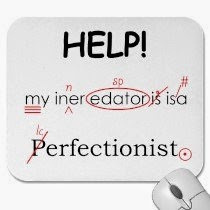
- Let go of your inner editor. When you sit down to write a draft, refrain from proofreading until that draft is complete.
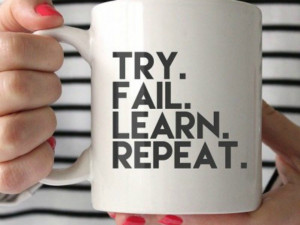
- Embrace your failures. Allow yourself to write poorly, to write a…
View original post 137 more words
Posted in Uncategorized
4 Comments
10 Handy Writing Tips – Part 1

- Write every chance you get. Write every day if you can. You should be thinking about writing or actually writing whenever you can.

- Reading is so important. You should read every chance you get as well. Read good writing and read about writing. Balance fiction and non-fiction to help you improve your own writing.

- Use your everyday observations to help you with coming up with surroundings, characters and situations for your stories. You can do this by keeping notebook with you, or if you’re not afraid of being stared at, use your phone and a recording app and pretend your on a call while you make note of what you see.
- Check your writing for repetitive words and phrasing. If you find yourself using the same words repeatedly, refer to a thesaurus (Shift-F7 in Word) but don’t confound your reader with extravagant utterances and locutions that will flummox them. (Fancy…
View original post 242 more words
Posted in Uncategorized
2 Comments
Sally’s Cafe and Bookstore – Author Update #Reviews – Don Massenzio, Marcia Meara and Teri Polen
Posted in Uncategorized
3 Comments
Quest for the Shattered Something: The Collecting Plot
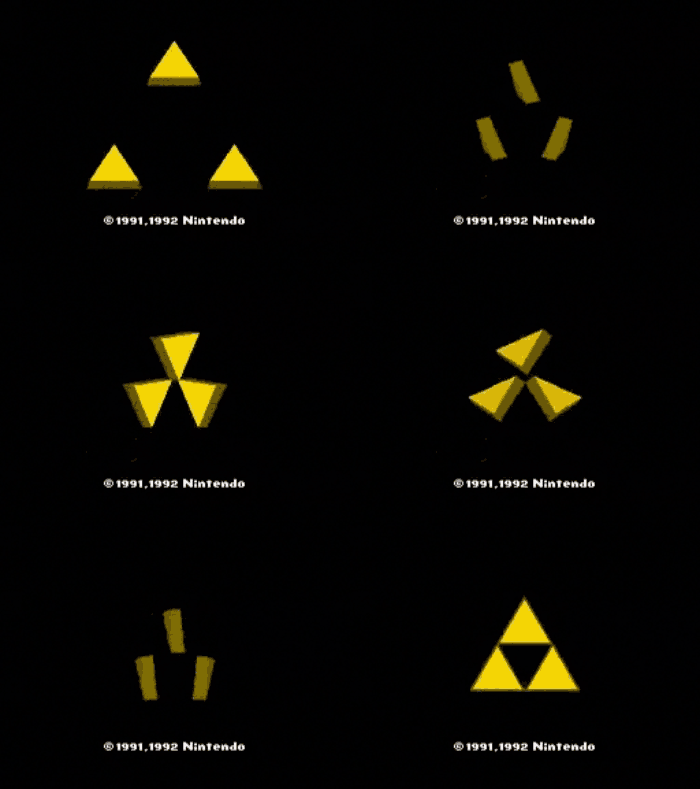
Triforce from Legend of Zelda
There are many types of quests out there, which have been used throughout mythology, history, and fiction. You have hunting down a villain, finding a mentor to save the world, and the long journey. Another that doesn’t turn up as often as I originally thought is the ‘Collecting Quest’. Not the official name, but I couldn’t think of any other way to name this specific plot line. So, what does it entail?
It’s rather straightforward and you probably know by the name. A set of ‘things’ or parts of a single ‘thing’ have been spread out across a landscape. They are needed to stop whatever the antagonist is about to do. A great example is the Triforce from ‘Legend of Zelda’, which you need to gather the pieces of to defeat Ganon. On a less world-saving level, you have Pokemon where you have to catch them all. So, the set is not always of things that can be physically connected. You can have other people hunting for these with their intentions either to replace the hero, solve a personal problem, or help the villain. The core point of these stories is that the protagonist is searching for these items, which fall into the MacGuffin category. There, I used the word, so nobody has to say I was avoiding it any more.
The funny thing is that I started this topic thinking I’d have a ton of references. Yet, I found that I was sticking almost exclusively to video games (Legend of Zelda), cartoons (Pirates of Dark Water), and comics (Inuyasha). You have it kind of turning up throughout the Marvel movies since Thanos is gathering the Infinity Gems or the final book of Harry Potter with the Horcruxes. Still, I’m finding that I’m hard pressed to think of more literary examples. ‘Lord of the Rings’ would have been this if they were gathering all of the magic rings instead of trying to destroy the One Ring. Anyway, I’m really saying that novels don’t use this plot line nearly as much as other media.
A reason could be that it is fairly simplistic and can get routine. In Legends of Windemere, the champions need to cleanse all of the temples and regain their power. I realized early on that this could get rather boring if it was nothing more than a series of dungeon crawls. That’s why the series has a solitary story for each book alongside the overarching one. For example, Charms of the Feykin involves the temple that Delvin Cunningham has to clear, but not until the end. The rest of the story involves the mysterious happenings that caused Delvin and Sari to suddenly claim themselves to be the Feykin’s Generals. This story line gives them another reason to enter the temple and fix what has gone wrong instead of simply powering Delvin up. These ‘dungeon crawls’ also lead to something important for the characters. Delvin and Nyx became closer on this story, Timoran’s allowed him to regain his confidence, Luke had a difficult decision, and the list keeps going.
The point is that you need to do more than the collecting of items, which become nearly background. I think many authors who attempt this try to make it the only highlight instead of having it be the vehicle. Character development and personality will be a big driving force for the audience to care about the story. I’m currently reading ‘Rave Master’, which is a manga where the hero has to gather the 4 pieces of an artifact that can defeat an evil one. I’m more interested in the characters and how they evolve than the actual quest because they stand out. They have flaws and personalities, which overshadows the fact that this is nothing more than an elaborate ‘Collecting Quest’. This difficulty might be why you don’t see it in novels that often, especially since it works best in a more episodic style instead of it getting drawn out.
So, what do you think of this kind of story? Can you think of any examples? Is it more a piece of the foundation than the whole show?
Posted in Thoughts
Tagged adventure, broken artifacts, collecting, fantasy, fiction, quests, sets, stories, sword & sorcery, traveling, writing
26 Comments
How Celebrating Diversity Can Make Your Ad Campaigns Better
Excellent post.
Diversity and identity politics can be a minefield. In my science fantasy series, Pearseus, I had as diverse a cast as possible, with strong female leads, a main hero of Indian descent, another one of Chinese descent, Masai warriors, a lesbian leader, etc. Even so, I got flak from people who felt their preferred minority was underrepresented because, for example, my warrior heroines were slim and slender (even though one of my favorite characters, Head Priestess Tie, was a big woman with a shaved head).
So, should we, as authors, shy away from diversity?
In one word, no. With Pearseus, I didn’t set off to create a diverse cast; it came about organically as that was simply what fit my characters. I seem to have an eye for the quirky and the unusual when people-watching and that shows in my own work. And I find it boring when I write stories with…
View original post 628 more words
Posted in Uncategorized
3 Comments

