The 2019 Interview Series Featuring Ann Chiapetta

This gallery contains 9 photos.

Don Massenzio This edition of my author interview series features Anna Chiapetta. It’s always interesting to see what questions each author selects for their interview. It definitely gives us insight into what makes them tick. Now, without further delay, please … Continue reading →

More Galleries | 2 Comments

How Gutenberg Will Change WordPress

Good info for WordPress bloggers. Didn’t even notice this thing myself.

Nicholas C. Rossis's avatarNicholas C. Rossis

From your comments, it’s obvious that you most of you hate Gutenberg. Some, however, were on the fence. And a few have actually used it and seemed to enjoy it.

There are some advantages to Gutenberg. We will have more control over the layout in native WordPress. We currently have a lot of control with builder themes and plugins, but with Gutenberg, we have a high level of control without needing a third-party product. We will need fewer plugins. Some of the features that we normally use plugins for are built into Gutenberg.

Whatever your feelings about it, we seem to be stuck with it. So, I thought I’d give you a quick description of how it works, with the help of Aspen Grove Studios. Just bookmark this post and come back to it if you wish to give Gutenberg a spin (or WordPress forces it upon us).

View original post 578 more words

Posted in Uncategorized | 2 Comments

Derailing Bedlam: Flirty Fish Tails Part 3 #fiction #adventure

As usual, here is your warning that this story has cursing, sex (not graphic), innuendo, and violence.  It’s my Rated-R action adventure called Derailing Bedlam.  This is the fourth outing (third official) for Cassidy and Lloyd, so feel free to click on one of the two covers to see how it started.  Each one is 99 cents!

Cover by Jon Hunsinger

Cover Art by Jon Hunsinger

.

.

.

.

.

.

.

.

.

.

Continue reading →

Posted in Derailing Bedlam | Tagged , , , , , , , , , , , , , , , , , , , , , , , | 8 Comments

Preparing for a Journey: When a Story Hits the Road

Kermit and Fozzie

In Crossing Bedlam and Legends of Windemere: Prodigy of Rainbow Tower, I had the heroes go on traveling adventures.  This meant deciding on locations, events for those locations, and how long they stayed in each place.  There’s a lot of organization here that I never really talked about in previous posts.  So, I thought I would give a step-by-step for planning out a journey.  This is going to get a little odd at times because I’m going to try for the steps involved in an Earth story and a Windemere story at the same time.  This way you get to see the overlap:

  1. Decide on the overall story and why the journey is happening.  This doesn’t mean that you know the end, but you know the reason for traveling.
  2. Get a rough idea of how many stops you want for the overall story.  You can always add and subtract later.  Personally, I try to aim high and whittle things down as I move along.
  3. Fantasy: This is when you start plotting your path by listing either the real names or placeholder names of each stop.  You can add marks here for traveling sections as well, but this is optional.  There’s no need to write descriptions just yet.
  4. Earth: Same as #3, but you need to look at a map here.  For Bedlam, I chose the beginning and ending States (For example, New York and California for the first book.) then did a Google driving route.  I would list the other States that appeared along there as well as any that are close enough to make detours.
  5. Here is where you can start writing descriptions of the stops and see if anything comes to mind for a location-based adventure.  Maybe there’s a brief delay that will take a chapter or two to settle.  It helps to treat these like short stories in order to flush out the details.
  6. Fantasy: Choose how long the characters will be at the stop.  Much of what you do here will be decided upon either with the outlining stage or just writing.  With fantasy, you can leave a lot more up to your whims than Earth.  So, this is probably where I’m going to end the Windemere side.
  7. Earth: Choose your cities and towns that you want to use.  Many people stick to the capitals and larger urban centers.  I prefer to have some of those and throw in some smaller towns for fun.  You never know what you will come across when you see a curious name on a map and look more into it.  Most of the stops in Crossing Bedlam and Chasing Bedlam came from this wandering eye curiosity.
  8. Research the stops in an Earth-based story.  It doesn’t have to be extensive, but get an idea of the culture and history of each location.  This can tell you what your heroes might run into.  Agriculture, major corporations, and landmarks can come in handy as well.  The deeper you go, the more real the location will be.  It also means you can avoid locals complaining about your bad depiction.
  9. Design a challenge at each location that connects to your research.  Unlike fantasy, you really should stick to what’s already there.  Don’t add a mountain to a place that doesn’t have one just because you want a climbing adventure.  There are plenty of things to use and you really should look for more unique facts to cling to.  For example, I used Thomasville, Georgia in Chasing Bedlam because it had a connection to roses and I wanted to have a beautiful city among the destruction.  The localized adventure was about slave traders, but this gave me an interesting setting.
  10. If it helps, print out a map and mark it up as you move along.  This way, you maintain an idea of distance and progress.  For fantasy, you can even make your own map to achieve this step.

That’s really it.  Hope you enjoyed it.

Posted in Thoughts | Tagged , , , , , , , , | 15 Comments

Teaser Tuesday: Entering the Mangrove Swamp #fantasy #adventure

Cover Art by Jason Pedersen

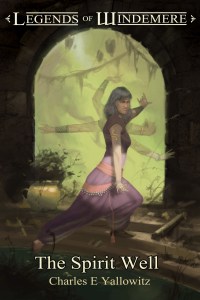
Another blast from the past for Teaser Tuesday.  Enjoy this piece of Legends of Windemere: The Spirit Well.

Continue reading →

Posted in Teaser Tuesday, The Spirit Well | Tagged , , , , , , , , , , , , , , , , , , , , | 11 Comments

Sally’s Cafe and Bookstore – Author Update #Reviews – M.J. Mallon, Sue Vincent and Stuart France, Bette A. Stevens and Charles E. Yallowitz.

Posted in Uncategorized | 4 Comments

Moving From the Spotlight to the Shadows and Back Again

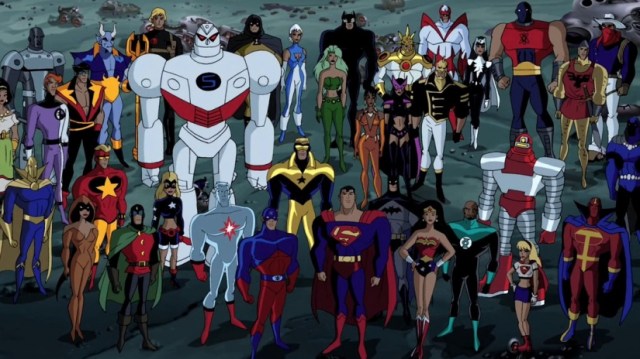
Justice League Unlimited

I’ve mentioned a few times that I write ensemble cast stories for the most part.  Legends of Windemere is the easiest example since you can’t really say any of the champions are more important than the others.  This wasn’t any easy trick to pull off either.  Many people picked Luke Callindor or Nyx as the main heroes because they did take the spotlight more often, so I can’t say I was perfect here.  Yet, every hero had at least one book to shine in, which meant the others had to step back.  Moving from the spotlight to the shadows ran a few risks and challenges, but I think I did it as well as I could.  After all, you don’t see it very often in books.

This is where planning came in handy because that helped me position all of the characters for the story.  I chose the focal character for the main story with maybe one or two others to act as full supporting.  The others were there with moments to shine and things to do or had a side story.  For some clarity, here is a breakdown of Legends of Windemere: The Mercenary Prince:

  • Delvin Cunningham had the main story of traveling to the Yagervan Plains to find his tribe.  This took the lion’s share of the story and would eventually cross with the others for the conclusion.
  • The other champions were following Delvin until they ran into a problem that divided them even further.  This had a few scenes that were used to allow time to pass for Delvin.
  • Luke Callindor ended up on his own at one point.  This helped create a bridge for the two stories.
  • Another bridge was what was going on with Nyx.

Now, I use ‘shadows’ in the title, but the other characters aren’t really that far back.  You can see that they are still operating even though Delvin is the focus.  This way, nobody falls behind in terms of story and development.  They might not be leaping ahead like the main character, but they are growing enough to be ready for their next push.  One thing I learned here is that you can’t have an ensemble cast grow at identical rates.  Each path can overshadow the other or you can just get a mess of events with the characters growing for no real reason.  This is why I gave each character at least one book to get that major boost of development then gradual grow throughout the others.

You do run into a slight problem at times because some characters become more popular than others.  I had many requests for Fizzle stories with Nyx and Luke not being that far behind.  In contrast, people really didn’t seem that interested in Timoran Wrath or Dariana.  Yet, I couldn’t let them fall behind because that could harm the finale.  Having several champions weak and underdeveloped would be sloppy.  Besides, there was always a chance that their big events could bring more people to their fan base, which I’d like to think it did.  The point is that I couldn’t ignore anyone, so cycling them from front row to back row was the best option.  Reminded me of playing Final Fantasy games where you have to switch characters in and out to make sure nobody is under powered.  Made a mistake of not doing this in FF8 and got stuck with a team too weak to continue through the game.

While I don’t think I’ve tried it, you can also shift the characters over the course of a single story.  Maybe I did this by accident or the main/side story system I had covers this, but I’m too dense to realize it.  The trick here is to give each character ample time to develop without rushing either one.  If they go alongside each other then the switch can allow for a ‘time passing’ transition like I mentioned before.  It’s almost like a three ring circus where the spotlight moves to another act while the other gets ready for something else.  Don’t think I’m doing well on the analogies.  Anyway, you need to make sure you don’t spend too much time on one story.  If you do then the other one will atrophy and it will feel odd to go back there.  You can counter this by having it stop on a cliffhanger that ties into the main one, but that still runs the risk if you wait for too long.  Best to do a 1-1 or 2-1 or even 3-1 chapter/scene breakdown.  It really depends on the importance of each path.

So, I think I hit the subject correctly, but I’ll admit that I can’t be sure.  I thought it would be more complicated, but it really isn’t if you think about it.  Make sure characters get decent story time and moments to be the focal point.  The more often you shift them back and forth, the more the audience accepts that they are a group of protagonists instead of a solitary hero.  Once that’s established, you can be a little freer in your usage and not worry as much about finding perfect balance.

Posted in Thoughts | Tagged , , , , , , , , , , | 11 Comments

How WordPress Powers the Internet (Infographic)

Nicholas C. Rossis's avatarNicholas C. Rossis

When I first started working on the Internet, back in the mid-90s, we had to code everything by hand. And I mean, everything. You couldn’t even write a simple “Hello World” without a dozen lines of code.

Fast-forward to today’s WordPress-powered blogs and websites and the difference couldn’t be starker. Even though my coding experience has proven invaluable time and again, it’s now possible to develop in a single day a website that would have taken me at least a week back then. Months, if I wanted to use some of the fancier elements that are now available at the click of a button!

And it still amazes me that it’s all free! So, this is my way of saying “thank-you” to Automattic and the WordPress team for making my life so much easier–and productive. Many thanks to Hosting Tribunalfor the excellent infographic!

And if you like my site…

View original post 59 more words

Posted in Uncategorized | 2 Comments

This Week in Indie Publishing

Unknown's avatarDon Massenzio

Is the Dream of a Traditional Book Deal Dead?

There was a time when self-publishing your book through a vanity press was the kiss of death for any hope of a writing career. It was considered tacky and desperate, and not something any worthwhile author would ever consider. Then, with the self-publishing and digital publishing revolution, the notion of having more control over your work trumped much of the negativity surrounding the air of “desperation.”

Eventually, self-publishing gained even more respect. Going indie for one title was a good way to earn some income while querying your other works; but that notion evolved even further to self-publishing your books only to have their sales figures and reader response prompt a traditional publisher to make an offer.

That idea has been received two different ways. Amanda Hocking, one of the first authors to sell a million self-published copies of her ebooks…

View original post 1,004 more words

Posted in Uncategorized | Leave a comment

What’s Wrong With Being Odd?

Dr. Evil

Lately, I’ve been thinking a lot about how people and society tend to declare what is normal.  Part of this has probably stemmed from my son being special needs and seeing how the world responds to him.  We seem to take ‘normal’ for granted even though I can’t even truly define it for this post.  You hear people point out oddities more than normalcy, which makes it feel like being odd is the only way to be an individual.  Yet, we’ve also stigmatized many differences including those that require special attention or medical help.  Overall, I have the opinion that most humans cannot exist without seeing something ‘beneath’ them.  That flawed person to make you feel superior because then you’d be the one at the bottom.  It’s fairly sickening.

Yeah, this is a pretty heavy post for a Sunday, which is usually light here.  I just couldn’t get this topic out of my mind.  Especially considering many of my ‘abnormalities’ that people have picked on:

  • I watch and enjoy anime.
  • I wear glasses.
  • There are patches on my legs due to being allergic to my own sweat.
  • I’m a fantasy author.
  • I walk on my toes.
  • Short and fat go on the list.
  • Sleep apnea.
  • Naturally anxious.

Many of those are physical issues and I don’t even have control over some of them.  Others are choices, but they are things that make me happy.  So, the judging of society covers things that are both beyond our control or within our control.  Isn’t it strange to genuinely bash someone for getting happiness out of something that isn’t hurting anyone?  Yet, we see it happen all the time because it might not be a ‘normal’ interest.  My list is actually pretty mild compared to others who are marked as ‘abnormal’ simply because of who they are.  Why do we have to define a normal anyway?  Is it really that important to have this label that is used more to ostracize than include?  Been thinking about this for a long time and I can’t figure it out.  In fact, it tends to make me tired and want to spend more time in Windemere.

I will say that one thing I enjoy at my job is seeing how the students interact.  Every week, I see or hear at least one encounter where someone who would be an outcast during my school days be included in something.  Not because a teacher told them to, but because they wanted that person there.  Gives me some hope for the future.

Anyway, what does everyone else think about this topic?  I know it’s rather touchy and I’m not asking anyone to declare their oddness.  Just let me know what you think about normal and abnormal.  Maybe you can figure out and explain this to me, especially since everyone has has one thing that makes them ‘odd’.  I mean, how can you have normalcy without people being identical?  It just doesn’t really make sense to me.

Posted in Thoughts | Tagged , , , , , | 43 Comments