Right vs Wrong

Google Image Search

Here we are at the final type of story and it’s one that can give an author a massive headache.  Not in the moment, but after the story is written, published, and absorbed by readers.  I’m talking about ‘Right vs Wrong’, which creates stories about temptation, good/evil, and morality.

We always think that this is an easy story to write because who can argue with right and wrong.  Killing somebody is wrong.  Saving someone is right.  Fairly simple and universal concepts, which every reader can connect to.  Definitely no gray area like if you kill someone who has been murdering others.  Nobody would dare to think that’s a good thing since killing is ALWAYS wrong.  That’s enough sarcasm since I’m sure everyone gets my point.

Morality isn’t universal.  Culture, experience, religion, mental state, and many other factors will mold a person’s sense of right and wrong.  Even the big crimes we know are wrong aren’t always treated that way.  People have defended murderers and rapists if they feel there was a bizarre moral high ground.  That’s because something influences their sense of right and wrong to the point where justification is created.  Other people won’t agree or even be disgusted by the mentality, but this is the human race.  We aren’t a hive mind.  More of a pack mentality where people will fall in line behind someone else to adopt their morality.  No wonder cults are so common throughout our history.

Getting back to writing for those who haven’t rushed off to the comments to talk about the real world, the grayness of morality is a challenge.  ‘Right vs wrong’ stories tend to involve someone being tempted to make a wrong decision.  An author would like to believe that all readers would know which is the ‘correct’ choice, but that’s not the case.  You may always have a group of readers who think the wrong decision is the right one.  Nothing you can do about it beyond accepting the fact.

Something you should never do is argue your moral code with your readers.  Being a stranger to them, you aren’t going to convince them to change their ways.  It’s more than likely that they are surrounded by people who share their views, so they will always have more support for their stance.  This doesn’t mean you have to agree with them or change your own ways.  Just that there really isn’t any point in confrontation, especially over a fictional conflict.  You know where you stand and remaining by your morality is more important than changing strangers on the Internet.

I’ve used ‘right vs wrong’ in my stories a lot.  Heroes have to make big decisions and their morality is traditionally supposed to stay strong.  I like having them waver a bit as they grow, but I still skew towards traditional ‘good/evil’ things.  This is where I run into issues with some readers.  For example, one of my stories had a hero meeting an arrogant lover of his girlfriend.  It was a cultural open relationship thing, which the hero agreed to since he would be traveling.  (Horrible sum up of what was always designed to be a tragic relationship.)  Anyway, I had several readers asking why the hero didn’t just kill the asshole lover who was goading him into a fight.  When I pointed out that such an act would be murder even in a fantasy world, they claimed the hero was weak and the asshole deserved to die.  This was such a shocking mentality for me to face since I would think the more heroic act is to not take the bait, kill a weaker opponent, and go to jail instead of finishing your quest.  Yet, the morality of these readers allowed them to believe certain people were okay to kill for their general, non-violent behavior.

What do other people think of the ‘right vs wrong’ theme?

Posted in Thoughts | Tagged , , , , , , , , , , , | 17 Comments

Book Trailers for Promotion – Part 2

Greetings to one and all. Beem Weeks back with you once again. Today, I’m doing a brush-up on a post I wrote a couple of years ago about book …

Book Trailers for Promotion – Part 2
Posted in Uncategorized | Leave a comment

Poetry Day: Man of Verse or Volume

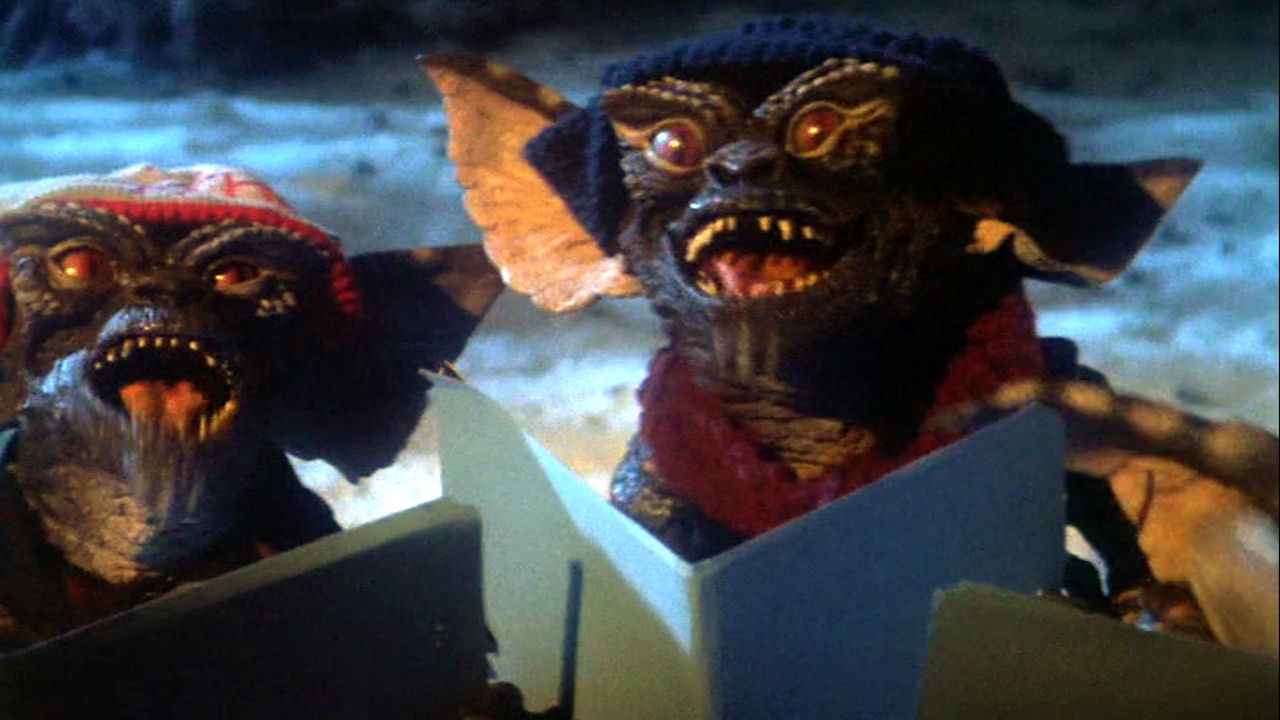
Gremlins Singing

(This poem stemmed from a debate.  A weird one too.  I pointed out that songs can be seen as poetry with musical accompaniment while poetry is the opposite.  The person said that isn’t always true because not all songs rhyme, but I think my point still stands.)

The great novel
Aspiration of my youth
My golden goal
For all these years
A want I never doubted
Until I woke at thirty


I have my plans
That I still hold very dear
Outlines and notes
Carefully constructed
Like children of my mind
That may never get to play


I stroke the bindings
Of my two ‘victories’
Both pushed to print
Which supporters call successes
Proud of my achievements
Yet I sense them lacking


The truth is harsh
I could not push
The way I needed to
My support faltered
Handing me chores
When I asked for more than words


Still there is the lacking
That both novels have at heart
I have been scared
To voice my thoughts
Going against my dream
A strange turn I did not see


I have a rhythm
That I keep raw
It comes out in the verse
And strangles in the prose
My poetry is a flow
That my prose can never match


So I wonder
If I have chosen poorly
That my true path
Was slightly to my right
Hidden by my pride
Upon writing a great novel


My characters have soared
Their adventures shined
Among my worlds of depth
Born anew
By a simple verse
Done with unsteady hands


So I stand
On an edge I fear
Because of time I wasted
To restart my mind
As a man of verse
And not a man of volume

Posted in Poems | Tagged , , , , , , | 6 Comments

Maturity vs Immaturity

Google Image Search

Know the above quote for a fact, but we’re going to stick to fiction.  ‘Maturity vs Immaturity’ is the tried and true ‘Coming of Age’ story.  What can we really say about that theme?

First of all, this is a more challenging theme to work on than people may think.  The issue is the audience.  Many people mistake immaturity for stupidity, so they get upset about actions taken.  Adult readers don’t always remember what they were like as teenagers, so they read the stories with their mature lens.  Some also forget that maturity is the same across the board, so a character might be lacking in some areas.  Personal experience and beliefs play a bigger role in this type of story than we would like to admit.

There isn’t a clear solution to this problem.  The characters need to grow at a natural pace, but one that fits them and their situation.  Readers might get halfway through and think maturity should have been reached.  Gets even more difficult when you factor in that such things tend to be rollercoasters.  Maturing isn’t just a straight path.  We can all go backwards, so having that in a story makes the pacing much more difficult.

A key part of this theme is internal, personal growth.  I think this makes it very different than the previous themes.  All of those had either external conclusions (life, death, etc.) or viewable by the outside ones (accomplishment/failure).  Maturity is all internal even if people are judging you for your actions.  It’s how you feel and think as you gain experience and wisdom.  This doesn’t mean you can handle every situation, but new ones create more growth. Maybe characters, like all people, never reach perfect maturity, but that’s not really what we’re here to talk about.

How do we show maturity though?  An easy way is to have a character’s thoughts be shown in a story.  I’m not a fan of that, so I go more with actions.  Like in real life, we tend to judge a person’s maturity by how they speak and act.  In a story, having them face similar decisions at the beginning and end can help.  Choosing the immature option reveals where they are starting and making the mature decision later on tells you how far they have come as a person.  This doesn’t mean the author or reader has to agree with what they are doing, but there will be a recognition of growth.

One thing I really like about the ‘maturity vs immaturity’ theme is that it can be as versatile as romance in terms of genre.  You can fit it into nearly any story.  Even better than romance, it doesn’t really take away because it’s a personal quest.  A hero going on an adventure can have a coming of age story, which is nothing more than the trials and challenges they face.  It would be the same with a mature character only without the same amount of growth.  The point of the theme is growth on a personal level instead of anything external.

I would like to point out that you can fail in a ‘coming of age’ story.  I’ve seen some people say that it 0nly counts if the person matures, but I think it still works if the character doesn’t grow.  Failure should always be an option in a story, which would be nothing more than getting the bad ending.  The character could lose those who care about them or whatever depended on them maturing.  After all, we’ve seen these types of stories play out in real life too.

What do you think of ‘maturity vs immaturity’ stories?

Posted in Thoughts | Tagged , , , , , , | 23 Comments

Smorgasbord Book Promotions 2024 – Share an Excerpt – #Supernatural Adventure The Last Drive by John W. Howell

In this series you are invited to share an excerpt of 500 words from any of your published books . This feature is for any author who has been …

Smorgasbord Book Promotions 2024 – Share an Excerpt – #Supernatural Adventure The Last Drive by John W. Howell
Posted in Uncategorized | 7 Comments

Like Starting All Over Again.

Hi, gang. Craig with you for part two of my series about writing to market. You can pick up post #1 here if you missed it. For purpose of a quick …

Like Starting All Over Again.
Posted in Uncategorized | 2 Comments

Teaser Tuesday: The Foggy Orchard

Cover Art by Jason Pedersen

Today, we’re going to revisit another setting from Charms of the Feykin.  This was made up as I went along, so I was happy with the results.  Though, the full results are in the ebook, which you can buy for $2.99.

Continue reading →

Posted in Charms of the Feykin, Legends of Windemere, Teaser Tuesday | Tagged , , , , , , , , , , , , , , , , , , , , | 7 Comments

Accomplishment vs Failure

Google Image Search

I never thought much about ‘Accomplishment vs Failure’ stories.  One could argue that every story touches on this.  The protagonist needs to succeed in whatever they are attempting in regards to the main plot.  If they don’t accomplish their goals then they’re going to fail.  Makes perfect sense, right?  So, why would there be a separate theme for something that comes off as a given?

From what I was reading, this type of conflict connects primarily to sports or any type of competition plot.  This article also notes it would encompass performance stories such as musicians, dancers, etc.  Considering this aspect, I can see what the difference is between general success.  In a sport or performance, the character is trying to achieve a victory on some level.  It isn’t to save the world, but maybe to win the big game, earn a spot on Broadway, or sell a painting to make rent.  This is at a smaller scale than ‘life vs death’, but just as important to the characters.  It’s the life and death of their dreams that is at stake here.

An aspect of these stories is that the protagonists always have the option to quit and give up on their dreams.  This would fall under failure and be an acceptable result if written correctly.  Other heroes don’t have this option such as in horror when they can’t just walk away from the serial killer.  There’s a much easier out in giving up here, which is always looming over the character.  Many times, they will quit at some point and then enter the third act with renewed determination.  Kind of predictable, but audiences still get into the ‘phoenix’ effect.

I think this is a very relatable conflict for people.  Most have had dreams at some point in their lives.  A reader can understand the passion the character has even if they lost or area delaying their own.  Seeing that the character has talent for what they want to do helps us believe in them achieving their dreams.  They become a surrogate for hope, which can be inspiring to a reader.  Think about sports movies and how a viewer who doesn’t like the real sport might really get into the heroes winning in the end.  It’s not the sport we are stirred by, but the strong desire to win.  Everyone wants to have that in their life instead of crushing failure.  Through these stories, an author may rekindle hope and passion in a person too.

Touching on the failure side of the equation, I think all of us can remember a time we feared losing.  Not only that, we all know what it’s like to come up short and lose, which is what the alternative to accomplishment.  So, our own ‘fear’ of failure and the pain it gives us can pull us into a story.  We start internally, or externally, cheering for this character and become emotionally invested.  Probably more than in the previous conflicts since we’re more likely to have experience here.

What do you think of this conflict?  It does seem fairly straightforward and deeper once you look at it from a sports/performance perspective.

Posted in Thoughts | Tagged , , , , , , , , , , | 13 Comments

Expressive Writing: Creative and Cathartic

Posted by Joy York Can writing really be cathartic?  Research studies say it can. In a 2018 article published in the Cambridge University Press by …

Expressive Writing: Creative and Cathartic
Posted in Uncategorized | Leave a comment

Happy Chain Mail (Chainmail?) Day!

Google Image Search

I’ve seen it both as ‘Chain Mail’ and ‘Chainmail’.  We’ll leave that argument alone because now we’re going to learn a little about this type of armor.  It’s one that is still finely crafted by some people today for a variety of reasons.  First, what is chainmail?

For those who don’t know, it’s a type of metal armor that many DnD players see as the step between leather and full-plate.  Plenty of things in the middle, but that’s not the point.  A piece of chainmail is made by linking small metal rings together and shaping them to be a vest, headpiece, shirt, or just about anything.  This creates a protective mesh, which warriors wore across the globe.  Chainmail granted more protection than previous armors and was flexible enough to allow semi-easy movement.  This was the superior armor for nearly a thousand years in some countries.

Here are some facts:

  • Credit for the invention of chainmail typically goes to the Celts of the 3rd century.
  • Chainmail is entirely to protect against stabbing.
  • The most common chainmail pattern in Europe was called a 4-to-1.  Each ring would be connected to 4 other rings.
  • For centuries, chainmail would have alternating rows of solid rings and riveted rings.  A transition to wedge-shaped rivets would result in the solid rings eventually being phased out.  (I wasn’t able to find out why this happened aside from a few theories about original round rivets have a high chance of failure without having the rows of solid links.)
  • Chainmail links were riveted to prevent most blades from breaking the armor.
  • Due to the flexibility, warriors could still be injured from a blow even if they weren’t stab.  This is why many would where quilted jackets underneath (called a gambeson) to absorb the force and provide extra protection.
  • Since this armor didn’t do a lot to prevent bruising and broken bones, people would still need to wear a solid helmet.
  • Earliest chainmail was made using iron, but would eventually be replaced by bronze and steel.
  • Chainmail is heavy.  A mail hood could way around 25 pounds while shirts could be around 60 pounds.  So, you had more stab protection than earlier armors and retained more flexibility than plate armors, but it still weighed you down.
  • Chainmail was eventually replaced in combat by full plate due to the more common use of crossbows and then firearms.

Is chainmail still used today outside of Ren Faires and historical reenactments?  Yes!  The metal ring mesh is still good protection against stabbing, so it is used in:

  • Stab-proof vests since bulletproof ones don’t give much protection from knives.
  • Shrapnel and splash guards in industrial areas.
  • Butchers in meat-packing plants may wear chainmail gloves and aprons.
  • Oyster shuckers have the gloves too.
  • Divers wear shark-resistant suits of chainmail.
  • Sometimes animal control officers wear chainmail to protect against bites.

And there we go.  Enjoy Chainmail Day!

Posted in Uncategorized | Tagged , , , , , , | 13 Comments