Yahoo Image Search
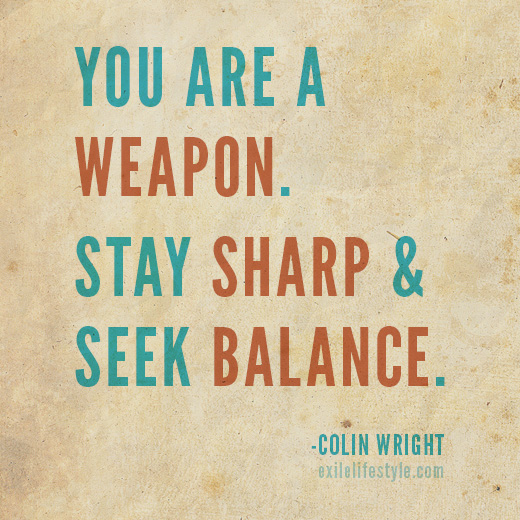
Betting those who visit my blog a lot saw this one coming because I usually end stuff like this talking about finding balance. Just like in real life, your characters may naturally gravitate toward a middle ground. They might be more of one side, but they still use the other in certain situations. A Thinker who doesn’t have time will depend on their instincts that have been honed through years of making plans. An instinct character who gets into a bad spot might take a moment to observe and plan to get out of the mess.
Now, you can start on one side and not have much of a problem. I say ‘much’ because you’ll always have some readers who get annoyed at a ‘reckless’ or ‘slow-acting’ hero right from the beginning. Like real people, characters evolve in tactics and habits. An inexperienced hero being all instinct isn’t far-fetched, but you can have them learn the importance of thinking. Nearly all experiences with impact have the ability to pull a person out of their comfort zone and refine themselves. You put a natural evolution on the hero that hits more than their physical abilities and powers, but the way that they use what they have.
In some ways, balance helps you do more with less. Instinct works off an innate knowledge of your own abilities while thinking allows you to analyze the situation. You don’t have to be stronger or faster than your opponent if you know your own abilities and how to use them. This goes for groups too as I explained on Monday’s posts. Many times a problem is solved by using what you have in a unique way. Heroes do this a lot since it keeps things interesting, but I will admit that it sides more with Thinker. Bashing through an obstacle instead of figuring out a way around is more pure instinct. Yet, that doesn’t mean a plan can’t be created that leads up to such an act.
The longer I try to write this post, the harder it seems to explain the nuances of finding balance between conscious planning and split second reactions. Maybe part of that is because it’s different for everyone. We all have preferences when it comes to this. Just look at how often you see authors declare to be a Pantser or Plotter/Planner. People like to pigeonhole themselves without realizing it. The truth is that we’re all probably in the middle somewhere. We lean to one side more than the other, but you can’t get very far as one side. Even a little bit of planning is needed at some point just as you need to let stuff flow naturally.
So, why do we pigeonhole ourselves and our characters? I’m not really sure since I just thought of this. Maybe because it’s easier to claim one side than to explain how we’re in the middle. If I say I’m a Planner/Thinker then you get an idea of what I do and we move on in the conversation. If I say I’m a heavy Planner who lets his Pantser instincts control the flow of the actual writing to get to his determined plot points then it’s harder to wrap your head around. Not by much, but enough that an author might not want to deal with the headache. There’s a long history of artists explaining their process and getting frustrated by the reaction.
I’ve moved away from the characters, but it does connect. We might be inclined to have a hero stick to one school to avoid the gray zones. That’s not realistic though. Very few things are black and white, so our fiction shouldn’t go that way. Yes, it makes things easier and cleaner, but it reduces the depth of the characters and world. This is why you can look at your own balance as an author and use that help flush out a character’s tactics. I mean, crafting a story can be just as harrowing as facing a dragon. More so if you’re hitting writer’s block since the dragon won’t make you suffer.


 Lynn Hobbs


 Ron Yates