
Google Image Search
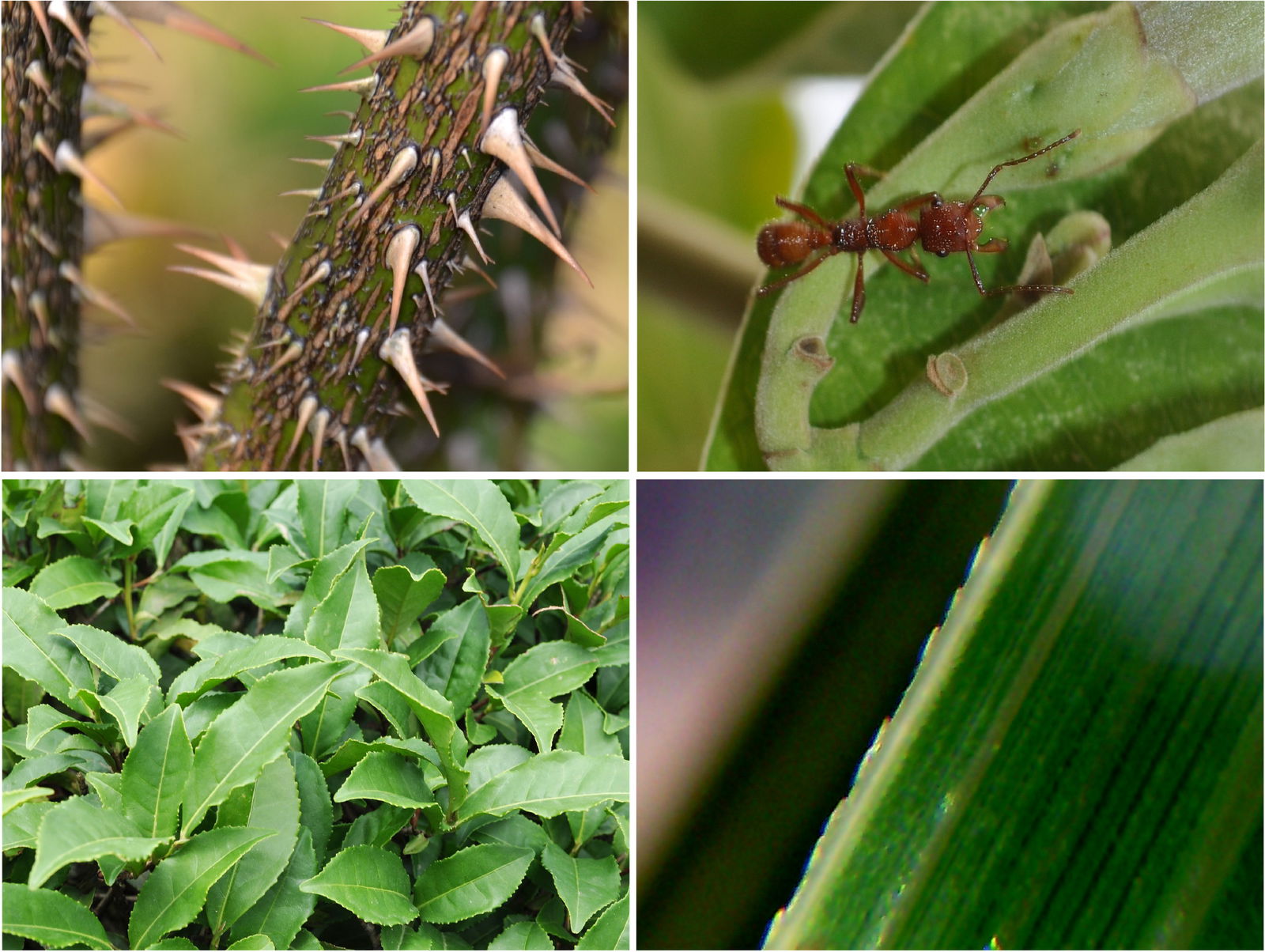
Plants can’t move, which means them easy targets for hungry animals. Yet, they aren’t defenseless. There are tons of weapons scattered about the Plant Kingdom to help them survive.
- Bark– Some plants have this hard, armor-like outer covering to protect their softer insides.
- Thorns/Spines/Burs– Basically, their leaves, stems, or seeds have pointy protrusions. This makes them dangerous to touch and even worse to eat. Most animals that try may get a bite, but they’ll suffer for it.
- Chemical– Some plants release toxic chemicals that range from painful burning to terrible taste to lethal poison.
- Symbiosis– Some plants have relationships with insects and animals in exchange for protection. For example, a plant might be home to ants, who keep harmful insects away.
- Waxy cuticles– This thick layer helps protect against UV radiation, some insects, and various pathogens.
- Closing Stomates– This tactic is when a plant closes it’s stomates (pores) to prevent diseases from getting inside.
- Thigmonastic Movement– This is when a plant, or part of it, will curl away or ‘move’ at the slightest touch. Mostly, it seems to be a plant closing its leaves to protect its sensitive bud.
- Mimicry– Plants have evolved to resemble other objects such as rocks. So, they hide in plain sight.
- Carnivorous Plants– Venus flytrap is the most common example. They eat insects that could be harmful, which also gives them nutrients.







Feed me, Seymore.
LikeLike
Eep.
LikeLiked by 1 person
A terrific discussion of plant defenses, Charles. I immediately thought of the cactus and the poison ivy’s of the world
LikeLike
They came to mind. Funny thing is that they’re tamed compared to some plants. The Manchineel Tree is terrifying.
LikeLiked by 1 person
It sounds horrible. Imagine being caught in the rain under one of those.
LikeLike
I’m sure many creatures have.
LikeLiked by 1 person
So true. 🥵
LikeLike
In addition to defense, burrs and some grasses have pointy bits that can contain seeds. They can spreads seeds by hitching a ride on animals that try to get a bite.
LikeLike
True. Plenty of methods of seed transport.
LikeLiked by 1 person
Plants are very clever and this made me think we wouldn’t have much to eat if they all had such strong defences! I guess grass for example is just good at growing so it doesn’t mind being eaten!
LikeLike
True. Though I guess most life would die off if all plants prevented themselves from being eaten.
LikeLike
Nature is so amazing.
LikeLike
And occasionally terrifying.
LikeLiked by 1 person
Nature is far more adaptive than we are.
LikeLike
Humans can adapt if they try. Though adaptation typically results in weaker members of a species dying.
LikeLiked by 1 person
True.
LikeLike