The 2018 Author Interview Series Fring Joleene Naylor

This gallery contains 7 photos.

Don Massenzio It’s time for the next subject for my 2018 author interview series. Author interviews are posted every Friday throughout the year. I am honored to continue this series with author Joleene Naylor You can catch up with all … Continue reading →

More Galleries | 2 Comments

Incursion, on #LisaBurtonRadio

coldhandboyack's avatarEntertaining Stories

Lisa Burton

Hey there all you space marines, special ops, and saboteurs. You’ve landed on Lisa Burton Radio. The only show that brings you the characters from the books you love.

I’m your host, Lisa the robot girl, and my special guest today is Irene Sol Vianini. “Welcome to the show, Irene.”

“Thanks for having me. So many interesting people have been here before. It’s a true honor to be one of them now.”

“Your story is a bit different than many people we get on the show. To set the stage a bit, aliens are about to invade Earth. A special unit is assembled to wreak havoc upon them, prior to them reaching the outer Earth colonies. You are part of this special unit. What can you tell us about that.”

“I’m a scientist on the factory ship Lapland. Our part of the mission is to build any parts the…

View original post 1,089 more words

Posted in Uncategorized | Leave a comment

7 Tips to Writing Prequels and Not Hurting the Originals

Age of Apocalypse

As I said, prequels are a risky endeavor because you can easily slip up and make a mess of both series.  Continuity becomes very fragile since you’re basically traveling back in time and we all know how often that turns sour.  Many authors might think of this as nothing more than writing any other series and assuming their own memories will guide them to safety.  Unfortunately, we are creatures of improvement and dabbling, which means we always have a chance of getting hooked on a bad idea because it’s cool for this specific story.  So, what are some tips to writing prequels?

  1. Make an outline or note system that focuses on areas that the two series can or may crossover.  Mark down where you go into descriptions for cities and creatures in the original to make sure you don’t redesign them.  Note your systems like magic, currency, politics, and religion to keep them either the same or at an earlier stage.  As strange as it sounds, you can’t always trust your memory here, especially since you have two series at risk.
  2. Not every cameo has to be indulged.  Sure, I’d love to have Nyx or Luke Callindor meet with Clyde, but there’s a small problem.  They haven’t been born yet.  Even a hint at their future existence is difficult.  You can try to give a nod to future events, but it’s more difficult with characters.  If they don’t exist or haven’t done anything to garner even a speck of attention then you have to work extra hard to get them involved.  I guess some match ups have to stay in fan-fiction.
  3. There are ways to make cities differ from series to series.  Things change over time, so you can make them smaller and still growing.  Still, you need to keep it the same to some extent to make sure people don’t think you made two cities with the same name.  For example, Gaia will be smaller in War of Nytefall, but it will still have the arena and griffin mountain.  Landmarks can really help here.
  4. Because I said so is not a way to get out of creating a paradox.  Either work a way to fix it or admit you made a mistake.  Preferably, you catch everything before publishing though, so this tip might be one that comes too late.
  5. If you know you’re going to write this series before finishing the first one then put in a few foundation points.  This will help establish a link and put you in the right mindset to keep them in the same world.  By already having created part of the new story in the old one, you forge a mental link that will carry over.  It can be as simple as mentioning old adventurers in passing or showing a creature that will play a prominent role in the next story.  It doesn’t have to be blatant, but it should be memorable for you.
  6. Never be afraid to go back to your original work and notes if you feel like you’ve made a mistake.  Our instincts can be pretty strong here, so it doesn’t hurt to take a few minutes to indulge them.  This goes for first drafts and editing stages.  In fact, you can simply make a note to check later if you’re scared of losing the flow.  Although, I would assume that the flow is broken by your own worry and doubt.
  7. Talk to those who read the original to learnwhat they think about a prequel.  You can get an idea of what people expect to see, but remember that you have the final decision here.  So, don’t go about adding characters that shouldn’t be there because everyone wanted to see them.  This will also give you an idea of what readers remember the most from the original, which will be in their heads when they read the new series.
Posted in Thoughts | Tagged , , , , , , , | 31 Comments

Who Should You Listen to – Reviewers, Peers or Readers?

Excellent post on taking advice. This is a part of being an author that tends to fly under the radar, but is as much a part of the journey as editing.

Nicholas C. Rossis's avatarNicholas C. Rossis

Lily Kaligian | From the blog of Nicholas C. Rossis, author of science fiction, the Pearseus epic fantasy series and children's bookThis is a guest post by Lily Kaligian. Lily is an editor at Businesscheck.co.nz and Canadabiz.net. She creates a variety of articles about careers, entrepreneurship, technology, business, education, as well as travel and personal development.

Who Should You Listen to – Reviewers, Peers or Readers?

Having your writing work read and appraised by others can be a very emotional experience. When you’ve poured your heart and soul into creating a novel, a short story, a poem or even just a blog post, you need to know that it’s not just you who sees your creation as valuable.

But writing and reading are incredibly subjective. One person’s prize winner could be another’s trashy holiday read. It can be hard working out who to trust when it comes to feedback and critique. Whose opinion should you take into account when reviewers, peers, and readers all have something to say?

Reviewers

View original post 489 more words

Posted in Uncategorized | 2 Comments

INTERVIEW WITH JESSE TELLER

Bookwraiths's avatar

authorspotlight

Today, I’m excited to welcome fantasy author Jesse Teller.  This hard working indie author has been kind enough to take a break from creating his delightfully dark, twisted Tales from Perilisc to answer a few questions.

black lineHey, Jesse, thanks for stopping by! For readers who aren’t familiar with you, could you tell us a little about yourself? 

At my most arrogant, I would say that I am a writer who understands fantasy and understands how to create it. At my most humble, I would say that I am a servant of the genre, that my love for fantasy is absolute and pure, and my only desire is to expand the conversation that is being had between all creators in the genre and the public at large. At my most juvenile, I would say that I am a child staring in wonder at the things the genre can do and…

View original post 3,292 more words

Posted in Uncategorized | Leave a comment

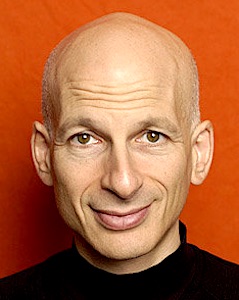
I expect something awesome from you – by Seth Godin…

Chris The Story Reading Ape's avatarChris The Story Reading Ape's Blog

 on The Book Designer:

I expect something awesome from you, otherwise why are we taking the extraordinary time and trouble to publish our books?

Continue reading HERE

View original post

Posted in Uncategorized | Leave a comment

What Makes a Good Villain?

Main villain? Not even close.

So, I’ve been thinking a lot about villains and what makes one popular while others are laughed at.  The answer I came up with is that it really depends on the individual since most villains have fans.  Sure, we live in a world where it’s more important to tear down what you dislike than build up what you do, but I’ve seen every bad guy have some level of popularity.  This makes it difficult to give a general answer, so I’m just going to say what I look for in a reader/viewer and try to do as a writer.

As a Reader/Viewer

I like villains to be dangerous and a challenge for the heroes in some way.  They don’t have to be physically overpowering, but they have to have an aspect that makes them a danger to others.  For example, Lex Luthor isn’t as strong as Superman, but he’s smart and charismatic enough to be one of his deadliest enemies.  I need to feel like I’m looking at a guy who could win if the hero makes a mistake.  Now, I’ll admit this isn’t always the case if the villain is entertaining to watch.  Yet, I really do need some sense of weight and risk when he/she interacts with the heroes.

Much of the weight in my mind stems from the villain’s motivation as well.  This one is hard to explain, but I prefer bad guys who have a plan that doesn’t really boil down to ‘I like being evil’.  Now, there are villains like that because their personality is that of a psychotic, but I give them a pass because they are written that way.  It’s the ones that act like they’re a higher class of antagonist when it really comes off with them being driven by the desire to kill, destroy, and steal.  Just fess up to that if that’s what you’re supposed to be.  Sadly, I see more of these bad guys turning up lately.  Maybe I’ve become more nitpicky though.  It’s just that if I can hear a bad guy’s plan and immediately think ‘well, why don’t you just do this instead since it brings you your goals without being a villain?’  I mean, doing evil things in the name of helping others tends to work off a twisted sense of morality, but that can be easily undone if there’s a clear and obvious path that even the twisted can see.

As a Writer

I try to make a variety of villains, which can range from ‘benevolent’ conquerors like Baron Kernaghan, sniveling servants like the Lich, and unwilling antagonists like Queen Trinity.  This connects to me going primarily for ensemble stories, so you have a team of heroes against a team of villains.  This requires that I have multiple personalities, goals, and methods within the same group.  I’ve found that doing this with a band of immoral bastards doesn’t really work because then you have the backstabbing issue.  Why would villains who have no morals and wish to be the main antagonist work together for an entire story?  I think we’ve come to expect villains to turn on each other too, so I try to minimize the use of that story point.

As strange as it is, one of the most important things I try to do for my villains is giving them a human aspect.  This can be positive or negative, but it helps create a bridge with the reader.  I think we can enjoy bad guys more if they have depth and desires similar to our own.  Sure, it might be a darker version of our own beliefs, but that can make us feel like we’d be the same if we took the wrong path.  Having even the evilest of villain develop a speck of sympathy from the readers can do wonders for him/her because it means they’re more than the final obstacle.  Look at Darth Vader who spent the first two movies as a really evil character, but then did one thing in the finale to gain a little redemption from the audience.  This is an extreme example though because not every villain deserves redemption.  Most villains should really stay there even if there are some aspects of their personality that are positive.  Then, you have characters like Stephen Kernaghan who are totally irredeemable.

So, what does everyone else look for in a villain or do to create one for their own stories?

Posted in Uncategorized | Tagged , , , , , , , | 19 Comments

A Second Series That Comes Before the First: Dreaded Prequels

LOTR and the Hobbit

One could say that War of Nytefall is a loose prequel to Legends of Windemere.  It’s pretty easy to say since it’s true.  They take place in the same world with the same races, magic system, and many shared cities.  There may even be a cameo or two from familiar faces that can survive the centuries.  It creates a bigger web of world-building and opens up more of Windemere for other stories.  The foundation has grown wider and higher, but there are risks.

First, one runs into a problem with readers thinking they have to read the first series to get into the second.  This isn’t true since they are separate stories that happen to take place in the same world.  You can follow the adventures of Clyde without knowing about the adventures of Luke Callindor.  Yet, many readers will see this and get confused about how they fit together.  Some may think this takes place afterwards too, which will hurt the story and result in people asking if Nyx will make an appearance (got this one already).  There really isn’t much you can do either because pushing them apart too much will make the stories feel like they aren’t supposed to be together.  You need to find a balance and simply hope that it carries over.

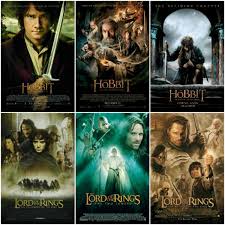
Second risk is the threat of ruining the continuity.  We’ve see it a lot in movies where you get prequels and they undo parts of the original.  The pieces don’t always match up like Legolas meeting Bilbo and the dwarves in ‘The Hobbit’.  He never told Frodo that he met his uncle or Gimli that he knew his father.  There wasn’t even a sense of familiarity when they were meeting to discuss The One Ring in LOTR.  The reason is because nobody knew ‘The Hobbit’ was going to come and have Legolas, which means there was nothing set up for the crossover.  I’m actually going to be posting tips for doing prequels on Wednesday, so I won’t go into details here.

Third risk . . . Well, the continuity thing covers a lot of ground.  You could end up making a prequel that causes the original work to become impossible or non-canon.  You could make the prequels so mild that they hold absolutely no weigh to the overall world.  The risks and challenges are so numerous, but they’re also oddly subtle.  You don’t see these issues happening while writing the newer series unless you keep going back to the original or do an outline that specifically focuses on continuity.  I did my best with that to make sure I didn’t ruin cities that I used in Legends of Windemere.  In fact, I did my best to minimize the use of them, but that isn’t easy when you have such large metropolises like Gaia and Gods’ Voice.  Needless to say, this aspect of a new, but connected series is fairly nerve-wracking.

So, let’s open up the floor to thoughts.  What do people think about prequels?  Keep in mind, I don’t mean the Star Wars prequels specifically.  I’m talking any like ‘The Hobbit’, Young Indiana Jones, etc.

Posted in Thoughts | Tagged , , , , , , , | 23 Comments

How to Get Your Dragon to Behave in Scrivener

Very useful post. Love the title.

P. H. Solomon's avatarStory Empire

Happy Monday to all the Story Empire readers. It’s so good to be back with all of you once again to share a few helpful (hopefully) thoughts. Today I wanted to share a few tweaks so that you can use Dragon Naturally Speaking with Scrivener. Let’s jump right in and get to it.

Dictation with Dragon & Scrivener

Nuance created Dragon NaturallySpeaking
For those who may have missed my last few posts, I will include a few links back to those so that you can get more detailed information about Dragon. I’ve been using Dragon now for a couple of months which has allowed me to make significant progress in two novel projects. In fact, I am working on both projects at the same time as I write this post. That’s the power of Dragon; I can dictate while I’m in the car and edit the other book at nigh…

View original post 1,067 more words

Posted in Uncategorized | Leave a comment

What Do You Wanna Talk About?

George Carlin

Last week, I gave a list of possible replacements for Teaser Tuesday to cover me until it’s time for Quest of the Broken-Hearted promos.  Most people liked the idea of ‘Question 3’ or just one question that I put my thoughts on.  Some suggested that I get topics from blog readers.  Well, that’s what I’m going to do.

So, do you have a question or topic that you would like to see covered on ‘Legends of Windemere’?

Posted in Uncategorized | 13 Comments