

Diving into “The Worst Medieval Monarchs” by Phil Bradford, I found myself on a surprisingly hilarious historical journey, despite the grim subject …
The Worst Medieval Monarchs by Phil Bradford
Diving into “The Worst Medieval Monarchs” by Phil Bradford, I found myself on a surprisingly hilarious historical journey, despite the grim subject …
The Worst Medieval Monarchs by Phil Bradford

Hello, SE friends. A couple of months ago, I began a series entitled Writing Through the Generations. The purpose of the series was and is to help …
Writing Through the Generations: The Millennials
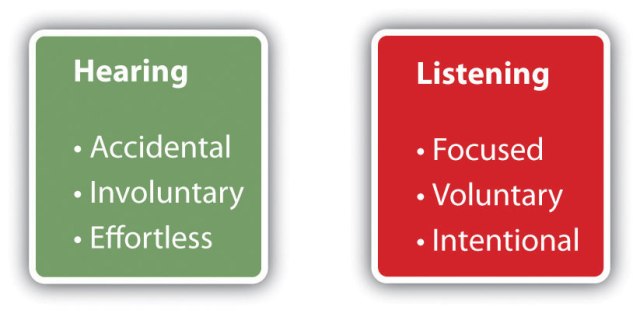
Yahoo Image Search
(The challenge with trying to make everyone happy is that it’s impossible. You’re inevitably going to make someone upset and sacrifice your own state of mind. I tried this many times in life and it always bit me in the face.)
I hear you
I hear all of you
Your requests
Bombarding me
Making me feel needed
Yet testing my limits
How long before I deny
Before I say no
Before I break
The time has come
Exhaustion has set in
With no respite
The flood gets stronger
More requests
More directions to be pulled
Very few ease off
Many continue to push
Then the inevitable
I miss a step
Following a misdirection
Created in my mind
Even if recovered flawlessly
I receive blame
Which I accept
And an unnecessary strike
A verbal sting
As if I never listen
I always listen
I always obey
But
I cannot always accomplish
When pulled
Beyond my limits
I hear you
I hear all of you

As someone who doesn’t often delve into fiction reviews, “Ice Islands” by Humphrey Hawksley offered a refreshing change of pace. This thriller, …
Ice Islands by Humphrey Hawksley
First, it’s difficult to even figure out what the Hippocratic oath really is. We tend to think immediately of doctors swearing to do no harm to their patients. Yet, something like this doesn’t appear until the second to last paragraph of the original oath. Prior to that was treating your teacher like family (including giving them money) and a list of things you cannot do like removing kidney stones or administering poison. The paragraph we think of mostly is translated to:
“Into whatsoever houses I enter, I will enter to help the sick, and I will abstain from all intentional wrong-doing and harm, especially from abusing the bodies of man or woman, bond or free. And whatsoever I shall see or hear in the course of my profession, as well as outside my profession in my intercourse with men, if it be what should not be published abroad, I will never divulge, holding such things to be holy secrets.”
Let’s work off that for the rest of this post.
One could argue that this should be common sense for a healer. Their career is to take care of the sick and injured, so why would the want to harm others? Why would they even need an oath? I could ask why our modern medical system needs it, but that’s a different and messy conversation. It still can have you scratching your head about why this kind of thing is necessary.
In terms of fantasy healers, they tend to be priests who get healing magic from deities or have been taught medicine in their church. You also have healers that use items from nature like herbalists and what we may think of when we hear Pagan healers. They can even get their information and supplies from spirits. Going back to the first example, you do have an ‘oath’ made to their god to follow the edicts in order to keep getting the power to heal. So, it isn’t a Hippocratic oath, but a pledge of loyalty to whoever their magical benefactor is. Guess breaking that would be the fantasy equivalent of malpractice, but that’s a stretch.
Maybe this is overall nitpicking. You only see the Hippocratic Oath come up in medical dramas or when an author is trying to put a healing character in a bind. We overlook it when writing so much because our fictional doctors are designed to operate regardless of its existence. If they’re good and honest then it will never come up. If they’re bad then they won’t care in the least. The Hippocratic Oath turns up when a good doctor is on the verge of falling or a bad one is going to get their comeuppance. It’s nothing more than a tool that we barely analyze and don’t have to because your average reader only knows ‘do no harm’.
In general, I think the Hippocratic oath demonstrates an interesting mental habit. We take a lot of things for granted in our world. Things we don’t question because they operate behind the scenes or don’t overtly affect us. Society simply functions this way and we carry this into our fictional worlds. If it isn’t something we’re directly trying to alter, we leave it alone. Economies exist unless we want to go with bartering. Everyone speaks whatever language we do because that’s what we write in. Farming is a thing without any core differences than what we do in the real world. Doctors are focused on healing and helping others unless they or another entity is evilly influencing the system. These things are just there unless we don’t want them to be.
So, what do you think of the Hippocratic oath and similar real world ideas turning up in fiction? Especially non-Earth fiction.

Jacqui here at Story Empire with the February edition of “What’s happening in the literary world?” What used to be a simple exercise where writers …
What’s Happening in the Literary World–February edition

Just a quick note to let you know I have been invited to an interview on the Radio by the team from Fresh Ink Group. The episode is tonight, …
Voice of Indie with #FreshInkGroup and John W. Howell #interview

Cover Art by Jason Pedersen
Welcome to my attempt to improve my Tuesday posts. I’m going to look back at each of my books and end with a Questions 3 finale. Best place to start is with Legends of Windemere: Beginning of a Hero. This was Volume 1 of my first series and is currently on Amazon as a FREE eBook.
Where to even start with this one? I created the foundation for Windemere and the rest of my series with this book. Luke Callindor was introduced as the ambitious, reckless hero who was in over his head. Fizzle showed up and might be considered the mascot of Windemere entirely. So much happened in this book to get the ball rolling and set up a 15 Volume series. There was a lot of juggling, but it didn’t feel like much of a challenge at first. Worked on this book for a little more than a decade before self-publishing on Amazon in 2013. I can’t even remember most of the sessions since I’d gone through so much during that span.
As much as I love this book, I don’t think I can ever read it again and it definitely shows my newbie status. A big reason for that is because I was so new to writing that I thought everyone knew better than me. So, I would take every suggestion to ‘improve’ Beginning of a Hero and it was turned into a mishmash of styles. I think the only tip I ignored was to change Luke’s first name to something else since Luke Skywalker existed. Nothing fit him, so I stuck with it. That should have taught me to trust my instincts, but I kept mucking around with my writing style. When I decided to try my luck with Amazon, I looked at this book and was horrified by what it turned into. It took me 3 months of daily work to get it back to what I felt was closer to my style, but I still see some shaky areas where I might have been listening to others on some level. Am I still proud of it? Yes, but I will always remember the brutality that I put this manuscript through due to my own lack of confidence.
I wouldn’t try to rewrite it either. That crossed my mind a lot, but I was worried I would lose the parts that came out really well. Going back to the drawing board because I listened to too many people seemed wrong. This is why I did editing run and editing run until I was happy with the final product. I think having a book like this out there helps me see how far I’ve come too. When I’m having imposter syndrome moments, I can look at Beginning of a Hero and see how I’ve improved. I know many authors who junk their earliest works and pretend they never existed. That doesn’t suit my personality where I like looking back to see how far I’ve come. Our past is what makes us, so why bury it?
All that being said, this book taught me how to transfer game events into a book. Dice rolls tend to cause unexpected twists, but you can’t have that occur in a book without it throwing off the flow. So, I needed to list the big events that were going to occur and see how I can make them fit. I did this a lot by making sure characters had the proper flaws to explain their successes and failures. One of the reasons Luke Callindor is so reckless is because I needed to show how he could make terrible mistakes and unexpected victories, which happened due to the dice. He became a character who depended on luck just as much as skills. That was born from needing to transfer events from one medium to another and this book is where I learned how to do this.
Overall, this book will always have a special place in my portfolio. I mean, it was the first one I really got to publish and promote. The first one to get on a Top 100 Amazon list and the first one to earn me a royalty check. Needless to say, Beginning of a Hero had a lot of milestones, which is to be expected.
Questions 3:

“Elizabethan Rebellions: Conspiracy, Intrigue and Treason” by Helene Harrison is a book that I found both insightful and unexpectedly entertaining. …
Elizabethan Rebellions by Helene Harrison
Akiko Yosano (Bungo Stray Dogs)
Healing characters in fiction is always a challenge. You don’t want to make it too easy or you lose tension. Too hard and there’s no point in having the option. The methods are a challenge as well because you have spells, potions, powers, etc. We tend to box ourselves into the established norms as well since healing can feel secondary, especially in fantasy stories. Just plop a priest down and have them pray the damage away. That can get boring. Then, there’s the following question
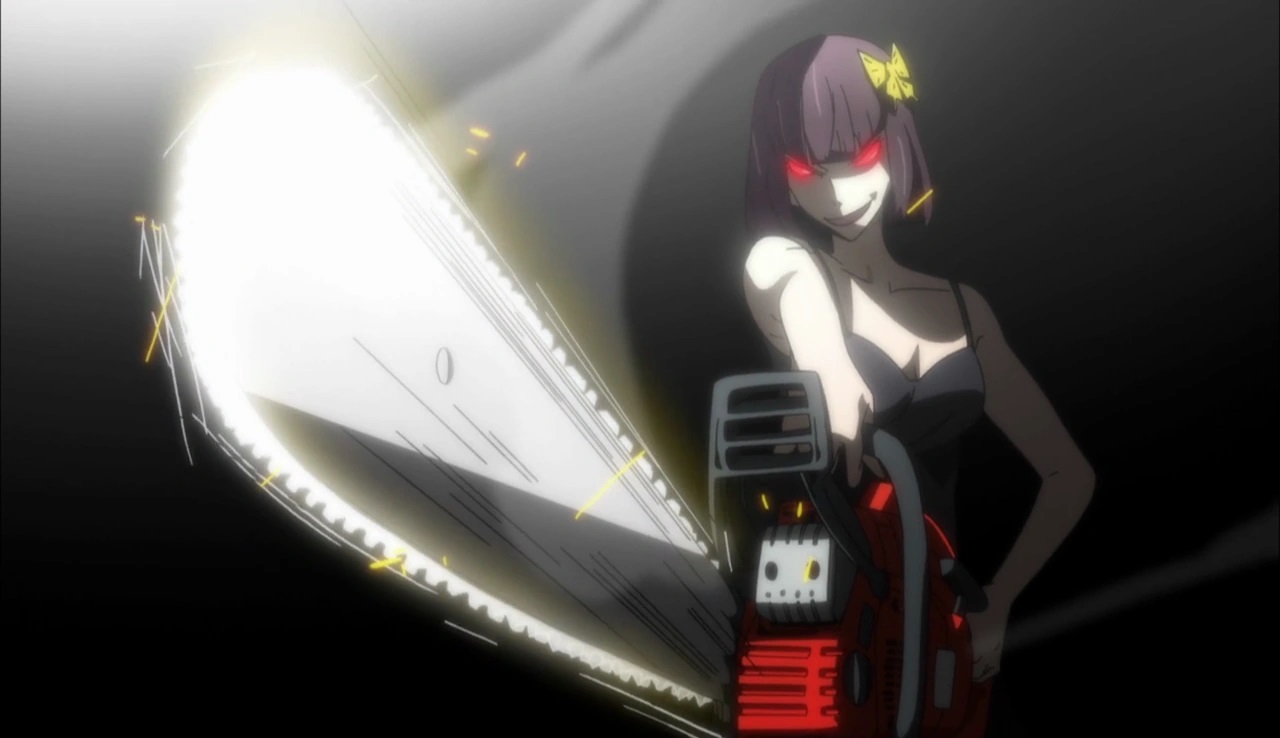
What does the woman with a chainsaw have to do with healing?
Akiko Yosano is from the series ‘Bungo Stray Dogs’ and she has a healing ability. She brings her companions back from the brink of death all the time. Unfortunately, ‘brink of death’ is the key phrase. She can only heal people when they are on the verge of death, which means some injuries require that she . . . Well, you see the chainsaw. This is all implied and not shown, but it got me wondering about unique methods of healing characters. Never heard of this version before, which got me wondering if there are more ways to pull off this rather basic action.
I can’t think of any other strange ways to heal others. I’ve seen healing kisses and characters with blood that acts like potions, but that might be it. The genres of fantasy, superheroes, and science-fiction tend to be where you find people willing to try something new. Even then, it’s usually a technology that is fairly easy to understand or a spell/ability that is simple. The more complicated the healing ability, the harder it might be to rationalize using it so often. ‘Bungo Stray Dogs’ went the route of implying or casually mentioning Akiko used her ability after the initial introduction. This made it that limbs were restored within a scene or two. This is why I think complication can be an issue, but it might be a way to stand out.
A question that should be asked is if going so far with a healing ability is necessary. The presence of these skills opens the door for characters to take risks because there is a certain level of damage that will be erased. They might not do it consciously, but the author will have them get hurt just to rationalize having the unique skill. You can lose tension and suspension because the audience no longer thinks the characters are in danger of death. As long as their healer is around, they’re fine. This can result in eliminating the healer, which gets rid of the skill that an author put so much work into crafting and establishing. Doesn’t seem worth it if that’s what you have to do.
Personally, I don’t think I would go too far with the healing abilities in my stories. I established auras and their manipulation as the source of magic, which includes healing. The healer uses their energy to repair the damage of another and the success depends on the strength of those involved. The more complicated the spell, the higher the chance of failure or the need for a second requirement. For example, resurrection in Windemere requires some of the dead’s aura and a person who has a strong mental/emotional connection to them. That person needs to remain focused on the ritual to make it successful, which is difficult. It’s why the spell isn’t used often. It sounds complicated, but it’s fairly standard and simplistic to avoid confusion.
So, what’s the weirdest method of healing you’ve ever seen in fiction? Any methods that you can come up with for your own stories?


 Legends of Windemere