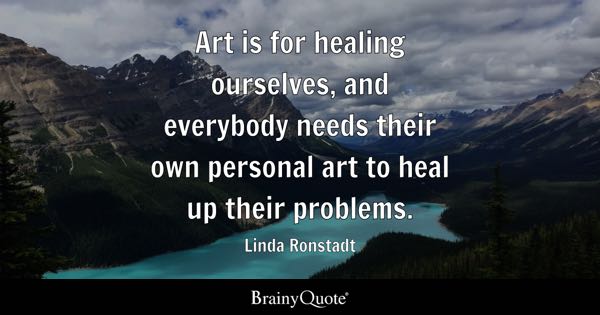
Coming to the end of Mental Health Month, so let’s just see what people are thinking and feeling.
- How do you think art helps with mental health?
- How has art helped your mental health?
- Why do you think there’s a connection between creativity and mental illness?
About Charles Yallowitz
Charles E. Yallowitz was born, raised, and educated in New York. Then he spent a few years in Florida, realized his fear of alligators, and moved back to the Empire State. When he isn't working hard on his epic fantasy stories, Charles can be found cooking or going on whatever adventure his son has planned for the day. 'Legends of Windemere' is his first series, but it certainly won't be his last.




 Legends of Windemere
LikeLiked by 1 person
Great answer for #3.
LikeLiked by 1 person
I think art helps with mental health by providing an object or idea focus other than on oneself?
Art has helped my mental health by providing an outlet for my creative energies. It also provides mental exercise that I find very soothing.
The connection between creativity and mental illness is common because in order to be creative there are certain boundaries of the mind that need to be stretched. In the process normal mental restrictions are loosened and the illness takes hold. Also folks with chemical imbalance that is manifest as mental illness are not afraid to be more expressive and thus more creative that others.
LikeLike
Funny how we say mental illness takes hold when we’re creative. Makes one wonder if NOT being creative is the real mental illness.
LikeLiked by 2 people
I like that twist
LikeLike
How do you think art helps with mental health? It’s fun and relaxing to do your art, and that is generally good for people’s emotional health.
How has art helped your mental health? These aren’t issues I’ve personally struggled with, but I think creative expression is part of being a whole human being. Social sharing of art builds stronger communities.
Why do you think there’s a connection between creativity and mental illness? I have doubts that this is really the case. History tells of a few geniuses who struggled with mental health, but doesn’t focus in the same way on many other geniuses who did not face that struggle.
LikeLike
I wonder if the focus on genius/mental health comes from the same root of the belief that *true* artists have to suffer. Like, somehow we’re told art is childish and those who pursue it are going against society. So they are bad people/radicals/whatever and have to be punished for pursuing an art instead of doing “real work” in an office or something.
LikeLike
I think it stems more from seeing certain habits that are also associated with mental health issues. Keep in mind that it isn’t always brutal depression or crippling anxiety that we need to think of. It could be such things on a smaller scale or handled. Also, both artistic talent and mental health issues have the concept of the mind being wired ‘differently’, so they can be associated on that level.
LikeLiked by 1 person
I’ve read how a lot of geniuses probably had some mental illness, but it wasn’t documented. Part of it is because they had a handle on it or being able to follow their creativity allowed them to keep it at bay. A person who can’t follow their desired path has a higher chance of falling into depression and anxiety, which can trigger other issues if left alone.
LikeLiked by 1 person
Art definitely helps with mental health. When I’m at my lowest, I go to the Eric Carle Art Museum, and it does wonders! Looking at real art soaks in every wonderful feeling, and vanishes negativity.
LikeLike
Very cool. Museums can be great pick me ups.
LikeLiked by 1 person
Yes!
LikeLike