
One Piece
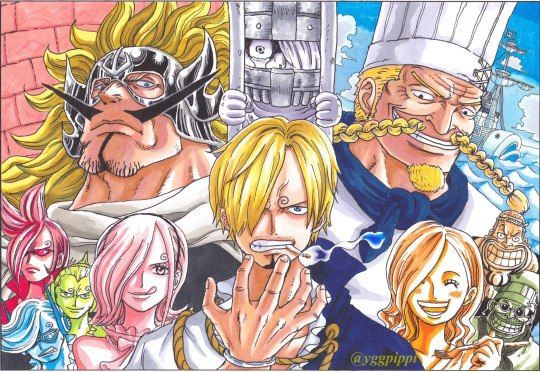
The inspiration for this week’s topic is ‘One Piece’. Kind of spoilers, but this is something revealed in 2016. Anyway, the character of Sanji is revealed to have come from an infamously villainous family called the Vinsmokes. He’s the black sheep of the family though because he isn’t as strong or cruel. This got me thinking about how common it is for there to be a good-natured protagonist who comes from an evil family. So, why is this a popular trope?
One reason is that this touches on the tried-and-true subject of ‘nature vs nurture’. This has always been a popular topic of debate since people have different opinions on which is more powerful. With a hero who comes from an evil family, one can believe that they are naturally prone to do bad things. Yet, this one person isn’t like the others, which can be caused by being raised by someone else. Maybe they were abandoned for some reason or ran away, but they escaped the influence of their family early enough to not be ‘infected’ by their evil.
An addition to the ‘nature vs nurture’ concept is that there is always a threat of them falling. There can be hints that they might join or at least imitate their family to reach their goals. It could be that they are extra violent, turn off their empathy, or have no qualms about doing horrible things if they feel their target deserves it. It works best if you make the protagonist an anti-hero instead of a true hero, but the latter can be gradually pushed towards this side. It depends on how they feel about their biological family and if they want to be accepted.
Some authors will do this solely to throw a twist into the story. Think of the reveal that Darth Vader was Luke Skywalker’s father. It shocked everyone at the time because nobody saw it coming and such a thing wasn’t common. Now, it might as well be named after that twist, but that’s besides the point. As you can guess, this requires that the audience be with the hero for an extended period of time. So, it might work best for a series or at least a longer work.
You might think doing this for shock is a bad thing, but it accomplishes an important feat if done correctly. Most importantly, the hero either shouldn’t have known this from the start or assumed they would never meet up with their family again. The first option is probably best if you want to give them a true inner conflict. Being from a dark lineage, the hero must question their own ‘nature vs nurture’ background as well as deciding how they handle their family. It’s no longer an unconnected enemy that they are facing, but blood relations. If they are truly good then they will have to figure out if they are okay with killing, capturing, or doing anything negative to these people. They might even believe that they can turn them from the dark side even if they haven’t seen any proof of that earlier.
Redemption is a third option for this type of story if the character is aware that their family is evil. Not for their family, but for themselves. Sometimes, they participated in the crimes as a child and something caused them to turn good. Other times, they left as a child when someone they cared about was hurt or killed. So, they set out to atone for their family’s actions by doing good and possibly even taking them down. This can be seen as a conclusion to the previous inner conflict where the hero decides that the world would be better off without their lineage. An added twist here is them deciding on what to do about themselves once they are done. If they feel their bloodline is evil then they might try to take themselves out at the end.
Personally, I like this type of character, but I wouldn’t use it often. I did it with Dariana in Legends of Windemere and I revealed it soon after she debuted. Can’t say I did it with any of my other books so far. Having a child come from a dark family isn’t as much of a challenge as it once was though. So, I don’t think I would use it very often unless it really works for the characters.
So, what do other people think of the hero from a villain family?




 Legends of Windemere
There are a lot of good characters who fit this: Peter Quill/Star-Lord; Roald Dahl’s character, Matilda (parents were crooks); Gamora/Nebula; and others. (Interesting how the Guardians of the Galaxy have that in common.) Their misfit status is good for conflict. We can see the cost they paid to turn against family.
LikeLiked by 1 person
Misfits from the evil side does seem popular. Wasn’t sure about Quill only because he wasn’t raised by his dad. It did create an interesting scenario. He was raised in a good family with secret ‘villain’ lineage. Gamora was born into a good family, but raised by an evil person. It’s like mirror images.
LikeLiked by 1 person
Yes! You brought up a good example though in One Piece. I like the aspect of someone who tries to be different from their family of origin.
LikeLike
It always gives rise to an unsettled family situation where the black sheep is constantly called out for the lack of evil. It also makes the hero more gallant given the evil roots.
LikeLiked by 1 person
Does that make them a white sheep?
LikeLiked by 1 person
I was going to say white sheep. 😀
LikeLiked by 1 person
It’s not something I’ve thought about, much. My mind is now chewing over ideas.
LikeLike
It can be a fun subplot.
LikeLike
Star Wars is full of this. “… you’re a Palpatine.” I don’t see this one as completely played out. It all depends upon how you handle it.
LikeLike
I feel like Star Wars did it poorly in the new ones. They tried to make the reveal like Luke and Vader, but was so late in the story that it didn’t really have time to gestate.
LikeLiked by 1 person
Agreed.
LikeLike
It’s a matter of the character coming into their own. They either decide to strike out on their own or embrace their family’s evil ways.
Zuko in Avatar (Last Airbender) and Warren Peace in Sky High are examples. Warren always rejected his hereditary evil, while Zuko was devoted to his father and tried to meet his expectations. But when he was forced to separate and experience more of the world, he came to reject the Fire Nation’s obsession with conquest.
LikeLike
There does seem to be a catalyst required for them to shift away too. Zuko needed to realize what his family was really like and how he’d never meet his father’s expectations. Iroh helped there, so a positive mentor can assist.
LikeLiked by 1 person