
First posted on January 9, 2013, I like how it was creating goblin society and dryad breeding practices that stirred this topic. Not Kira Grasdon constantly forcing me to reevaluate her path or Queen Trinity shifting further away from true villain with every revision. It was goblin civilization and tree fairy copulation . . . Man, I was in for a brutal awakening later on if those two things threw me for a loop.
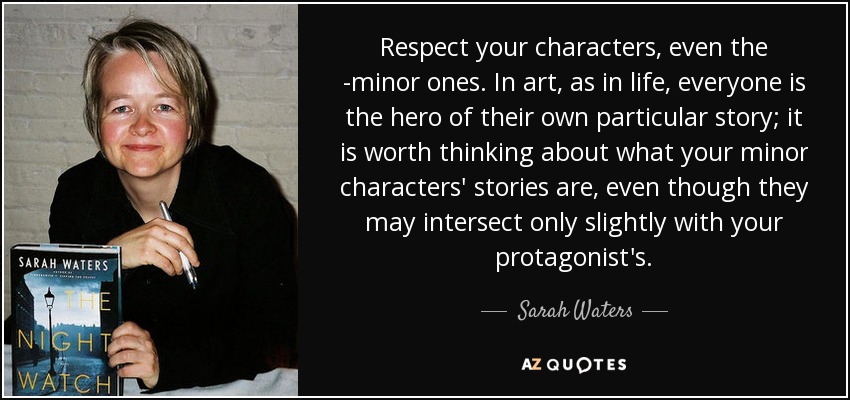
I have a habit of letting my characters wander through a scene without much direction and it has led to a lot of interesting developments over the years. Just recently the wandering writing style has designed how goblin society works and how dryads breed. I never had the intentions of developing or even mentioning these things, but they simply appeared as I was writing. While it seemed out of place at first, I realized that it did make sense and brought more depth to the world.
So, I wonder if this is a common method for writers. I have to admit that until recently, I never heard another writer/author/storyteller tell me that they let their characters run wild. There was always talk of being in control and having a rigid path that the characters follow. These people knew where they wanted the story and characters to go and that was going to happen no matter what. I was always confused by this because my characters always had to voice their opinion, act out in defiance, or simply ignore what I thought was best. It might sound strange to people, but it is a relationship that has served me well. There is something more organic and flowing to my stories when I loosen the leash on my characters. They know where they are supposed to go and the major points that I want to touch on. Still, they get into personal conversations with each other and trouble that has little to do with the main plot.
Maybe this stems from my focus on character development and interactions instead of the main plot. I know the main plot of a story is the essential core to it, but I always enjoy reading about how the characters grow and get along. I take more enjoyment from writing a scene where two characters are having a lover’s spat than the heroes conquering the villains. The final battle is the endgame with only clean-up to handle afterwards and then the dreaded thought of ‘what am I going to write next?’ The scenes where my characters go off-task and live their lives are the ones that make me choke up, get angry, worry, and groan in exasperation.
The best example of this run wild method is a character in my book who I can’t mention by name because he/she has not appeared yet. I don’t like giving spoilers, so bear with me. I based this minor character off a rather infamous, unlikeable celebrity of the day that fit the role I was going to use the character for. So, I proceeded to write he/she like the celebrity and things were going smoothly for a scene. Then, the character started showing up in group scenes and gaining my attention for some reason. He/she managed to enter the main plot during one of the rewrites and it stuck. Eventually, this character took offense at his/her origin and convinced me to change his/her entire form. A unique weapon came next and a deeper personality before I realized this minor character I needed for two scenes had just broken into my top five characters to write. I even have a solo book planned for this character because his/her story goes on longer than the main plot. All of this happened by me refusing to restrain the character and following the curious path that I was led on. Now, I cannot think of Legends of Windemere without this character walking around.
I wonder if this method and my interest in character development are because I see my characters like children. They need to grow and evolve as they follow their paths, but I can only push them so far. Every character has strengths, weaknesses, aspirations, likes, hates, and so many other things that real people have. I learn about these facets of their personalities as I write them just as I learn about the quirks of my flesh and blood son as he grows older. I admit to having more control over my characters than my son, but I do see some similarities. Eventually, I will have to let him take the reins of his life and I stand back to act as a safety net if he needs one. I do the same for my characters that I put into life-changing situations and see how they react with very little conscious influence on my part. If they are hurt then I work to heal them throughout the rest of the book or series. If they come through their trials stronger then I learn more about their limits and have a deeper character to work with. I’d like to think my characters would thank me for helping them grow, but I also have a feeling they’d be like real children and get angry at me for interfering. I can already hear Luke begging me to stop writing and embarrassing him while a few other characters are laughing at him from the shadows.
I hope this post is clear because this is a topic that I have a lot of trouble explaining to the depth that I feel it. I also hope that somewhere out there are other writers who let their characters call some shots and run free.




 Legends of Windemere
I think the technique has served you well. You gained insight into a civilization and how your characters move and breathe. That makes them seem like real people.
I started off pantsing my way through plot-driven stories. I kept a tight rein on characters’ actions because I had a set goal in mind. But one day, one of my advisors read some of my chapters and pointed out a character I had only planned to use in one chapter and never again. She told me she preferred that character to any of the others who were showcased more! And he barely did anything in that scene! I gave him free rein in some experimental scenes after that, and then later I wrote a whole book with him. So, I understand the aspect of letting characters dictate the action, even if you have a plot in mind. I changed the plot of the book I just mentioned, because after writing scenes with the character, I knew that was how he would end things.
LikeLike
I wonder why that character grabbed her attention. Did she say why?
LikeLiked by 1 person
She didn’t. But he was pretty taciturn in the scene. He stayed that way. 😊 She has two sons and writes a lot of books with male main characters.
LikeLike
I remember this post and was amazed at the time that you had the same experiences with characters as I did. In fact, the post made me relax about the situation. I remember the protagonist John Cannon a anti hero wanting to shoot someone. He kept bugging me till I finally let him do it. He promptly threw up and never shot anyone again.
LikeLiked by 1 person
It’s funny how people thought it was only them who had this experience back then. Wild times in the indie author heyday. That is a great way to handle a pushy protagonist. Give them what they want and have them suffer for it.
LikeLiked by 1 person
Shows how far we have come.
LikeLike
Loved this discussion into how you write a scene. I must admit I don’t have this problem except when I get into a conversation between the two main characters. Then I often am amazed at what happens!
LikeLike
Are you a big planner or pantser when it comes to your stories?
LikeLike
This is great stuff and still relevant. Sometimes you just have to let them run wild. My root monsters were supposed to be a limited scene. By the end I had people asking for solo titles that only featured root monsters.
LikeLike
Cute and crazy nonhuman characters always seem to fall into this category.
LikeLiked by 1 person
I can see that if a writer has a hard deadline they can’t let their story jump the tracks. But I agree with you that the most interesting ideas and connections pop up when you let things flow.
LikeLike
Deadlines can be the death of creativity and story flow. Learned that the hard way a few times.
LikeLiked by 1 person