
The most popular post by a mile first appeared on April 24, 2019.
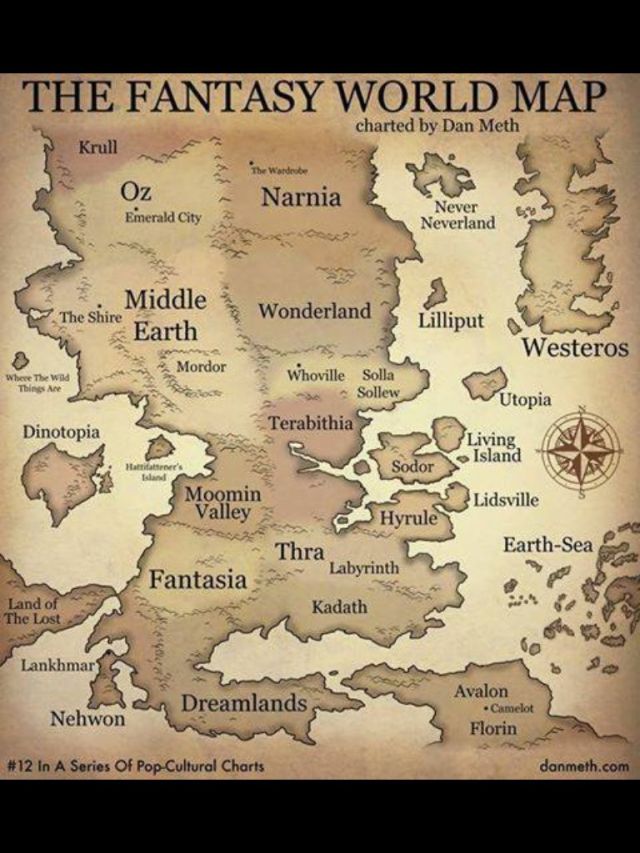
Fictional World Map (Created by Dan Meth)
Continuing the topic of naming locations, I’m going to do my best to come up with some useful and humorous tips. I only had to create one new place in War of Nytefall: Rivalry, so these are going to have to go outside of the new release. Apelios doesn’t really give me a lot to work with either. Here we go:
- Make the location pronounceable. It may be funny to write one with only vowels or consonants, but you could lose a few readers if they can’t figure out how to say things. It can help to have a pronunciation guide or mark it during the first appearance, so this is more of a guideline.
- Consider the terrain before you come up with the name. You can only get away with naming a desert city after water once or twice before the joke gets stale. The founders would have to be aware of these things too. A person who has lived in the clouds for eternity won’t have a good chance of knowing what a worm is, so they probably wouldn’t use it to name a town.
- Use real world examples for your fictional ones to help get the creativity flowing. This can really help with natural territories. Rocky Mountains, Great Barrier Reef, Grand Canyon, and other locations in our world are fairly simplistic. You would be surprised how many places can be named by how they look. It can easily be chalked up to an ancient traveler being awed and not that creative.
- If you name a place after a person then you need to come up with some history. It doesn’t have to be much. Could be how the person found the area or some great feat that they accomplished to earn the right. To relate this to the reader, you can have a local explain it briefly or have the characters read a sign about it. To avoid an info dump, you want to be brief or spread out the story.
- As with monsters and characters, you can always use another language to come up with names. Consider something about them and then go to Google Translate. It can be related to the terrain, a historic event, their biggest export, or whatever makes this place stand out enough to be included in the story. Do keep in mind that people who actually speak the language will understand it, so try to keep it clean. Unless the joke is that the town is really a swear word.
- Accept that people will mispronounce the fictional locations if they are made by letters being tossed together. Seriously, I’ve gotten Windemere, Windmere, WindEmere, Winemere, Winmere, Windermere, Windermore, and a few others. (For those who wonder, it’s Win-deh-mere. This probably doesn’t help.)
- Don’t rely too much on common endings for locations such as -burg, -town, City, Village, etc. Only way to get away with using the same ending is if you build it into your world creation. In that case, you can NEVER stray from the pattern or the whole world will implode. The deaths of millions of fictional characters will be on your head, you monster.




 Legends of Windemere
Good tips! As you mentioned, it’s interesting how some real-life place names are based on the look of the place.
I’ve seen on maps many fictional cities with names I didn’t know how to pronounce. It’s always frustrating when a pronunication key is not given.
LikeLike
I don’t even try with those. I feel like needing to learn a fictional language to read a book takes away from the emersion.
LikeLiked by 1 person
I still like the consequences listed in number seven. No doubt why this was number one.
LikeLike
Thanks. That was a last minute idea actually
LikeLiked by 1 person
Good one though.
LikeLike
Interesting post, Charles.
I used Latin to come up with the names of the fictional worlds in my Elemental Worlds series. There’s Terra (Earth), Aerial (air), Ignis (fire) and Aqua(water). Then there’s the central world that is like the normal world, a fusion of them all, called Fusionem.
Incidentally, I pronounced Windemere correctly, possibly because of a lake in the UK called Windermere. It’s the largest lake in England. (mere means lake here.)
LikeLike
I’ve used Latin for a few things. My usual bit is throwing English words into google translate and changing the other language until I like something.
LikeLiked by 1 person
Good idea. I had a bit of a problem with place names (and others) in my historical novel set in Roman Britain. Google wasn’t much help in translating to Brithonic (the language of the ancient British Celts) so I used Welsh.
LikeLike
No wonder this was popular. It’s a great post. I use a lot of Google translate. Lately, I also tell AI about my area, then ask for ten options In many ways it’s faster than Google and if I hate them all there are other options. My last big round of this involved naming race horses.
LikeLike
Cool. Is there a trick to naming race horses? They always seem odd.
LikeLiked by 1 person
Not really. I accepted that many are international and added some flair. Some are corporate sponsored and I dabbled with that.
LikeLike
Great map but where’s the Beklan Empire?
LikeLike
Guess it’s the New Zealand of fantasy worlds.
LikeLiked by 1 person
What, you don’t think Bergville would be a good place name?
LikeLike
Sounds cold and crumbly.
LikeLiked by 1 person