
Silent Hill
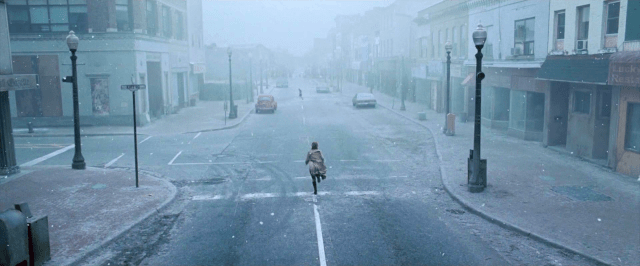
I might start leaning more towards Survival Horror here. Still, most of the advice should be able to work for non-horror survival stories. I was wondering if Swiss Family Robinson would count too. I mean, things seemed a bit too easy in that movie even when things were getting dicey. That should be a good segue.
- A hero who is struggling to survive can’t be overpowered. They are an underdog and the selling point is the looming threat of death. If they’re able to defeat every monster or create every comfort they need on a deserted island then there isn’t any tension. A reader will never fear for the hero’s life and start to feel like they’re dealing with a ‘no stake’ story. So, they need to be a balance of defenseless/weak and capable.
- Obstacles need to be difficult, but not impossible. Just like in #1, making things too easy eliminates tension. Authors tend to avoid this, but they’re more likely to create an unwinnable situation. This comes from a desire to make the victory that much sweeter, which is fine. Unfortunately, an author can go too far and make an obstacle that the hero shouldn’t be able to survive. The results are either death/end of story or an unbelievable success that reduces the sense of danger.
- Survival heroes need to have some victories. Even if it’s simply getting out of a situation alive with injuries, they cannot continue losing. It can reach points of comedy or, at least, have the readers wondering why they don’t change tactics or learn from mistakes. Survival stories benefit a lot from a rollercoaster series with several ups, downs, and loops.
- Turning to those stories that use a villain or monsters, you don’t have to have other targets to show that they’re deadly. Having them kill other characters is the easiest way to create jump scares and increase tension. It’s just not the only way and can result in readers seeing their appearance as a sign that someone will die. Alternatives can be them giving chase to the hero, causing non-lethal injuries, and forcing them to hide until the coast is clear.
- Don’t overuse jump scares even in books. Less is more here.
- A key point to surviving is having an idea of what is coming or at least a sense of what needs to be done. A hero who is running around without a clue or plan is going to die fairly quickly. That or depend exclusively on luck. You don’t have to drop huge hints or have every expected scenario happen. Yet, a hero with a sense of forethought opens the door for more believable victories.
- Having a mystery to solve alongside the survival is fairly common, especially in survival horror tales. At least, the video games do this. Adding this creates a subplot, which maintains the readers’ interest. Now, it is no longer just about the hero surviving, but also discovering what caused their situation. The hero may want to know this information as well. The only downside here is that it’s fairly easy to get convoluted or create plot holes that make one wonder either how things went wrong or how anyone survived the initial event to be the survivor hero in the first place.




 Legends of Windemere
Oh man! Now I’m thinking of I AM LEGEND (book/movie), A QUIET PLACE (1 and 2), and THE MARTIAN (book/movie) though the latter was not of the horror genre. I also think of ROT AND RUIN by Jonathan Maberry, which is part of his surviving zombies series. And Green Arrows origin story (though horror was not part of his survival journey).
Great tips! Yes the jump scares get old quick. And yes, yes, yes to number 7. Some of the story beats and puzzes are too convoluted in some games.
LikeLike
I always thought Green Arrow was based around Robinson Caruso in some way. Just grittier.
LikeLiked by 1 person
It must have been.
LikeLike
Excellent points, Charles
LikeLiked by 1 person
Thanks.
LikeLiked by 2 people
For a lot of survival stories, you’d think the over-arching goal is just to get back to civilization. Or in the case of a pandemic, zombies, etc. to reach a place of safety where the menace can’t reach them.
I think you’re right though that there have to be some successes. The character manages to find water, or start a fire, or shelter somehow. That shows they can pull themselves out of this, however difficult it might be.
LikeLike
I think many survival stories work off short term goals. The characters do want to get back to civilization, but they need to focus on immediate need. So, there’s a very big ‘now’ factor, which helps with tension.
LikeLiked by 1 person
I hadn’t considered one of these tales. There are some things I included in Once Upon a Time in the Swamp that are related. (She didn’t intend to survive) You can start small. Fire, water, shelter and build small victories. Then move up to what’s safe to eat, and learn the hard way what isn’t. Find out what eats you, heal, etc. Keep going until there is a comfort level, then introduce villains if you like.
LikeLike
That learning the hard way for food is always a strange event. I tend to wonder how they don’t die because eating the wrong mushroom should be lethal. Just artistic choice?
LikeLiked by 1 person
There are many that will make you sick, but not kill. Research is needed.
LikeLike
Pingback: Survival Horror: Writing Stories That Make Readers Feel Trapped | Birthing the Essence of Horror
Pingback: Survival Horror: Writing Stories That Make Readers Feel Trapped - Global Frightening