
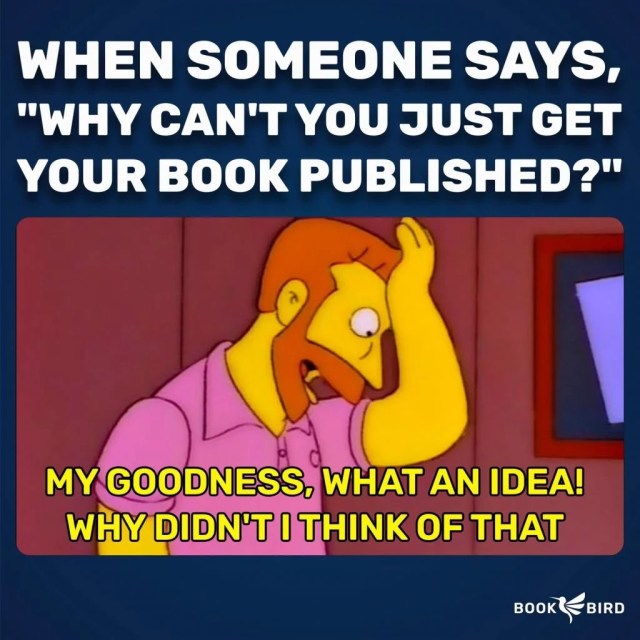
Google Image Search
This is the mentality I used when I started planning Do I Need to Use a Dragon? and I kept it going through the writing. At least, that was my intention. This might be the hardest of the three categories to maintain.
It worked for me.
This works the way you would expect and you can easily imagine the person saying it having a weird expression. There’s a strange mix of confidence, doubt, helpfulness, and a desire for recognition here. The author is sharing what they have learned, but they’ve added a simple disclaimer. It’s saying that this piece of advice has worked out, but it might not be successful every time. Sometimes, a ‘this is gold’ tip will be demoted to this if enough people take it and fail. Now, the previous author has learned some caution about declaring something perfect.
Don’t mistake this mentality for not having faith in the advice or oneself. Clearly, it has worked enough to pass it on. You’re seeing a defense mechanism in action. The author is trying to help while making sure they don’t get in trouble if failure occurs. They don’t want to get a person’s hopes up and see them crushed, especially if they’ve seen that result in aggression aimed in their direction. I mean, many authors are jittery creatures due to anxiety or a coffee addiction. We’re pretty easy to startle, so we do what we can to reduce the chances of being attacked.
The benefit of this type of advice giving is that it combines the flanking methods. It does have some of the confidence of ‘this is gold’ because the author is explaining it and saying that it works. It also takes from Friday’s method (no spoilers!), which puts minimal pressure on the receiver. They are made to feel that they can take the risk and the decision is their way. Even better, they know that this is not a guarantee, which allows a person to be better at choosing to follow or not. They won’t think that they have to do it for success or be driven away for a number of other reasons. I find this tactic to be informative and friendly without being aggressive.
Anyone who has followed my blog for a while knows that this is where I tend to land. I do this because I’ve been on both sides of this situation. When I was starting out, I followed a lot of advice that I was told couldn’t fail. Many of the tips failed and I was left wondering what went wrong. Some of those authors disappeared on me after the first encounter, so I couldn’t ask if I made a misstep. Others said that I had to keep trying and it would work eventually. This was usually with promotions that involved paying money, but I never got sales from it. Needless to say, I had a TON of learning experiences in my first few years as a new author.
On the other side of the coin, I’ve been happy to give advice, especially if asked. There was a small amount of time when I spoke as if everything I did was going to work. That habit got knocked out of me pretty quickly. It helps that I’m naturally pessimistic. So, I can fully expect that a tip that works for me won’t necessarily work out for other people. It could be a total disaster due to incompatibility or requires the receiving author to tweak things to their needs.
That last part is actually something that authors should consider in general. When you receive advice, don’t always take it exactly as given. I learned that if the author has a different style, genre, or promoting method, their tips might not smoothly line up with your own. You would have to change to what they are for it to work out effectively, so you may need to adjust. For example, I had people suggesting promo sites for my books early on and I would jump on the ideas. After a while, I realized that the ones that weren’t working at all tended to be dominated by the genre of the advising author. This wouldn’t be my own genre of fantasy. Honestly, it was usually romance or YA dystopia, which meant a fantasy book got lost in the sea of everything else. That meant, I had to do my own research to make sure the suggestion was a good fit.
So, this mentality is what I tried to maintain with Do I Need to Use a Dragon? and I think I did a decent job. Mostly because I have a beginning and ending disclaimer saying that what I talk about worked for me. Check it out for 99 cents as an eBook or $20 for a paperback.




 Legends of Windemere
It’s frustrating when someone insists that his or her advice is a one-size fits all. Many times, I’ve been given some writing advice, only to find that it didn’t work for me. (Like well-meaning people who insist that Scrivener is the way to go. Tried it and it confused me, so I returned to what works for me.) And then I felt stupid because the advice giver then assumed that something had to be wrong with me because the advice should have worked. So good on you for explaining that it worked for you and might not work for all scenarios.
LikeLiked by 1 person
I’ve run into that so many times. I hate it when the person acts like you’re an idiot. Not a fan of being told to try again until it works too.
LikeLiked by 2 people
Me neither. Some programs and advice just aren’t right for everyone.
LikeLiked by 1 person
“It worked for me” is one of the best things you can say. It offers a tangible effect, while also acknowledging how many variables there are.
LikeLiked by 1 person
It’s a good safety net if used correctly. It doesn’t come off as a guaranteed success, which I find to be the best type of advice.
LikeLiked by 2 people
Another great behind the scenes look.
LikeLike
Thanks.
LikeLike