
Yahoo Image Search
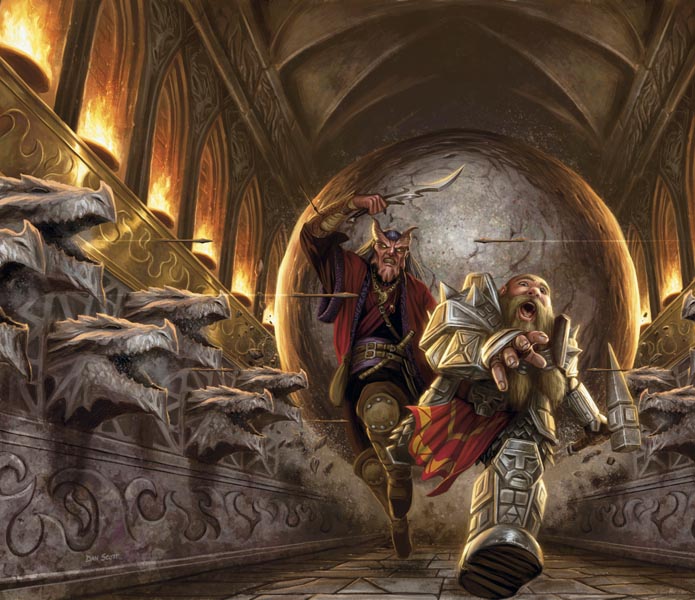
One of the big standards of fantasy adventure books are traps and mazes. The latter isn’t as common as the former and I can already hear some people groaning about the topic because they think these are terrible concepts. Dungeon crawling in a book can be tedious and is more action than anything else. You can have part of a book involve a trap-filled ruin, but you need to try to have it be big, essential, and put some character development in there. Most importantly, the heroes need a real reason to be in there. Rescuing a kidnapped ally, cure for a disease of one of the main characters, returning an artifact that could destroy the world, and things that are larger in scale than ‘find the random, possibly shiny treasure’.
First, mazes are relatively simple in and of themselves. Characters wander and talk while dealing with wrong turns and traps. This can be used for character relationship development, especially if you’ve built up a plot between them that has to be discussed. It helps to draw a crude map of the maze to give yourself a feel for it. Though, you can also get away without giving exact directions. ‘Time passes’ and chapter breaks can be your friend here.
Second, when working with ancient ruins or dungeons or any trap-filled place, you need to consider a few questions:
- Is this a place that can be easily accessed?
- Is this a place that has been lost to the ages and recently found?
- How fresh are the bodies of failed adventurers? Are there any?
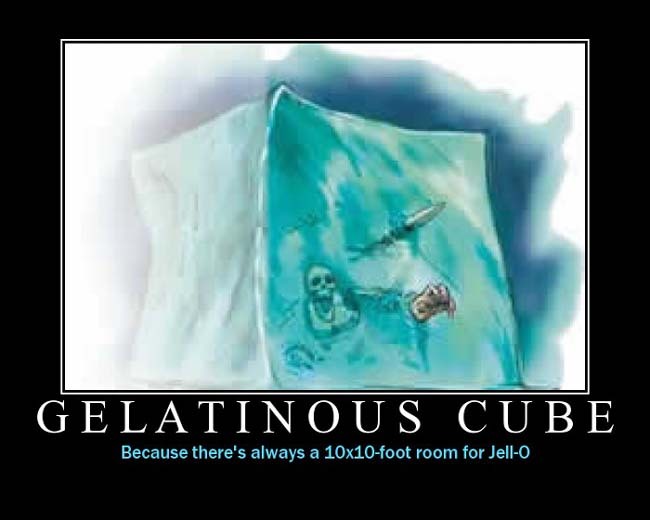
The reason these questions are important revolves around the entrance. If it’s well-known and wide open then anyone can go in there and you need to make it look that way. If it’s difficult to get to and you want it to feel abandoned then you need a hidden door or entrance puzzle. These questions also help you figure out the trap types because some people wonder how a trap resets if several people have sprung it over the years. Easy way to solve this is to put a living threat in the ruins that has the ability and instructions to reset the traps. Gelatinous Cubes are not acceptable.
Yahoo Image Search
This brings us to traps, which are one of the standards of fantasy adventures. Any adventures really. From Indiana Jones running away from a boulder to James Bond in a booby-trapped elevator, traps are nasty surprises that an author can have fun with. In fantasy, you have magic to work with and that opens a few interesting doors. Fictional poisons, spells, and monsters can play into this. You have pitfalls, arrow traps, swinging blades, fire traps, water traps, ejection traps, poison gas, boulders, illusions hiding spikes, setting off ghosts, falling into monster-infested pits, electricity traps, eternal sleep traps, explosions, Gelatinous Cubes (the bastards!), force fields, and overly complicated death machines. Just to name a fraction of them. Here are a few general tips if you plan on using traps:
- Create the way out before writing. One of the biggest threats to a trap is that the way out is random and ridiculous. It doesn’t have to be clear to you, but have the general idea that a character needs to do a specific action.
- Make it believable that the heroes can find and avoid the traps. Ignore if you plan on killing them off with the trap, but then people might realize that when they see they’re on the last page.
- Overly complicated traps can have simple answers and probably should. After all, if it’s a terrifying death machine then people will think big. They might not immediately consider a simple, obvious method like looking for a button.
- Make sure the heroes can escape without outside influences and remember why that has to happen. People ask what the point of a trap is if there’s a way out and here is my answer. A person who makes a trap would design it with an escape in case they fell into it or it was used against them. All you need is one gnome reverse engineering your electric fire pit trap and you’ll find it everywhere.
- Please make most of your traps lethal. Spitting darts the size of a fingernail without poison on them isn’t going to scare anyone.
- You don’t have to sacrifice a character to demonstrate the danger of a trap. Standing within a room of death or dangling over a shark pit can do wonders for suspense. It also keeps readers on their toes for if you’ll really kill a character.
Now, a lot of people don’t like these things in literature because they fall into the ‘cliche’ category. My suggestion is to do it if it fits the story and ignore the complaints. The important part is that the traps, mazes, and dungeons make sense within the story. So don’t use them as filler and make sure to give them a purpose.




 Legends of Windemere
Interesting insights…cool to see how you would plan this sort of thing!
LikeLike
These are definitely some of the most difficult to work with if you don’t plan them. I’ve done a few off the cuff traps and they always seem to either be too easy or too impossible.
LikeLike
These are great character building story devices. I enjoy when I read a book that has a part where the characters are either lost or in trouble with no way out but to rely on each other and the environment around them. Who doesn’t like Indiana Jones stuck in a trap uttering the words, “The penitent man. The penitent man. Penitent. Penitent. Penitent.” The story takes a turn when characters are in the middle of all this since it pulls the audience in without a problem!
LikeLike
One of the things I love about these types of obstacles is that they’re typically mind-based. It gives the characters a chance to use their minds and not have to bash their way through. Enemies tend to be defeated through violence. Good traps would get worse if you simply whack away with an axe.
LikeLike
I like the logic for the use of traps, to use them if they fit the story and make sense and avoid them otherwise. I don’t agree with using anything in a story that doesn’t make sense, use of things just for the sake of using them will ultimately cause readers to lose interest, at least in my opinion.
LikeLike
There does have to be some point even if the point is that they’re red herrings to a mystery or decoys. I recently went over the notes for my next book and found a chapter that was all trap solving. There was no reason for it in the grand scheme of things.
LikeLike
I love the use of mazes and traps as tools to showcase other talents in the characters (mind vs. brawn) and using them to draw out certain plot points/tensions in characters.
My only trouble with mazes (Harry Potter Goblet of Fire, I’m looking at you) is that I have a very strong tendency to become lost myself – and if there’s any description about how they’re lost, turned around or disoriented, then I am, too. However, I think that’s just a very odd, personal thing! 🙂
LikeLike
Mazes are very delicate. I’m not a big fan of using them because I get lost. I tried to use one in a story way back in high school and a friend mapped it out from what I wrote. He suggested never doing mazes again because it was more like an ‘S’ shaped hallway with traps.
LikeLike
Traps are so fun — both in D&D and in fantasy books 🙂 I’m actually thinking of taking a leaf out of your book and adapting a D&D adventure my brother created into one of the adventure scenes in my latest writing project. First, however, I need to check with him and make sure he didn’t blatantly steal his ideas from elsewhere, lol, as that is something he frequently does and then conveniently forgets to tell me.
LikeLike
I remember running into that issue once or twice. One of the characters in the game was named after an actor and there were other times that a character was blatantly taken from the game mythos.
LikeLike
You have no idea how much pleasant despair I cause with this.
LikeLike
I’m guessing a lot with maniacal laughter.
LikeLike
No laughter, only the perpetual silence in the wake of slaughter in expansive wastes.
LikeLike
That makes it a tad creepier for some reason.
LikeLike
My specialty!
LikeLike