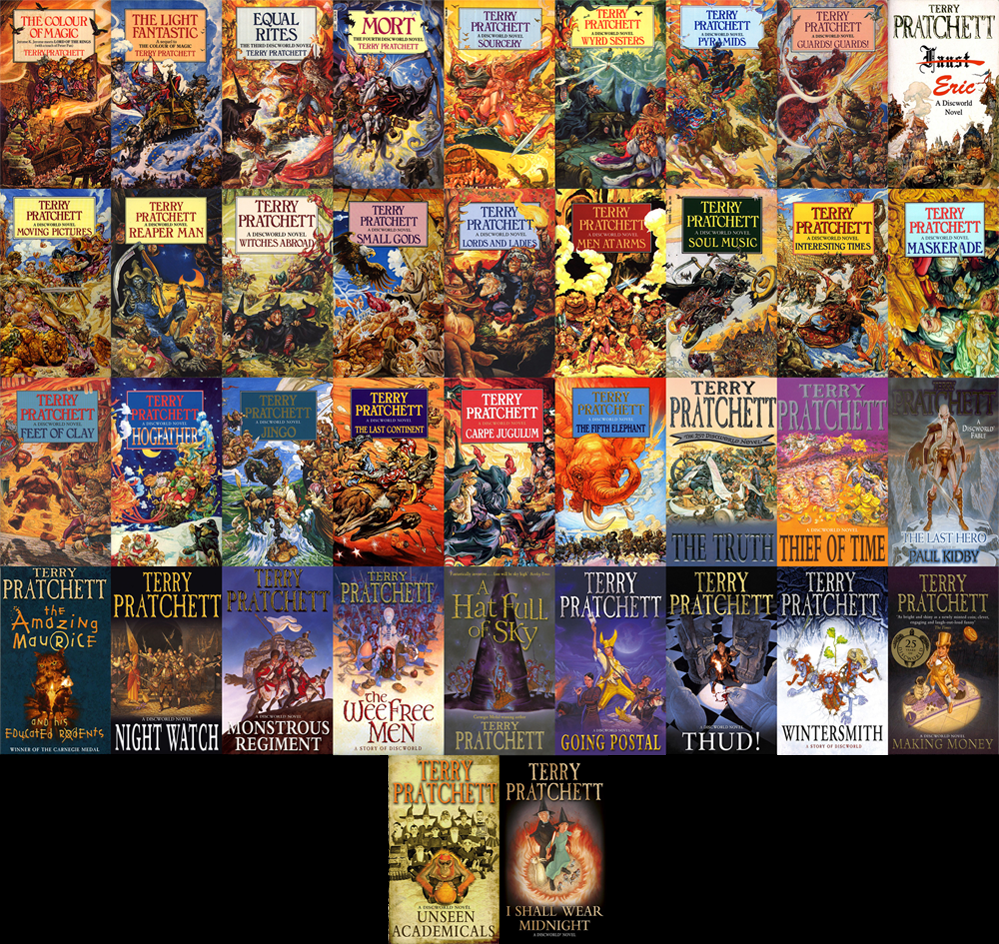
Discworld Series by Terry Pratchett
I don’t know if the number is right, but I think Discworld by Terry Prachett is 45 Books long. Xanth by Piers Anthony is in the 30’s. Wheel of Time by Robert Jordan is 15 Books. Legends of Windemere by some idiot on Amazon is heading for 15 too. The point of this is that fantasy has always had the looooooooong series, which is no longer a common practice. It seems most of what you find are 3-7 books. Why did it change? Well a friend just said it’s because of shorter attention spans of readers. Whatever it is, there are a lot of ups and downs to writing a series. I’m going to touch on a bunch of points from different aspects here. Remember that this is for the big series:
Massive World Building
This is one of the hardest, but most rewarding aspects of doing such a massive series. You really get to create a lush world with multiple continents, hero parties, and time periods as the series progresses. You can shake up the world as things move along and give your books a realistic feel. It’s no longer a setting that events happen in and then the reader goes off to the next thing. Now it’s a living, breathing, changing organism where every addition adds into it. It doesn’t even have to be the same series, but simply using the same world for everything can forge something that will exist longer than the author. Am I saying smaller series don’t create evolving worlds? No, but I will say that the longer the series, the more depth and space you can give your world.
Consistent Sales
At the beginning, I thought high sales was the goal. This became harder and harder to do as the series went on. People would drop out while others joined in. Other readers fell behind, so they wouldn’t be part of the debut month sales. So you really can’t do anything about this because it’s the nature of the beast for those without a massive following. So the goal shouldn’t be about quantity, but consistency. If all of the books are selling every month then it means new readers are coming into the series and old ones are moving along. There’s no way to really tell what is going on unless a reader notifies you that they started reading your series or are dropping out. I’d say switching to this mentality around Book 2 of a trilogy or Book 3 of a longer series is smart because it takes a lot of the edge off when nature takes its course.
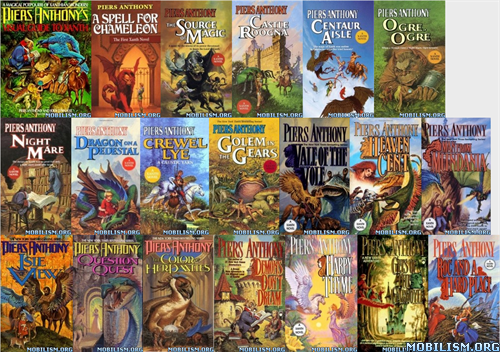
Xanth by Piers Anthony (Drop in the Bucket of this series)
Knowing What’s Coming
I’ve mentioned this a few times. At least in comments. One of the biggest ‘downs’ for writing a long series is that the author knows or at least has an idea for the endgame. A reader sees everything without the final context, so some events won’t be immediately clear. The longer the series, the more foreshadowing and ‘shaky’ parts one will find as they move along. Something that seems so ridiculous and unnecessary in Book 5 might be part of the game-changer of Book 9. The unfortunate part is that the reader won’t know unless they continue reading or demand spoilers, which can ruin the entire event. So there’s no winning on this one. You either make everything clear and make the foreshadowing idiot proof or you stick to your guns and trust that more people will keep reading than drop out of the series.
More Exposure to Readers
This is an odd downside that I recently started thinking about. The longer a series goes, the more an author is open to criticism of the story. For new authors, this can be an unseen obstacle and influence. The needling remarks can cause one to slightly turn away from a plot line, remove things, or even do something more. It really depends on the author’s mentality. Once the series is done, everything is locked in stone and changing something requires rewriting more than one book. Very few authors would be willing to do that. So a newer author with a long series really does run a high risk of being influenced by the criticism, which brings up the infamous question:
DO YOU WRITE FOR YOURSELF OR OTHERS FIRST?
(Hmmmm. That ended on a weird note. Eh, I’ll let it stay.)





 Source: