
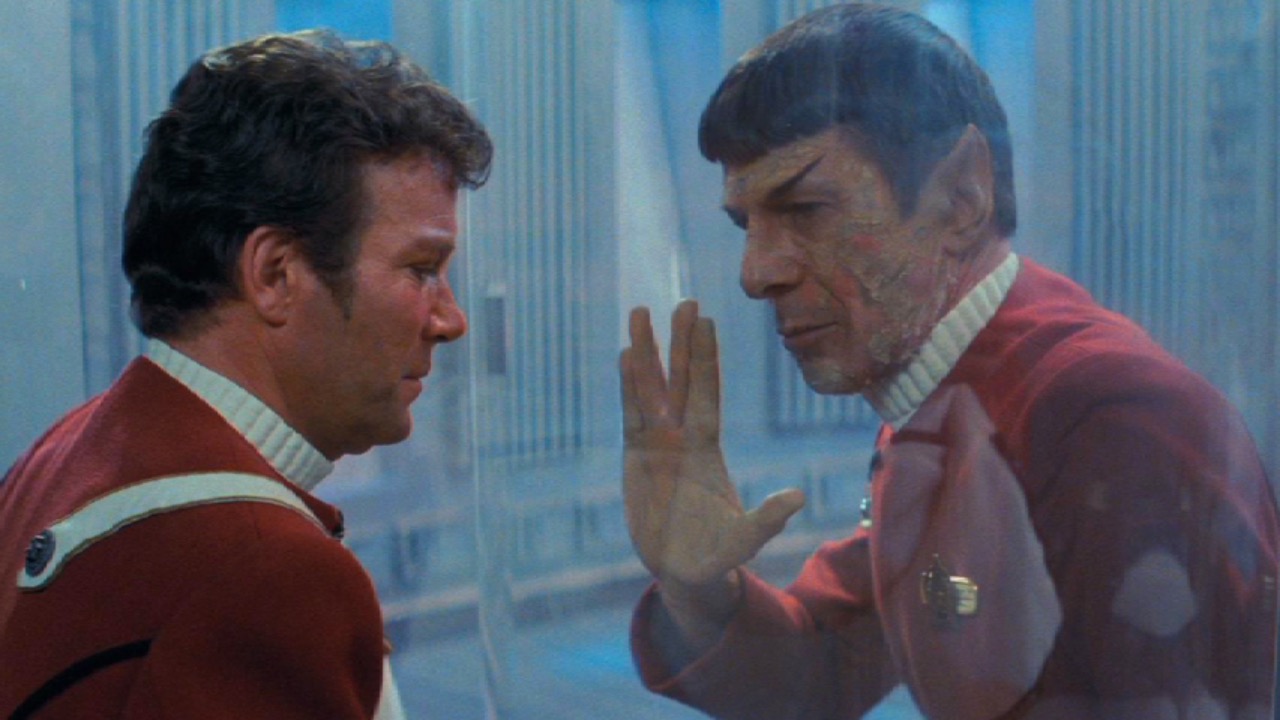
Star Trek II: Wrath of Khan
Heroes or their allies sacrificing themselves in fiction has been around for decades upon decades. It’s a common trope that people don’t typically get upset about. Not unless it’s done poorly. So, why are sacrifices in fiction so common among authors?
Well, the most obvious answers would be that sacrifices are what heroes do. People expect the protagonist to grow, which can result in giving something up. It might not even be their sacrifice, but one by someone close to them. Think of Obi-Wan Kenobi giving up his life to help his allies escape. He wasn’t the main hero, but he gave himself up to drive the heroes forward.
The sacrifice doesn’t even have to be ones life. A person can give up a precious item or a dream to help another. It could be a sacrifice that takes them away from an impossible path to one that will truly make them happy. They aren’t dead, but they have changed and are no longer staying in one place. It can also be a sacrifice that solidifies a positive situation such as in ‘Gift of the Magi’. The husband and wife each sacrifice something they love for the other, which negates the physical presents while strengthening their emotional relationship.
Thinking more about why people are okay with sacrifices in fiction has me considering how we look at the real world. When a horrible event happens, certain parts of the news turn towards those who tried to help. Many school shooting stories have parts where students, teachers, and others died taking on the shooter. They are seen as heroes in the face of a situation they should never have had to face. On a similar, but not unexpected, level are military, police, and firefighters who are trained to handle danger and possibly sacrifice themselves for others. We’re really trained from childhood to accept that people will give up their lives and that’s okay.
Of course, the sacrifice needs to mean something and create change. Plenty of times, a character has been killed and it ends up being pointless. There is something to be said for the ‘died in vain’ twist, but it can turn the audience. This turns what could be an emotional event into a shock death, which serves no internal purpose. None of the surviving characters have changed and the story is the same with the exception of having one less cast member. So, one would wonder if this is even considered a true sacrifice since it should be giving up ones life, power, or something important to help. An example of a wasted sacrifice would be Chiaotzu in ‘Dragon Ball Z’ self-destructing to kill the Saiyan warrior Nappa . . . Only Chiaotzu died.
What does everyone else think of the ‘sacrifice’ plot twist?




 Legends of Windemere
The sacrifice plot twist adds a lot of emotion to the writing. I did cry at that scene with Spock and Kirk.
LikeLiked by 1 person
I did too!
LikeLiked by 1 person
Definitely. Especially if you build up a good character/audience relationship.
LikeLiked by 2 people
I appreciate a sacrifice done well. A sacrifice gives a story weight, especially when there is permanent change, as you mentioned. I think of A Tale of Two Cities and, of course, Wrath of Khan, since you showed the image above. I also think of Frodo’s sacrifice in being a ringbearer and Sam’s in going with him to help him bear the burden. And I think of the 2002 movie Hero, starring Jet Li. A beautiful movie.
LikeLiked by 1 person
Haven’t seen that movie since it came out. Great example. Also, good point on how some sacrifices are simply comfort and safety.
LikeLiked by 1 person
Powerful tool if done well, and some foreshadowing could be helpful.
LikeLiked by 1 person
Good point. Foreshadowing is key.
LikeLiked by 1 person
The sacrifice always pulls at the heartstrings and usually makes for a beautiful story.
LikeLiked by 2 people
Totally agree.
LikeLiked by 2 people
😊
LikeLike