
Iliamna Lake Monster
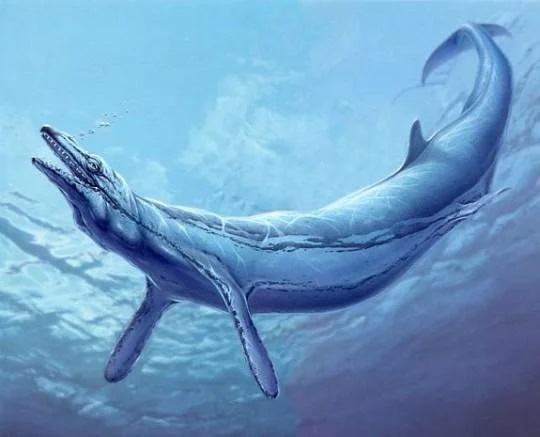
Found in the largest freshwater lake in Alaska, this mysterious creature is said to be 30 feet long. It has metallic scales and a large head. Some stories have its head shaped like a wolf while others a shark. Being an aquatic creature, it can dive underwater and stay down there for a very long time. So, what is the history of this cryptid?
Two pilots claimed they saw the Iliamna Lake Monster in 1942 when they were flying overhead. Others came out to say the same. A biologist saw it in 1963 and a missionary saw it twice in 1967. The second guy is interesting because he decided to land his plane on the lake and fish for the beast. He used steel cables with tuna as bait, which were claimed and . . . the plane was dragged around the lake while he swam for shore. When it was recovered, three of the cables were gone and the hooks where straightened. Other simpler sightings throughout the years had people claiming they saw a large fin in the water and at least one in 2017 claimed they saw it blowing water.
Going back further, the Tlingit people have a legend about a large creature in the lake called Gonkadet. It has the head and tail of a wolf on the body of an orca, which is similar to the Akhlut. It was considered a ‘fish god’ and may have been what stirred the imagination of the pilots who saw it initially.
With the lake being connected to the Bering Sea, there are a few possibilities as to the actual animal. As usual, a plesiosaur is on the list. This would be the long-necked, four-finned dinosaur that people also think is Nessie. More modern animals also fit the bill such as beluga whales, which are known to swim into the lake from time to time. They would fit some descriptions that are seen from far away, but not above. A final possibility is the White Sturgeon. These fish can get pretty big and match some of the description even though they haven’t been seen in the lake specifically.
Seems lake monsters always have a more logical explanation even if they aren’t as much fun. Still, do you think a lake can hold a large beast, especially if it has access to the ocean for it to disappear?







I doubt a creature would hang out in a lake if it has an ocean to swim in.
LikeLike
Depends on if it’s salt or freshwater, I guess.
LikeLike
I love the idea of lake monsters. Idaho even has one. Water is one place we really haven’t explored extensively.
LikeLiked by 1 person
Hard to survive down there, so the mystery makes sense.
LikeLiked by 1 person
Absolutely! I wonder about the plesiosaur but a gigantic fish would do. I’ve seen grouper as big as a grand piano.
LikeLiked by 1 person
I’ve heard groupers and catfish can get huge.
LikeLiked by 1 person
I had one swim by me when I was snorkeling at the edge of a very deep drop off in the Bahamas. Scared the whey out of me.
LikeLike
Definitely a possibility with the number of real strange mammals and fish that live in the sea.
LikeLiked by 1 person
True. Finding new species every year.
LikeLike
I think folks who go into a lake and then can’t touch bottom tend to imagine monsters lurking below. This one has great possibilities as a whale of large fish.
LikeLike
Floating helplessly in the water with no sense of anything below you would definitely conjure fears.
LikeLiked by 1 person
Gave me the chills just thinking about it.
LikeLike
As I mentioned before in an earlier comment, large ‘monsters’ are said to live in very deep lakes all around the world. There is a list on Wikipedia (list of lake monsters).
While some ate described differently, many are plesiosaur-like, snake-like or with a long neck.
So how did so many similar stories arise all around the world if there’s nothing in it?
Or am I kidding myself because I want to believe? There have been many investigations that have found nothing, but I do remember a photograph from one of the Loch Ness investigations showing what appears to be a plesiosaur-like fin.
LikeLike
Sea serpents have been in humanity’s lore for most of history. So, the idea of a water creature being a snake or long-necked is common. Add in that most are seen with bad or no lighting, so it could easily be a floating branch.
LikeLiked by 1 person
Spoilsport! I want to believe in them. But you’re probably right.
LikeLike
They’re more likely in the ocean. Lakes and rivers are for smaller critters.
LikeLiked by 1 person
Interesting they think the cryptid might be beluga rather than orca whales.
LikeLike
Guessing it’s the fin shape and size. Orcas tend to be distinct.
LikeLiked by 1 person
True, the orca’s black and white coloration would be hard to confuse with a white beluga.
LikeLike
Quite plausible. Fascinating stuff, Charles.
LikeLike
Thanks.
LikeLiked by 1 person
You’re welcome.
LikeLike
Pingback: The Iliamna Lake Monster – Anand Pasi