
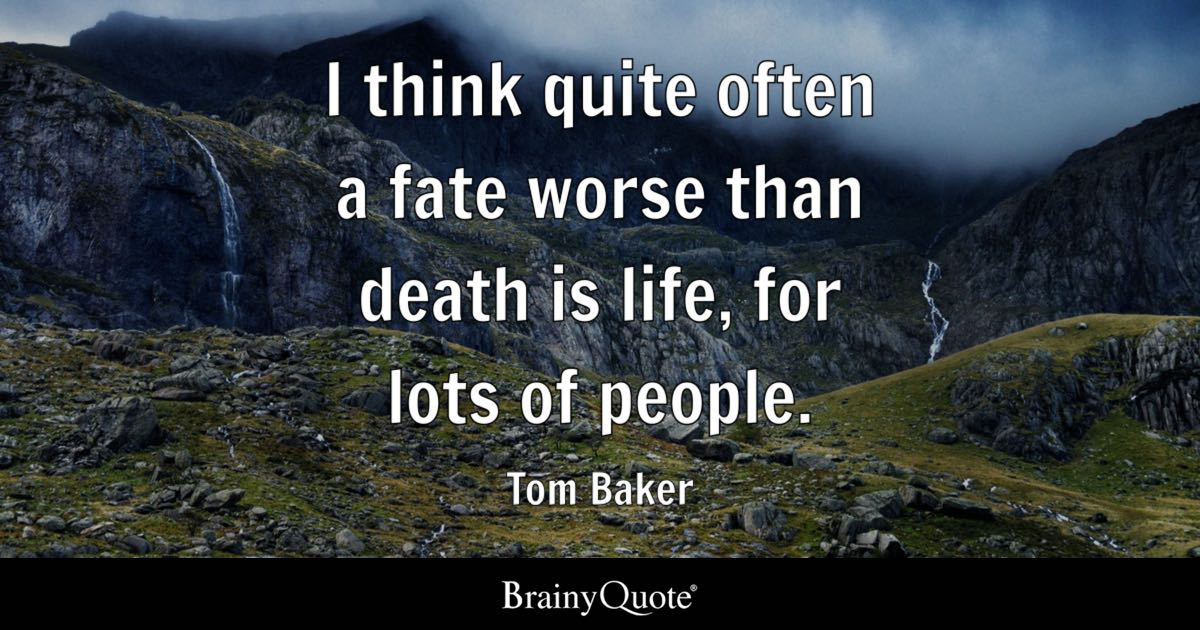
This category is why Monday’s post was a little difficult. ‘Life vs Fate Worse Than Death’ makes me think of a person not dying, but being left in a terrible state. Upon reading more about this concept, it appears to be something else since it covers the themes of thriller, horror, and mystery, People die in those, so why do they not fall under ‘Life vs Death’?
From what I can tell, the difference might come down to cause and effect. In an adventure or action story, the heroes typically choose to be in the fray or they at least have some control over their situation. ‘Life vs Fate Worse Than Death’ feels more like the protagonists are dragged into a terrible situation that will kill them. There’s a lot of fear and suffering to break them down. It’s not like when a hero falls. This is when an innocent victim is tortured until they die.
Thriller and horror are what draw me to this conclusion as to how this is different than adventure and action stories. While there is action, the adrenaline is born from fear of a victim instead of fear of a hero. They might both be protagonists, but those in horror and thrillers are made to suffer before they either live or die. A fate worse than death for many could be suffering horribly before dying or simply being murdered in one of the many outlandish ways us authors tend to create. It’s not a natural, simple demise, but one that you can sense came with pure terror in their final moments.
Thriller, horror, and mystery stories involve more trauma as well. If one looks at ‘life’ in this theme as more than physical survival then it shows something much different than adventure tales. What if ‘life’ stands for being psychologically and emotionally intact at the end of the story? Many would say that living with PTSD is a fate worse than death since you’re permanently scarred. Taking this approach, one can see how most survivors of a thriller/horror/mystery story don’t really make it out on the winning side. Yes, they are alive, but the things they have seen will realistically leave them traumatized and suffering for the rest of their lives.
I guess that’s another difference between ‘fate worse than death’ stories and ‘simple death’ ones. The protagonists in adventures tend to be ready to see horrible stuff or at least have the mentality to handle it on some level. They are adventurers or people who step up to the challenge with courage since they have to finish their quest. With thriller and horror protagonists, they tend to be average people from beginning to end. They might be law enforcement, but the don’t come in with powers, magic, or a ton of experience dealing with what they are about to face. In fact, the stronger and more experienced the protagonist of these stories, the more messed up and disturbing the threat. That’s because the intent of the author is to break them either before or instead of killing them.
Can’t be sure if I’ve ever really written one of these stories. I stick to adventure and action tales, so my heroes either start or gain the abilities needed to survive. Maybe the ‘Raven Series’ I put up in October would count since it was my attempt at horror with heroes who weren’t experience with what they were facing. I still put my heroes through the wringer and have some survive with major scars. This means there can be a ton of overlap between certain themes, which is probably a given.
So, what do you think about ‘life vs fate worse than death’ stories?




 Legends of Windemere
Is the Tom Baker of the Brainy Quote the Tom Baker who starred in Doctor Who? When I think of a fate worse than death, I think of what you mentioned later in the post: situations where a person still lives, but with an awful incurable disease or with the knowledge that he or she was the direct cause of a catastrophe and now lives with terrible regret. I have not written one of these stories, but I recall “The Tell-Tale Heart” and the guilt and madness of the unreliable narrator.
LikeLiked by 1 person
Not sure. I just found the quote during a search. Fates worse than death can be vicious, especially to villains. Though that doesn’t pull in the regret. You know, I’m thinking about survivor’s guilt.
LikeLiked by 1 person
This piece immediately reminded me of the poor, hopeless and downtrodden who formed the background and basis of Dickens’ novels.
LikeLiked by 2 people
Good point! Were you thinking of any novels in particular? I usually think of Little Dorrit of A Tale of Two Cities.
LikeLike
David Copperfield, which I am rereading now, Barnaby Rudge and Oliver Twist.
LikeLiked by 1 person
True. They definitely faced a terrible fate if they failed.
LikeLiked by 1 person
Fate worse than death stories are interesting in that they usually involve a mistake or miscue that has lasting ramifications. I’ve never written one but imagine placing a character in that situation and they work out of it could be a powerful story.
LikeLike
It feels like it would be more harrowing than death too.
LikeLiked by 1 person
It does feel that way.
LikeLike
I look at this as another tool. I’ve glanced off of it with my character, Lizzie, but nothing debilitating and permanent. I need her for future stories. She’s like my superhero. I know this kind of horror exists in real life, and feel for those people. Maybe that’s the point. We want readers to feel something and this one works.
LikeLiked by 2 people
I don’t think the ‘fate worse than death’ has to be physical either. PTSD comes to mind, which is a fate that can hopefully be worked through. It helps out with a long series as well because it knocks the hero down enough to give them more space to grow.
LikeLiked by 2 people
I think that ,metal scars are the worst. They are the most difficult to get over. Even if a character has physical results, (like a character in my latest WIP who suffers severe, scarring burns), they can more easily come to terms with their new situation, more than someone who has suffered from PTSD.
LikeLiked by 1 person
A challenge with mental scars is that others can’t see them. So they’re more easily ignore and dismissed by those who find them inconvenient.
LikeLiked by 1 person
A fate worse than death can be anything, really. Any situation you can’t get out of, from a prison cell to an unhappy marriage. It think it’s easy for people to say “I’d rather die than (whatever)” but in the event, they might decide to live anyhow.
LikeLiked by 1 person
Good point.
LikeLike
So true! Horror and thrillers are all about the psychological scars.
LikeLike
Yup. I’m not a horror fan due to gore and jump scares. I do like psychological ones though.
LikeLike