
Google Image Search
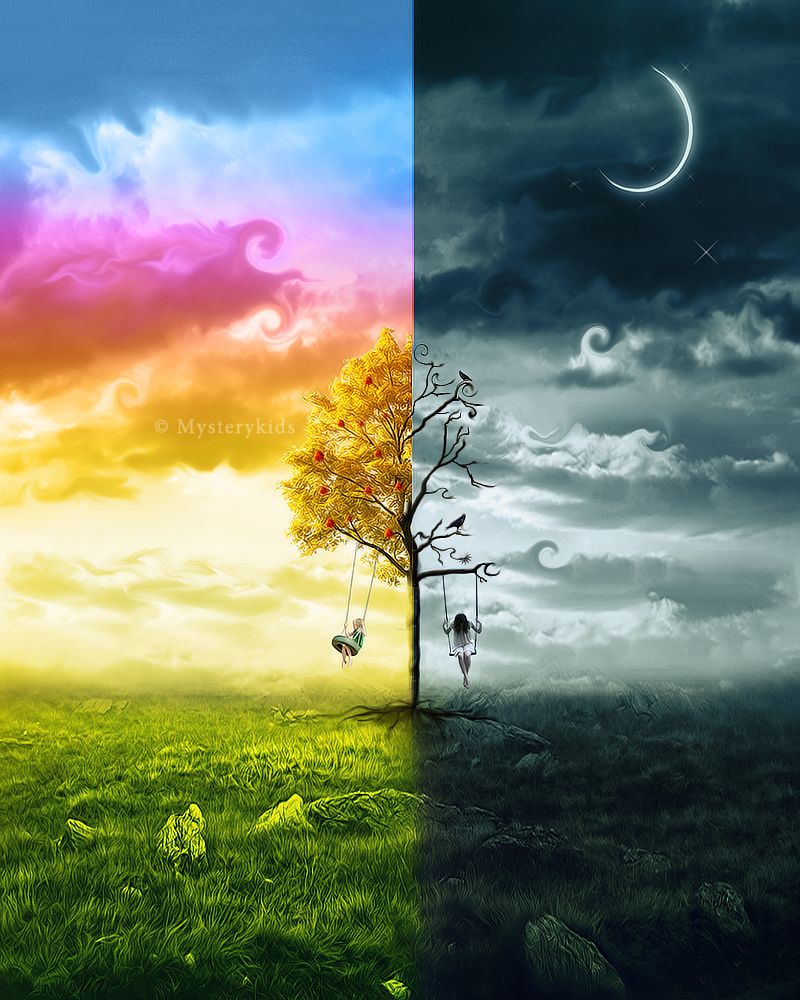
‘Life vs Death’ is probably one of the most basic concepts that any person can wrap their head around. Living things don’t want to die, which means we will root for the hero to survive. We see almost every genre having at least some grouping of stories that involve this conflict. Of course, we’re not looking at genre here because these themes can span all of those.
Adventure and action stories are what would normally have ‘life vs death’ conflicts. A person is in a situation where they are facing death and will struggle to survive. It could be a fantasy story about adventurers, romance about lovers lost at sea, or a drama where someone is fighting to survive cancer. You can see that these will have various levels of action as far as physical violence. There has to be a near constant worry that the heroes will not survive. Even if a person sees plenty of pages left, they need to know that death is possible to achieve this theme.
Some would even call this survival from nature because it is primarily about a death that doesn’t involve purposeful pain. A character who dies simply fails to get away from the threat or make the right decision. There isn’t malice or a desire to make the hero suffer if they fail when it’s a simple ‘life vs death’. The person either lives or dies with nothing in the middle. Again, the simplicity is key and helps to get readers to connect to the overall concept. Going beyond that is another conflict theme that we’ll get into on Wednesday, so please don’t jump ahead.
As someone who writes adventure and action stories, I can see a lot of ‘life vs death’ themes in my work. I do enjoy having my heroes come through scathed, but they still survive. This theme doesn’t mean a hero won’t be touched by violence or harm, but they will simply be alive at the end. So, I feel that you can do just about anything to them as long as they don’t die or end up in a state that prevents them from completing their adventure. Doing so can extend the tension because a hero who is weakened as time goes on will have a higher chance of dying. Increasing the likelihood of death in an adventure is difficult, but pays off better than decreasing the chances.
One of the downsides to this theme is that it ends with more finality than the others. You can’t really go back after death has been achieved. Sure, fantasy has resurrection spells, but that’s a genre thing. It’s also something that shouldn’t be abused unless you’re an epic anime/manga series involving 7 magic orbs. Seriously though, most stories are over when the main character dies or have to create a replacement. This makes ‘life vs death’ a fairly limited theme when compared to others. There is none, or at least very little, gray area to this finale. At best, you can have the death be ambiguous, but that requires sacrificing some closure.
Overall, this will always be one of my favorite story types to write. I like the simplicity even if I’m covering it with complicated machinations. The heroes either live to see another adventure or die. Well, they can retire too, but that’s still living. Either way, I always enjoyed these survival adventures because of the tension they gave me. Then again, I read a lot of books with groups of heroes, which allows you to have the theme end in different ways for each character. That’s another way to skew and expand on this conflict.
So, what do you think of the ‘life vs death’ theme?





 Legends of Windemere
You can really see the high stakes when a conflict is life or death. Boromir’s death was so poignant in The Fellowship of the Ring. A Tale of Two Cities wouldn’t be the book it is without the life and death struggle. In a war story, we expect someone to die and others to at least be at risk. George RR Martin readily killed off even likable characters in his books.
LikeLike
Martin is an interesting one. He uses this theme a lot, but gravitates towards the ‘good’ characters dying. Almost like you have to be bad to survive.
LikeLiked by 1 person
I think that was why I stopped after the first couple of books. Characters I liked died off, and I was like, “What a minute!” I’ll kill off a character. But I need a good reason to do so.
I wonder if some authors/screenwriters wish they’d kept a character around instead of killing them off. I would have liked to see more of Qui-Gon Jinn. Instead he was killed off in Phantom Menace.
LikeLiked by 1 person
Some might regret it, but I’ve never heard anyone publicly declare it. With GoT, I never read the books. The person who suggested flat out told me every character I’m going to like and root for will die. He explained that the bad guys usually win, so I didn’t bother.
LikeLiked by 1 person
I like the life and death theme when there is an unknown outcome. I thinking of the kind of story where the protagonist is in a situation where ehe has to struggle to survive and we readers have no idea whether he will or not. I remember the movie where a couple were left out in the middle of the ocean during a diving trip. We all watched them struggle until in the end they died. It was a big letdown but certainly exciting.
LikeLiked by 1 person
The downer ending is interesting. You point out that it was a letdown even though the whole movie was exciting. I think most people want happy endings even if they aren’t obvious. So, when you don’t get one, it can leave a sour taste. Yet, the idea that good always triumphs undermines the mystery. It’s like two opposing forces repeatedly getting in each others way.
LikeLiked by 1 person
So true.
LikeLike
It is one of the standard stories and will never die. It also invades different plots as a portion of the main story. I think they’re great.
LikeLike
It’s definitely the simplest and most basic of tales.
LikeLiked by 1 person
You have to want some finality with this theme. You are so right about Martin killing off the ‘good guys,” one of things that frustrated me with his books (when I had time to get through them!).
LikeLike
There’s pessimism in fiction and then there’s GoT. Fatalism?
LikeLike
I agree with L. Marie. By the time that movie came out, I was older, so Qui-Gon was the character who resonated most with me.
As far as life/death stakes, I prefer not to start with that, but with a different problem that expands as the characters learn more, and eventually becomes a life/death story.
LikeLike
Would you say life/death always has to be a big, grand story issue?
LikeLiked by 1 person
I guess I feel like it is big, so it you start with life/death stakes, where do you go from there?
But, of course, you could do an intimate story about family turmoil with a similar framework.
LikeLike
Guess the only place to go is dealing with the fallout.
LikeLike