
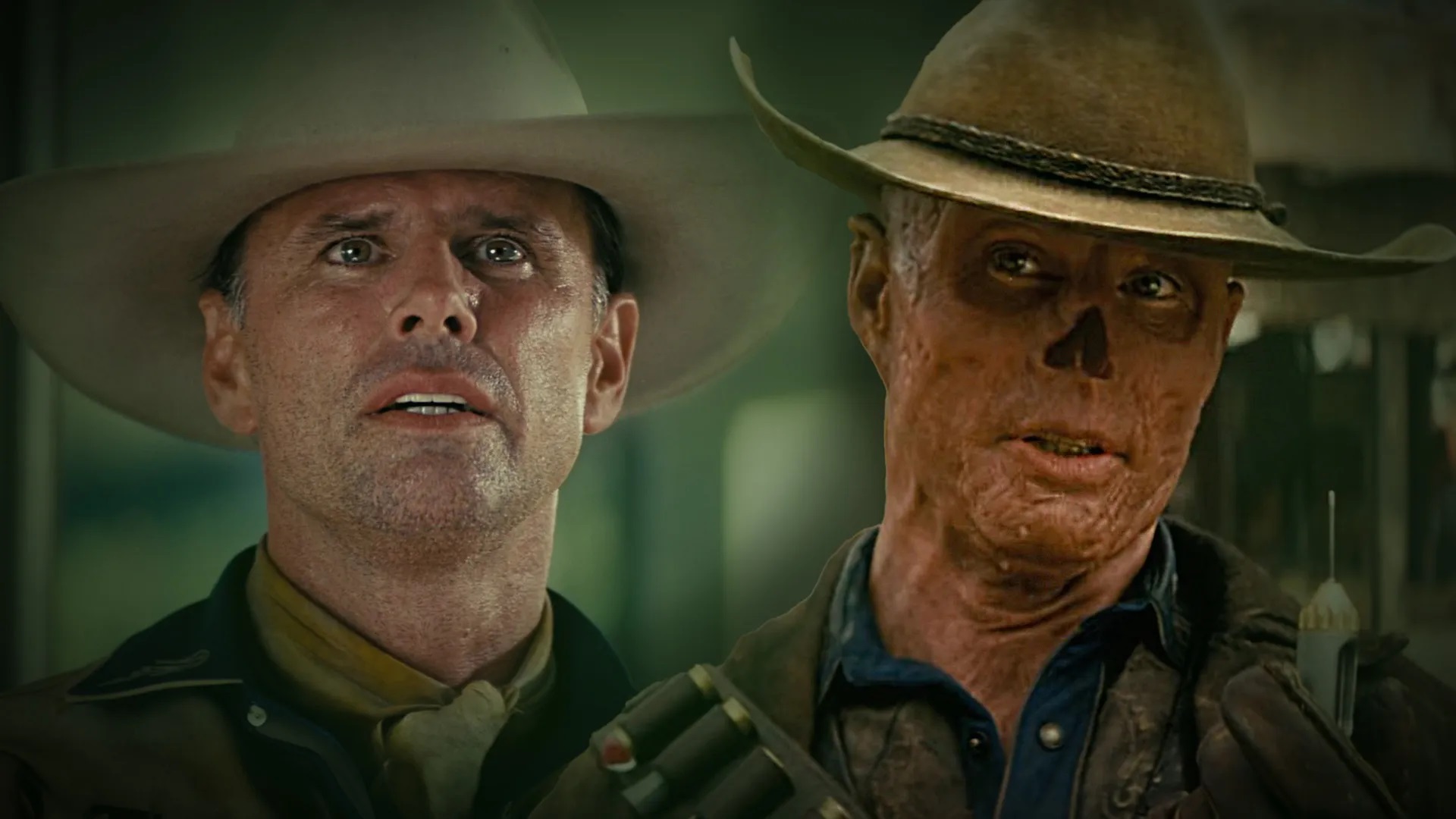
Fallout
A few months back, I watched a show on Amazon called ‘Fallout’ It was about characters in a post-apocalyptic landscape with the three protagonists having their own stories, which converge. There were also scenes about the past events leading up to the nuclear explosions, which focused on the guy above. He survived the events to become ‘The Ghoul’, so he’s a big POV character. Through him, we get to see the story of the past run alongside the story of the present. Not an easy feat to pull off.
I’m also reminded of the Netflix ‘Resident Evil’ show from last year, which a friend and I watched. We went in with hope and left with . . . ugh. It attempted the same thing with the past being shown to explain the present through one character. Unfortunately, the character wasn’t portrayed as relatable as one would want. There were inconsistencies in behavior and more interesting characters surrounding her as a kid. As an adult, she seemed to make one mistake after another to get the plot moving, which undid the whole ‘smart child’ part we were watching. It really didn’t help that we spent most of the series in the past with blips of the present until near the end when it switched without much warning.
So, you now have an example of it working and not working. What was different?
In my opinion, it had a lot to do with continuity and time:
- With ‘Fallout’, the scenes from the past explained the future and didn’t create any inconsistencies. You only see one main character (Cooper/Ghoul) in both time periods and the past shows how him became the darker version. He might not be the same in terms of mentality, but you can see how he got there. In ‘Resident Evil’, it doesn’t feel like the character you see as a child was anything like the adult version. Perhaps both of them making mistakes and ‘dues ex machina’-ing their way out of dying is something, but it felt like two character in two unrelated stories. Sudden personality changes seemed to happen as well, which wasn’t the case with ‘Fallout’. Continuity was maintained in one, but not the other.
- By time, I mean the amount of attention given to each time period. ‘Fallout’ spent enough time in the past in most episodes to set up the bulk of the action within the present. There was maybe one episode that was predominantly past to clear up a lot of mysteries, but it worked. The reason is because it answered questions the audience already had thanks to foreshadowing. You didn’t feel like you were abruptly yanked from one time period to another as well . . . That’s kind of what ‘Resident Evil’ did. In fact, my friend and I agreed that it felt like the present, more action-oriented story interrupted the more dramatic past story. They didn’t mesh and were almost at war with each other for importance. It was almost like the creators feared not getting a second season, so they combined two seasons into one and made a mess.
It was nice to see that the ‘two eras at one time’ story could work. I was afraid after ‘RE’ that it was something that simply couldn’t be done. All it requires is patience, balance, and continuity. I’ll touch more on it Wednesday with a tip post. For now, what do you think about this type of story? Do you like getting two eras at the same time or would you rather one be a prequel/first story?






I heard good things about Fallout. I never played the games nor did I play any of the Resident Evil games. But I know people who did. Amazon seems willing to spend money on their shows. Netflix seems to go the cheap route sometimes.
I don’t mind flashbacks, as long as they are done well. Back in the first season of Lost, I enjoyed their use of flashbacks to help us learn about the characters and how they came to be in their present state. I don’t mind some prequels. Some I don’t care for, because I don’t have as much tension about the characters, especially if the later stories show that they survived. I didn’t mind the Star Wars prequels, but I didn’t have any tension about Obi-Wan because he’s an old man in A New Hope!
LikeLiked by 1 person
Never played Fallout, so I went in with very little information. Still highly enjoyable and they explained enough for me to not be confused.
I was wondering about Obi-Wan. I had the same issue with Mab. She was in Legends, which happened after Nytefall but published first. Definitely removes a lot of tension.
LikeLiked by 1 person
That’s the tough part about characters and prequels. But there’s still enjoyment to be had, like with Mab. And I enjoyed watching a younger Obi-Wan in action. That was a plus.
LikeLike
I like two era shows and books. The past section if done well, gives richness to the present.
LikeLiked by 2 people
Good point.
LikeLiked by 2 people
😁
LikeLike
With my own stories, I tend to stick with the present and have limited flashbacks or character memories. But these stories do work well if the writers are up to it.
Once Upon a Time was a tv show a few years back that framed their episodes that way. It seemed though that at the end of every season there was something that “reset” the series and would undo what had been built in previous years. I got pretty tired of that.
You might also check out Martha Wells’ book The Wizard King, which alternates past and present by chapter and is deservedly winning all sorts of awards.
LikeLike
I remember watching that TV series. The reset happening once was interesting. Then it kept happening and I lost interest. No point in getting attached to characters especially with time jumps being added.
LikeLiked by 1 person